The Best Dog Collars With Metal Buckles
A plastic side-release buckle is the one part of a collar that fails without warning. Getting off plastic is cheap. Getting a maker to tell you what the metal actually is turns out to be the hard part.
The verdict
Buy the Max & Neo MAX collar. It is the pick for most dogs and most budgets: it is the only collar here whose listing states plainly that the buckle is metal, it is also the cheapest thing on this page, so it is the budget pick as well, and it is the one upgrade that removes the failure mode this page exists for. If your dog backs out of a flat collar, buy the Ruffwear Chain Reactioninstead — a metal chain control loop and an aluminum V-ring, with the standard martingale rule that it never stays on an unsupervised dog. For a field dog that needs ID on the collar itself, the Warner Cumberlandrivets a brass plate to leather and is the only collar here that names its buckle material at all — and what it names is nickel-plated, which is a coating rather than a metal. That is the finding of this page: “metal buckle” is a claim almost nobody in this category substantiates, and the one maker that does substantiates it with plating. Prices come from our live price layer as of November 23, 2026.
Quick picks
The short answer, ranked and scored against our published durability rubric. Where a manufacturer does not publish a spec, we say so rather than estimating it.
| # | Photo | Product | What the maker publishes about the closure | Durability | Price |
|---|---|---|---|---|---|
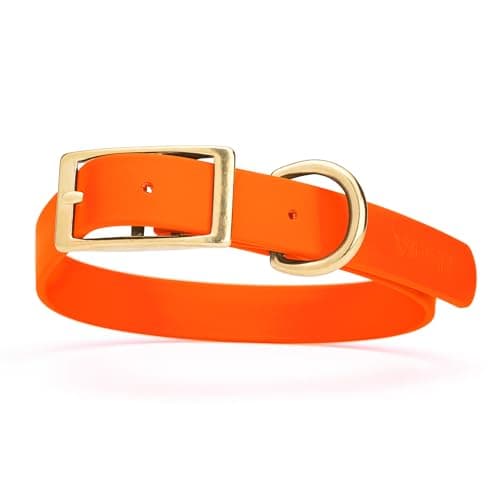
| 1 | 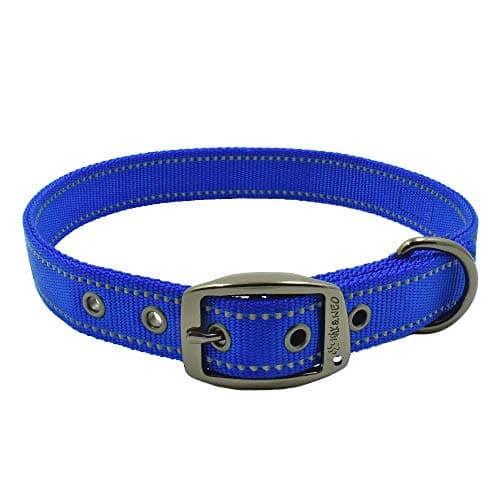 | Max and Neo MAX Reflective Metal Buckle CollarA metal-buckle nylon collar that funds a rescue |
| 61/100 | $15.99 · Amazon |
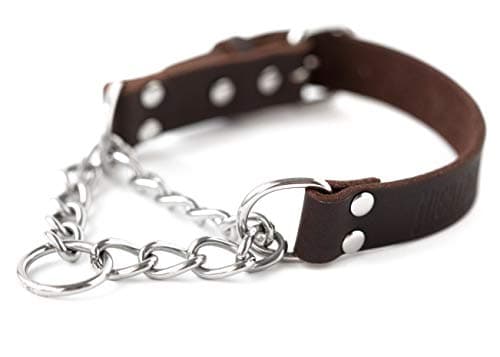
| 2 | 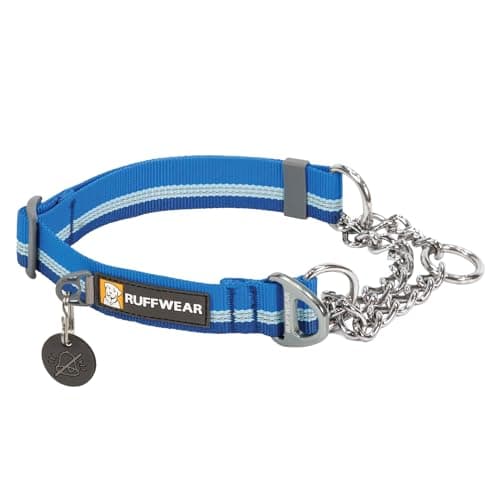 | Ruffwear Chain Reaction CollarA dog that backs out of a flat collar |
| 70/100 | $22.49 · Amazon |
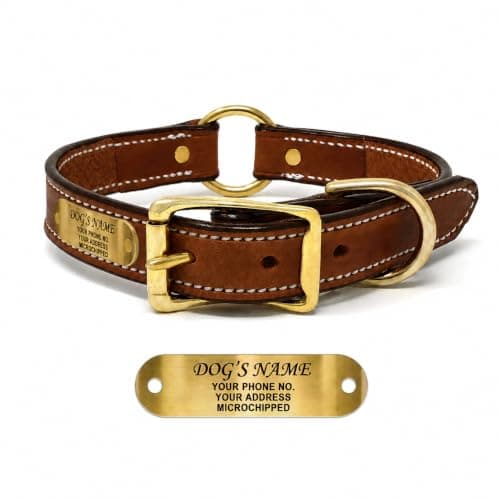
| 3 | 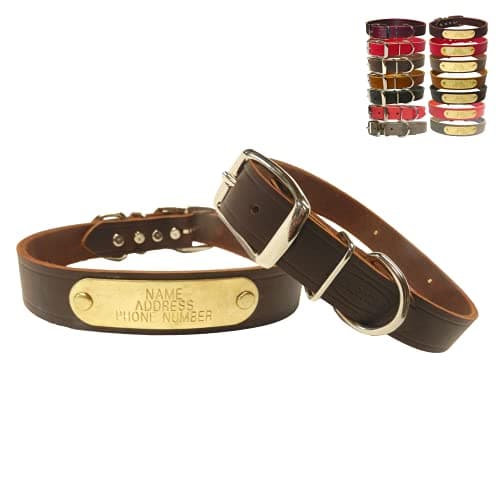 | Warner Sporting Cumberland Leather Collar, Riveted Brass TagA US-made field collar from a gundog-gear maker, plate included |
| 62/100 | $24.95 · Amazon |
| 4 | 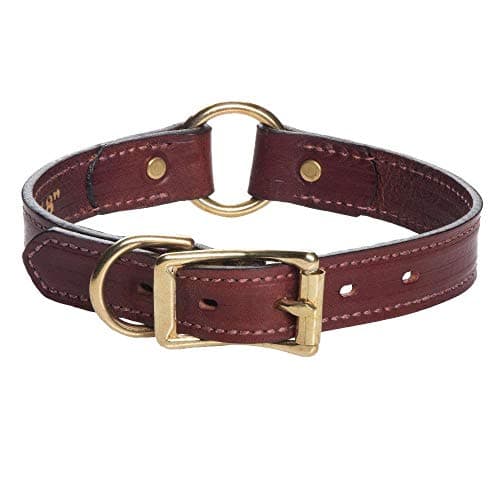 | Mendota Pet Leather Dog CollarA working leather collar from a field-gear maker |
| 67/100 | $44.49 · Amazon |
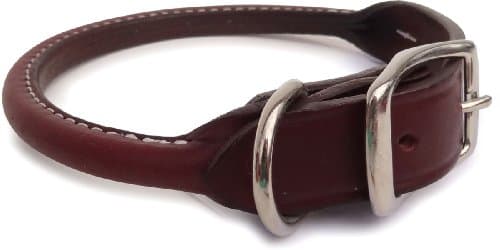
| 5 | 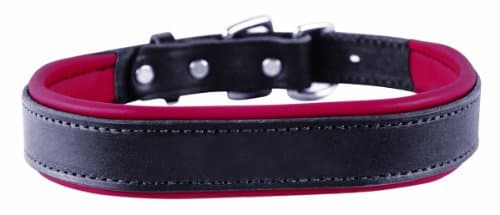 | Perri's Leather Dog CollarEquestrian-trade leatherwork applied to a dog collar |
| 65/100 | $39.95 · Amazon |
Tap any row to jump to the full review. Specs are the manufacturer's own published figures; where a maker does not publish one we say "not published" rather than estimating it. Prices are pulled live from Amazon as of November 23, 2026; where we have no verified live price we show none rather than a stale number. #ad — how our links work.
Why the buckle is the part worth choosing
Almost every collar failure people describe is the same failure. The strap does not snap and the stitching does not let go; the side-release buckle lets go, usually when a dog hits the end of a leash at an angle or when something catches the release wings. A plastic buckle fails suddenly and completely, and it gives no warning first. Nylon webbing, by contrast, frays visibly for months before it is genuinely weak.
That asymmetry is the whole argument for ranking collars on the closure. A frayed strap is a maintenance item you can see coming. A cracked acetal buckle is a loose dog. So the useful question is not “which collar is strongest” but which closure fails gracefully, and which maker will tell you what it is made of.
There are three closure families on this page and they are not interchangeable:
- A metal side-release buckle— the direct replacement for plastic. Same one-handed operation, same quick removal, no wings to crack in cold.
- A buckle and tongue, the belt closure. There is nothing to crack because there is no spring mechanism at all. It is the most reliable closure here and the slowest to use, which is why it survives on field collars and nowhere else.
- A martingale with a metal control loop. The closure is a buckle or a slip, but the load path runs through the chain, so the chain is the part that matters.
The disclosure problem: three makers, one real answer
We went looking for a buckle specification across every collar in our registry. What we found is worth stating plainly, because it is the reason this page ranks the way it does.
Max & Neosays “metal.” Not an alloy, not a plating, not a rating — but it is an unambiguous statement about the material, and at this price that is remarkable on its own. Ruffwear names an aluminum V-ring and a metal chain loop on the Chain Reaction, which is a component-level description rather than a marketing word. Warner Sporting is the only maker here that describes its buckle and D-ring precisely, and what it describes is nickel-plated.
Everyone else publishes nothing. Mendota, whose business is gundog gear and whose collars are made in the USA, does not state the hardware material. Perri’s, a horse-tack manufacturer, does not either. Neither publishes a leather grade, which is the other specification that decides how long a leather collar lasts. We have written the same sentence on the leather collar roundup and it has not changed.
So treat “metal buckle” as a category rather than a specification. It reliably tells you the part is not acetal. It tells you nothing about the alloy, the casting method or what the thing holds — and no collar in this category publishes a load rating at any price, a vacuum we document in full on the durable collar roundup.
Plated is not solid, and the D-ring is where it matters
Warner’s honesty deserves the follow-through. Nickel plating is a coating over a base metal, usually zinc alloy or steel, and coatings wear through where something rubs. On a collar the place something rubs constantly is the D-ring, because that is where a leash clip sits and swivels every single walk. Once the plating is gone the base metal is exposed, and if that base metal is a zinc alloy it corrodes and weakens at the exact point the leash loads.
This is not a reason to avoid the Cumberland — it is a well-made US field collar with the best sizing guidance on this page, including an explicit instruction to measure the dog with a string rather than copy an old collar. It is a reason to inspect the ring annually, and a reason to prefer solid brass or stainlessif a maker offers it and states it. Copper Leaf’s bridle-leather collar, ranked on the nameplate collar roundup, uses a solid brass plate — and publishes nothing at all about its buckle, which is why it is not on this page.
The martingale case, and its one hard rule
If the problem you are solving is a dog that reverses out of a flat collar, a metal buckle does not solve it. The collar stays done up and the dog comes out of the loop. That is a geometry problem, and the Chain Reaction answers it with a limited-slip martingale: the loop tightens just enough that the collar can no longer pass over the dog’s head, then stops.
Ruffwear puts a metal chain in the control loop rather than a fabric one, which matters because the chain is the component carrying the correction load. The rule that comes with it is absolute and not a style preference: a martingale must never be left on an unsupervised dog. The loop that stops escapes is a snag hazard around crate wire, fence panels and another dog’s jaw. We go through the mechanism and the safety case on the martingale roundup and on whether a martingale suits a puppy.
Why a belt buckle is still the strongest closure sold
The Mendota and the Perri’s both use the oldest closure there is, and on a durability site it has to be said that it is also the best one. A buckle and tongue has no spring, no wings, no release mechanism and no plastic. It cannot be popped by a knock. It does not get brittle at minus ten. The tongue passes through a punched hole and the load runs through leather and a solid frame.
What you give up is speed and adjustment granularity: you get the holes the maker punched, and taking the collar off is a two-handed job. For a dog that wears one collar for years — most working and field dogs — that is not a cost. For a household that takes the collar off every night, it is an irritation you will feel daily. Buy the closure that matches how the collar actually gets used.
One genuine caution on leather generally: it is the material most sensitive to water. A leather collar on a dog that swims every day will stiffen, crack and eventually fail at a punched hole. If that is your dog, the right answer is a coated webbing, and the waterproof collar roundup is the page for it.
The picks, ranked
1. Max and Neo MAX Reflective Metal Buckle Collar
Durability score 61/100Best for: A metal-buckle nylon collar that funds a rescue
The cheapest honest way to get off plastic buckles.
- Buckle
- Metal (Amazon listing)
- Webbing
- Nylon, reflective stitching (Amazon listing)
- Load rating
- Not published
Pros
- A metal buckle at a price where almost everything is plastic
- Max and Neo donates a collar to a rescue for each one sold
Cons
- No published load rating or webbing spec
- Reflective stitching, not reflective webbing
How we assessed it: on published materials, hardware specs and construction — not long-term chew-tested. We say so because it is true, and because a claim we cannot back is worth nothing to you.
#ad Price as of November 23, 2026; Amazon prices change often, so check before you buy. How our links work.
2. Ruffwear Chain Reaction Collar
Durability score 70/100Best for: A dog that backs out of a flat collar
The right answer for a dog that slips its collar, with the standard martingale caveat: not for unsupervised wear.
- Design
- Martingale-style limited-slip with a chain control loop (Amazon listing)
- Hardware
- Metal chain loop, aluminum V-ring
- Load rating
- Not published
Pros
- The limited-slip loop tightens just enough to stop a dog reversing out of it
- Metal control loop instead of a fabric one
Cons
- A martingale must never be left on an unsupervised dog — the loop is a snag hazard
- No published load rating
How we assessed it: on published materials, hardware specs and construction — not long-term chew-tested. We say so because it is true, and because a claim we cannot back is worth nothing to you.
#ad Price as of November 23, 2026; Amazon prices change often, so check before you buy. How our links work.
3. Warner Sporting Cumberland Leather Collar, Riveted Brass Tag
Durability score 62/100Best for: A US-made field collar from a gundog-gear maker, plate included
Honest field kit with the best sizing advice on the page, held back by plated hardware and by a maker that will not put a warranty in writing.
- Material
- Leather; grade not published
- ID method
- Engraved brass tag riveted to the collar, in Warner's own wording
- Hardware
- Nickel-plated buckle and D-ring per the listing
- Width
- 1 in; Warner states it is for dogs of roughly 35 lb and up
- Sizes
- 19, 21, 23, 25 and 27 in collars, each with a published neck range (this ASIN is the 21 in, for a 15-19 in neck)
- Warranty
- Not published
Pros
- A gundog-gear maker rather than a personalization shop, and the listing states Made in USA
- The sizing guidance is the best on this page: a chart to the inch, plus an explicit instruction to measure with a string rather than copy the dog's old collar
- Warner states plainly that the brass tag is riveted to the collar, so you know you are buying a plate and not something that hangs
- The cheapest riveted-plate leather collar in this roundup
Cons
- Nickel-plated buckle and D-ring rather than solid brass or stainless. Plating is a coating, coatings wear through, and the ring is where a leash loads the collar
- No warranty published anywhere we could find, on a collar sold for hard field use
- No leather grade published, which is the same gap that runs through the whole category
- Explicitly not intended for dogs under about 35 lb, which rules out every small-dog owner reading this
How we assessed it: on published materials, hardware specs and construction — not long-term chew-tested. We say so because it is true, and because a claim we cannot back is worth nothing to you.
#ad Price as of November 23, 2026; Amazon prices change often, so check before you buy. How our links work.
4. Mendota Pet Leather Dog Collar
Durability score 67/100Best for: A working leather collar from a field-gear maker
A proper working collar from a proper working brand — and the grade of leather, which decides everything, is the thing nobody will state.
- Material
- Leather; grade not published on the listing
- Origin
- Made in the USA per Mendota
- Hardware
- Buckle and D-ring; material not published
- Warranty
- Not published in detail
Pros
- From a maker whose business is field and gundog gear rather than fashion, which shows in the hardware proportions
- Made in the USA, which Mendota states plainly
- Traditional buckle-and-tongue closure — no plastic to crack in cold
Cons
- The listing does not state the leather grade, which is the single specification that determines how long a leather collar lasts
- Hardware material not published
- No published warranty terms
How we assessed it: on published materials, hardware specs and construction — not long-term chew-tested. We say so because it is true, and because a claim we cannot back is worth nothing to you.
#ad Price as of November 23, 2026; Amazon prices change often, so check before you buy. How our links work.
5. Perri's Leather Dog Collar
Durability score 65/100Best for: Equestrian-trade leatherwork applied to a dog collar
The tack-shop option. The trade pedigree is real; the specification disclosure is not better than anyone else's.
- Material
- Leather; grade not published on the listing
- Trade origin
- Equestrian leather goods manufacturer
- Hardware
- Buckle and D-ring; material not published
- Warranty
- Not published in detail
Pros
- Built by a manufacturer whose main trade is horse tack, where leather has to survive weather and load daily
- Padded and lined constructions available across the range
Cons
- Grade not published, again
- Hardware material not published
- Priced above the mass-market leather collars without a published spec to justify it
How we assessed it: on published materials, hardware specs and construction — not long-term chew-tested. We say so because it is true, and because a claim we cannot back is worth nothing to you.
#ad Price as of November 23, 2026; Amazon prices change often, so check before you buy. How our links work.
How to check a buckle before you trust it
Three checks, none of which needs a tool. First, weigh it in your hand: a cast metal buckle has an obvious heft a stamped one does not, and stamped hardware is thin sheet bent into shape. Second, look at the D-ring join— a welded ring is a closed loop with a visible bead; a split ring has a gap you can see, and a gap can be opened under load. Third, work the release twenty times. A metal side-release that feels gritty is a casting with poor tolerances, and poor tolerances are what cause a buckle to release when it is knocked.
Then inspect the ring once a year. On a plated buckle, that inspection is the whole maintenance plan: when you can see base metal, replace the collar.
The bottom line
Getting off plastic costs about fifteen dollars, and the Max & Neo is the cheapest honest way to do it. Past that, the money buys leather, hand-work and country of origin — not disclosure, and not a load rating, because nobody in this category publishes one. Choose the closure by how the collar gets used: a metal side-release for a collar that comes off nightly, a buckle and tongue for a collar that stays on, a metal martingale loop for a dog that backs out. If you want the full field ranked on materials rather than the closure, the durable collar roundup is the page, and the collar materials guide covers what each strap material actually does.
Frequently asked questions
What is the best dog collar with a metal buckle?
The Max and Neo MAX reflective collar. It is the only collar in our registry whose listing states plainly that the buckle is metal, it is the cheapest collar on this page, and it removes the failure mode that makes this page worth writing - a plastic side-release buckle that lets go without warning. Its honest limits: Max and Neo publishes no buckle alloy, no webbing denier and no load rating, and the reflectivity is stitching rather than reflective webbing.
Are metal buckles better than plastic on a dog collar?
For failure mode, yes, and that is the argument. Plastic side-release buckles fail suddenly and completely, usually when knocked or when the release wings catch on something, and they get brittle in cold. Metal does not. What a metal buckle does not give you is a number: no collar maker in this category publishes a load rating at any price, so 'metal buckle' tells you the part is not acetal and nothing more.
Is a nickel-plated buckle the same as a solid brass one?
No. Nickel plating is a coating over a base metal - usually a zinc alloy or steel - and coatings wear through where something rubs. On a collar that place is the D-ring, because a leash clip sits and swivels there on every walk. Once the plating wears off, the base metal is exposed at the exact point the leash loads the collar. Solid brass or stainless has no coating to lose. Warner's Cumberland is the only collar here that states its hardware is plated, which is honest disclosure rather than a reason to avoid it - just inspect the ring annually and replace the collar when you can see base metal.
Which collar closure is strongest?
The buckle and tongue - the belt closure used on the Mendota and the Perri's. It has no spring, no release wings and no plastic, so there is no mechanism to pop under a knock or go brittle in cold, and the load runs through leather and a solid frame. The trade-off is practical rather than structural: you get the adjustment holes the maker punched, and taking the collar off is a two-handed job. For a dog that wears one collar for years that is not a cost; for a household that removes the collar nightly it is a daily irritation.
Do any dog collar makers publish a load rating?
Not one that we have found, at any price, in any material. This is the same vacuum we document on our durable collar roundup and our tactical collar page: harness makers occasionally publish buckle and D-ring ratings - OneTigris does - but collar makers do not. It is why this page ranks on what can be observed and stated (closure type, material disclosure, plated versus solid) rather than on strength claims nobody substantiates.
Can I use a metal-buckle collar for a dog that slips its collar?
A metal buckle does not solve that problem. A dog that backs out of a collar is not opening the buckle - it is passing the whole loop over its head, which is a geometry problem rather than a hardware one. The answer is a limited-slip martingale like the Ruffwear Chain Reaction, which tightens just enough that the collar can no longer clear the dog's head and then stops. The hard rule that comes with it: a martingale must never be left on an unsupervised dog, because the control loop is a snag hazard on crate wire, fences and another dog's jaw.
Sources
Every spec on this page traces to one of these. Where a manufacturer does not publish a figure, we say “not published” rather than estimating it.
- Max and Neo - the MAX reflective collar listing: the metal buckle, the nylon webbing with reflective stitching, and the donate-a-collar-per-sale model. No load rating and no webbing denier are published anywhere on it
- Ruffwear - product pages for the Chain Reaction collar and the Hi & Light and Web Master harnesses: named hardware (ITW Nexus buckles, anodized 6061-T6 aluminum V-rings, an aluminum chain loop) and the shell deniers. Ruffwear states no warranty duration and excludes chewing damage
- Warner Sporting - Cumberland collar: the riveted brass tag, the nickel-plated buckle and D-ring, the 1 in width and the 35 lb-and-up guidance, plus the per-inch size chart and the instruction to measure with a string
- Mendota Pet - leather collar range from a gundog-gear maker: made in the USA, buckle-and-tongue closure. Neither the leather grade nor the hardware material is published
- Perri's Leather - the equestrian tack manufacturer behind its dog collar line; padded and lined constructions across the range, with no published leather grade or hardware material