What CPS Crash Certification Actually Covers
Certification is issued per product and per dog weight. Almost every product page in this category obscures that — and it is the detail that matters most.
The one thing to take away: a Center for Pet Safety certification is issued for a specific product in a specific size, tested at a specific dog weight. It does not transfer to other sizes of the same product, and it does not transfer to a heavier dog.
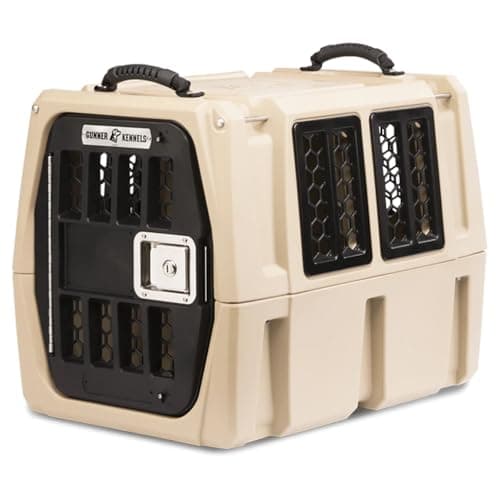
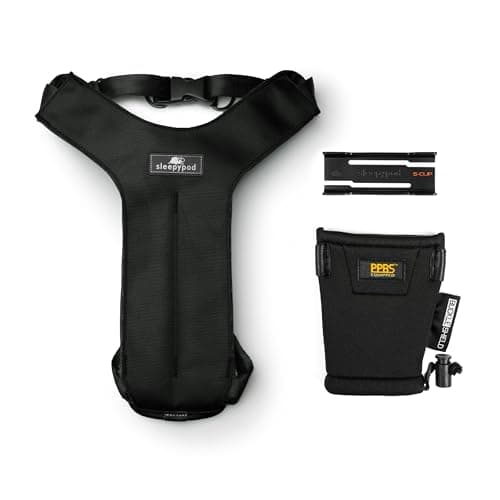
A Gunner G1 is certified in Small, Medium and Intermediate. A G1 Large is not certified at all. The Sleepypod Clickit Sport is rated to 90 lb; put a 110 lb dog in it and you are outside the certification. This is not pedantry. In CPS’s own testing, the same harness model passed in one size and catastrophically failed in another.
Who the Center for Pet Safety actually is
CPS is a 501(c)(3) non-profit founded in 2011 by Lindsey Wolko, after her own dog was injured by a faulty harness. Two things about it matter:
- It takes no money from the industry it tests. In its own words: “Center for Pet Safety does not accept funding from pet product manufacturers, we are independent of industry and work in the consumer interest.”
- It uses no live animals. Testing uses “specially designed, weighted and instrumented simulants.”
It also does not endorse products — certification is a test result, not a recommendation. And certification is voluntary and manufacturer-submitted, which has an important corollary: a product that is not on the list has not necessarily failed. It may simply never have been submitted. Absence of certification is absence of evidence, not evidence of failure — though for a safety-critical purchase, that distinction is cold comfort.
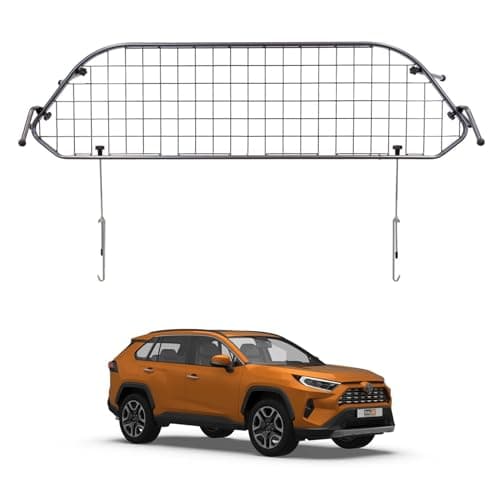
Whole categories fall into that gap. CPS certifies harnesses, carriers and travel crates — no dog car barrier has ever been CPS certified, and none has been submitted for testing. That is not evidence that barriers fail; it is the reason we treat a car barrier as a distraction-control device rather than as crash protection, and score it accordingly.
The test
There is no government standard for dog restraints, so CPS adapted the closest thing that exists. In their words, they used “a test generally referenced by some canine safety harness manufacturers, the Federal Motor Vehicle Safety Standard (FMVSS) 213 for child restraint systems.”
- Speed: a simulated collision at 30 mph
- Lab: MGA Research Corporation, Manassas, Virginia — the same facility that does testing for the US Department of Transportation and NHTSA
- Dummies: instrumented, weighted simulant dogs — 25, 30, 45, 50, 75, 90 and 110 lb across the various tests
- Pass criteria: head excursion within FMVSS 213 limits, structural integrity of hardware and webbing, and full containment of the dog
- Protocols:
CPS-001-014.01for harnesses,CPS-002-016.01for travel crates
Why size changes everything
The clearest evidence in the whole field comes from CPS’s 2013 harness study, where the results are broken out by size:
- Sleepypod Clickit Utility (the study’s top performer) — “Head Excursion Measurement (FMVSS 213) was within limits for sizes Small and Medium and was exceeded for size Large.”
- RC Pet Canine Friendly — passed Small and Medium; “Failure of size X-large met CPS Catastrophic Failure Definition.”
- Kurgo Tru-Fit — “Head Excursion Measurement (FMVSS 213) was exceeded for medium size. Failure of size small and large met CPS Catastrophic Failure Definition.”
Read that again. The same product, in a different size, catastrophically failed. A bigger dog generates more force; the geometry changes; the load paths change. Size is not a detail, it is the test.
This is why CPS lists the Clickit Sport as per-size weight ratings rather than one number — and why, when it wanted to extend the rating across the Medium, Large and XL, it had to physically inspect them first to confirm they were “constructed of the identical materials, stitching and hardware.” Certification does not spread across a product line by default. It has to be earned, or explicitly extended, size by size.
And when Sleepypod wanted a rating above 90 lb, it could not simply claim one — it had to put a different harness (the Clickit Range) through a new test at 110 lb.
What certification does NOT cover
Four things, and every one of them can undo the certification you paid for.
1. Your car’s anchor points. CPS warns that “Cargo area anchors are not always weight-rated for the forces generated in an accident” and that even vehicle manufacturers face limitations there. They advise verifying anchor strength with your car’s maker and anchoring crates with strength-rated straps. A certified crate bolted to an anchor that tears out is a certified crate flying through your car.
2. Anything you add to it. CPS is unambiguous: “these add-ons cancel out any crash-protection benefit”, and it “restricts brands that sell extension tethers from participating in the CPS Certified program.” An extension tether on a certified harness voids the point of the harness.
3. Wire crates, at all. “Test evidence indicates that even with strength rated support systems, wire crates should be considered as distraction prevention tools and will not provide significant protection in the case of an accident.”
4. The laws of physics. Certification means the restraint contained the dog and stayed within excursion limits. It does not mean a crash becomes survivable in all cases. CPS’s early crate testing recorded “likely fatal injuries to the Crash Test Dog”, and a 55 lb crash test dog generating enough force to break the seatback. A certified restraint improves the odds enormously. It is not a force field.
How to actually use this
- Look up the exact size, not the brand. “Gunner is crash tested” is not a fact about the crate in your car. “The G1 Intermediate is certified at 75 lb” is.
- Weigh your dog. Then check that weight against the certified test weight — not against the size chart.
- Check the list itself, not the product page. CPS publishes it publicly and it is the only authority that matters here.
- Use the strength-rated straps. On the Gunner and Cabela’s certifications, the straps are part of what was tested.
- Add nothing. No tethers, no extensions, no zipline.
One honest closing note
We are gear reviewers, not crash engineers, and we hold no safety credential. Everything on this page is sourced directly from the Center for Pet Safety’s own published material, and every source is linked below so you can check us. Where CPS has not published something — the g-forces involved, for instance — we have not filled the gap with a guess.
If you take one thing away: check the size, not the brand. Then read our certified crate list and certified harness list.
For a worked example of “check the size, not the brand,” take the crate this comes up with most: the Gunner G1 is certified in Small, Medium and Intermediate and is not certified in Large — the size sold for dogs over 70 lb. We follow that through, size by size, in our Gunner G1 kennel review.
Frequently asked questions
What is CPS certification for dog car safety?
The Center for Pet Safety is a 501(c)(3) non-profit that independently crash-tests dog restraints and publishes the results. It takes no funding from pet product manufacturers, uses instrumented dummy dogs rather than live animals, and tests against a protocol adapted from FMVSS 213 — the federal child-restraint standard — at a simulated 30 mph. Certification is the only independent verification available in this category.
Does CPS certification apply to every size of a product?
No. Certification is issued for a specific size tested at a specific dog weight, and it does not automatically transfer. In CPS's 2013 harness study, the Sleepypod Clickit Utility passed in Small and Medium but exceeded the head-excursion limit in Large, and the Kurgo Tru-Fit met CPS's catastrophic failure definition in small and large. The same product can pass in one size and fail badly in another.
Is the Gunner G1 Large CPS certified?
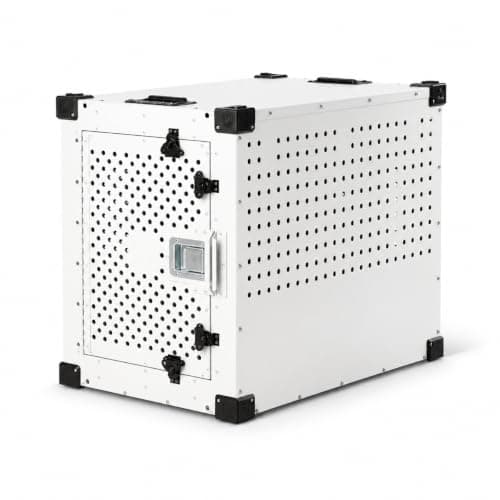
No. CPS has certified the Gunner G1 in Small (30 lb test dog), Medium (45 lb) and Intermediate (75 lb) only. There is no certified G1 Large or XL. For a dog up to 110 lb, the only CPS-certified crate at that weight is the Lucky Duck Lucky Kennel in Large.
How fast is the CPS crash test?
CPS's testing simulates a collision at 30 mph, conducted at MGA Research Corporation in Manassas, Virginia — the same facility used for US Department of Transportation and NHTSA testing. The protocol is adapted from FMVSS 213, the federal standard for child restraint systems, because no government standard exists for dog restraints. CPS does not publish a g-force figure, so we do not quote one.
Do extension tethers affect crash safety?
Yes, and badly. CPS states that extension tethers and zipline-style add-ons 'cancel out any crash-protection benefit', and it restricts brands that sell them from participating in the certified program at all. Adding slack lets the dog build momentum before the restraint loads. Do not add anything to a certified harness.
Does a certified crate need special straps?
Yes. The Gunner and Cabela's certifications are formally issued for the kennel with its strength-rated anchor straps — the straps were part of the tested system. CPS separately warns that vehicle cargo anchors 'are not always weight-rated for the forces generated in an accident' and advises checking anchor strength with your vehicle manufacturer.
Sources
Every spec on this page traces to one of these. Where a manufacturer does not publish a figure, we say “not published” rather than estimating it.
- Center for Pet Safety — the CPS Certified product list
- Center for Pet Safety — about (501(c)(3); takes no funding from pet product manufacturers)
- CPS 2011 Pilot Study — FMVSS 213 adaptation, 30 mph, MGA Research (Manassas, VA)
- CPS 2013 Harness Crashworthiness Study — per-size pass/fail results
- CPS 2015 Crate Study — wire crates are not crash protection
- CPS — Sleepypod Clickit Sport certification (per-size weight ratings)
- CPS — cargo area connection advisory (your car's anchors are not rated by CPS)
- CPS — extension tether advisory (add-ons cancel out crash protection)
- CPS 2011 preliminary crate test (55 lb crash test dog broke the seatback)