Are Crash-Tested Dog Crates Worth It?
Yes, for a specific set of people. For everyone else there is a certified option that costs a tenth as much, and almost nobody comparing the two says so.
The short answer. A crash-certified crate is worth it if you drive with your dog often, your dog falls inside a size band that has actually been certified, and you can physically load a 40–50 lb box into your vehicle. If any of those three is not true, buy a CPS-certified harness instead — you get certified restraint for a small fraction of the money, and it is the honest recommendation for most households.
What “crash tested” is actually worth
Two things make this question harder than it looks, and neither is usually explained.
First: there is no federal safety standard for pet restraints. No regulation requires a crate or a harness to survive anything, and no government agency tests them. The only independent certification in the category is the Center for Pet Safety’s, and CPS is a non-profit rather than a regulator. Everything called “crash tested” that is not on the CPS certified list is a manufacturer describing its own testing, to its own protocol, with its own pass mark.
Second: certification is issued per product and per dog weight. This is the detail that changes purchasing decisions and it is buried on most sites. Gunner’s G1 is certified 5-star in Small with a 30 lb test dog, Medium at 45 lb and Intermediate at 75 lb — and the Large and XL are not certified at any weight. Buying a bigger version of a certified crate does not buy certification.
The complete certified list, size by size, is in crash-tested dog crates, and what the protocol does and does not cover is in CPS crash testing explained.
Worth it: four situations
- You drive with the dog most weeks. Exposure is the whole argument. A crate that lives in the car and is used four times a week is a different value proposition from one used twice a year.
- Your dog is in a certified size band. Around 30–75 lb has the most certified options. Above 75 lb the list narrows sharply — the only crate currently certified with a 110 lb test dog is the Lucky Duck Large.
- The dog cannot travel in a harness — recovery from surgery, a dog that will not settle, or a dog that chews a seatbelt tether.
- You have a vehicle that suits it. A wagon or SUV with a flat cargo floor and real anchor points. In a saloon with a boot aperture, the crate simply does not fit.
Not worth it: four situations
- You drive with the dog a few times a year. A certified harness costs a fraction as much and is certified for the same purpose.
- Your dog is outside the certified size bands. Paying premium money for an uncertified size of a certified product is buying the brand rather than the certification.
- You cannot lift it. A crate that stays in the garage protects nothing. The Lucky Duck Large is 45 lb and 38 x 24 x 29 in externally, which is a two-person lift into most cars.
- You would not anchor it. CPS tests crates with strength-rated anchor straps. An unanchored certified crate is not the tested system — it is a heavy object in a cargo area.
The comparison nobody makes
Here is the part that should change most people’s decision. There are certified harnesses, and they cost a small fraction of a certified crate.
Only three dog car harnesses have ever passed independent CPS certification — a strikingly short list, and one that tells you how difficult the test is. For a dog that travels in the back seat and settles, a certified harness clipped to the seatbelt is certified restraint at a price most households will actually pay, in a product that lives in a glovebox rather than a garage.
The trade-offs are real and worth stating: a harness does not contain a dog that will not settle, does not stop a dog being loose after a crash if the buckle is released by a first responder, and is easier to fit incorrectly. The full comparison is in dog car harness vs crate, and the certified harnesses are ranked in crash-tested dog harnesses.
Quick picks
The short answer, ranked and scored against our published durability rubric. Where a manufacturer does not publish a spec, we say so rather than estimating it.
| # | Photo | Product | Durability | Price |
|---|---|---|---|---|
| 1 | 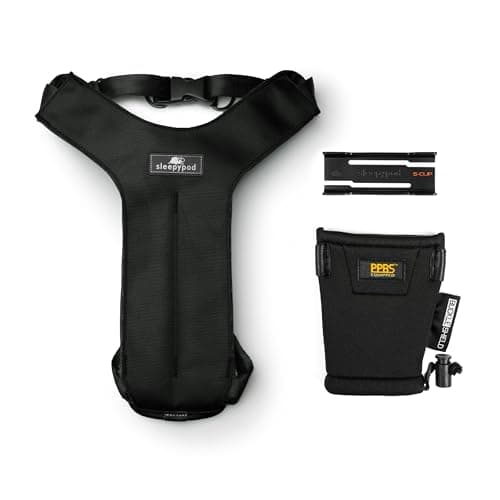 | Sleepypod Clickit Sport PlusThe best-certified car harness you can actually buy on Amazon | 87/100 | $109.24 · Amazon |
| 2 | 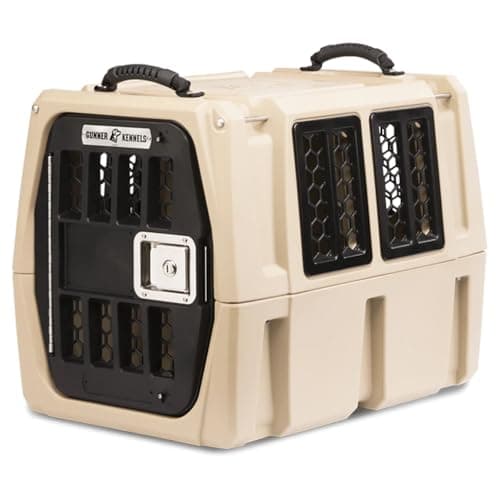 | Gunner G1 KennelA CPS-certified crate — in the sizes that are actually certified | 86/100 | $550.00 · Amazon |
| 3 | 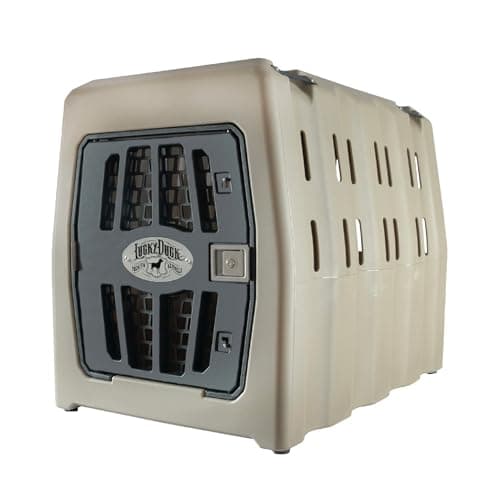 | Lucky Duck Lucky KennelThe only CPS-certified crate for a dog up to 110 lb | 86/100 | $699.99 · Amazon |
Tap any row to jump to the full review. Prices are pulled live from Amazon as of October 18, 2026; where we have no verified live price we show none rather than a stale number. #ad — how our links work.
The picks, ranked
1. Sleepypod Clickit Sport Plus
Durability score 87/100Best for: The best-certified car harness you can actually buy on Amazon
The car harness to buy for a dog under 90 lb: it is one of a mere three that have ever passed independent crash certification.
- CPS certification
- Clickit Sport: 5-star, protocol CPS-001-014.01 (tested July 2014)
- Per-size ratings
- S rated to 25 lb · M rated 45–90 lb · L rated 75–90 lb · XL rated to 90 lb
- Ceiling
- 90 lb. For a heavier dog, CPS certifies the Clickit Range at 110 lb
- Design
- Three-point restraint; the vehicle seat belt passes through the harness
Pros
- Sleepypod is one of only three brands with ANY CPS-certified harness — the entire certified list is three products
- CPS publishes explicit per-size weight ratings for it rather than one blanket claim
- The three-point design keeps the dog on the seat rather than tethering it by the neck
Cons
- Rated to 90 lb — a bigger dog needs the Clickit Range instead
- Expensive, and it takes real care to fit correctly. A badly fitted certified harness is not a certified harness
- CPS certified the 'Clickit Sport'; Amazon currently lists the 'Clickit Sport Plus'. Check the CPS listing before you buy if certification is the reason you are buying
How we assessed it: on published materials, hardware specs and construction — not long-term chew-tested. We say so because it is true, and because a claim we cannot back is worth nothing to you.
#ad Price as of October 18, 2026; Amazon prices change often, so check before you buy. How our links work.
2. Gunner G1 Kennel
Durability score 86/100Best for: A CPS-certified crate — in the sizes that are actually certified
One of the few genuinely CPS-certified crates — but only in Small, Medium and Intermediate. Buy the size that was tested, not the size that fits.
- CPS certification
- 5-star: Small (30 lb test dog), Medium (45 lb), Intermediate (75 lb)
- NOT certified
- Large and XL — CPS has not certified them at any weight
- Protocol
- CPS-002-016.01, tested with strength-rated anchor straps
- Construction
- Double-walled rotomolded shell, welded aluminum frame
- Door
- Paddle latch with key lock; backup safety latches top and bottom
- Warranty
- Lifetime against defects — but 'does not extend to cover destruction done to the product by the pet'
Pros
- Genuinely CPS 5-star certified in Small, Medium and Intermediate — one of only a handful of crates that is
- The certification covers the crate WITH its strength-rated anchor straps, which is how it must actually be installed
- Backup safety latches top and bottom, plus a lockable paddle latch
Cons
- There is NO CPS-certified Gunner G1 Large or XL. If you have a 110 lb dog, a G1 Large is an uncertified crate — this is the single most misunderstood fact in the category
- The lifetime warranty explicitly excludes destruction by your dog
- Gunner sells a separate steel 'Chew Kit' for high-drive dogs, which is a tacit admission the base kennel is chewable
- Very expensive and very heavy
How we assessed it: on published materials, hardware specs and construction — not long-term chew-tested. We say so because it is true, and because a claim we cannot back is worth nothing to you.
#ad Price as of October 18, 2026; Amazon prices change often, so check before you buy. How our links work.
3. Lucky Duck Lucky Kennel
Durability score 86/100Best for: The only CPS-certified crate for a dog up to 110 lb
If your dog is over 90 lb and you want a certified crate, this is currently the only one that exists.
- CPS certification
- 5-star: Medium (50 lb test dog), Intermediate (75 lb), Large (110 lb)
- The Large
- Currently the ONLY CPS-certified crate tested at 110 lb — certified with Lucky Duck's own ratchet strap kit
- Construction
- One-piece rotomolded, stainless hardware, powder-coated tie-downs
- Latch
- Locking paddle latch, one-handed operation
- Large dimensions
- 38 x 24 x 29 in external; 45 lb; for dogs 70–110 lb
- On Amazon
- Listed as 'Lucky Dog Kennel' — brand Lucky Duck, sold by Lucky Duck Decoys
- Warranty
- Lifetime against manufacturing defects, original purchaser only — excludes 'pet-related chewing or scratching' and 'Dropping or impact damage'
Pros
- The Large is the only CPS-certified crate on the entire list tested with a 110 lb dog. For a giant breed there is currently no certified alternative
- Certified across three sizes — Medium, Intermediate and Large
- One-piece rotomolded shell with stainless hardware and integrated tie-down points
Cons
- The warranty excludes 'Dropping or impact damage' — the kennel is certified for a crash and not covered after one
- The lifetime warranty excludes chewing and scratching, like almost every crate in this category
- The certified configuration includes Lucky Duck's own ratchet straps, which are sold direct rather than on Amazon
- Expensive
How we assessed it: on published materials, hardware specs and construction — not long-term chew-tested. We say so because it is true, and because a claim we cannot back is worth nothing to you.
#ad Price as of October 18, 2026; Amazon prices change often, so check before you buy. How our links work.
What is definitely not worth it
- A wire crate as car safety. The Center for Pet Safety’s 2015 crate study concluded wire crates will not provide significant protection in the case of an accident. A wire crate in a car is containment and nothing more.
- An uncertified “crash tested” crate at certified prices. If it is not on the CPS list, the phrase describes the manufacturer’s own testing. That is not necessarily worthless — but you are paying for a claim you cannot check.
- A barrier, as restraint. No dog car barrier we can find is crash-certified and none publishes a load rating. Barriers keep a dog out of the driver’s space, which is a genuine benefit while driving — see how to install a dog car barrier — but they are not restraint.
- A booster seat with a tether, for a large dog. Sold as safety, tested as nothing — the Center for Pet Safety crash-tested four pet travel seats and none earned its Top Performer designation. For a small dog the picture is different, because a handful of enclosed carriers are certified at published weights; we rank those in the best dog car seats.
Read the warranty before you spend crate money
At these prices the warranty deserves the same scrutiny as the certification, and it is consistently weaker than buyers expect. Gunner’s lifetime warranty against defects states that it “does not extend to cover destruction done to the product by the pet.” Lucky Duck’s lifetime warranty excludes pet-related wear and tear including chewing and scratching.
Neither is unreasonable — they are structural warranties, not chew warranties. But if you are buying a crate specifically because your dog destroys things, understand that you are buying crash performance rather than chew coverage. The one crate we have found with a genuine dog damage guarantee is Impact’s High Anxiety line, which is not crash-certified. You cannot currently have both.
There is no law requiring any of this
Worth knowing, because “is it required?” and “is it worth it?” get conflated. There is no federal law requiring a pet to be restrained in a moving vehicle in the United States. A small number of states address it directly, several more reach it through distracted-driving or obstruction statutes, and a much larger group has laws about animals in parked cars.
We quote the actual statutes, with citations, in dog car restraint laws by state. None of that changes the physics: an unrestrained 70 lb dog in a 30 mph stop is a hazard to every person in the car, which is the argument that stands regardless of what your state requires.
Our verdict
Buy a certified harness first. It is the cheapest certified restraint available, it fits any car, and for the large majority of dogs and journeys it is enough.
Buy a certified crate if you travel constantly, your dog is in a certified band, and you have the vehicle and the strength for it. It is genuinely better protection and it also solves containment, which a harness does not. Then anchor it with rated straps, because the straps are part of the certification and not an accessory.
Frequently asked questions
Are crash-tested dog crates worth the money?
Worth it if you drive with your dog most weeks, your dog is in a size band that has actually been certified, and you can lift a 40-50 lb crate into your vehicle. If any of those is not true, a CPS-certified harness gives you certified restraint for a small fraction of the cost. Certification is issued per product and per dog weight — Gunner's G1 is certified in Small (30 lb), Medium (45 lb) and Intermediate (75 lb), and its Large and XL are not certified at any weight.
Is a crash-tested crate safer than a dog car harness?
For a given dog it is generally more protective, and it also solves containment, which a harness does not. But only three dog car harnesses have ever passed independent CPS certification, and one of those clipped to a seatbelt is certified restraint at a fraction of the price, in a product that lives in a glovebox rather than a garage. The harness trade-offs are real: it will not contain a dog that refuses to settle, and it is easier to fit incorrectly.
Does a crash-tested crate need to be strapped down?
Yes — CPS tests crates with strength-rated anchor straps, so the straps are part of the certified configuration rather than an accessory. A certified crate sitting loose in a cargo area is not the system that was tested; it is a heavy object that becomes a projectile in a collision. Use rated straps to genuine anchor points such as cargo hooks.
Are wire crates crash tested?
No, and the Center for Pet Safety's 2015 crate study concluded that wire crates will not provide significant protection in the case of an accident. A wire crate in a vehicle is containment and nothing more. The same applies to car barriers: none we can find is crash-certified and none publishes a load rating, so they keep a dog out of the driver's space rather than restraining it in a collision.
Do crash-tested crate warranties cover chewing?
No. Gunner's lifetime warranty against defects states it does not extend to cover destruction done to the product by the pet, and Lucky Duck's excludes pet-related wear and tear including chewing and scratching. Both are structural warranties rather than chew warranties, which is reasonable — but if you are buying because your dog destroys things, understand you are buying crash performance, not chew coverage. The one crate we have found with a genuine dog damage guarantee is not crash-certified.
Is it illegal to drive with an unrestrained dog?
There is no federal law requiring a pet to be restrained in a moving vehicle in the United States. A small number of states address it directly, several more reach it through distracted-driving or obstruction statutes, and a much larger group legislates on animals in parked cars. None of that changes the physics: an unrestrained 70 lb dog in a 30 mph stop is a hazard to every person in the vehicle.
Sources
Every spec on this page traces to one of these. Where a manufacturer does not publish a figure, we say “not published” rather than estimating it.
- Center for Pet Safety — certified products list
- Center for Pet Safety — 2015 Crate Study (wire crates “will not provide significant protection in the case of an accident”)
- Center for Pet Safety — 2013 Harness Crashworthiness Study (the study that established how size and dog weight change the result)
- Gunner — warranty (“does not extend to cover destruction done to the product by the pet”)
- AVMA — Pet safety in vehicles