Dog Bed vs Crate
Most people buying their first of either are really asking one question: do I need to contain this dog, or just give it somewhere to lie down? The warranties answer it more honestly than the marketing does.
The verdict
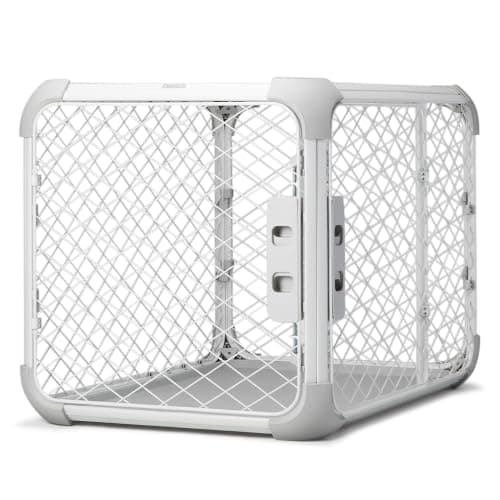
Buy a bedif the dog settles on its own and the problem is just that the floor is hard, cold or wet — and if the dog chews, buy the Kuranda chewproof elevated bed, because it is the only bed in the category whose one-year chew warranty explicitly covers damage from digging and scratching. Buy a crate if the dog cannot yet be left loose, needs a den it can be shut into safely, or has to travel; for a genuine escape artist the Impact High Anxietyis the only crate at any price whose standard warranty pays out when the dog wins. Most households with a young or destructive dog end up owning both, and in that case the correct pair is a crate plus a flat, chew-rated bed inside it — not a plush bed that gets shredded in week one. One thing a crate is not: a car restraint, unless it is specifically certified for the job.
Quick picks
The short answer, ranked and scored against our published durability rubric. Where a manufacturer does not publish a spec, we say so rather than estimating it.
| # | Photo | Product | What it is for | Durability | Price |
|---|---|---|---|---|---|
| 1 | 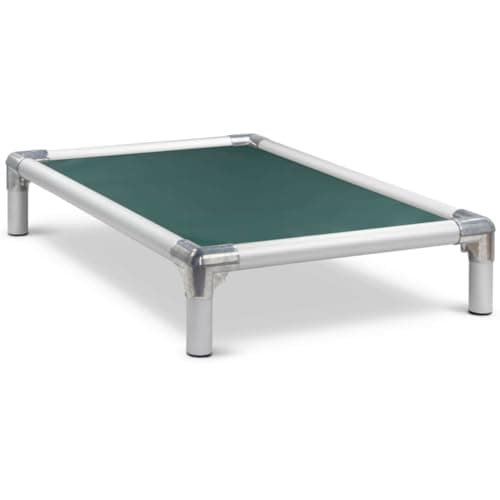 | Kuranda Chewproof Aluminum Elevated BedThe most confident chew warranty in the bed category |
| 91/100 | $144.95 · Amazon |
| 2 | 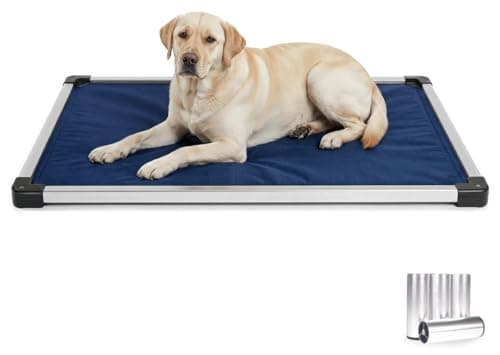 | K9 Ballistics Chew Proof Armored BedA soft bed for a chewer, with a real replacement promise |
| 77/100 | $165.00 · Amazon |
| 3 | 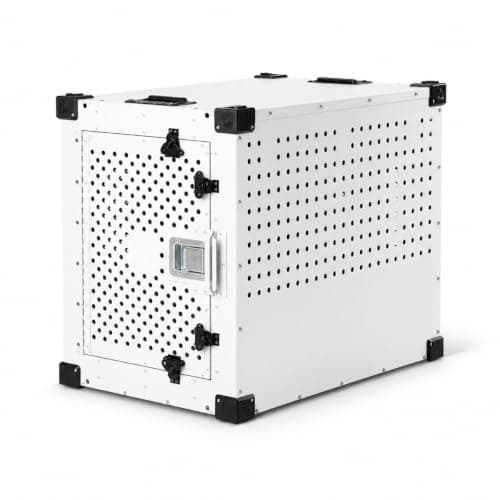 | Impact High Anxiety CrateThe genuine escape artist — and the only warranty that pays out when a dog wins |
| 91/100 | Check price |
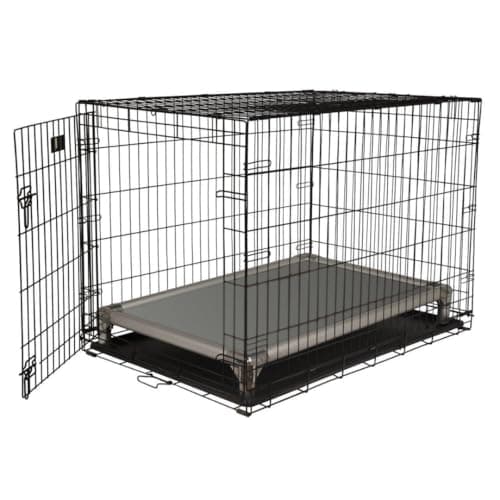
| 4 | 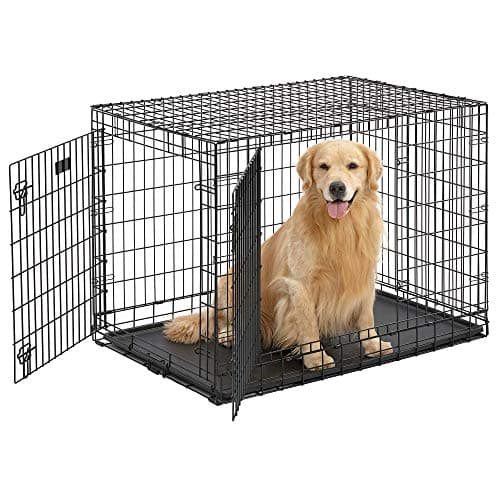 | MidWest Homes for Pets Ultima Pro Heavy-Duty CrateA stronger wire crate — with a hard limit you must understand |
| 43/100 | $154.99 · Amazon |
Tap any row to jump to the full review. Specs are the manufacturer's own published figures; where a maker does not publish one we say "not published" rather than estimating it. Prices are pulled live from Amazon as of October 18, 2026; where we have no verified live price we show none rather than a stale number. #ad — how our links work.
They are not alternatives
A bed and a crate get compared because they occupy the same corner of the same room, but they answer different questions:
| A bed | A crate | |
|---|---|---|
| Solves | Hard, cold, wet or shared floor space | Containment, house-training, a shut door at night |
| Fails by | Being shredded, flattened or soaked | Being escaped, bent or defeated at the latch |
| Warranty reality | A short chew clock, where one exists at all | Dog damage excluded almost everywhere |
| Travel use | None (a bed is not restraint) | Only if independently certified |
The warranties tell you what each product really is
This is the comparison nobody runs, and it is the most useful one. Read the two categories side by side and the manufacturers tell you plainly what they expect to happen.
On the bed side, Kuranda warrants its elevated bed against the dog for a full year and goes further than anyone else by covering damage from digging and scratching — with real carve-outs worth reading: outdoor mesh, bed pads and accessories are not covered, cosmetic damage is excluded, and a marketplace purchase has to be claimed through the retailer rather than Kuranda. K9 Ballistics covers chewing for 120 days, once, and on its Armored line that replacement is the whole bed rather than just the cover — while its 10-year and 1-year warranties both exclude chewing outright. K9 Ballistics also says, in its own words, that no bed is 100% indestructible. We quote that approvingly; it is the most honest sentence in the category.
On the crate side, the picture inverts. Impact’s Dog Damage Guarantee — “if your dog breaks it, we’ll replace it” — is the only standard crate warranty we have found at any price that covers your dog destroying the product, and it applies to the High Anxiety line only: buy the Collapsible or the Stationary instead and you do not have it. Everybody else, including Gunner, Lucky Duck, ProSelect and Diggs, excludes dog damage. MidWest’s Ultima Pro does not cover it either, and MidWest will not publish a wire gauge at all — it says “professional-gauge” and stops, which is marketing rather than a specification. The long version of that argument is on our heavy-duty crate roundup, and which bed warranties cover chewing does the same job on the bed side.
Which one you actually need
Buy a bed, not a crate, if…
- The dog already settles unsupervised and the only issue is where. A bed is a comfort purchase and that is a perfectly good reason to make one.
- The dog is older, stiff, or heavy. Depth and support matter more than containment — see the orthopedic beds and whether they are worth it.
- The floor is the problem: hot tile, cold concrete, a damp kennel run. That is the specific case an elevated cot is built for, and elevated against standard is the comparison.
Buy a crate, not a bed, if…
- The dog cannot be left loose yet, for its own safety or the house’s. That is a containment problem and no bed solves it.
- The dog needs a den it can be shut into — at night, around guests, or while recovering. Size it properly first: what size crate your dog needs is the measurement, and a crate that is too big is a real problem rather than a kindness.
- There is separation anxiety in the picture. That changes which crate, not just whether — and it is the single most common way a crate purchase goes badly wrong. Read crates and separation anxiety before you spend.
- The dog travels. A crate can be the restraint; a bed never is. Which crate depends entirely on certification — the crash-tested crates is the only honest list, and the travel crates covers the fold-and-fly end.
Buy both if…
The dog is young, destructive, or both — which is most dogs for a while. The pairing that works is a crate for containment plus a flat, chew-rated bed inside it. The pairing that does not work, and that everyone tries first, is a crate plus a plush bolster bed: it bunches into a corner, the dog starts on a seam, and the stuffing comes out. We have a whole page on getting that fit right — will a dog bed fit in a crate — and the crate pads is the roundup for the thing that goes inside.
A crate is not automatically a car crate
One hard line, because the words overlap and the consequences do not. The Center for Pet Safety is the only independent crash-certification program in the category, certification is issued per product and per dog weight, and CPS’s finding on wire crates is that they “will not provide significant protection in the case of an accident” — they should be treated as distraction prevention. So the MidWest Ultima Pro on this page is a reasonable home crate and emphatically not a car crate. If the car is the reason you are shopping, start at harness against crate for the car.
What to look for, in order
- Name the job out loud. Comfort or containment. If the honest answer is both, buy both rather than one product that does neither well.
- Read what the warranty excludes, not what it promises. On beds, the chew clause. On crates, the dog-damage clause. Those two sentences tell you more than any spec sheet in this category.
- Check for a published number. Kuranda publishes a 250 lb frame rating; K9 Ballistics publishes 1200 denier. MidWest publishes no wire gauge and Impact publishes no aluminum gauge. A maker that publishes something has committed to something.
- Measure before you buy either. A crate too large defeats its purpose; a bed too large does not fit the crate.
- Separate the car decision entirely. It is a certification question, not a strength question.
The picks, ranked
1. Kuranda Chewproof Aluminum Elevated Bed
Durability score 91/100Best for: The most confident chew warranty in the bed category
The most defensible chew-proof bed on the market, because Kuranda is the only maker willing to warrant its bed against the dog for a full year.
- Frame
- Aircraft-grade aluminum; stainless steel fasteners
- Weight rating
- Up to 250 lb (aluminum frame)
- Fabrics
- 40 oz heavy-duty vinyl, ballistic nylon, Cordura, or outdoor mesh
- Sizes
- 25x18 through 50x36 in
- Chew warranty
- 1 year — and it explicitly covers damage from digging and scratching
- Fabric denier
- Not published — Kuranda says only 'high-denier nylon'
Pros
- A one-year chew warranty is the longest and most confident in the entire bed category — four to twelve times longer than the rest
- Uniquely, the warranty explicitly covers damage from digging and scratching, not just manufacturing defects
- There is no foam and no stuffing to disembowel — the failure mode is a torn fabric panel, which is replaceable
- Off the ground: no absorbed urine, no mold, and it stays cool
- Aluminum frame rated to 250 lb, with stainless fasteners that will not rust
Cons
- Outdoor mesh, bed pads and accessories are NOT covered by the chew warranty — read which fabric you are buying
- Cosmetic damage is excluded, and marketplace purchases must be claimed through the retailer, not Kuranda
- Kuranda will not publish an actual denier number for its fabrics
- Hard surface — an elevated cot is not a soft bed, and an older dog with joint pain may not thank you
How we assessed it: on published materials, hardware specs and construction — not long-term chew-tested. We say so because it is true, and because a claim we cannot back is worth nothing to you.
#ad Price as of October 18, 2026; Amazon prices change often, so check before you buy. How our links work.
2. K9 Ballistics Chew Proof Armored Bed
Durability score 77/100Best for: A soft bed for a chewer, with a real replacement promise
The best soft bed for a chewer, and the only one whose maker publishes a fabric denier — but the clock runs out after 120 days.
- Fabric
- 1200 denier ballistic — 'densely woven, similar to that used in flak jackets'
- Chew warranty
- 120 days, one-time replacement
- Armored line coverage
- Full bed replacement (not cover-only)
- Foam density
- Not published
Pros
- 1200 denier ballistic fabric is a real, published number — most bed makers will not give you one
- The Armored line gets a full bed replacement under the 120-day warranty, not just a cover
- A soft, padded bed a chewer can actually use, unlike a cot
Cons
- 120 days is one-time only, and it is four times shorter than Kuranda's
- K9 Ballistics does not publish foam density anywhere
- Their 10-year and 1-year warranties both explicitly exclude chewing — only the 120-day one covers it
- K9 Ballistics themselves say plainly: no bed is 100% indestructible
How we assessed it: on published materials, hardware specs and construction — not long-term chew-tested. We say so because it is true, and because a claim we cannot back is worth nothing to you.
#ad Price as of October 18, 2026; Amazon prices change often, so check before you buy. How our links work.
3. Impact High Anxiety Crate
Durability score 91/100Best for: The genuine escape artist — and the only warranty that pays out when a dog wins
The only heavy-duty crate whose maker will stand behind it when the dog wins — which, in a category built on excluding exactly that, is the whole argument.
- Material
- Powder-coated aluminum
- Warranty
- Lifetime Dog Damage Guarantee — 'If your dog breaks it, we'll replace it'
- Warranty scope
- High Anxiety crates ONLY — not the Collapsible or Stationary models
- Aluminum gauge
- Not published for this model
Pros
- This is the only crate we found, at any price, whose standard warranty actually covers your dog destroying it
- Every other heavy-duty brand — Gunner, Lucky Duck, ProSelect, Diggs, and even Impact's own other crates — excludes dog damage
- Aluminum, powder-coated, built for dogs that defeat everything else
Cons
- The most expensive crate here by a wide margin
- The Dog Damage Guarantee applies ONLY to the High Anxiety line. Buy the Collapsible instead and you lose it
- Heavy and not genuinely portable
- Impact does not publish the aluminum gauge
How we assessed it: on published materials, hardware specs and construction — not long-term chew-tested. We say so because it is true, and because a claim we cannot back is worth nothing to you.
#ad We only show a price when we have a live one from Amazon. We don’t have one for this product right now, so we’re not going to guess. How our links work.
4. MidWest Homes for Pets Ultima Pro Heavy-Duty Crate
Durability score 43/100Best for: A stronger wire crate — with a hard limit you must understand
A decent home crate for a dog that is not trying to escape. It is not an escape-proof crate and it is emphatically not a car crate.
- Construction
- 'Professional-gauge, heavy duty steel'
- Wire gauge
- NOT PUBLISHED — MidWest will only say 'professional-gauge'
- Latches
- Slide-bolt
- Sizes
- 24, 30, 36, 42, 48 in
- Car safety
- None. CPS: wire crates 'will not provide significant protection in the case of an accident'
Pros
- Heavier wire than a standard folding crate, and the double doors are genuinely useful
- Cheap, and it folds flat
Cons
- MidWest markets it as 'professional-gauge' and then refuses to publish a number. That is marketing, not a spec
- Slide-bolt latches — the easiest latch for a determined dog to defeat
- Never use a wire crate as car restraint. In the Center for Pet Safety's 2015 crate study, MidWest wire crates failed, and CPS's conclusion is that wire crates should be treated as distraction prevention, not protection
How we assessed it: on published materials, hardware specs and construction — not long-term chew-tested. We say so because it is true, and because a claim we cannot back is worth nothing to you.
#ad Price as of October 18, 2026; Amazon prices change often, so check before you buy. How our links work.
The bottom line
A bed is a comfort product sold with a short chew clock. A crate is a containment product sold with the dog explicitly excluded from the warranty, with exactly one exception in the whole market. Decide which problem you have, buy for that, and if the answer is both, buy a crate and put something flat and chew-rated inside it rather than hoping a plush bed survives the first fortnight. And keep the car out of the decision: that is settled by what the Center for Pet Safety has certified, not by how heavy the thing feels in a shop.
Frequently asked questions
Should I get my dog a bed or a crate?
Decide which problem you have. A bed solves comfort - a hard, cold, wet or shared floor - and a crate solves containment, house-training and travel. If the dog already settles unsupervised, a bed is the purchase. If the dog cannot be left loose yet, no bed will fix that. Households with a young or destructive dog usually need both, and the pairing that works is a crate plus a flat, chew-rated bed inside it rather than a plush bolster bed that bunches into a corner and gets opened at a seam.
Is a crate better than a bed for a dog that chews?
A crate contains the chewing; it does not stop it, and the warranties make that clear. On the bed side, Kuranda covers chewing for a year and uniquely covers digging and scratching too; K9 Ballistics covers it for 120 days, once, replacing the whole bed on its Armored line. On the crate side, dog damage is excluded almost universally - Gunner, Lucky Duck, ProSelect, Diggs and MidWest all exclude it - with one exception: Impact's Dog Damage Guarantee, which applies to its High Anxiety line only. So for a chewer, the best-covered combination on the market today is an Impact High Anxiety crate with a Kuranda or K9 Ballistics Armored bed in it.
Can I put a dog bed inside a crate?
Yes, and it is usually the right answer - but the bed has to be chosen for the crate rather than the living room. A plush bolster bed bunches into a corner, which both wastes crate floor space and gives a bored dog a seam to start on. What works is a flat pad or a low-profile elevated bed sized to the crate's interior, with the dog's standing height measured first. We go through the measuring properly on our page about whether a dog bed will fit in a crate.
Is it cruel to crate a dog instead of giving it a bed?
That framing mixes two separate decisions. A crate used as a den the dog can be shut into for reasonable periods is a containment tool; a crate with nothing soft in it is simply an unfinished setup, which is why most crates end up with a pad. The question that genuinely matters, and where crate purchases most often go wrong, is separation anxiety - a crate can make an anxious dog's distress worse rather than better, and it changes which crate is appropriate as well as whether one is. We treat that on its own page rather than as a footnote here.
Can I use a dog crate in the car?
Only if the specific crate is independently certified for it, at your dog's weight. The Center for Pet Safety runs the only independent crash-certification program in the category and issues certification per product and per dog weight. CPS's finding on wire crates is that they will not provide significant protection in an accident and should be treated as distraction prevention - so a MidWest Ultima Pro is a reasonable home crate and not a car crate. Our crash-tested crate page keeps the real certified list.
What size crate do I need if the dog also has a bed in it?
Size the crate to the dog first - enough room to stand without ducking, turn around and lie down fully - and then choose a bed that fits the remaining footprint without reducing that standing height. Those two steps in the other order are how people end up with a crate the dog cannot stand up in once the bed is in. A low-profile pad costs almost no height; a 7 in orthopedic mattress costs 7 in of it.
Sources
Every spec on this page traces to one of these. Where a manufacturer does not publish a figure, we say “not published” rather than estimating it.
- Kuranda — warranty terms: the 1-year chew warranty that explicitly covers damage from digging and scratching, and the exclusions (outdoor mesh, pads, accessories, cosmetic damage)
- K9 Ballistics — warranty terms: the 120-day one-time chew replacement, the Armored line's whole-bed rather than cover-only replacement, and the 10-year/1-year warranties that both exclude chewing
- Impact Dog Crates — lifetime guarantee page: the Dog Damage Guarantee and its scope limit to the High Anxiety line
- MidWest Homes for Pets — Ultima Pro product page: the 'professional-gauge' description, slide-bolt latches and the 24-48 in size range
- Center for Pet Safety — certified products, and its finding that wire crates will not provide significant protection in an accident