Gunner G1 Kennel Review
The most certified travel crate on the market, reviewed on the thing most reviews get wrong: certification is issued per size, and the size big-dog owners need is not one of them.
The verdict
The G1 is the real thing: a double-walled rotomolded shell on a welded aluminum frame, and one of a handful of crates in existence to hold a 5-star Center for Pet Safety crash rating. But that rating belongs to specific sizes, not to the product line. CPS lists the Small, Medium and Intermediate— tested with 30 lb, 45 lb and 75 lb test dogs respectively. It does not list the Large, which is the size Gunner sells for dogs of “71+ lbs.” So the owner of a 100 lb dog who buys a G1 for its certification is buying an uncertified crate, and that is the single most misunderstood fact in this category. Two more things to price in: the certification was earned with Gunner’s own strength-rated tie-down straps, so an unstrapped crate is not the tested configuration; and the lifetime warranty explicitly does not cover destruction caused by the dog inside it.
The certification, size by size
Everything that makes the G1 worth its price comes down to one claim, so it is worth being exact about what the claim covers. The Center for Pet Safety is the only independent body issuing crash certification for pet travel crates in the US, it publishes a list of what it has certified, and that list is per product and per size.
On the CPS certified list, the Gunner G1 appears in three sizes:
- Small— certified, 30 lb test dog
- Medium— certified, 45 lb test dog
- Intermediate— certified, 75 lb test dog. This is the record with the most detail attached to it: a 5-star result under test protocol CPS-002-016.01, test number V15572, dated June 2015.
The Large is not on the list. Gunner does not claim it is — its own page attaches the 5-star language to Small, Medium and Intermediate — but the distinction disappears fast in search results, in retailer copy and in the way people talk about the brand. “Gunner crates are 5-star crash tested” is true of three sizes and not of the fourth, and the fourth is the one sold for the dogs most likely to hurt someone in a crash.
We go through the whole certified list, across every maker, on crash-tested dog crates, and what the rating does and does not test is explained in CPS crash testing explained. The short version worth having here: a 5-star result means the crate contained the test dog and did not come apart or launch. It is not a statement about the crate’s strength in general, and it is not transferable to a bigger crate of the same design.
The straps are part of the certification
This is the second detail that gets dropped. The G1 was certified with Gunner’s strength-rated tie-down straps, which Gunner describes as the only straps it recommends for 5-star certified safety, and which use integrated stainless steel pins Gunner says were tested not to rip from the kennel on impact.
A certified crate sitting loose in a cargo area is not the configuration that was tested. In a collision, an unsecured 48 lb crate with a 70 lb dog in it is a projectile regardless of how well built it is. If you buy the crate and not the straps, you have bought the shell of the safety claim. That is not a criticism of Gunner — it publishes the requirement plainly — it is a cost line most buyers do not budget for.
The published sizes, and how to read them
Gunner publishes interior and exterior dimensions separately, which is better practice than most of the category manages and is the only way to size a crate honestly. Note how much shell sits between the two numbers — that is the double wall, and it is also the reason a G1 takes up more cargo space than its interior suggests.
- Small— interior 21.75 x 14.5 x 15.5 in; exterior 24.5 x 18.625 x 19 in (20.5 in with the carry handles); kennel weight 27 lb; dogs up to 30 lb
- Medium— interior 25 x 18 x 19.75 in; exterior 29.5 x 20.5 x 23.5 in (25 in with handles); 38 lb; dogs up to 45 lb
- Intermediate— interior 30 x 18 x 25 in; exterior 34 x 23 x 28.5 in (30 in with handles); 48 lb; dogs up to 70 lb
- Large— interior 33.25 x 21 x 29 in; exterior 40.25 x 28 x 33.25 in (34.5 in with handles); 72 lb; dogs 71+ lb. Not CPS certified.
One small coherence point in Gunner’s favor: CPS tested the Intermediate with a 75 lb test dog, and Gunner rates the same crate for dogs up to 70 lb. The company’s own capacity is slightly more conservative than the test, which is the right direction for that gap to run.
The exterior-versus-interior gap is where buyers get caught. A 40 in exterior that holds a 33 in interior is normal for a double-walled crate and ruinous if you measured your cargo area to the inch. Measure the vehicle first, then the dog, then shop. Our guide to what size crate a dog needs covers the dog side of that, and travel crates covers the vehicle side.
The build
Gunner describes the G1 as the only double-walled kennel on the market: a rotomolded shell with a second wall inside it, on a custom welded, powder-coated, reinforced aluminum frame. The door is reversible so it can open from either side — genuinely useful in a cargo area where the tailgate dictates the geometry — and it closes on a paddle latch with a key-in-the-hole lock. The floor is recessed to a removable oversized drain plug, and the whole crate sits on elevated feet.
Every one of those is a durability feature rather than a convenience feature, and the two that matter most over years of use are the least glamorous. A drain plug and a recessed floor mean the crate can be hosed out properly after a wet dog, a sick dog or a long drive. Elevated feet keep the floor off standing water in a truck bed. Those details are why the G1 shows up in the working-dog and hunting market rather than only the safety market.
Gunner also publishes two thermal claims: that the G1 stays consistently cooler than leading aluminum and single-wall rotomolded crates, and that dogs in freezing conditions expend 20% less energy staying warm. Both are plausible from the double-wall construction and both are Gunner’s own figures. We have not found an independent test of either, so treat them as manufacturer claims rather than verified performance. The honest version of the insulation argument is the construction itself: two walls with air between them will always beat one wall of the same material.
The warranty, and the kit that contradicts it
Gunner’s lifetime manufacturer’s warranty covers the crate against defects. In its own words, it “does not cover destruction caused to the crate by its inhabitant and extends to the original purchaser only.”
That is the category norm rather than a Gunner failing — we went looking, and almost every heavy-duty crate maker excludes the dog. The one real exception is Impact’s Dog Damage Guarantee, which applies to its High Anxiety line only and which we cover in are Impact dog crates crash tested and in our heavy-duty crate roundup. Two consequences for a G1 buyer: the exclusion means a chewing problem is your problem, and “original purchaser only” means a secondhand G1 — and plenty change hands — carries no warranty at all.
Gunner sells a separate Chew Kit: lasercut, powder-coated steel covers for the kennel windows and door, described as an additional layer of protection for high-drive dogs. It is a well-made accessory and it is also an admission. A company that sells you steel plating for the windows is telling you the base kennel is chewable, while its warranty declines to cover exactly that. Both facts are true and a buyer should hold them together: for a determined chewer, budget the kit at the same time as the crate.
Where you can actually buy it
One practical note. When we checked availability for this review, Amazon carried the G1 in Small only— the Medium, Intermediate and Large are sold direct by Gunner. So if the size you need is the Intermediate, the buy link on this page will not get you there, and we would rather say that than send you to a listing for the wrong crate. Stock on the Small was also thin at the time of checking; the price block above reflects whatever the live listing says now rather than a number we typed in.
Price and availability
The live price and the buy link, scored against our published durability rubric. Where a manufacturer does not publish a spec, we say so rather than estimating it.
| # | Photo | Product | Durability | Price |
|---|---|---|---|---|
| 1 | 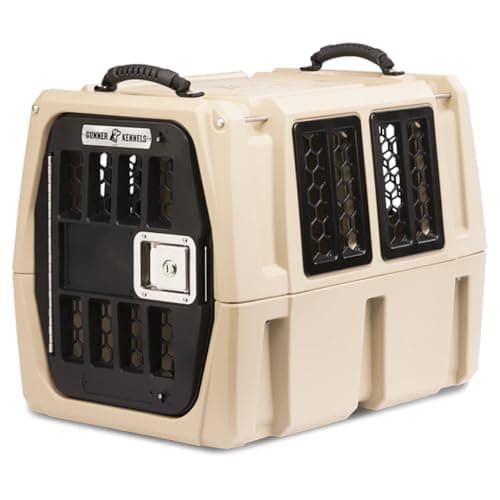 | Gunner G1 KennelA CPS-certified crate — in the sizes that are actually certified | 86/100 | $550.00 · Amazon |
Tap any row to jump to the full review. Prices are pulled live from Amazon as of October 18, 2026; where we have no verified live price we show none rather than a stale number. #ad — how our links work.
The scorecard
Gunner G1 Kennel
Durability score 86/100Best for: A CPS-certified crate — in the sizes that are actually certified
One of the few genuinely CPS-certified crates — but only in Small, Medium and Intermediate. Buy the size that was tested, not the size that fits.
- CPS certification
- 5-star: Small (30 lb test dog), Medium (45 lb), Intermediate (75 lb)
- NOT certified
- Large and XL — CPS has not certified them at any weight
- Protocol
- CPS-002-016.01, tested with strength-rated anchor straps
- Construction
- Double-walled rotomolded shell, welded aluminum frame
- Door
- Paddle latch with key lock; backup safety latches top and bottom
- Warranty
- Lifetime against defects — but 'does not extend to cover destruction done to the product by the pet'
Pros
- Genuinely CPS 5-star certified in Small, Medium and Intermediate — one of only a handful of crates that is
- The certification covers the crate WITH its strength-rated anchor straps, which is how it must actually be installed
- Backup safety latches top and bottom, plus a lockable paddle latch
Cons
- There is NO CPS-certified Gunner G1 Large or XL. If you have a 110 lb dog, a G1 Large is an uncertified crate — this is the single most misunderstood fact in the category
- The lifetime warranty explicitly excludes destruction by your dog
- Gunner sells a separate steel 'Chew Kit' for high-drive dogs, which is a tacit admission the base kennel is chewable
- Very expensive and very heavy
How we assessed it: on published materials, hardware specs and construction — not long-term chew-tested. We say so because it is true, and because a claim we cannot back is worth nothing to you.
#ad Price as of October 18, 2026; Amazon prices change often, so check before you buy. How our links work.
Who should buy it
Buy the G1 if your dog is 70 lb or under and crash protection is the reason you are shopping. In Small, Medium and Intermediate you are buying an independently certified result rather than a marketing claim, and that is a genuinely rare thing to be able to buy. Buy the tie-down straps with it, because the certification assumes them.
Think hard if your dog is over 70 lb. The G1 Large is a well-made crate and it is not certified, so the specific reason to pay Gunner prices does not apply to it. The same is true of the whole large end of this category: certification thins out as dogs get heavier, which we document in the real certified list and in crates for large dogs. If certification is your priority and your dog is heavy, there may be nothing on the market that honestly serves you yet, and we would rather tell you that than rank something as a substitute.
Do not buy it as a house crate. It is heavy, expensive, and designed for a vehicle; a wire or steel crate does the home job better for a fraction of the money, and we compare the two jobs in dog bed versus crate.
The honest alternatives
Lucky Duck Lucky Kennel— the closest direct comparison, and the one that matters for bigger dogs: CPS lists it in Medium, Intermediate and Large. If you want certification above 70 lb, this is where to look first. It sits next to the G1 on our certified crate roundup.
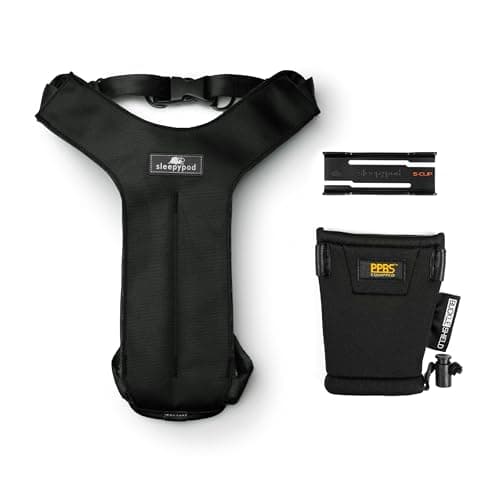
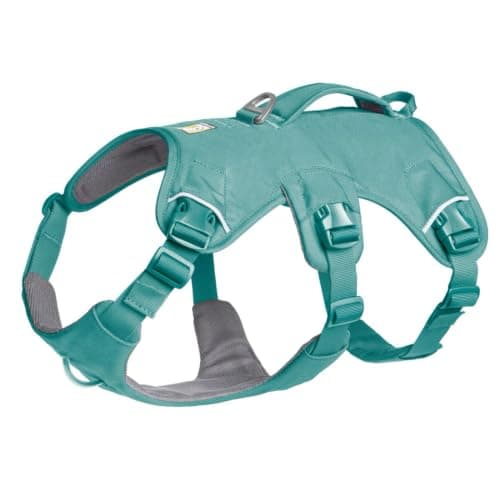
A certified harness instead— if a crate will not fit the vehicle. The trade-off is real and not in the harness’s favor on protection, but a certified harness correctly fitted beats an uncertified crate sliding around a cargo area. The certified list is short and we keep it on crash-tested dog harnesses, and the choice between the two formats is argued in car harness versus crate. Note that a walking harness is not a candidate for this job, however good it is — the point we make in our Ruffwear Web Master review.
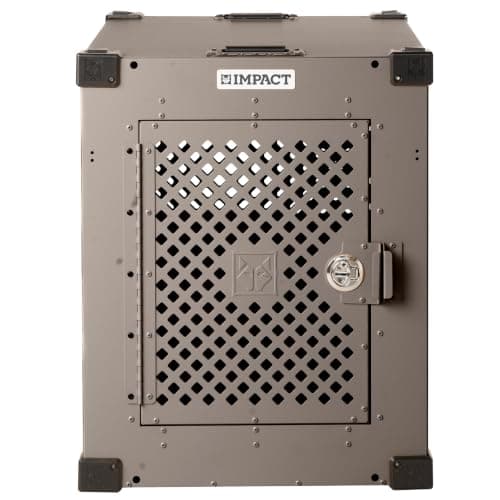
Impact High Anxiety— not crash certified, and the only crate we have found whose standard warranty covers the dog destroying it. A different problem solved well.
What wears out, and what does not
We have not put a G1 through a crash or a multi-year field test and we are not going to imply otherwise. The crash performance is not ours to claim or doubt — it is CPS’s, in three sizes, on the record. On everything else, the construction tells you where the service life sits: a rotomolded shell has no seams to fail and no fasteners to loosen, the welded aluminum frame is the part least likely to be the problem, and the wear points are the moving ones — the paddle latch mechanism, the door hinge pins, and the drain plug gasket. Those are also the cheap parts. The thing most likely to end a G1’s life early is a dog chewing the door surround, which is precisely what the warranty excludes and the Chew Kit exists for.
Frequently asked questions
Is the Gunner G1 crash tested in every size?
No, and this is the most important thing to know about it. The Center for Pet Safety lists the Gunner G1 Kennel in Small, Medium and Intermediate - tested with 30 lb, 45 lb and 75 lb test dogs respectively. The Large is not on the CPS certified list. Gunner itself attaches the 5-star language to the three certified sizes rather than to the line, but the distinction gets lost in retailer copy and in search results. If you are buying the G1 specifically for its certification and your dog needs the Large, the certification does not come with it.
What size Gunner G1 do I need for my dog?
Gunner publishes a weight capacity per size: Small up to 30 lb, Medium up to 45 lb, Intermediate up to 70 lb and Large for 71+ lb. Measure the dog as well, because weight and frame size are not the same thing - the published interior floor dimensions are 21.75 x 14.5 in (Small), 25 x 18 in (Medium), 30 x 18 in (Intermediate) and 33.25 x 21 in (Large). Then measure your cargo area against the exterior figures, which are substantially larger because of the double wall: the Large is 40.25 x 28 x 33.25 in, or 34.5 in tall with the carry handles.
Do you need Gunner's tie-down straps for the crate to be safe?
For the certified configuration, yes. The G1's 5-star CPS result was earned with Gunner's strength-rated tie-down straps, and Gunner states they are the only straps it recommends for 5-star certified safety. They use integrated stainless steel pins that Gunner says were tested not to rip from the kennel on impact. A crate sitting loose in a cargo area is not what was tested - in a collision a 48 lb crate with a 70 lb dog inside becomes a projectile no matter how well it is built. Budget the straps as part of the purchase, not as an accessory.
Does the Gunner warranty cover a dog chewing the crate?
No. Gunner's lifetime manufacturer's warranty states that it 'does not cover destruction caused to the crate by its inhabitant and extends to the original purchaser only'. That is the norm in the heavy-duty crate category rather than a Gunner-specific gap - Lucky Duck, ProSelect, Diggs and MidWest all exclude dog damage too, and the one real exception we have found is Impact's Dog Damage Guarantee on its High Anxiety line. The 'original purchaser only' clause also means a secondhand G1 carries no warranty at all. Gunner sells a separate Chew Kit of lasercut powder-coated steel window and door covers for high-drive dogs, which is worth budgeting for if chewing is your dog's habit.
Is the Gunner G1 worth the money?
For a dog of 70 lb or less, if crash protection is the reason you are shopping - yes, because you are buying an independently verified result rather than a claim, and very few products in this category can offer that. For a dog over 70 lb the main argument evaporates, because the Large is not certified and you would be paying a certified-crate price for an uncertified crate. The build is excellent either way: a double-walled rotomolded shell on a welded aluminum frame, a reversible lockable paddle-latch door, a recessed floor with a removable drain plug and elevated feet.
Is the Gunner G1 actually insulated?
It is double-walled, which does the work insulation does, but the performance figures are Gunner's own. Gunner publishes that the G1 stays consistently cooler than leading aluminum and single-wall rotomolded crates, and that dogs expend 20% less energy staying warm in freezing conditions. We have not found an independent test of either claim, so we report them as manufacturer claims rather than verified performance. The defensible version is structural: two walls with air between them will outperform one wall of the same material, which is why aluminum crates run hot in the sun and this one does less so.
Where can you buy a Gunner G1 kennel?
Gunner sells the full range direct. When we checked availability for this review, Amazon carried the G1 in Small only, with Medium, Intermediate and Large sold direct by Gunner - so the buy link on this page reaches the Small size. Stock on the Small listing was limited at the time of checking. We do not quote a price in the prose because it changes; the price block on this page reads from the live listing, and if it shows nothing then there was no fresh price to show rather than a number we filled in.
Gunner G1 or Lucky Duck Lucky Kennel?
It depends on the size you need. Both hold 5-star CPS certification, but the certified size ranges differ: CPS lists the Gunner G1 in Small, Medium and Intermediate, and the Lucky Duck Lucky Kennel in Medium, Intermediate and Large. For a dog over 70 lb that makes Lucky Duck the one with a certified option and the G1 the one without. Below 70 lb both are certified and the decision comes down to dimensions against your vehicle, door orientation and price. Both are on our crash-tested crate roundup with the certification details stated per size.
Sources
Every spec on this page traces to one of these. Where a manufacturer does not publish a figure, we say “not published” rather than estimating it.
- Center for Pet Safety — certified product list: the Gunner G1 Kennel is listed in Small, Medium and Intermediate only
- Center for Pet Safety — Gunner G1 Intermediate certification record: 5-star rating, test protocol CPS-002-016.01, test number V15572, 75 lb test dog, tested with Gunner strength-rated tie-down straps
- Gunner — G1 Kennel product page: the per-size interior and exterior dimensions, kennel weights, dog weight capacities, double-walled rotomolded construction, welded aluminum frame, reversible paddle-latch door, drain plug, tie-down strap requirement, thermal claims and the warranty wording quoted here