The Best Dog First Aid Kits for Hiking
The kit in your boot is not a hiking kit. On a trail the deciding specs are weight, where the pouch mounts and whether you can work it one-handed - and no commercial kit on the market is finished when you buy it.
The verdict
For hiking, buy the Adventure Medical Kits Trail Dog: it is the only one of the three assembled by a wilderness-medicine company rather than a pet brand, it ships with a printed instruction manual, and it is genuinely light and compact enough to live in a pack rather than a cupboard — which is the only property that matters on a trail. If you would rather the kit rode on the dog or on your belt than in the pack, the Kurgo RSG kitis the one built for that: a MOLLE-compatible detachable pouch that mounts to Kurgo’s RSG harness or Active Utility Belt, with a 49-piece contents list that includes a 5×9 trauma pad and 2 in gauze rolls. The ARCA PET kithas the highest item count here and is the wrong shape for walking — it is a vehicle kit, and it is the one to leave at the trailhead. One thing is true of all three and of every kit we have assessed: none of them is a finished kit.The AVMA’s own checklist leads with your vet’s and the nearest emergency clinic’s phone numbers, and no manufacturer can put those in a box.
Quick picks
The short answer, ranked and scored against our published durability rubric. Where a manufacturer does not publish a spec, we say so rather than estimating it.
| # | Photo | Product | What the maker publishes | Durability | Price |
|---|---|---|---|---|---|
| 1 | 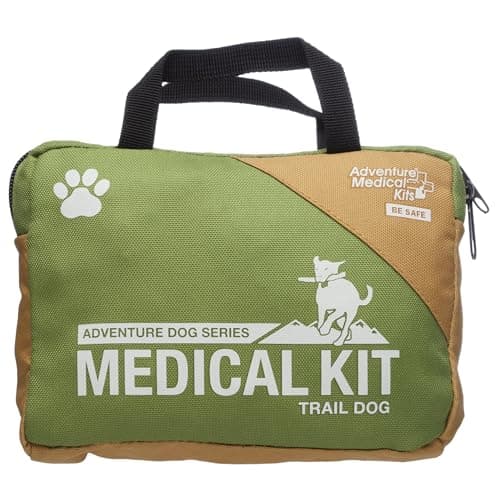 | Adventure Medical Kits Trail Dog Medical KitA kit built by a wilderness-medicine company rather than a pet brand |
| 72/100 | $20.99 · Amazon |
| 2 | 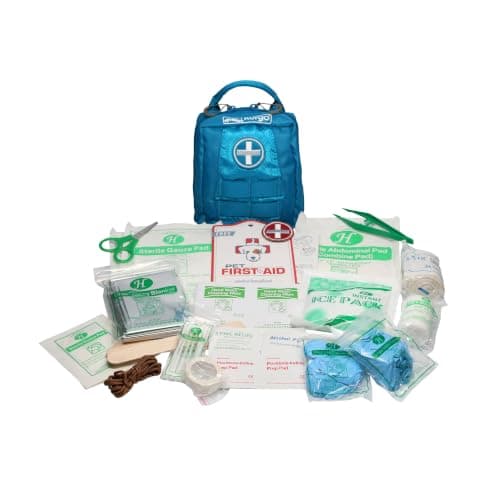 | Kurgo RSG Dog First Aid KitA kit that rides on the harness or the belt, not in the boot |
| 62/100 | $30.95 · Amazon |
| 3 | 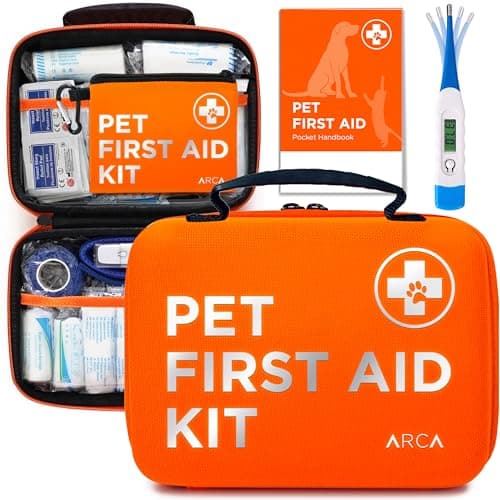 | ARCA PET Pet First Aid KitThe highest item count for the money |
| 51/100 | $35.90 · Amazon |
Tap any row to jump to the full review. Specs are the manufacturer's own published figures; where a maker does not publish one we say "not published" rather than estimating it. Prices are pulled live from Amazon as of October 18, 2026; where we have no verified live price we show none rather than a stale number. #ad — how our links work.
What a hiking kit is judged on, in order
This is the part the category gets backwards. Dog first aid kits are sold on item count, because item count photographs well and is easy to put on a bullet list. On a trail, item count is close to irrelevant. Four things decide whether a kit does any good:
- Whether you have it with you. A 180-piece kit in the car is worth nothing four miles up a ridge. This single criterion eliminates most of the category, and it is why the two compact kits here outrank the big one.
- Where it rides.A kit that mounts to a harness or a belt gets carried every time. A kit that lives loose in the bottom of a pack gets left behind on the day you are travelling light — which, statistically, is every day until the one that matters.
- Whether you can work it one-handed, in poor light, with a frightened dog. That means a flat layout you can see into rather than a stuffed zip bag, and it means printed instructions, because you will not be looking anything up.
- Dressing sizes, not dressing numbers. A dog-sized laceration needs gauze in useful sizes and a way to hold it on. Forty plasters are not a substitute for one trauma pad and a roll of cohesive bandage.
Everything else — the case color, the carabiner, the tick card — is noise. And note the thing that is noton this list: medication. None of the three kits contains any, which is correct. Dosing a dog with a human analgesic is one of the common ways owners make a trail injury into an emergency, and the AVMA’s standing position is that first aid is not a substitute for veterinary care.
The honest limitation: nobody publishes a weight
If carry weight is the first criterion, you would expect the makers to publish it. They do not. Adventure Medical Kits describes the Trail Dog as lightweight and compact; Kurgo publishes a 49-piece contents list and the pouch format but no mass; ARCA PET publishes neither. Across every dog first aid kit we have assessed, not one states a packed weight, which for a product category sold partly on portability is a real gap.
So the proxy we use is format, and format is published:
| Format | Carries like | Right for |
|---|---|---|
| Compact pack (AMK Trail Dog) | Goes in a pack lid or a hip pocket | Day hikes, trail running, the default |
| MOLLE pouch (Kurgo RSG) | Mounts to the harness or your belt | Anyone who already runs a MOLLE harness or belt |
| Zip case (ARCA PET) | Lives in a vehicle or a cupboard | The trailhead kit, not the trail kit |
The sensible arrangement for most people is two kits, not one: the big case stays in the vehicle where weight is free, and a compact kit goes in the pack. That is not an upsell — it is the only way both kits are being used for what they are good at.
What all three leave out, audited against two published lists
We audited the three kits against the AVMA’s own published pet first aid checklist and the American Red Cross pet kit list. Four omissions are common to every commercial kit we have looked at, and on a trail three of them matter more than anything in the box:
- Your vet’s and the nearest emergency clinic’s phone numbers. The AVMA checklist lists these first. No kit contains them. Write them on a card and put the card in the kit — and for a trail, add the number of the nearest clinic to the trailhead, which is usually not your own vet.
- A thermometer.Absent from the compact Trail Dog configuration and from the Kurgo RSG. Heat is the trail emergency most likely to actually happen, and the AVMA’s warm-weather guidance is about recognizing heat stress early.
- A muzzle, or something that works as one. A frightened dog in pain bites the person helping it, including you. A soft muzzle or a length of gauze roll is the item that makes everything else in the kit usable. The ARCA PET kit is the one of the three that includes a muzzle per its own listing.
- Styptic powder. For a torn nail, which is the single most common thing that happens to a dog on rock, and which bleeds impressively.
We set the full item-by-item audit out on the main first aid kit roundup, and the build-your-own route is on what should be in a dog first aid kit. If you are wondering whether your own kit will do, the honest answer is mostly yes with three exceptions, and those are on dog kit against human kit.
The four things a trail changes
A kit used at home is a stopgap for a drive to the vet. A kit used four miles out is doing a different job, and four things change with it:
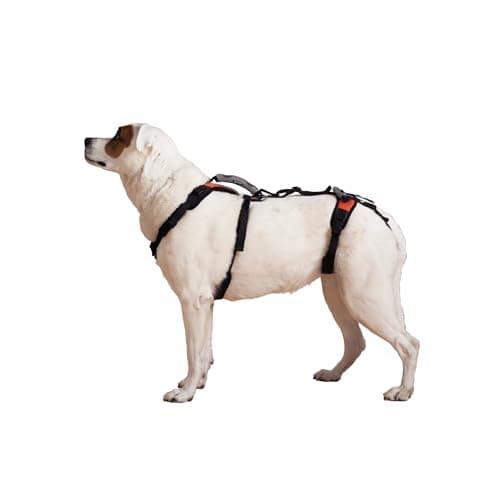
- You may have to carry the dog out.This is the trail reality nobody sells you a kit for. A 60 lb dog that cannot weight-bear is a two-person job without equipment, and the equipment is a sling or a lifting harness rather than a dressing — see the lifting and support harnesses, which includes a rescue sling built for exactly this.
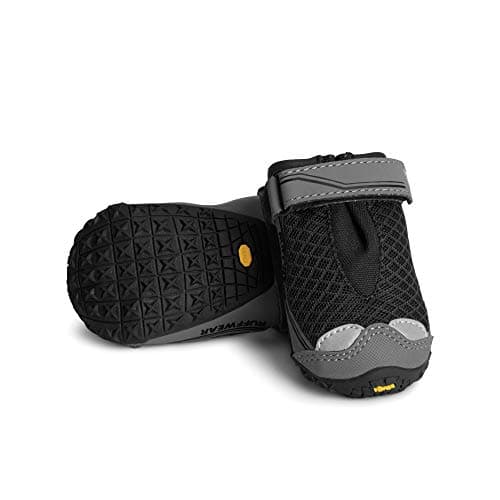
- Paws take most of the damage. Cut pads on scree and shale are the most common trail injury, and a pad laceration needs a dressing that will survive being walked on. Vet wrap plus a bootie is the field repair; the boots that take a real outsole are on the dog boots roundup.
- Heat, not cold, is the emergency.A dog in trouble from heat needs cooling and shade immediately and a vet afterwards, and the AVMA’s published guidance is to recognize the signs early rather than to treat them at the scene. Whether a cooling vest helps is a separate question with a more complicated answer: are dog cooling vests worth it.
- Water is both the treatment and the weight.The thing you will actually use the most is clean water — for flushing a wound, for cooling, for drinking. Carry more than you think and keep the bowl light: the collapsible bowls and bottles.
Hunting and multi-day trips need a bigger kit, not a different one
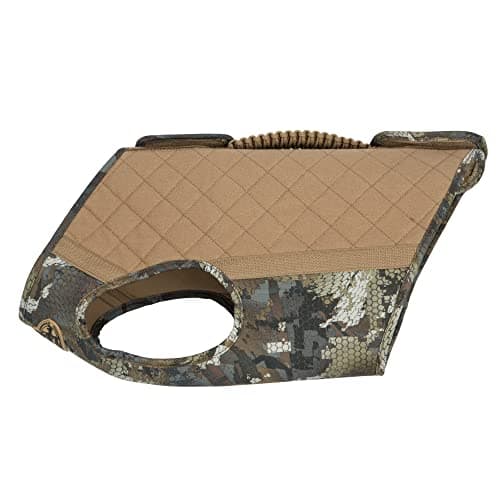
The kit that suits a day hike is the base layer for a hunting or multi-day kit, with three additions rather than a different product: more cohesive bandage and gauze than you think (volume is what runs out), a means of restraint, and a way to carry the dog. A field dog working cover takes a different class of injury from a dog on a maintained trail — eye and ear damage, barbed wire, chest punctures — and a vest is a serious consideration rather than an accessory. Those are on the hunting dog vests.
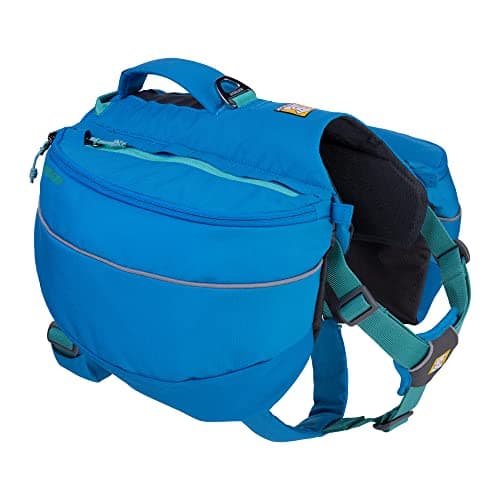
For the full trip list, including the gear that prevents the injuries rather than dressing them, the hiking gear checklist is the page to work from. And if the dog is carrying its own kit, that pack has published load guidance worth reading: the dog backpacks roundup.
What to look for, in order
- Compact enough to always be in the pack. The first and largest filter.
- A mounting option if you run a MOLLE harness or belt. A kit on the dog is a kit you cannot forget.
- Printed instructions in the kit. Not a QR code, not an app.
- Useful dressing sizes:a trauma pad, 2 in gauze rolls, cohesive bandage. Ignore the piece count.
- No medication, and no kit that implies you should dose the dog.
- Room to finish it yourself: phone-number card, thermometer, muzzle, styptic powder.
The picks, ranked
1. Adventure Medical Kits Trail Dog Medical Kit
Durability score 72/100Best for: A kit built by a wilderness-medicine company rather than a pet brand
The best starting point, precisely because it was assembled by people who treat humans in the backcountry — but it is a starting point, not a finished kit.
- Contents
- Dressings, bandages, tools; per the live Amazon listing
- Instructions
- Includes a printed instruction manual
- Format
- Lightweight, compact pack
- Contains medication
- No
- AVMA checklist coverage
- Partial — see the checklist comparison on this page
Pros
- Built by a wilderness-medicine company, and it shows in the dressing selection rather than in the packaging
- Includes a printed manual, which matters because you will be reading it one-handed in poor light
- Genuinely light and compact enough to live in a pack rather than in a cupboard
Cons
- Like every commercial kit, it does not contain the AVMA's first listed item — your vet's phone numbers. You add those
- No thermometer in the compact configuration
- Contents lists vary between retailers and configurations, so check the pack you are actually buying
How we assessed it: on published materials, hardware specs and construction — not long-term chew-tested. We say so because it is true, and because a claim we cannot back is worth nothing to you.
#ad Price as of October 18, 2026; Amazon prices change often, so check before you buy. How our links work.
2. Kurgo RSG Dog First Aid Kit
Durability score 62/100Best for: A kit that rides on the harness or the belt, not in the boot
The kit that goes with you rather than the one that stays in the boot. Buy it for the mounting and the guide, then finish it yourself against the AVMA's list.
- Contents
- 49 pieces — gauze pads (4x4 and 2x2), 2 in gauze rolls, a 5x9 trauma pad, 2 in crepe bandage, tape roll, alcohol and iodine prep pads, sting-relief pads, cleansing wipes, tongue depressors, cotton swabs, tweezers, scissors, gloves, instant cold pack, emergency blanket, parachute cord and a first-aid guide (Kurgo)
- Format
- MOLLE-compatible detachable pouch; mounts to the RSG harness or Active Utility Belt (Kurgo)
- Contains medication
- No
- Warranty
- Kurgo lifetime warranty on manufacturing defects (the pouch, not the contents)
Pros
- It attaches to the dog's harness or your belt, which is the difference between a kit you own and a kit you have with you
- The printed first-aid guide is included, and under stress that is worth more than the item count
- A 5x9 trauma pad and 2 in gauze rolls — the sizes that actually matter on a dog-sized wound
- Kurgo's warranty covers the pouch itself
Cons
- A warranty on a first aid pouch is close to meaningless — it is the contents that expire
- No thermometer, no muzzle, and no styptic powder
- Still needs the AVMA's phone-number card added by you
- Compact by design, so it is a trail kit rather than the one you keep in the car
How we assessed it: on published materials, hardware specs and construction — not long-term chew-tested. We say so because it is true, and because a claim we cannot back is worth nothing to you.
#ad Price as of October 18, 2026; Amazon prices change often, so check before you buy. How our links work.
3. ARCA PET Pet First Aid Kit
Durability score 51/100Best for: The highest item count for the money
Good value by volume. Audit it against the AVMA list rather than against the item count on the box.
- Contents
- Multi-item kit; per the live Amazon listing
- Format
- Zip case
- Contains medication
- No
- Warranty
- Not published in detail
Pros
- The largest item count in this roundup for the price
- Includes tools that the compact trail kits leave out
Cons
- Item count is not the same as usefulness — a kit padded with plasters is still short of gauze when you need gauze
- No published warranty terms
- Bulkier than the trail kits, so it lives in a car rather than in a pack
How we assessed it: on published materials, hardware specs and construction — not long-term chew-tested. We say so because it is true, and because a claim we cannot back is worth nothing to you.
#ad Price as of October 18, 2026; Amazon prices change often, so check before you buy. How our links work.
A note on the one warranty in this category
Kurgo covers the RSG pouch under its lifetime warranty against manufacturing defects. That is a genuine commitment and it is also close to irrelevant: on a first aid kit, the thing that fails is not the bag, it is the contents reaching their expiry date in a cupboard. Nobody warrants those, and nobody should. Put a date in your phone, check the kit every spring, replace the adhesive dressings and the prep pads, and treat the pouch as the only part with a long life.
The bottom line
Buy the Trail Dog as the kit that goes in the pack, add a phone-number card, a thermometer, a soft muzzle and styptic powder, and you have a finished trail kit for less than the price of the big case you were considering. Add the Kurgo pouch instead if you already run a MOLLE harness or belt, because a kit that mounts is a kit that travels. Keep the ARCA PET case in the vehicle where its item count costs you nothing. And remember what a kit is for: it buys time and it keeps a wound clean on the walk out. It does not treat anything, and the AVMA’s position — that first aid is not a substitute for veterinary care — is the one line on this page we would not want paraphrased.
Frequently asked questions
What is the best dog first aid kit for hiking?
The Adventure Medical Kits Trail Dog. It is the only one of the three we assessed that was put together by a wilderness-medicine company rather than a pet brand, it ships with a printed instruction manual, and it is compact enough to actually live in a pack - which is the property that decides whether a kit does any good four miles from the car. Two caveats that apply to it and to every kit on the market: the compact configuration has no thermometer, and no kit contains the item the AVMA's checklist lists first, which is your vet's and the nearest emergency clinic's phone numbers.
How much should a hiking dog first aid kit weigh?
Nobody will tell you, and that is a real gap in the category. Across every dog first aid kit we have assessed, not one manufacturer publishes a packed weight - Adventure Medical Kits says lightweight and compact, Kurgo publishes a 49-piece contents list and a pouch format but no mass, and ARCA PET publishes neither. Because weight is unpublished, we judge on format instead, which is published: a compact pack for the trail, a MOLLE pouch if you want it mounted on the dog or your belt, and a zip case for the vehicle.
What is missing from every dog first aid kit?
Four things, audited against the AVMA's published pet first aid checklist and the American Red Cross pet kit list. Your vet's and the nearest emergency clinic's phone numbers, which the AVMA lists first and no manufacturer can supply. A thermometer, absent from the compact Trail Dog configuration and the Kurgo RSG. A muzzle or something that works as one, because a frightened dog in pain bites the person helping it - the ARCA PET kit is the one of the three that includes one. And styptic powder, for the torn nail that is the most common thing that happens to a dog on rock.
Should the first aid kit ride on the dog or in my pack?
Either, as long as it is one of the two and not the car. The argument for mounting it on the dog or your belt is that a kit that is attached to something is a kit you cannot leave behind on a light day, which is the day it will be needed; the Kurgo RSG is built for that, as a MOLLE-compatible detachable pouch that fits the RSG harness or the Active Utility Belt. The argument for the pack is simply that most people do not run a MOLLE harness. What does not work is the big case in the boot, which is a trailhead kit rather than a trail kit.
Do dog first aid kits contain medication?
None of the three here does, and that is correct rather than a shortcoming. Dosing a dog with a human analgesic is one of the common ways an owner turns a trail injury into an emergency, and the AVMA's standing position is that first aid is not a substitute for veterinary care. If your vet has prescribed something specific for your dog - and some do, for known conditions or for long trips - that goes in the kit on their instruction, in its own labelled container, with the dose written down.
What do I add for hunting or a multi-day trip?
Volume and two capabilities, rather than a different kit. More cohesive bandage and gauze than you expect, because volume is what runs out. A means of restraint, because a working dog that is hurt and still full of adrenaline is harder to handle than a pet. And a way to carry the dog out, which is a sling or a lifting harness rather than anything in a first aid box. A field dog in cover also takes a different class of injury from a dog on a maintained trail - eye and ear damage, wire, chest punctures - which is the argument for a vest rather than a bigger kit.
How often should I check a dog first aid kit?
Once a year, in a season you will remember - spring is the usual choice because it is the start of the hiking year. You are replacing the things with a shelf life: adhesive dressings, alcohol and iodine prep pads, any ointment, and the instant cold pack if it has been through a hot car. The pouch itself will long outlive the contents, which is why Kurgo's lifetime warranty on the RSG bag, while genuine, is close to meaningless in practice. Put the date in your phone rather than trusting yourself to notice.
Sources
Every spec on this page traces to one of these. Where a manufacturer does not publish a figure, we say “not published” rather than estimating it.
- AVMA — first aid tips for pet owners: the standing guidance that first aid is not a substitute for veterinary care, and the checklist items quoted here
- AVMA — pet first aid client brochure (2025): the published kit checklist this page audits the three kits against, including the vet and emergency-clinic phone numbers listed first
- American Red Cross — first aid kit for pets checklist (the second published list used for the audit)
- AVMA — warm weather pet safety: signs of heat stress, hot surfaces, and the cooler-hours guidance
- Kurgo — RSG Dog First Aid Kit product page: the 49-piece contents list, the MOLLE-compatible detachable pouch, and the harness and Active Utility Belt mounting quoted here
- Kurgo — lifetime warranty terms: manufacturing defects only; wear and tear and unintended use excluded
- Adventure Medical Kits — maker site for the Trail Dog kit, including the printed instruction manual it ships with