Rabbitgoo No-Pull Dog Harness Review
Two leash clips, four adjusters and a padded chest panel for less than twenty dollars. It is a real product with a real use - and it is sold with no published material, hardware or load specification of any kind.
The verdict
Buy it for a small-to-medium dog that pulls lightly, on a budget, and it will do that job well: two leash clips, four adjustment points and a padded chest panel at a price nothing else here approaches. Do not buy it for the reason most people search for it. It is not an escape-proof harness— escape resistance is a structural property that comes from a third strap further back along the ribcage, and this is a conventional two-strap design. And do not buy it for a dog that pulls hard or chews: Rabbitgoo publishes no material spec, no hardware spec and no load rating, the buckles are plastic and the ring is stamped rather than welded, and those are exactly the parts that fail first. Our durability score is 38 / 100, which is not a dismissal — it is what a harness scores when the maker documents nothing and builds to a price. For a hard puller, the no-pull roundup has the alternatives, and the harness that tops it publishes a 3,800 lb webbing figure.
What it is, and why it sells
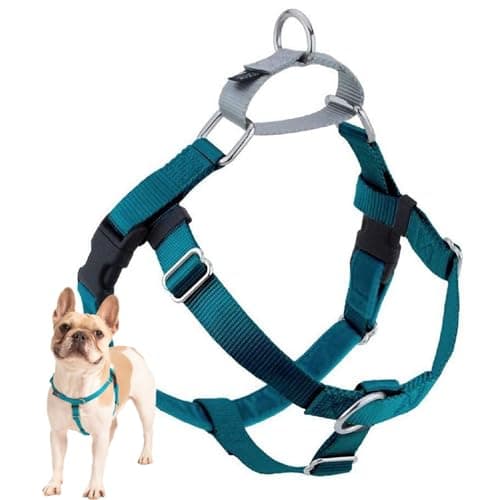
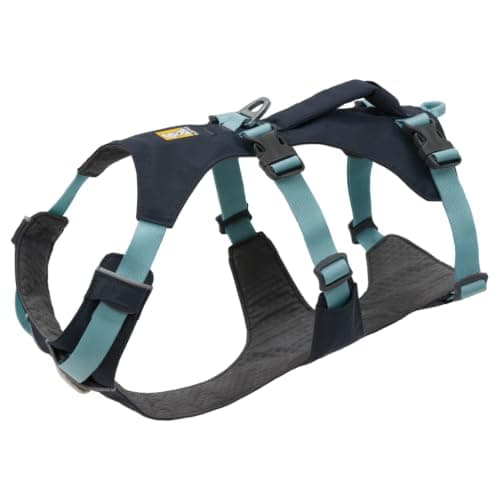
The Rabbitgoo no-pull harness is the default budget harness of the category. It is a conventional two-strap vest — one strap around the chest in front of the legs, one behind them — with a padded panel, a top handle, reflective stitching, two leash attachment points and four adjustment buckles.
Two of those features are the whole reason it sells, and both are genuinely worth having:
- Two leash clips.A back clip for ordinary walking and a front chest clip for redirecting a dog that leans into the lead. The front clip is the mechanism that actually does something about pulling — it turns the dog slightly toward you instead of giving it something to push against — and finding it at this price is unusual.
- Four adjustment points. Two on the neck, two on the chest. On a deep-chested or barrel-chested dog, a harness with only two adjusters often cannot be made to fit at all, so four is a real functional advantage and not a spec-sheet filler.
It is also easy to put on, which matters more than enthusiasts admit. A harness the whole household can fit correctly gets used correctly; a better harness that only one person can buckle properly gets used badly.
What Rabbitgoo publishes: nothing
Here is the entire specification available for this harness, taken from its own listing:
| Specification | Rabbitgoo | For comparison, in the same category |
|---|---|---|
| Webbing material | Not published | 2 Hounds: 3,800 lb test webbing (maker’s own figure) |
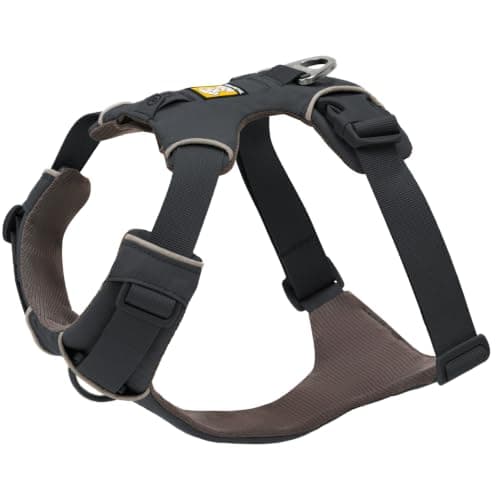
| Shell fabric / denier | Not published | Ruffwear Front Range: 300D recycled polyester ripstop |
| Hardware material | Not published | 2 Hounds: stainless steel |
| Load / break rating | Not published | Published by almost nobody — this gap is category-wide, not brand-specific |
| Warranty terms | Not published in detail | Ruffwear: defects, chewing excluded. 2 Hounds: chew coverage sold separately |
| Country of origin | Not published | 2 Hounds: North Carolina, globally sourced materials |
Every figure in the right-hand column belongs to a differentproduct, because there is no Rabbitgoo figure to put beside it. That is the finding of this review, and it is why we will not write that the webbing is “heavy duty” or the buckles are “strong.” We have no basis for either claim and neither does anyone else quoting the listing back at you.
One of those comparison figures carries a second fact worth having: 2 Hounds publishes not just a webbing rating but a manufacturing location, “North Carolina, globally sourced materials.” Makers willing to answer one awkward question tend to answer the others, which is the pattern behind which dog gear is actually made in the USA.
To be fair about the context: the missing load rating is a category-wide failure rather than a Rabbitgoo one. We say the same thing about far more expensive gear — Ruffwear calls hardware “strength-rated” without publishing the rating, and no collar we assess publishes a load figure at any price. What separates this harness from the premium options is not that it omits one number. It is that it omits all of them, including the material the thing is made of.
The escape-proof question, which is why most people are here
The largest search term in this cluster asks for reviews of the Rabbitgoo as an escape-proof harness. The honest answer is that it is not one, and the reason is structural rather than a matter of quality.
A dog escapes a harness by backing up hard, dropping a shoulder and walking out through the single strap behind its front legs. Adding padding, tightening the straps or buying a better two-strap harness does not remove that escape route — the geometry is the same. What removes it is a third strap further back along the ribcage, so there is no single point to reverse through. That is why the harnesses that genuinely resist escape are three-strap designs, and why we rank them separately on escape-proof harnesses.
Two practical consequences. If your dog has already backed out of a harness once, this is not the replacement — buy a three-strap design, because a dog that has learned the trick will repeat it. And if your dog has not escaped, a well-fitted Rabbitgoo is unlikely to be the thing that teaches it: fit is what matters, and the four adjusters are the feature that lets you get it snug. The measuring method is on how to measure a dog for a harness.
The two parts that will fail, and roughly in what order
With no published spec, the assessment has to come from what is visible in the construction, and two things are:
- Plastic side-release buckles.These are the load path. Plastic buckles are not inherently bad — the whole category uses them, including premium harnesses with named ITW Nexus hardware — but a named buckle from a known maker and an unnamed one are different products at the same shape. Cold makes plastic brittle, UV degrades it, and grit in the mechanism is what makes a buckle release under load. On an unnamed buckle you have no way to know which polymer you have.
- A stamped rather than welded leash ring.A welded ring is a closed loop. A stamped or split ring has a seam, and a seam opens under a sideways load — which is exactly the load a lunging dog applies. It is the cheapest component in any harness and the one we would replace first.
Neither of those makes the harness unsafe for the dog it is built for. Both are reasons we would not put it on a 70 lb dog that lunges at other dogs, where the consequence of a failure is a loose dog in traffic rather than an inconvenience. The general rule for when to retire any harness — and what to look for while inspecting one — is on how often to replace a dog harness.
One clear no: a dog that chews
If your dog chews webbing, this is the wrong purchase at any price, and the reason is the warranty rather than the fabric. Rabbitgoo publishes no detailed warranty terms. Compare the two brands that do: Ruffwear’s Trail Tested Promise covers defects and explicitly excludes chewing, and 2 Hounds Design sells chew coverage as a separate paid add-on precisely because its base warranty excludes chewed webbing and buckles. In other words, the brands that document their warranties have all decided that chewing is not something they will carry for free — and one of them will sell you the cover if you want it.
With no published terms at all, the sensible assumption for a chewer is that you are buying a consumable. For a chewer the cost-per-year maths usually favors paying once for a harness with purchasable chew coverage, which is the argument made in full on the most durable harnesses.
Who it is for, and who it is not
| Your dog | Verdict | Why |
|---|---|---|
| Small or medium, pulls a little | Yes | Front clip plus four adjusters is the right tool at the right price |
| Awkwardly shaped and hard to fit | Yes | Four adjustment points, and cheap enough to risk on a fit experiment |
| Puppy you expect to outgrow it | Yes | A growing dog needs replacing, not warranting |
| Already escaped a harness | No | Two-strap geometry; buy a three-strap design instead |
| Large and pulls hard, or lunges | No | Unnamed plastic buckles and a stamped ring on the load path |
| Chews webbing | No | No published warranty terms to fall back on |
| Needs a car restraint | No | Not crash certified; nothing in this class is |
That last row deserves its own sentence, because it is the one with permanent consequences. No walking harness is a car restraint, this one included. Crash certification is issued per product and per dog weight by the Center for Pet Safety, only three harnesses have ever held it, and the full list is on crash-tested dog harnesses.
A note on the tactical model, which is a different product
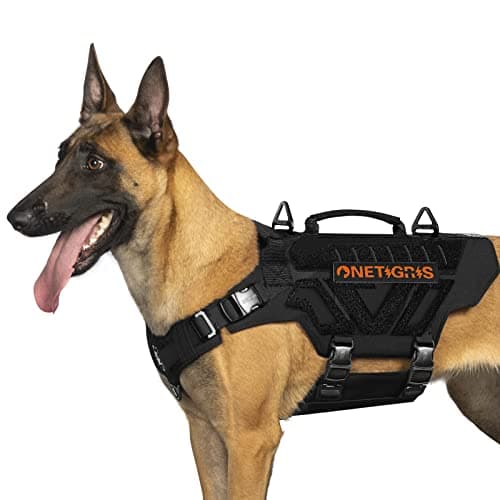
Rabbitgoo also sells a tactical MOLLE vest, and it is searched for separately. Worth knowing that it is better documentedthan this one: it is the best-documented budget MOLLE vest we assess, because it actually publishes a denier figure — which this harness does not. If the tactical vest is what you were looking at, it is ranked on the tactical harnesses roundup and, for a big dog, the large-dog tactical cut. The two products share a brand and nothing else that matters.
Price and availability
The live price and the buy link, scored against our published durability rubric. Where a manufacturer does not publish a spec, we say so rather than estimating it.
| # | Photo | Product | Durability | Price |
|---|---|---|---|---|
| 1 | 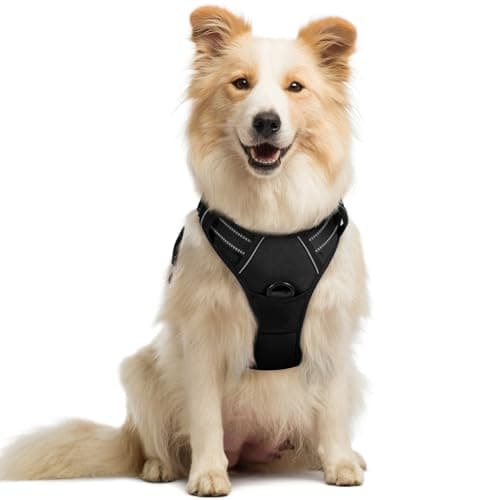 | Rabbitgoo No-Pull Dog HarnessA light-pulling dog on a tight budget | 38/100 | $17.98 · Amazon |
Tap any row to jump to the full review. Prices are pulled live from Amazon as of October 18, 2026; where we have no verified live price we show none rather than a stale number. #ad — how our links work.
The scorecard
Rabbitgoo No-Pull Dog Harness
Durability score 38/100Best for: A light-pulling dog on a tight budget
Fine for a small, light-pulling dog; the wrong tool for anything strong, and we would not put it on a dog that chews.
- Design
- Two leash clips, four adjustment points (Amazon listing)
- Materials
- Not published
- Hardware
- Not published
- Load rating
- Not published
Pros
- Two leash clips and four adjusters at a price nothing else here can match
- Padded and easy to fit
Cons
- No published material or hardware spec of any kind
- Plastic buckles and a stamped ring — the parts that fail first
- Not a harness to trust with a dog that pulls hard or chews
How we assessed it: on published materials, hardware specs and construction — not long-term chew-tested. We say so because it is true, and because a claim we cannot back is worth nothing to you.
#ad Price as of October 18, 2026; Amazon prices change often, so check before you buy. How our links work.
How we assessed it
We have not used this harness. Every statement above comes from the product’s own listing, from the published specifications of the comparison products named, or from the visible construction of the design — and where Rabbitgoo publishes nothing, we have written that rather than estimating. Our scores are an editorial judgment against our published five-metric rubric, justified in the prose above: materials and hardware score low because nothing is documented, not because we have measured a failure. We do not publish star ratings, we have no user-review data, and we have not tested this product to destruction.
The bottom line
The Rabbitgoo is a fair product honestly priced, and the thing to be clear-eyed about is what you are buying: a well-featured two-strap harness with a front clip, sold with no published specification of any kind. For a light-pulling dog, a puppy, or an awkwardly shaped dog that needs four adjusters, that is a sensible purchase and we would not talk anyone out of it. For a strong puller, an escape artist or a chewer it is the wrong tool, and the upgrade is not a more expensive version of the same geometry — it is a different design or a documented warranty. The ranked alternatives are on the no-pull harnesses, the escape-proof harnesses and the small-dog harnesses, and the question of whether a harness helps with pulling at all is answered on do harnesses help with pulling.
Frequently asked questions
Is the Rabbitgoo no-pull harness any good?
For a small-to-medium dog that pulls lightly, yes - two leash clips, four adjustment points and a padded chest panel at a price nothing else in the category approaches, and it is easy enough to fit that the whole household will fit it correctly. For a large dog that pulls hard, an escape artist or a chewer, no. Rabbitgoo publishes no material spec, no hardware spec and no load rating, the side-release buckles are unnamed plastic and the leash ring is stamped rather than welded - and those are the parts on the load path. Our durability score is 38 out of 100, which reflects the absence of documentation rather than a measured failure.
Is the Rabbitgoo harness escape proof?
No, and the reason is structural rather than a question of quality. A dog escapes a harness by backing up, dropping a shoulder and walking out through the single strap behind its front legs. The Rabbitgoo is a conventional two-strap design, so that escape route exists no matter how well it is made or how tight you pull it. What removes the route is a third strap further back along the ribcage, which is why genuinely escape-resistant harnesses are three-strap designs. If your dog has already backed out of a harness once, buy a three-strap harness rather than another two-strap one.
What is the Rabbitgoo harness made of?
Rabbitgoo does not say, and that is the single most important fact in this review. The listing publishes the design - two leash clips, four adjustment points - and nothing about the webbing, the shell fabric, the hardware material, a load rating, a warranty term or a country of origin. For comparison, within the same category 2 Hounds Design publishes a 3,800 lb webbing test figure and stainless steel hardware, and Ruffwear publishes a 300D ripstop shell on the Front Range. We will not describe this harness's materials as heavy duty or strong, because there is no published basis for either word.
Will the Rabbitgoo harness hold a dog that pulls hard?
We would not rely on it for a large dog that pulls hard or lunges. Two visible details decide it: the side-release buckles are unnamed plastic, and plastic buckles are a known load path where the specific polymer matters - cold embrittles them, UV degrades them and grit makes them release; and the leash ring appears stamped rather than welded, and a seamed ring opens under the sideways load a lunging dog applies. For a 70 lb dog that lunges, the consequence of a failure is a loose dog in traffic, which is a different risk category from an inconvenience.
Is the Rabbitgoo harness safe to use in a car?
No. No walking harness is a car restraint, this one included. Crash certification is issued per product and per dog weight by the Center for Pet Safety, and only three dog harnesses have ever passed it - none of them in this class or at this price. A walking harness clipped to a seat belt concentrates the entire deceleration load on straps that were never designed for it. If you need a restraint, buy a certified one, and check the certified weight against your dog rather than the size label on the packaging.
Rabbitgoo no-pull or Rabbitgoo tactical harness?
They are different products that share a brand. The tactical MOLLE vest is the better-documented of the two: it is the best-documented budget MOLLE vest we assess because it actually publishes a denier figure, which the no-pull harness does not. Choose by job rather than by brand - the no-pull harness exists for the front clip that redirects a pulling dog, and the tactical vest exists to carry load and to give you a handle. If you want the vest, it is ranked on our tactical harness roundup, with a separate cut for large dogs.
What should I buy instead if my dog chews its harness?
Something with purchasable chew coverage, because the fabric is not what decides this - the warranty is. Rabbitgoo publishes no detailed warranty terms. The two brands in the category that do publish theirs have both concluded that chewing is not something they will carry for free: Ruffwear's warranty covers defects and explicitly excludes chewing, and 2 Hounds Design sells chew coverage as a separate paid add-on because its base warranty excludes chewed webbing and buckles. For a chewer, paying once for a harness whose maker will sell you the cover is usually cheaper per year than replacing a cheap harness repeatedly.
Sources
Every spec on this page traces to one of these. Where a manufacturer does not publish a figure, we say “not published” rather than estimating it.
- 2 Hounds Design — Freedom No-Pull Harness product page: the 3,800 lb webbing test figure, stainless steel hardware and North Carolina manufacture used here as the published-spec comparison
- 2 Hounds Design — how the harness chewing warranty works: the separate paid chew coverage that the base warranty excludes
- Ruffwear — Front Range Harness product page: the 300D recycled polyester ripstop shell and named hardware used here as the mid-price comparison
- Ruffwear — Trail Tested Promise warranty terms: defects in materials and craftsmanship, excluding chewing, cleaning, disassembly, alterations and normal wear
- PetSafe — Easy Walk harness maker page, the front-clip comparison at a similar price point