The Best Escape-Proof Dog Harnesses
There is exactly one structural feature that stops a dog backing out of a harness, and no amount of adjustment on a two-strap design substitutes for it.
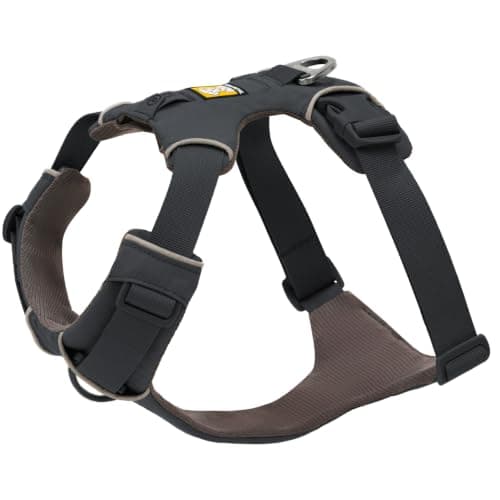
Buy the Ruffwear Flagline if you want the best fit available: six independent adjustment points, the most of anything we have scored, and a front connection specified as 87.5% UHMWPE — a genuinely high-strength fiber that almost nobody names.
Buy the Web Master if the dog is a serious escape artist, because its three-strap layout is the structural answer, and the 2 Hounds Freedom if the dog also pulls hard.
How a dog actually escapes a harness
Understanding this determines everything else on the page. A dog does not wriggle out sideways. It backs up, plants, and pulls its shoulders rearwards through the chest opening. Once the shoulder blades clear the chest strap, the whole harness comes off over the head in one movement.
A two-strap harness — a chest strap and a girth strap behind the elbow — has an opening between those two straps that is, by geometry, wide enough for the shoulders. Tightening it reduces the gap; it does not eliminate it, and a dog that is determined enough and flexible enough will find it.
A third strap, set further back on the ribcage, closes the geometry. Now there is no single opening large enough for the shoulders to reverse through, and no amount of backing up produces an escape. That is the whole trick, and it is why the Web Master and the Flagline are the two harnesses we would put on a dog that has already succeeded once.
Adjustment points, and why six beats four
Escape resistance is a fit problem as much as a design problem, and adjustment count is what lets a harness fit an unusual dog.
A four-point harness fits a dog whose proportions are near the middle of the size chart. A six-point harness — the Flagline — fits a deep-chested lurcher and a barrel-chested bulldog with the same shell, because each strap can be set independently rather than being dragged out of position by its neighbor.
This matters disproportionately for the breeds that escape most: sighthounds, whose necks are narrower than their heads and whose chests are far deeper than their girth suggests, and who are the classic Houdini case for exactly that reason.
The one named high-strength fiber in this hub
Worth flagging because it is genuinely unusual. Ruffwear specifies the Flagline’s front leash connection as 87.5% UHMWPE, 12.5% nylon. UHMWPE — ultra-high-molecular-weight polyethylene — is the fiber family used for climbing slings and cut-resistant gloves, and it is dramatically stronger per unit weight than nylon.
Ruffwear does not publish a load rating for it, which is frustrating and entirely consistent with the rest of the category. But naming the fiber at all is more disclosure than almost anyone else offers, and it is a real reason to prefer the Flagline’s front connection over a generic webbing loop.
For the breed that generates most of this category’s demand, the best dog gear for huskies covers escape, coat and heat together — including the fitting failure a dense double coat creates that no size chart accounts for.
Quick picks
The short answer, ranked and scored against our published durability rubric. Where a manufacturer does not publish a spec, we say so rather than estimating it.
| # | Photo | Product | Durability | Price |
|---|---|---|---|---|
| 1 | 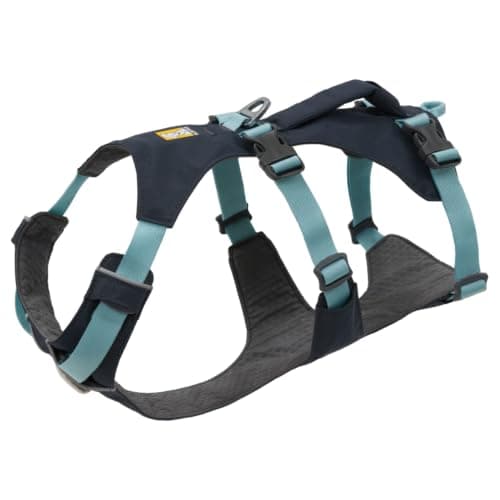 | Ruffwear Flagline HarnessSix adjustment points and a lift panel — the best-fitting escape-resistant harness | 81/100 | $69.99 · Amazon |
| 2 | 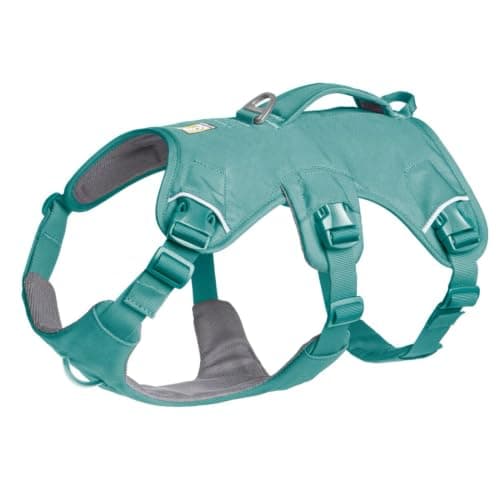 | Ruffwear Web Master HarnessLifting and controlling a dog over real terrain | 77/100 | $79.99 · Amazon |
| 3 | 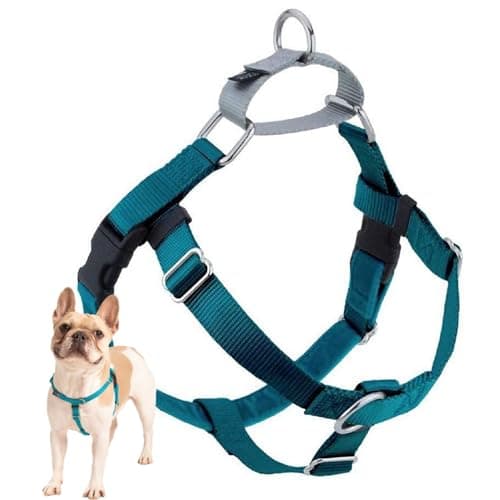 | 2 Hounds Design Freedom No-Pull HarnessA hard puller, if you buy the chew coverage with it | 82/100 | $34.98 · Amazon |
| 4 | 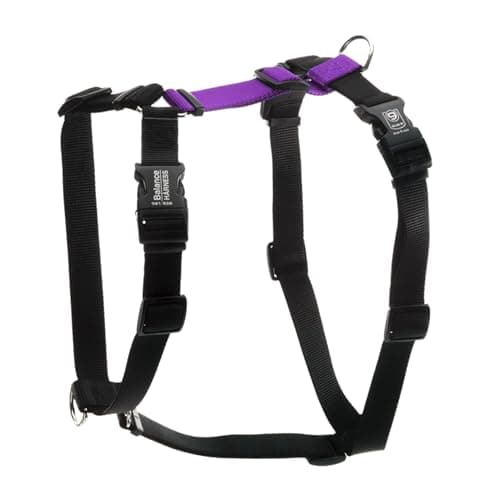 | Blue-9 Balance HarnessFit — if you can live with a brand that publishes almost nothing | 60/100 | $45.95 · Amazon |
| 5 | 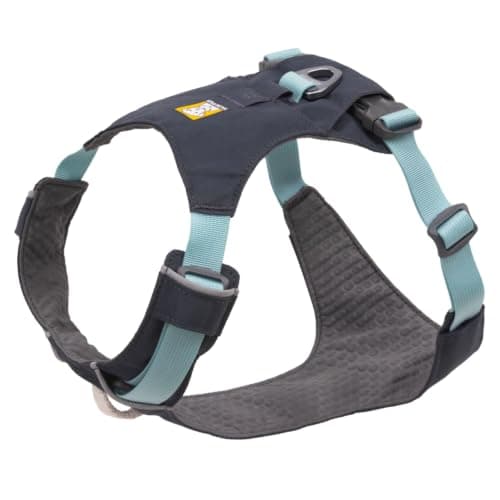 | Ruffwear Hi & Light HarnessA minimal harness for a small dog that objects to bulk | 62/100 | $49.99 · Amazon |
| 6 | 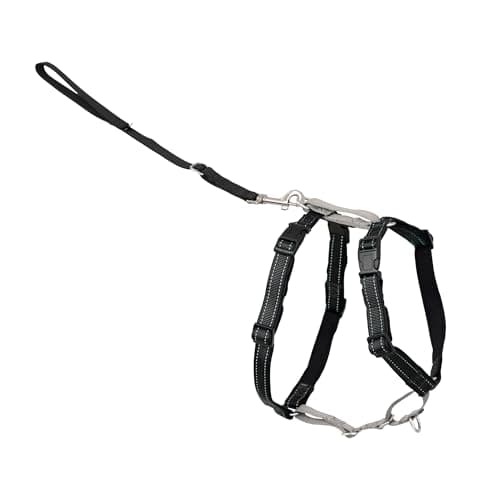 | PetSafe 3 in 1 HarnessA budget harness that also does duty as a car restraint tether point | 42/100 | $29.99 · Amazon |
Tap any row to jump to the full review. Prices are pulled live from Amazon as of October 18, 2026; where we have no verified live price we show none rather than a stale number. #ad — how our links work.
The picks, ranked
1. Ruffwear Flagline Harness
Durability score 81/100Best for: Six adjustment points and a lift panel — the best-fitting escape-resistant harness
The best-fitting harness Ruffwear makes and the one we would put on an escape artist — six adjusters and a named high-strength front connection, on a deliberately light shell.
- Shell
- 150D polyester ripstop with DWR and PU coating
- Adjustment
- Six points
- Handle
- Padded, for balanced lifting
- Lift panel
- Load-dispersing chest/belly panel
- Buckles
- ITW Nexus Mach 1 side-release
- Rear leash ring
- Anodized 6061-T6 aluminum V-ring
- Front leash connection
- 87.5% UHMWPE / 12.5% nylon
- Sizes
- XXS (13–17 in) to L/XL (32–42 in) girth
- Lift load rating
- Not published
Pros
- Six independent adjustment points — the most of any harness we have scored, and adjustment is what actually stops a dog reversing out
- The front leash connection is specified to the composition: 87.5% UHMWPE, 12.5% nylon. UHMWPE is genuinely high-strength fiber and almost nobody names it
- Named ITW Nexus Mach 1 buckles and an anodized 6061-T6 aluminum V-ring
- Load-dispersing chest and belly panel means the lift handle is not just sewn to a strap
Cons
- 150D shell — half the denier of the cheaper Front Range's 300D, so this is the lighter fabric despite being the more capable harness
- No published load rating for the handle or the lift panel, on a harness sold for lifting
- Expensive
- Chewing excluded from the warranty, like everything else in Ruffwear's line
How we assessed it: on published materials, hardware specs and construction — not long-term chew-tested. We say so because it is true, and because a claim we cannot back is worth nothing to you.
#ad Price as of October 18, 2026; Amazon prices change often, so check before you buy. How our links work.
2. Ruffwear Web Master Harness
Durability score 77/100Best for: Lifting and controlling a dog over real terrain
Buy it for the three-point structure and the handle — not for the shell, which is thinner than the harness Ruffwear sells for twenty dollars less.
- Shell
- 150D polyester ripstop, PU coating (40% recycled)
- Padding
- Closed-cell foam
- Webbing
- Polypropylene
- Buckles
- ITW Nexus Airloc
- Rear attachment
- Anodized 6061-T6 aluminum V-ring
- Sizes
- XXS–L/XL, 13–42 in girth
- Handle lift rating
- Not published
Pros
- Five points of adjustment and a three-strap design that is genuinely hard for a dog to reverse out of
- Named hardware — ITW Nexus buckles and an anodized 6061-T6 aluminum V-ring, not a generic stamped D-ring
- Reinforced handle makes it the tool of choice for lifting a dog over an obstacle
Cons
- The shell is 150D — literally half the denier of the cheaper Front Range's 300D. You are paying for structure, not fabric
- Ruffwear publishes no lift rating for the handle, on a harness sold specifically for lifting dogs
- Polypropylene webbing is less abrasion-resistant than the polyester Ruffwear uses on the Front Range
How we assessed it: on published materials, hardware specs and construction — not long-term chew-tested. We say so because it is true, and because a claim we cannot back is worth nothing to you.
#ad Price as of October 18, 2026; Amazon prices change often, so check before you buy. How our links work.
3. 2 Hounds Design Freedom No-Pull Harness
Durability score 82/100Best for: A hard puller, if you buy the chew coverage with it
The strongest published webbing in the category paired with stainless hardware — but budget for the paid chewing warranty if your dog is a chewer.
- Webbing
- 3,800 lb test strength (manufacturer's own claim)
- Lining
- Swiss velvet
- Hardware
- Stainless steel
- Control
- Martingale tightening loop on the back
- Sizes
- 5/8 in XS (14–20 in) to 1 in XXL (36–44 in)
- Made in
- North Carolina, globally sourced materials
Pros
- The 3,800 lb webbing figure is the highest published rating we found on any harness in this category
- Stainless steel hardware — rust-resistant and washable, unlike plated zinc
- The martingale loop tightens the chest strap rather than choking the neck
- Made in the USA, which is rare at this price
Cons
- The 3,800 lb figure is 2 Hounds' own claim, not third-party verified — treat it as a manufacturer's number
- Base warranty explicitly excludes chewed webbing and buckles; chew coverage is a separate paid add-on
- Velvet lining is comfortable but holds dirt and dries slowly
How we assessed it: on published materials, hardware specs and construction — not long-term chew-tested. We say so because it is true, and because a claim we cannot back is worth nothing to you.
#ad Price as of October 18, 2026; Amazon prices change often, so check before you buy. How our links work.
4. Blue-9 Balance Harness
Durability score 60/100Best for: Fit — if you can live with a brand that publishes almost nothing
The best-fitting harness here and the worst-documented — a real problem when durability is the thing you are buying.
- Material
- Washable soft-touch nylon
- Adjustment
- Six points
- Attachment
- Front and back rings
- Buckle material
- Not published
- Ring type (welded or split)
- Not published
- Load rating
- Not published
Pros
- Six points of adjustment — the most in this roundup, and the reason trainers reach for it
- Front and back attachment on every size
- Genuinely washable
Cons
- Blue-9 is the thinnest-specified brand we looked at: no buckle material, no ring type, no load rating anywhere on its product page
- Chewing is not covered by default — Blue-9 sells a $4 one-year chew warranty as an add-on
- You cannot substantiate a single durability claim about this harness from the manufacturer's own site
How we assessed it: on published materials, hardware specs and construction — not long-term chew-tested. We say so because it is true, and because a claim we cannot back is worth nothing to you.
#ad Price as of October 18, 2026; Amazon prices change often, so check before you buy. How our links work.
5. Ruffwear Hi & Light Harness
Durability score 62/100Best for: A minimal harness for a small dog that objects to bulk
The lightweight option, and honest about being one. Do not ask it to do the Flagline's job.
- Construction
- Minimalist webbing-led build
- Reflectivity
- Reflective trim
- Weight
- Lightest harness in Ruffwear's line
- Adjustment
- Published by Ruffwear per size
- Load rating
- Not published
Pros
- Genuinely minimal — the right answer for a small dog where a structured harness is more garment than the dog needs
- Reflective trim as standard
- Packs down to nothing, which makes it a good travel spare
Cons
- Minimal construction means less escape resistance than a three-strap design — this is not the harness for a determined reverser
- No load rating published
- Little padding, so it is not the harness for a dog that pulls hard
How we assessed it: on published materials, hardware specs and construction — not long-term chew-tested. We say so because it is true, and because a claim we cannot back is worth nothing to you.
#ad Price as of October 18, 2026; Amazon prices change often, so check before you buy. How our links work.
6. PetSafe 3 in 1 Harness
Durability score 42/100Best for: A budget harness that also does duty as a car restraint tether point
Reasonable value as a walking harness. Do not read the car-restraint function as a safety claim — it is not certified and we would not use it as one.
- Functions
- Walking harness, no-pull front clip, and car restraint attachment
- Webbing
- Nylon; denier not published
- Crash certification
- None — not CPS certified
- Hardware
- Not published
Pros
- Three functions in one at a low price, including a front clip for pulling
- Widely available in a full size run
Cons
- The car-restraint function is NOT crash certified — the Center for Pet Safety has not certified this harness, and a tether point is not a restraint
- No published webbing or hardware specification
- Two-strap construction offers less escape resistance than a three-strap design
How we assessed it: on published materials, hardware specs and construction — not long-term chew-tested. We say so because it is true, and because a claim we cannot back is worth nothing to you.
#ad Price as of October 18, 2026; Amazon prices change often, so check before you buy. How our links work.
Fitting for escape resistance specifically
The two-finger rule is the general standard. For an escape artist, the checks are more specific:
- The backwards test. Hold the leash and step towards the dog so it walks backwards, then apply steady pressure. If the shoulders start to come through the chest opening at all, the harness is wrong or the fit is wrong. Do this in a hallway, not in a car park.
- The girth strap is the one that counts. It is also the one that loosens first, because it is under load every walk. Check it every time, not monthly.
- Size down, not up. Where you fall between sizes, the smaller shell properly adjusted has less slack to exploit. Our measuring guide covers the girth measurement that decides this.
- Double-clip during the trust-building period. A double-ended leash to both the harness and a well-fitted martingale collar means that a harness failure is not a loose dog. This is standard practice with newly adopted and fearful dogs and it is worth adopting for a month.
Why the dog is escaping matters
Equipment is the containment layer, not the solution. A dog that backs out of a harness is almost always doing it for one of three reasons, and they call for different responses:
- Fear. The most common by far, especially in newly adopted dogs. The harness buys you time; the fix is behavioral and it is slow.
- Pain. A harness that pinches under the elbow produces a dog that tries to get out of it, and the dog is right. Check the coat under the girth strap for broken hair or pink skin before you assume it is behavior.
- It has worked before. Escaping is self-reinforcing. Every successful escape makes the next attempt more determined, which is why the correct response to one escape is to change the equipment immediately rather than to tighten what failed.
A note on the PetSafe 3-in-1
It is in this roundup because it is a widely bought budget harness, and because we want to be explicit about something. Its third function is a car-restraint attachment, and it is not crash certified. The Center for Pet Safety has not certified it, a tether point is not a restraint, and we would not use it as one. The harnesses that have actually passed independent crash testing — all three of them — are in our crash-tested harness roundup.
If the three-strap approach is the one that fits your dog’s escape habit, the Web Master gets a page of its own: the size chart, the hardware, the four-versus-five adjustment-point inconsistency on Ruffwear’s own site, and what its warranty does and does not cover, in our Ruffwear Web Master review.
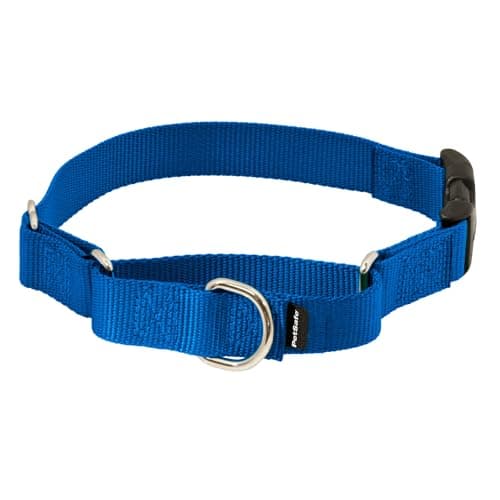
If the dog escaping is a puppy rather than an adult, the cheaper first step is usually a limited-slip collar rather than a harness — with the two rules that come with one. We set them out on is a martingale collar safe for a puppy.
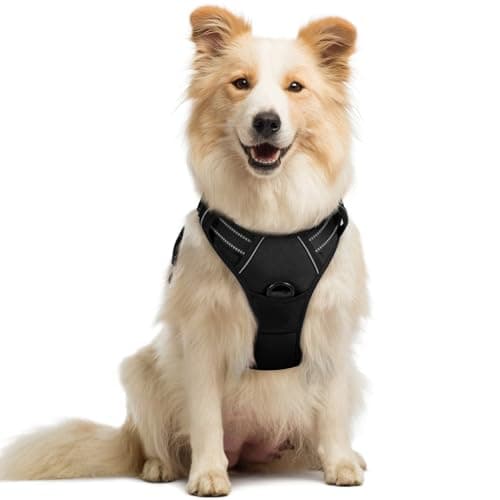
One harness is searched for as an escape-proof option and is not on this page for a reason. The budget two-strap vests — the Rabbitgoo above all — leave the single escape route behind the front legs exactly where it was, no matter how well they are made or how tight you pull them. We set that out in full, with what the harness is genuinely good for, in our Rabbitgoo no-pull harness review.
Frequently asked questions
What is the most escape-proof dog harness?
Structurally, any harness with a third strap set back on the ribcage — the Ruffwear Web Master and Flagline are the two here. A dog escapes by backing up and pulling its shoulders rearwards through the chest opening, and a two-strap harness always has an opening wide enough for that. A third strap closes the geometry so no amount of reversing produces an escape.
Why does my dog keep backing out of its harness?
Because a two-strap harness has an opening between the chest strap and the girth strap that is, by geometry, wide enough for the shoulders — tightening reduces it but does not eliminate it. Beyond the design, check three things: fear (the most common cause, especially in newly adopted dogs), pain from a strap pinching under the elbow, and the fact that escaping is self-reinforcing, so every success makes the next attempt more determined.
How many adjustment points does an escape-proof harness need?
More than four if your dog is not shaped like the middle of a size chart. The Ruffwear Flagline has six independent adjustment points, which is the most of any harness we have scored, and it is what lets one shell fit both a deep-chested sighthound and a barrel-chested bulldog. Sighthounds are the classic escape case precisely because their necks are narrower than their heads and their chests deeper than their girth suggests.
Should I double-clip a leash to a harness and collar?
For an escape artist, yes — at least for the first month. A double-ended leash to both the harness and a well-fitted martingale collar means an equipment failure or a fit error does not become a loose dog. It is standard practice with newly adopted and fearful dogs, and the redundancy costs nothing but a leash you probably already own.
Is the PetSafe 3 in 1 harness safe for the car?
Not as a crash restraint. It has a car-restraint attachment point, but it is not certified by the Center for Pet Safety, and a tether point is not a restraint — it will hold a dog in place at a stop and it is not a substitute for a certified harness in an impact. Only three dog car harnesses have ever passed independent crash certification, and they are covered separately.
What is UHMWPE and why does it matter on a harness?
Ultra-high-molecular-weight polyethylene — the fiber family used in climbing slings and cut-resistant gloves, dramatically stronger per unit weight than nylon. Ruffwear specifies the Flagline's front leash connection as 87.5% UHMWPE and 12.5% nylon. No load rating is published for it, which is frustrating, but simply naming the fiber is more disclosure than almost anyone else in this category offers.
Sources
Every spec on this page traces to one of these. Where a manufacturer does not publish a figure, we say “not published” rather than estimating it.
- Ruffwear — Flagline specs (150D ripstop; six adjustment points; 87.5% UHMWPE front connection)
- Ruffwear — warranty terms (chewing excluded; no duration stated)
- Center for Pet Safety — certified products list
- Ridgway (2026) — “Health implications of dog-worn equipment: a review of known and alleged physical risks”, Frontiers in Veterinary Science 13:1711781
Related
 Rabbitgoo No-Pull Dog Harness Review
 Is a Martingale Collar Safe for a Puppy?
- Ruffwear Web Master Harness Review
 The Most Durable Dog Harnesses
- The Best No-Pull Dog Harnesses
- How to Measure a Dog for a Harness
 The Best Martingale Collars
 The Best Crash-Tested Dog Harnesses
 The Best Dog Harnesses for Small Dogs
- How we test — the durability rubric in full