Stainless vs Ceramic Dog Bowls
Three materials, one question worth asking about each: what happens when it fails. That is where the comparison stops being close.
The short answer. Buy stainless steel. It does not craze, does not chip into shards, cannot be chewed into swallowable pieces, survives a dishwasher indefinitely and has no surface for bacteria to colonize. Ceramic is heavier, prettier and fails badly. Plastic scratches, holds bacteria in the scratches, and is chewable.
Three materials, compared
| Stainless | Ceramic | Plastic | |
|---|---|---|---|
| Lifespan | Decades | Until it is dropped | A year or two |
| How it fails | Dents. Keeps working | Chips, cracks, crazes; shards | Scratches, then splits into pieces |
| Hygiene | Non-porous, dishwasher-safe | Non-porous while the glaze is intact | Scratches harbor bacteria |
| Chewable? | No | No, but breakable | Yes — the main reason to avoid it |
| Stays put | Needs a bonded rubber base | Yes — weight is its real advantage | No |
| Published composition | Rare — YETI states 18/8 | Essentially never | Rare |
Failure mode decides this
Every material here eventually fails. What separates them is what you are left holding.
Stainless dents. A dented steel bowl is a slightly ugly bowl that works exactly as well as it did before. There is no version of a stainless bowl failing that produces a hazard.
Ceramic chips and crazes. Crazing is the fine network of cracks that appears in a glaze over time, and it matters for two reasons: it gives bacteria somewhere to live that a wash will not reach, and it is the beginning of the chip. A ceramic bowl dropped on tile — by you, or by a dog pushing it off a step — produces glazed shards in a room where a dog eats. That is the whole case against it.
Plastic scratches. Every scratch is a channel a dishwasher does not reach. And unlike the other two, plastic is chewable: a bowl a dog can bite pieces out of is a foreign-body risk, which is a different order of problem from an unhygienic bowl.
The ceramic question we cannot answer for you
There is a genuine concern about lead and cadmium in ceramic glazes — it applies to traditional and imported pottery generally, and the FDA maintains limits and guidance for ceramic foodware. Decorative and imported ceramics are the recurring problem area.
Here is our difficulty, stated plainly: we cannot verify glaze composition from a product listing. Very few pet ceramic bowls state that they are lead-free or food-safe certified, and none that we found publish test results. We are not going to tell you that pet ceramic bowls are dangerous, because we have no data saying so. We are also not going to recommend a specific one, because we would be recommending a glaze we cannot check.
That is why this page has three stainless picks and no ceramic pick. If you want ceramic, buy from a maker that states food-safe, lead-free glaze in writing, and replace it the moment it chips or crazes.
Quick picks
The short answer, ranked and scored against our published durability rubric. Where a manufacturer does not publish a spec, we say so rather than estimating it.
| # | Photo | Product | Durability | Price |
|---|---|---|---|---|
| 1 | 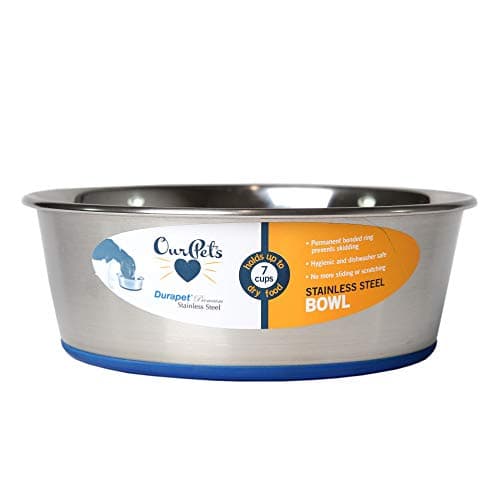 | OurPets Durapet Stainless Steel BowlThe sensible stainless bowl at a tenth of the price | 71/100 | $17.99 · Amazon |
| 2 | 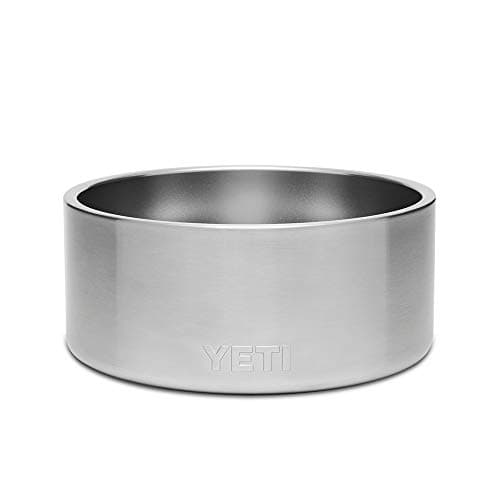 | YETI Boomer 8 Dog BowlA bowl that will outlive the dog, at a price that reflects it | 87/100 | $60.00 · Amazon |
| 3 | 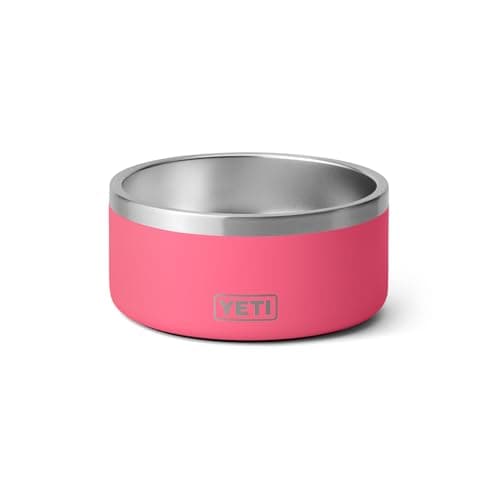 | YETI Boomer 4 Dog BowlThe same bowl for a smaller dog | 85/100 | $40.00 · Amazon |
Tap any row to jump to the full review. Prices are pulled live from Amazon as of October 18, 2026; where we have no verified live price we show none rather than a stale number. #ad — how our links work.
The picks, ranked
1. OurPets Durapet Stainless Steel Bowl
Durability score 71/100Best for: The sensible stainless bowl at a tenth of the price
The value answer, and honestly the one most people should buy. The premium bowls are better specified, not meaningfully better bowls.
- Material
- Stainless steel; alloy not published
- Base
- Bonded rubber non-slip ring
- Care
- Dishwasher safe
- Capacity
- Multiple sizes; per the live listing
Pros
- Does everything a stainless bowl needs to do at a fraction of the price of the premium options
- The bonded rubber ring genuinely stops the bowl traveling across a tiled floor
- Dishwasher safe and effectively indestructible
Cons
- The alloy is not published, only 'stainless steel', which covers a wide range of grades
- The bonded rubber ring can separate over years of dishwasher heat — the one wear point on an otherwise permanent object
How we assessed it: on published materials, hardware specs and construction — not long-term chew-tested. We say so because it is true, and because a claim we cannot back is worth nothing to you.
#ad Price as of October 18, 2026; Amazon prices change often, so check before you buy. How our links work.
2. YETI Boomer 8 Dog Bowl
Durability score 87/100Best for: A bowl that will outlive the dog, at a price that reflects it
Objectively over-specified for a dog bowl, and the only one here whose steel alloy is actually stated. If you buy one bowl for the dog's life, this is defensible.
- Material
- 18/8 stainless steel, per YETI
- Capacity
- 8 cups
- Base
- Non-slip ring
- Care
- Dishwasher safe
- Wall construction
- Double-wall on YETI's insulated line; check the specific model
Pros
- 18/8 stainless is a named alloy specification rather than 'stainless steel', which is the level of disclosure we keep asking for and rarely get
- Non-slip ring is molded into the base rather than glued on, so it does not peel off in the dishwasher
- Genuinely a buy-it-for-life object — there is no wear mechanism on a stainless bowl short of the dog eating it
Cons
- Four to five times the price of an equivalent-capacity stainless bowl
- Heavy, which is a virtue at home and a liability in a pack
- You are paying a brand premium on a product where the material is the whole story
How we assessed it: on published materials, hardware specs and construction — not long-term chew-tested. We say so because it is true, and because a claim we cannot back is worth nothing to you.
#ad Price as of October 18, 2026; Amazon prices change often, so check before you buy. How our links work.
3. YETI Boomer 4 Dog Bowl
Durability score 85/100Best for: The same bowl for a smaller dog
The small-dog version. Same argument, same premium, less capacity.
- Material
- Stainless steel, per YETI
- Capacity
- 32 oz (4 cups)
- Base
- Non-slip ring
- Care
- Dishwasher safe
Pros
- The right capacity for a small or medium dog, where the 8-cup bowl is simply a large object in the kitchen
- Same non-slip molded base and same material story
Cons
- Same premium pricing, on less bowl
- Too small for a large dog's water, which usually wants the larger size
How we assessed it: on published materials, hardware specs and construction — not long-term chew-tested. We say so because it is true, and because a claim we cannot back is worth nothing to you.
#ad Price as of October 18, 2026; Amazon prices change often, so check before you buy. How our links work.
The number almost nobody prints
“Stainless steel” is a family, not a specification. The relevant grades for foodware are the 300-series austenitic steels, usually described as 18/8 or 18/10 — 18% chromium with 8% or 10% nickel. The chromium is what resists corrosion; the nickel adds corrosion resistance and toughness.
In this whole category, YETI is the only maker we found that states its alloy — 18/8 for the Boomer bowls. OurPets does not publish an alloy. Nor does anyone else we checked. That absence is not a reason to avoid the cheaper bowls, and we recommend one; it is a reason to be honest that “stainless” on a listing is a family name.
What you can check without a spec sheet: does a magnet stick weakly or not at all (300-series is non-magnetic or nearly so, though forming can change this), is the base a bonded rubber ring rather than a glued-on pad, and is it dishwasher-rated.
The one thing ceramic genuinely does better
It stays put. A heavy ceramic bowl does not skate across a tile floor when a dog noses it, and it does not get carried into the next room. If your problem is a bowl that travels, that is a real advantage.
The stainless answer to the same problem is a bonded rubber base — a rubber ring vulcanized to the bowl rather than a pad glued on, which comes off in a dishwasher within a month. It solves the skating problem without the shard problem, and it is the single most useful feature on a steel dog bowl.
Biofilm, and the reason this matters at all
A dog bowl left unwashed grows a slimy film — that is bacterial biofilm, and it forms on any wet surface. On smooth, intact stainless it wipes off. In crazed glaze and in plastic scratches, it has somewhere to sit that a sponge does not reach.
Which makes the practical hierarchy simple:
- Wash the food bowl daily and the water bowl every couple of days. Dishwasher is fine.
- Choose a material that survives that treatment indefinitely — which is stainless.
- Replace any bowl with scratches, chips or crazing, whatever it is made of.
The verdict
Stainless with a bonded rubber base, for almost everyone. The value option is the right purchase for most households, and the premium option is genuinely better specified rather than a genuinely better bowl — which is an unusual thing for a gear site to say and it happens to be true here.
Full rankings in the best stainless steel dog bowls, and if your dog eats too fast, that is a bowl-shape problem covered in slow feeder bowls.
Frequently asked questions
Are stainless steel or ceramic dog bowls better?
Stainless, mainly on failure mode. A stainless bowl dents and keeps working; a ceramic bowl chips, crazes and — dropped on tile by you or pushed off a step by the dog — produces glazed shards in the room where your dog eats. Stainless is also non-porous, dishwasher-safe indefinitely and cannot be chewed into swallowable pieces. Ceramic's genuine advantage is weight: it stays put without needing a rubber base.
Are ceramic dog bowls safe?
We cannot verify it either way from a product listing, and we will not pretend otherwise. There is a real, general concern about lead and cadmium in ceramic glazes — the FDA maintains limits and guidance for ceramic foodware, with decorative and imported pottery as the recurring problem area — but very few pet ceramic bowls state that they are lead-free or food-safe certified, and none we found publish test results. If you want ceramic, buy from a maker that states a food-safe, lead-free glaze in writing, and replace it the moment it chips or crazes.
Why are plastic dog bowls bad?
Two reasons, and the second is the serious one. Plastic scratches, and every scratch is a channel that holds bacterial biofilm where a dishwasher cannot reach. And unlike steel or ceramic, plastic is chewable — a bowl a dog can bite pieces out of is a foreign-body risk, which is a different order of problem from an unhygienic bowl.
What does 18/8 stainless steel mean on a dog bowl?
18% chromium and 8% nickel — a 300-series austenitic stainless, the standard family for foodware. Chromium provides corrosion resistance and nickel adds toughness. It is worth knowing because almost nobody prints it: YETI is the only maker in this category we found that states an alloy for its bowls. 'Stainless steel' on any other listing is a family name rather than a specification.
How do I stop a stainless dog bowl sliding across the floor?
Buy one with a bonded rubber base — a rubber ring vulcanized to the bowl, not a pad glued on, which will come off in a dishwasher within a month. It is the single most useful feature on a steel dog bowl and it solves the same problem ceramic solves with weight, without the shard risk when something gets dropped.
How often should you wash a dog bowl?
The food bowl daily and the water bowl every couple of days — a dishwasher is fine and is part of the argument for stainless, which survives that treatment indefinitely. The slimy film that forms on an unwashed bowl is bacterial biofilm; on smooth intact stainless it wipes off, while crazed glaze and plastic scratches give it somewhere to sit that a sponge will not reach. Replace any bowl with scratches, chips or crazing.
Sources
Every spec on this page traces to one of these. Where a manufacturer does not publish a figure, we say “not published” rather than estimating it.