Ruffwear Web Master Harness Review
Ruffwear's most-recommended support harness, assessed on what the company publishes and on the two things it does not. Buy it for the structure. Do not buy it for the fabric.
The verdict
The Web Master earns its reputation on structure, not materials. Three straps, a molded back panel and a padded handle make it genuinely hard for a dog to reverse out of and genuinely useful for steadying one over an obstacle, and the hardware is named rather than generic — ITW Nexus Airloc buckles and an anodized 6061-T6 aluminum V-ring. Two things should give a durability buyer pause. The shell is 150 denier, literally half the 300D on Ruffwear’s cheaper Front Range, and the webbing is polypropylene where the Front Range uses polyester. And on a harness whose own page advertises “balanced lifting,” Ruffwear publishes no lift rating at all. Buy it if you need the handle and the escape resistance. If you mostly need a tough everyday harness, the cheaper model is the heavier-built one.
What the Web Master actually is
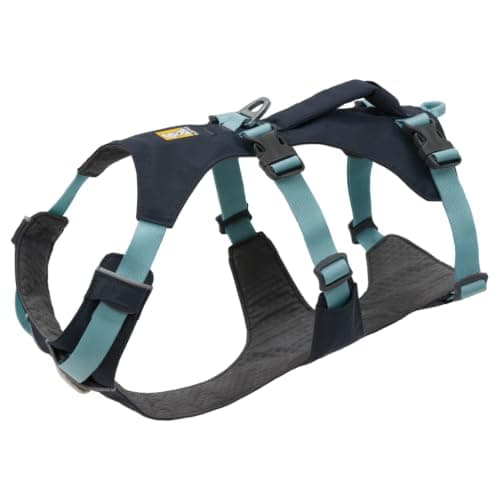
The Web Master is Ruffwear’s support harness: a three-strap design with a padded, reinforced handle on the back, aimed at dogs that need steadying rather than dogs that need steering. It is the harness that gets recommended for scrambling terrain, for helping an older dog into a truck bed, for working and service dogs, and — the reason most people end up here — for dogs that escape ordinary two-strap harnesses.
That last point is worth stating plainly because it is the strongest thing about the product. A conventional harness has one strap behind the front legs. A dog that backs up hard and drops a shoulder can often walk out of one. The Web Master adds a third strap further back along the ribcage, so there is no single point to reverse through. It is a structural solution to an escape problem, not a tightening one, which is why we rank it where we do on escape-proof harnesses.
Ruffwear lists three leash attachment points: the anodized aluminum V-ring on the back, a webbing loop beside it, and a front chest loop in a molded TPU housing. There is also a separate nylon tow loop. The front point makes it a usable no-pull harness, though it is not what the Web Master is built for — if pulling is your actual problem, the front-clip designs on our no-pull roundup are the better buy and most of them cost less.
The materials, and the number that surprises people
Here is Ruffwear’s own published build, read from the product page:
- Shell: 150 denier polyester ripstop with a PU coating, 40% recycled content, bluesign approved
- Padding: closed-cell foam, perforated for breathability
- Lining: polyester knit mesh
- Webbing: polypropylene
- Buckles: ITW Nexus Airloc
- Back attachment: anodized 6061-T6 aluminum V-ring
- Front attachment: nylon webbing in molded TPU
Five of those seven lines are unusually specific, and that deserves credit. Naming ITW Nexus as the buckle maker and 6061-T6 as the aluminum alloy is not normal in this category — most brands write “heavy-duty metal buckle” and leave it there. When a company names a supplier and an alloy, it has decided it can be held to them.
The shell figure is the one that should change a buying decision. 150Dis a light fabric. Ruffwear’s own Front Range — the cheaper everyday harness — publishes a 300D recycled polyester ripstop shell, twice the yarn weight, and polyester webbing rather than polypropylene. Polyester resists abrasion better than polypropylene and holds up better to sustained UV. So on the two specs that describe how a harness survives contact with brush, gravel, salt water and sun, the less expensive Ruffwear is the tougher one.
That is not a reason to skip the Web Master. It is a reason to be clear about what you are paying for, which is the three-strap architecture, the molded panel and the handle. You are paying for geometry. If you want the fabric, you want the other harness — and our durability ranking of the whole harness category scores both against the same rubric so the trade is visible.
The handle: the whole point, and the whole gap
Ruffwear’s product page says the Web Master’s “anatomical design and padded handle provide balanced lifting.” That is the sentence the product is sold on. People buy this harness specifically to pick a dog up.
Ruffwear does not publish what the handle is rated to lift. Not a working load, not a break strength, not a maximum dog weight. We read the product page in full on 6 October 2026 and there is no figure, and there is no dog-weight column in the size chart either — the chart is girth only.
We want to be fair about this, because it is a category-wide silence rather than a Ruffwear failing: we have not found a single mainstream harness maker that publishes a handle lift rating, which is a finding we repeat on tactical harnesses for large dogs. But Ruffwear is the brand advertising lifting as a feature, and it is the brand that names its buckle supplier and its aluminum alloy. It clearly can publish numbers when it wants to. That it has not published this one is the single biggest mark against the product on our rubric, and it is why the harness does not score higher on materials and warranty combined.
Practically: the handle is for assistance, not suspension. Steadying a dog on a ledge, boosting a stiff hip into a vehicle, holding a dog close at a trailhead — all reasonable. Hauling a dog’s full body weight up a vertical face on a harness with no published rating is not, and if that is genuinely your use case you want a purpose-built support rig from our lifting-harness roundup, where the designs put a hand under the dog rather than a strap over it.
Fit, sizing, and the inconsistency on Ruffwear’s own site
The Web Master is sold in five sizes by chest girth: XXS 13–17 in, XS 17–22 in, S 22–27 in, M 27–32 in and L/XL 32–42 in. There are no dog weight ranges, which is the right call — two 60 lb dogs can be four inches apart in girth — and it means you genuinely cannot buy this harness without a tape measure. Our guide to measuring a dog for a harness covers where to put it.
One honest note on the spec sheet. The Web Master product page we read lists four points of adjustment. Other Ruffwear listings and a large number of retailer pages say five. We cannot reconcile the two, so we are not going to assert either number as the truth: treat it as four to five, and if the exact count matters to your fit problem, check the specific listing you are buying from. Flagging it is more useful than quietly picking the flattering figure.
The neck strap buckles rather than going over the head, which matters more than it sounds. A head-shy dog, a dog with a sore neck, or a dog that has learned to dislike harnesses is far easier to fit when nothing has to pass over its face.
The warranty, read properly
Ruffwear’s Trail Tested Promise covers defects in materials and craftsmanship. Two things about it are worth knowing before you buy:
- It states no duration. There is no term of years on the page we read. An open-ended promise reads generously, but a buyer comparing warranties has nothing to compare.
- Chewing is explicitly excluded— along with damage from cleaning, disassembly, alterations and modifications, and separately from normal wear and tear, abuse and fire.
The chewing exclusion is the one that bites. The dogs that most need a three-strap escape-resistant harness overlap heavily with the dogs that chew their gear, and for those dogs the warranty does not apply to the most likely form of failure. That is not unusual — almost every harness and crate warranty in this category carves out the dog, which is a pattern we document across every chew warranty in the bed category — but it should be priced in rather than assumed away. Claims in the US are settled as an e-gift card for the replacement value, and only purchases from Ruffwear or an authorized dealer are eligible.
Care is hand wash, mild detergent, air dry. On closed-cell foam and a PU-coated shell that is a real constraint, not boilerplate: this is a harness you rinse, not one you throw in a machine after a muddy week.
Price and availability
The live price and the buy link, scored against our published durability rubric. Where a manufacturer does not publish a spec, we say so rather than estimating it.
| # | Photo | Product | Durability | Price |
|---|---|---|---|---|
| 1 | 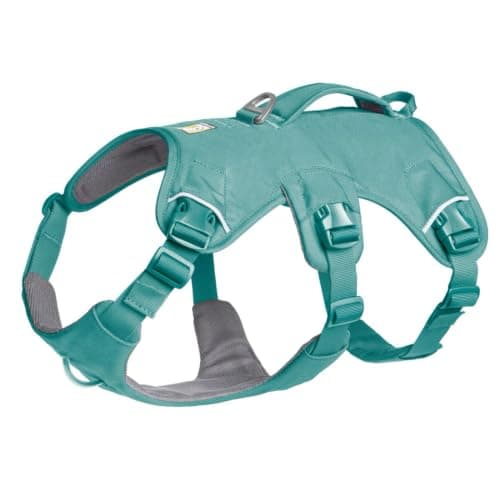 | Ruffwear Web Master HarnessLifting and controlling a dog over real terrain | 77/100 | $79.99 · Amazon |
Tap any row to jump to the full review. Prices are pulled live from Amazon as of October 18, 2026; where we have no verified live price we show none rather than a stale number. #ad — how our links work.
The scorecard
Ruffwear Web Master Harness
Durability score 77/100Best for: Lifting and controlling a dog over real terrain
Buy it for the three-point structure and the handle — not for the shell, which is thinner than the harness Ruffwear sells for twenty dollars less.
- Shell
- 150D polyester ripstop, PU coating (40% recycled)
- Padding
- Closed-cell foam
- Webbing
- Polypropylene
- Buckles
- ITW Nexus Airloc
- Rear attachment
- Anodized 6061-T6 aluminum V-ring
- Sizes
- XXS–L/XL, 13–42 in girth
- Handle lift rating
- Not published
Pros
- Five points of adjustment and a three-strap design that is genuinely hard for a dog to reverse out of
- Named hardware — ITW Nexus buckles and an anodized 6061-T6 aluminum V-ring, not a generic stamped D-ring
- Reinforced handle makes it the tool of choice for lifting a dog over an obstacle
Cons
- The shell is 150D — literally half the denier of the cheaper Front Range's 300D. You are paying for structure, not fabric
- Ruffwear publishes no lift rating for the handle, on a harness sold specifically for lifting dogs
- Polypropylene webbing is less abrasion-resistant than the polyester Ruffwear uses on the Front Range
How we assessed it: on published materials, hardware specs and construction — not long-term chew-tested. We say so because it is true, and because a claim we cannot back is worth nothing to you.
#ad Price as of October 18, 2026; Amazon prices change often, so check before you buy. How our links work.
Who should buy it, and who should not
Buy the Web Master ifyour dog escapes two-strap harnesses, or if you regularly need to physically assist a dog — into a vehicle, over a log, across a stream. Those two jobs are what the three-strap layout and the reinforced handle are for, and nothing cheaper does them as well. The hardware is named and good, the V-ring is aluminum rather than stamped steel, and the buckles come from a supplier that exists and can be looked up.
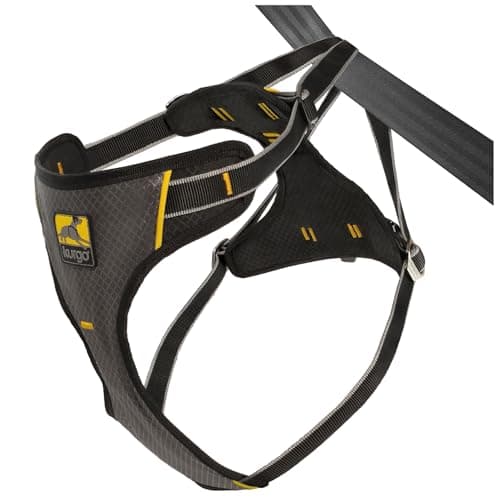
Do not buy itas a general-purpose tough harness. On published fabric and webbing it is the lighter-built of Ruffwear’s two mainstream harnesses, and the cheaper one wins that comparison. Do not buy it as a car restraint either — it is not crash tested, and clipping a walking harness to a seat belt is the mistake we unpick in car harness versus walking harness. And do not buy it expecting the handle to be rated for your dog’s weight, because no such rating exists.
The three honest alternatives
Ruffwear Front Range— the same brand, the same named hardware, twice the shell denier, polyester webbing instead of polypropylene, and less money. The trade is that you lose the third strap and the lifting handle. For most dogs that is the better purchase, and we say so on the durability ranking.
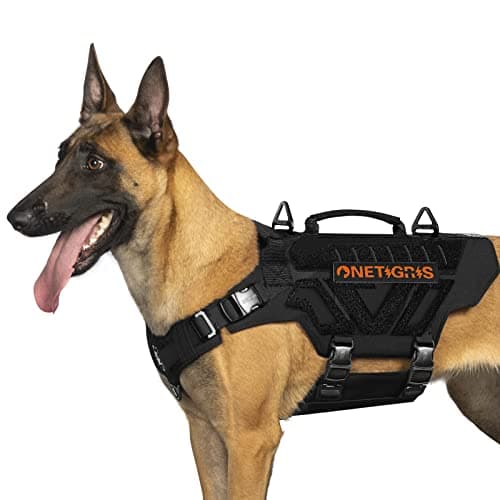
OneTigris X-Armor— if the missing numbers are what bother you. It is the only harness we have found in any category that publishes load ratings on its hardware: 485 lb buckles and a 440 lb front chest D-ring at L and XL. It is heavier, hand-wash only, and a MOLLE vest rather than a support harness, but it answers the question Ruffwear will not. It leads our tactical harness roundup.
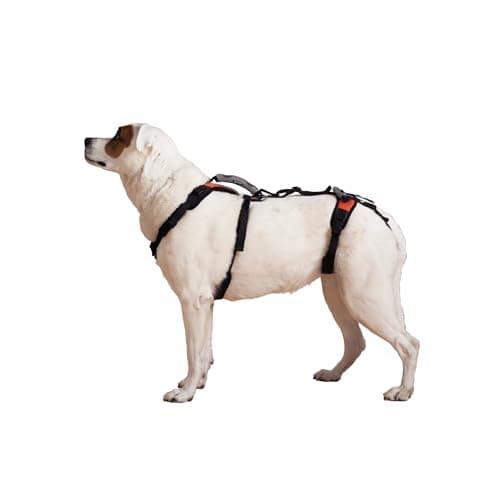
A dedicated support harness— if lifting is the actual job rather than an occasional assist. The rigs on our lifting-harness page distribute weight under the dog’s chest and abdomen instead of concentrating it in one dorsal handle, and for a dog with real mobility loss that difference is the whole point.
How long it should last
We have not run this harness through a multi-year field test and we are not going to pretend otherwise. What we can say is where a harness of this construction gives out: the PU coating on a 150D shell is the first thing to go, the polypropylene webbing stiffens and frays at the adjustment ladders before the stitching fails, and the buckles outlive both. None of that is a defect, so none of it is a warranty claim — it is the service life of the materials. Our guide on when to replace a dog harness lists the specific things to look at, and on this harness the honest answer is to watch the webbing at the ladders and the stitching around the handle anchor, because that is the seam taking a load nobody has published a number for.
Frequently asked questions
Is the Ruffwear Web Master worth it?
Yes, for two specific jobs: a dog that escapes ordinary two-strap harnesses, and a dog you regularly have to physically help over obstacles. The three-strap layout and the reinforced padded handle are what you are paying for, and the hardware is genuinely named rather than generic - ITW Nexus Airloc buckles and an anodized 6061-T6 aluminum V-ring. It is poor value if you want it as a general tough everyday harness, because Ruffwear's cheaper Front Range publishes twice the shell denier (300D against 150D) and uses polyester webbing rather than polypropylene.
How much weight can the Ruffwear Web Master handle hold?
Ruffwear does not publish a figure. There is no lift rating, no working load and no break strength anywhere on the product page, and the size chart lists chest girth only with no dog weight ranges - even though the page advertises that the harness provides 'balanced lifting'. No mainstream harness maker we have found publishes a handle rating, so this is a category-wide silence rather than a Ruffwear-only one. Treat the handle as a tool for assisting and steadying a dog, not for suspending its full weight.
Can a dog escape from a Ruffwear Web Master?
It is much harder than with a standard harness, which is the main reason to buy it. A conventional harness has a single strap behind the front legs, and a dog that backs up hard while dropping a shoulder can reverse out of it. The Web Master adds a third strap further back along the ribcage, so there is no single point to reverse through. It is a structural fix rather than a tightening one. No harness is escape-proof on a determined dog, and fit still decides the outcome - measure chest girth rather than buying by the size letter.
What is the Web Master made of?
Ruffwear publishes a 150 denier polyester ripstop shell with a PU coating (40% recycled content, bluesign approved), closed-cell perforated foam padding, a polyester knit mesh lining, polypropylene webbing, ITW Nexus Airloc buckles, an anodized 6061-T6 aluminum V-ring on the back and a front attachment of nylon webbing in molded TPU. It is made in Vietnam. The 150D shell is the figure worth noticing: it is half the denier of the cheaper Front Range.
Web Master or Front Range - which Ruffwear harness should I buy?
Front Range for most dogs; Web Master for escape artists and for dogs you have to lift. On published specs the Front Range is the tougher build - 300D recycled polyester ripstop against the Web Master's 150D, and polyester webbing rather than polypropylene, which resists abrasion and UV better - and it costs less. The Web Master's advantages are structural rather than material: a third strap that makes it genuinely hard to reverse out of, a molded back panel, and a reinforced padded handle the Front Range does not have. Both use the same ITW Nexus Airloc buckles and the same anodized 6061-T6 aluminum V-ring, and neither publishes a load rating.
Does the Ruffwear warranty cover chewing?
No. The Trail Tested Promise covers defects in materials and craftsmanship, and it explicitly excludes damage caused by chewing, cleaning, disassembly, alterations or modifications, as well as damage from normal wear and tear, abuse or fire. The warranty page we read also states no duration at all. US claims are settled as an e-gift card for the replacement value, and only purchases from Ruffwear or an authorized dealer qualify - a marketplace purchase from an unauthorized seller does not.
Can you use the Web Master as a car harness?
No. It is not crash tested, and no walking harness should be clipped to a seat belt as a restraint - the whole deceleration load of the dog goes into straps that were never designed to take it. The only independent crash certification in this category is the Center for Pet Safety's, it is issued per product and per test-dog weight, and the Web Master does not hold it. Keep walking gear and car restraint as two separate purchases.
How do you wash a Ruffwear Web Master?
Hand wash in mild detergent and air dry - that is Ruffwear's own instruction, and on a PU-coated 150D shell over closed-cell foam it is a real constraint rather than cautious boilerplate. Machine washing and tumble drying attack the coating and the foam. Rinse it after salt water or heavy mud, work the grit out of the adjustment ladders, and let it dry out of direct sun. Note also that the warranty excludes damage caused by cleaning, so the instructions are worth following.
Sources
Every spec on this page traces to one of these. Where a manufacturer does not publish a figure, we say “not published” rather than estimating it.
- Ruffwear — Web Master Harness product page: the 150D polyester ripstop shell, closed-cell foam, polypropylene webbing, ITW Nexus Airloc buckles, anodized 6061-T6 aluminum V-ring, the 13-42 in girth chart and the care instructions quoted here
- Ruffwear — Front Range Harness product page: the 300D recycled polyester ripstop shell and polyester webbing used as the comparison throughout
- Ruffwear — Trail Tested Promise warranty terms: covers defects in materials and craftsmanship, and excludes damage caused by chewing, cleaning, disassembly, alterations or modifications, and damage from normal wear and tear, abuse or fire