Heavy-Duty Dog Leashes for Pit Bulls
Ask owners how their last leash died and almost nobody says it snapped. It was chewed in half at a crosswalk, or the clip let go. Both are fixable, and neither is about webbing strength.
Buy the Mighty Paw chew-proof cable leash. It is 2.34 mm braided stainless steel — five bundles of seven wires — and it is the only construction here that a dog physically cannot bite through. The carabiner is rated to over 850 lb of pull force, which is more than almost any leash brand will state about its clip.
Buy the Leashboss double-handle if your dog does not chew and what you need is the traffic handle. It also carries a five-year Boss Promise that, unusually in this category, does not carve chewing out.
How a pit bull’s leash actually dies
Every “heavy duty leash for pit bulls” article you will find opens on tensile strength. That is the wrong problem. A 50–70 lb dog on a 6 ft lead is not out-pulling nylon webbing; webbing is not where these leashes fail.
Two things kill them:
- Chewing, while stationary. Standing at a crosswalk, tied outside, waiting in a vet lobby. A bored dog with serious jaw strength takes a nylon leash to half thickness in under a minute and you will not notice until it parts under load next week. This is the number-one failure mode and it is the one to buy against.
- The clip. The strap is not the weak point on any leash, ever. A commodity 1/2 in nickel-plated zinc bolt snap publishes a 90 lb working load. A determined 60 lb dog hitting the end of a lead beats that easily. Which clip types fail and how is in dog leash clips explained.
Why steel cable is the honest answer, and what it costs you
A stainless cable inside a coating is not a gimmick; it is the only material in ordinary retail that removes chewing as a failure mode entirely. That is worth stating plainly because the rest of the category sells “chew resistant” nylon, which means nylon.
The trade-offs are real and you should know them before you buy:
- It does not drape. A cable holds its shape. It will not fold into a pocket and it does not gather in the hand the way webbing does.
- It marks things. Car paint, doorframes, your own knuckles.
- Mighty Paw publishes the carabiner rating and not the cable’s. They will tell you the clip holds 850+ lb; they will not tell you what the cable holds. We would rather have both.
- The warranty excludes chewing. On a leash sold specifically to people whose dogs chew. That is worth knowing before it matters.
The traffic handle is the other thing worth paying for
A second handle low on the leash, 8–12 in above the clip, changes what you can do in a crowded street. You take hold of it and the dog is beside your leg with no slack — no reeling, no wrapping the lead round your hand, no gap for a lunge to build speed in.
For a strong, muscular, reactive-if-startled dog in a city, that is the single most useful feature on a leash. Three of the five below have one. Never wrap a leash around your hand or wrist as a substitute: a dog at speed generates enough force to break fingers.
Six feet, and why not four
Six feet with a traffic handle beats a four-foot leash. A short lead keeps a dog permanently at the end of it — always in mild tension, always braced — where six feet with a handle lets the dog walk on a loose leash and gives you an instant way to shorten it to nothing.
Retractables are the wrong tool for this dog and it is worth being blunt about why: a thin cord under load, a plastic brake and a housing you cannot grip if the brake fails. The alternative for real distance work is a long line, which is a different object with a different job — our long line roundup covers it.
Quick picks
The short answer, ranked and scored against our published durability rubric. Where a manufacturer does not publish a spec, we say so rather than estimating it.
| # | Photo | Product | Durability | Price |
|---|---|---|---|---|
| 1 | 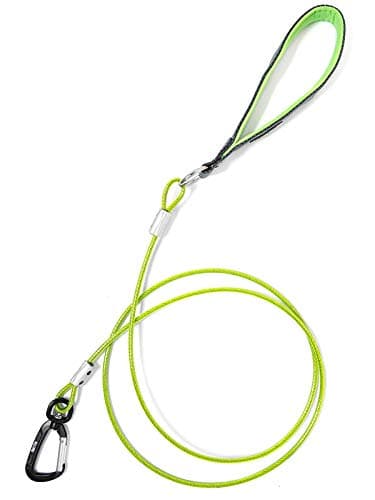 | Mighty Paw Chew-Proof Cable LeashA dog that chews through leashes | 82/100 | $13.99 · Amazon |
| 2 | 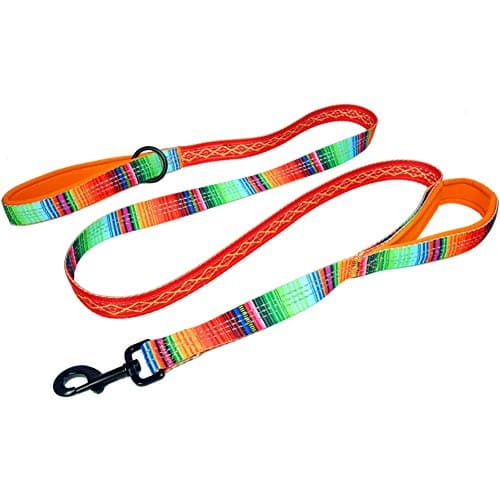 | Leashboss Double Handle LeashClose control on a big dog, with a warranty that covers chewing | 74/100 | $19.98 · Amazon |
| 3 | 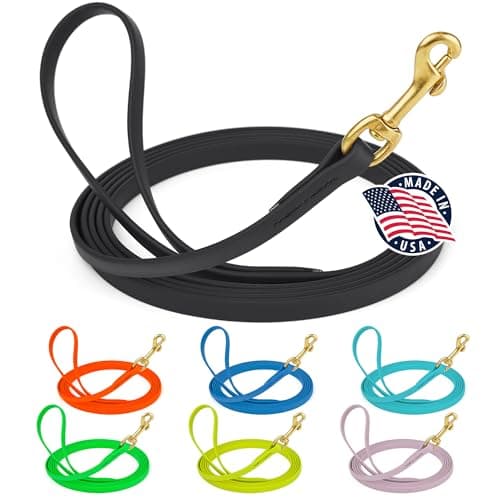 | Viper BioThane K9 Working LeadA shorter waterproof working lead | 72/100 | $28.99 · Amazon |
| 4 | 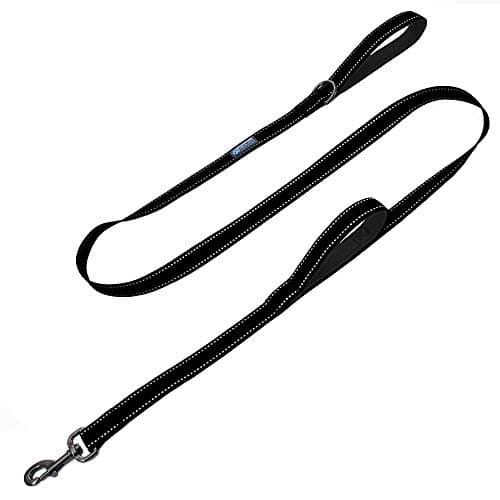 | Max and Neo Double Handle Traffic LeashA traffic handle on a budget | 61/100 | $16.99 · Amazon |
| 5 | OneTigrisNot on Amazon — buy direct | OneTigris Tactical Bungee LeashAbsorbing the shock of a lunging dog | 56/100 | Check price |
Tap any row to jump to the full review. Prices are pulled live from Amazon as of October 18, 2026; where we have no verified live price we show none rather than a stale number. #ad — how our links work.
The picks, ranked
1. Mighty Paw Chew-Proof Cable Leash
Durability score 82/100Best for: A dog that chews through leashes
The right answer for a leash-chewer, and the only one here with a rated clip — just note the irony that the chew-proof leash's warranty excludes chewing.
- Cable
- 2.34 mm stainless steel braided wire — five bundles of seven wires
- Clip
- Aviation aluminum carabiner, holds over 850 lb of pull force
- Length
- 6 ft
- Cable break strength
- Not published
Pros
- A steel cable is the only leash construction a determined chewer cannot simply bite through
- The carabiner is rated — over 850 lb of pull force — which is more than most leash brands will state
- The 2.34 mm braided construction is specified down to the wire count
Cons
- Mighty Paw publishes the carabiner rating but not the cable's own break strength
- A steel cable will mark your hands and your car's paint; it does not drape like webbing
- Mighty Paw's lifetime warranty excludes excessive chewing — on a leash sold to chewers
How we assessed it: on published materials, hardware specs and construction — not long-term chew-tested. We say so because it is true, and because a claim we cannot back is worth nothing to you.
#ad Price as of October 18, 2026; Amazon prices change often, so check before you buy. How our links work.
2. Leashboss Double Handle Leash
Durability score 74/100Best for: Close control on a big dog, with a warranty that covers chewing
Buy it for the traffic handle and the five-year promise; there is not much published spec behind it.
- Webbing
- Nylon (Leashboss does not publish a denier)
- Hardware
- Swivel clasp (metal type not published)
- Construction
- Padded handles, reflective stitching
- Length
- 6 ft, with a second traffic handle
- Warranty
- Boss Promise 5-year
Pros
- The traffic handle gives you instant close control at a curb or a trailhead
- Leashboss appears to be the only leash brand here whose standard warranty contemplates chewed leashes rather than excluding them
- Five-year warranty is a real commitment at this price
Cons
- No published denier, clasp metal or break strength — the warranty is doing all the work
- Their product and warranty pages block automated access, so the terms are harder to verify than they should be
How we assessed it: on published materials, hardware specs and construction — not long-term chew-tested. We say so because it is true, and because a claim we cannot back is worth nothing to you.
#ad Price as of October 18, 2026; Amazon prices change often, so check before you buy. How our links work.
3. Viper BioThane K9 Working Lead
Durability score 72/100Best for: A shorter waterproof working lead
A solid waterproof working lead; the material is proven, the clip is an unknown.
- Material
- Coated webbing: polyester core, TPU or PVC coating
- Core break strength
- Beta 520 PET standard profile: 1,000 lb (material spec)
- Hardware rating
- Not published by Viper
Pros
- Same waterproof, odor-free material in a working-length lead
- Easy to disinfect — BioThane specifies a 10% bleach solution
Cons
- Hardware rating unpublished, and hardware is where these fail
- Slick in the hand when wet
How we assessed it: on published materials, hardware specs and construction — not long-term chew-tested. We say so because it is true, and because a claim we cannot back is worth nothing to you.
#ad Price as of October 18, 2026; Amazon prices change often, so check before you buy. How our links work.
4. Max and Neo Double Handle Traffic Leash
Durability score 61/100Best for: A traffic handle on a budget
A well-thought-out budget leash with nothing published behind it.
- Webbing
- Nylon, reflective (Amazon listing)
- Hardware
- Metal clasp (Amazon listing)
- Load rating
- Not published
Pros
- Traffic handle and reflective webbing, cheap
- A collar is donated to a rescue with each sale
Cons
- No published break strength
- Standard bolt snap, which is the usual failure point
How we assessed it: on published materials, hardware specs and construction — not long-term chew-tested. We say so because it is true, and because a claim we cannot back is worth nothing to you.
#ad Price as of October 18, 2026; Amazon prices change often, so check before you buy. How our links work.
5. OneTigris Tactical Bungee Leash
Durability score 56/100Best for: Absorbing the shock of a lunging dog
Genuinely kinder on your joints; just remember the elastic is the part that ages first.
- Design
- Bungee section with two control handles (Amazon listing)
- Materials
- Not published for this model
- Load rating
- Not published for this model
Pros
- The bungee takes the shock out of a lunge — easier on your shoulder and on the dog's neck
- Two handles
Cons
- A bungee section is an extra failure mode: the elastic degrades before the webbing does
- No published spec
How we assessed it: on published materials, hardware specs and construction — not long-term chew-tested. We say so because it is true, and because a claim we cannot back is worth nothing to you.
#ad We only show a price when we have a live one from Amazon. We don’t have one for this product right now, so we’re not going to guess. How our links work.
Attach it to a harness, not the collar
A muscular dog hitting the end of a lead puts all of that force through whatever it is clipped to. On the safety question, the honest reading of the literature is more nuanced than either camp claims: Ridgway’s 2026 review reports that claims of collar-related injury to thyroid, trachea or major vessels from routine leash pulling are not supported in the literature, while also reporting that every harness type studied alters gait and restricts thoracic excursion.
Our position is practical rather than clinical: a harness gives you a wider load path and a second point of control, and for a dog with this much drive that is worth having. Which harness is a separate question — escape-proof harnesses matter here more than most, because a broad-headed dog can back out of gear that would hold a shepherd.
If the chewing is the actual problem
A cable leash removes the symptom. It does not remove the cause, and a dog that chews its leash on every walk is telling you something about arousal, boredom or how the walk is structured. Two things that reliably help, and neither costs anything:
- Do not hand the leash to the dog. Slack in the mouth-height zone is an invitation. Keep the lead above the dog’s head line when standing.
- Give the mouth a job at stops. A dog that has learned to sit and take a treat at every crosswalk is not a dog with a spare mouth.
For the same energy pointed somewhere useful, chew toys that survive this breed is the companion page to this one.
Inspect the leash, not the dog
Once a week, run the whole length through your hand. You are looking for three things: a thinned or furry patch where the coating has been worked, a clip gate that can be pushed open with a thumb, and stitching lifting at the handle bartack. Any of the three and the leash is finished — with a strong dog there is no partial credit.
The full inspection routine and replacement intervals are in when to replace a harness, leash or collar.
The collar is the other half of this purchase, and it has its own answer. A leash fails at the clip; a collar on this build fails by coming off over the head, which makes a limited-slip collar the right default rather than a wider flat one. The collars are ranked on heavy-duty dog collars for pit bulls.
Frequently asked questions
What is the strongest leash for a pit bull?
For the failure mode that actually happens, a braided stainless steel cable leash — the Mighty Paw is 2.34 mm of steel in five bundles of seven wires, and it is the only construction a dog physically cannot bite through. Note what is published and what is not: Mighty Paw rates the aviation-aluminum carabiner at over 850 lb of pull force but does not publish a break strength for the cable itself.
Why does my pit bull chew through leashes?
Usually while standing still — at a crosswalk, tied outside, waiting in a lobby — rather than under load. A bored dog with serious jaw strength can take a nylon leash to half thickness in under a minute, and the damage does not show until the leash parts a week later. Keep the lead above the dog's head line when stopped so there is no slack at mouth height, and give the mouth a job at every stop. A cable leash removes the symptom; the routine removes the cause.
Do I need a chew-proof leash for a pit bull?
Only if your dog chews leashes — and if it does, yes, because 'chew resistant' nylon is still nylon. The trade-offs are real: a cable does not drape or fold into a pocket, it marks car paint and knuckles, and Mighty Paw's own lifetime warranty excludes excessive chewing, which is worth knowing before it matters on a leash sold to chewers.
What length leash is best for a pit bull?
Six feet with a traffic handle. A four-foot lead keeps the dog permanently at the end of it, braced and in mild tension; six feet lets the dog walk on a loose leash while the second handle lets you shorten it to nothing instantly. Avoid retractables entirely — a thin cord under load with a plastic brake is the wrong hardware for a strong dog. For genuine distance work use a long line, which is a different tool with a different job.
Should a pit bull's leash clip to the collar or a harness?
A harness, for a practical rather than a clinical reason: it spreads the load path and gives you a second point of control on a dog with real drive. On the safety debate, Ridgway's 2026 review reports that claims of collar injury to the thyroid, trachea or major vessels from routine leash pulling are not supported in the literature, while also reporting that all harness types studied alter gait and restrict thoracic excursion. Neither option is free, and escape resistance matters more than usual on a broad-headed dog.
What is a traffic handle and do I need one?
It is a second handle 8–12 in above the clip. You take hold of it and the dog is at your leg with no slack — no reeling in, no wrapping the lead around your hand, and no gap for a lunge to build speed in. For a strong dog in a city it is the single most useful feature on a leash. Never substitute wrapping the lead around your hand or wrist: a dog at speed can generate enough force to break fingers.
Sources
Every spec on this page traces to one of these. Where a manufacturer does not publish a figure, we say “not published” rather than estimating it.
- Mighty Paw — chew-proof cable leash specs (2.34 mm braided steel, five bundles of seven wires; carabiner rated 850+ lb)
- Mighty Paw — warranty policy (excessive chewing and cutting excluded)
- Leashboss — the Boss Promise 5-year guarantee
- Campbell 1/2 in. nickel-plated zinc bolt snap — published 90 lb working load (Ace Hardware catalog)
- BioThane — Beta 520 PET material spec (1,000 lb strap break strength; 200 lb buckle pull strength)
- Ridgway (2026) — “Health implications of dog-worn equipment: a review of known and alleged physical risks”, Frontiers in Veterinary Science 13:1711781