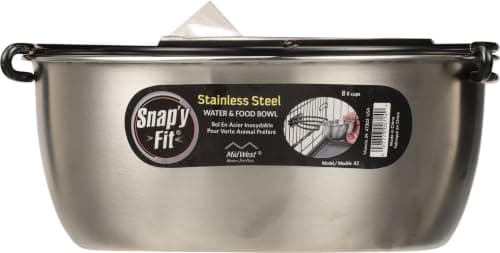
The Best Dog Bowls for Large Dogs
A big dog does not break a stainless bowl. It empties it, slides it across the kitchen, or lifts it off the floor entirely - so the specifications that matter are volume and whatever keeps the thing where you put it.
The verdict
Buy the YETI Boomer 8. At 8 cupsit is the only floor bowl here that is a plausible day’s water for a large dog, and it is the one bowl in our entire registry whose maker states an actual alloy — 18/8 stainless, rather than the unqualified words “stainless steel” everybody else uses — with a non-slip ring moulded into the base rather than glued on, so it cannot peel off in the dishwasher. The budget pick is the OurPets Durapet: it does everything a stainless bowl needs to do at roughly a quarter of the price, and honestly it is the one most people should buy. If your dog is a messy eater, the Neater Feeder Deluxeis the only product here that actually addresses spill — a two-tier design that drains water away from the food. If the bowl lives in a crate or a kennel run, the Lixit 40 oz comes off its bracket one-handed, which is the difference between a bowl that gets scrubbed daily and one that gets rinsed when somebody remembers. One thing to settle before you shop: raising a bowl is not a neutral convenience decision, and we go through the bloat evidence below rather than selling height as a feature. Prices come from our live price layer as of November 23, 2026.
Quick picks
The short answer, ranked and scored against our published durability rubric. Where a manufacturer does not publish a spec, we say so rather than estimating it.
| # | Photo | Product | Capacity and what holds it still | Durability | Price |
|---|---|---|---|---|---|
| 1 | 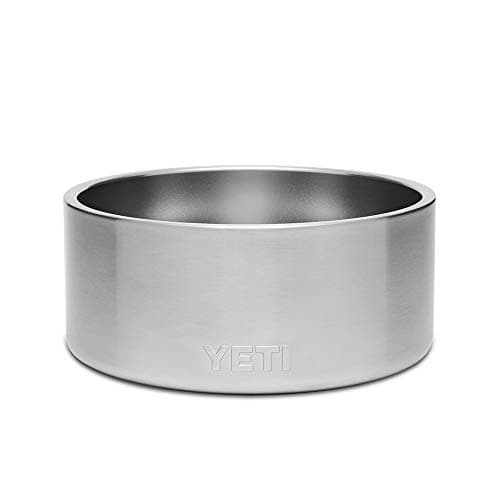 | YETI Boomer 8 Dog BowlA bowl that will outlive the dog, at a price that reflects it |
| 87/100 | $60.00 · Amazon |
| 2 | 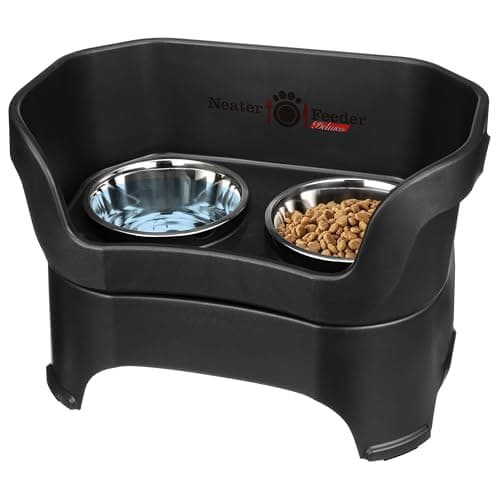 | Neater Pet Brands Neater Feeder DeluxeContaining the mess rather than just raising the bowl |
| 59/100 | $57.79 · Amazon |
| 3 | 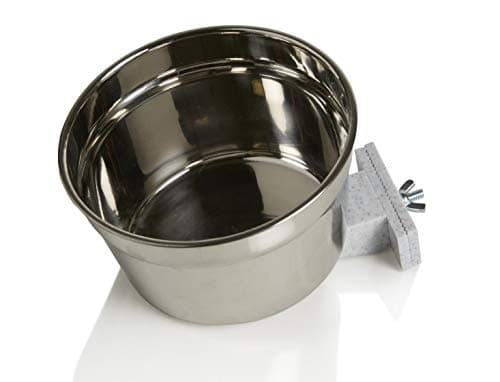 | Lixit Stainless Steel Kennel Bowl (40 oz)The bowl that comes off its bracket one-handed, every day, without tools |
| 54/100 | $17.99 · Amazon |
| 4 | 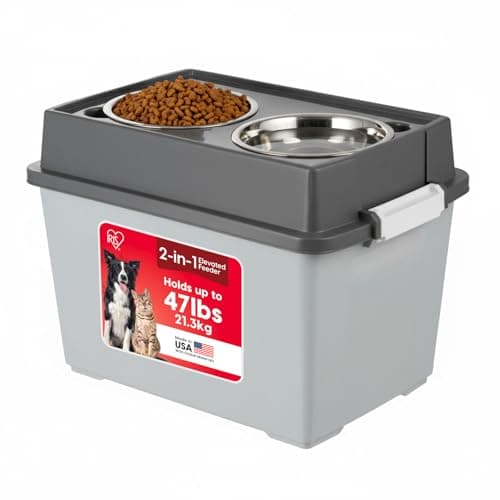 | IRIS USA Elevated Dog Bowls, 15 in with Airtight StorageThe most food capacity of anything here, in a feeder that seals |
| 70/100 | $37.97 · Amazon |
| 5 | 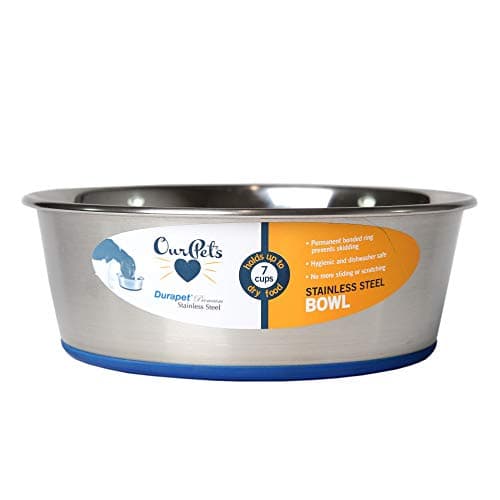 | OurPets Durapet Stainless Steel BowlThe sensible stainless bowl at a tenth of the price |
| 71/100 | $14.40 · Amazon |
Tap any row to jump to the full review. Specs are the manufacturer's own published figures; where a maker does not publish one we say "not published" rather than estimating it. Prices are pulled live from Amazon as of November 23, 2026; where we have no verified live price we show none rather than a stale number. #ad — how our links work.
Capacity first, because this is the one spec that scales with the dog
A stainless bowl has no moving parts, no coating to wear through and nothing to tear. It outlives the dog. So nothing on this page is really a durability ranking — it is a ranking on the two things that do change when the dog is 80 lb instead of 20: how much it holds and what stops it moving.
Capacity is worth doing the arithmetic on. The common veterinary rule of thumb is roughly an ounce of water per pound of body weight per day, which puts an 80 lb dog near 10 cups a day in normal conditions and higher in heat or after work. Against that: a standard 2 qt crate bowl is 8 cups, the YETI Boomer 8 is 8 cups, the Lixit is 5 cups, and the small bowls most households own are 2 to 3. Most large-dog water problems are a bowl that is simply too small to leave down for a working day.
The IRIS unit is the outlier here and worth calling out: two removable 64 ozstainless bowls, which is 8 cups each. It is the largest capacity on this page by a distance, and it is the only product here that is also a sealed food store — up to 47 lb of kibble in an airtight container with a buckle-reinforced lid, which is a full large bag. We rank the storage side of that category separately on elevated feeders with storage.
The three ways a big dog defeats a bowl
They are different problems with different answers, and buying the wrong one is the most common mistake in this category.
- Sliding.The dog pushes into the bowl and it travels across tile. The answer is a non-slip base ring — and the distinction worth knowing is moulded versus bonded. YETI moulds the ring into the base, so there is nothing to come off. OurPets bonds a rubber ring on, which works just as well and is the one wear point on an otherwise permanent object: after years of dishwasher heat, a bonded ring can separate.
- Lifting. The dog gets its lower jaw under the rim and flips the whole bowl. No base treatment resists this, because the failure is vertical. The only answers are mass (which is why a heavy stainless bowl genuinely helps) or a mount.
- Spilling while eating.Water slopped out of the bowl, kibble scattered around it. This is the only one of the three that a base ring and a mount both fail to solve, and it is the specific problem the Neater Feeder’s two-tier design exists for: spilled water drains into a lower reservoir instead of sitting under the food.
If the bowl lives inside a wire crate, the problem changes again and so does the hardware. A bracket that bolts to the crate wire cannot be lifted off; a hanging bracket that lifts out one-handed can also be lifted out by the dog. That trade-off is the whole subject of the crate-mounted bowl roundup, and the Lixit on this page is the convenience end of it.
The alloy nobody publishes, and the one maker that does
We have written this finding on every bowl page on this site because it keeps being true: almost no maker in this category publishes the grade of its stainless steel. OurPets says “stainless steel.” MidWest says “stainless steel.” Lixit publishes no grade for the kennel bowl at all, and we could find no Lixit product page stating a steel grade, a bracket material or a warranty — the specs we list come from the live Amazon listing.
YETI is the exception. It states 18/8, which is a real specification: 18% chromium, 8% nickel, the austenitic grade most people actually picture when they read the word stainless. That is the level of disclosure this site keeps asking for and rarely gets, and on a page about a product whose material is the entire story, it is the reason the Boomer leads.
Being fair about what that buys you: it is four to five times the price of an equivalent-capacity stainless bowl, and you are paying a brand premium as well as a specification. A $17 bonded-ring stainless bowl and a $60 one will both last the dog’s life. The honest case for the YETI is the stated alloy, the moulded ring and the capacity — not longevity, because longevity is not in question for either of them. If price is the constraint, every bowl we rank under $20 is on its own page.
Height is a medical decision, not a convenience feature
Two products here are raised: the Neater Feeder and the 15 inch IRIS unit. We are not going to sell you the elevation as a benefit, because the evidence does not support treating it as one.
The specific concern is gastric dilatation-volvulus— bloat — and the reason it matters here is that the best-known veterinary study of risk factors in large and giant breeds found raising the food bowl to be associated with increased risk, not reduced. That is an association in an observational study rather than proof of causation, and there are legitimate reasons a particular dog needs a raised bowl: megaesophagus, cervical spine problems, severe arthritis making it painful to lower the head. All of those are conversations with your vet, not shopping decisions. We lay out the evidence as it stands on whether you should use a raised dog bowl, and for a large or giant breed we would read that page before buying height.
One practical note if you do buy a stand: it holds a bowl by its outer rim diameter, almost nobody publishes that figure, and capacity cannot be converted into it — a 5-cup bowl can be wide and shallow or narrow and deep. Measure the cutout and buy the stand maker’s own replacement bowls where they exist.
Washing: the one maintenance task the FDA actually specifies
The FDA’s guidance on handling pet food is to wash food bowls after each use and water bowls daily, and to wash and dry any food container between bags so residual fat and crumbs do not stay in it. For a large dog that is four to five bowl washes a day in a multi-dog house, and it quietly decides which of these products you will actually keep clean.
Three of the picks here are dishwasher safe and the stainless bowls on the other two are removable, which is the whole point of specifying removable bowls. The two that need thought are the ones with housings: the Neater Feeder has a plastic housing, and it is the part that cracks if a big dog stands on it; the IRIS bin is plastictoo, and plastic scratches, and scratched plastic is harder to get properly clean. On the IRIS specifically there is an awkward structural detail worth knowing before you buy — the bowls sit in the lid, so every meal opens the food store, and a 47 lb bin is heavy and awkward to lift out and wash, which is exactly the maintenance the FDA asks for.
The picks, ranked
1. YETI Boomer 8 Dog Bowl
Durability score 87/100Best for: A bowl that will outlive the dog, at a price that reflects it
Objectively over-specified for a dog bowl, and the only one here whose steel alloy is actually stated. If you buy one bowl for the dog's life, this is defensible.
- Material
- 18/8 stainless steel, per YETI
- Capacity
- 8 cups
- Base
- Non-slip ring
- Care
- Dishwasher safe
- Wall construction
- Double-wall on YETI's insulated line; check the specific model
Pros
- 18/8 stainless is a named alloy specification rather than 'stainless steel', which is the level of disclosure we keep asking for and rarely get
- Non-slip ring is molded into the base rather than glued on, so it does not peel off in the dishwasher
- Genuinely a buy-it-for-life object — there is no wear mechanism on a stainless bowl short of the dog eating it
Cons
- Four to five times the price of an equivalent-capacity stainless bowl
- Heavy, which is a virtue at home and a liability in a pack
- You are paying a brand premium on a product where the material is the whole story
How we assessed it: on published materials, hardware specs and construction — not long-term chew-tested. We say so because it is true, and because a claim we cannot back is worth nothing to you.
#ad Price as of November 23, 2026; Amazon prices change often, so check before you buy. How our links work.
2. Neater Pet Brands Neater Feeder Deluxe
Durability score 59/100Best for: Containing the mess rather than just raising the bowl
Buy it for the mess containment, which no other feeder here addresses, and treat the elevation as secondary.
- Format
- Two-tier — upper feeding basin drains spilled water to a lower reservoir
- Bowls
- Stainless steel, removable
- Height
- Published per size by Neater
- Material
- Molded plastic housing
- Warranty
- Not published in detail
Pros
- The two-tier design is the only genuinely different idea in this category: spilled water drains away from the food rather than sitting under it
- Stainless steel bowls, removable for washing — which is the only bowl material we would recommend
- Contains kibble scatter, which for a messy eater is worth more than the elevation itself
Cons
- Plastic housing, and it is the part that cracks if a big dog stands on it
- Bulkier on the floor than a simple stand
- No published warranty terms
How we assessed it: on published materials, hardware specs and construction — not long-term chew-tested. We say so because it is true, and because a claim we cannot back is worth nothing to you.
#ad Price as of November 23, 2026; Amazon prices change often, so check before you buy. How our links work.
3. Lixit Stainless Steel Kennel Bowl (40 oz)
Durability score 54/100Best for: The bowl that comes off its bracket one-handed, every day, without tools
The convenience pick. It washes more easily than anything else here and holds less securely, and which of those matters more is a question about your dog rather than about the bowl.
- Capacity
- 40 oz / 5 cups (Amazon listing); also sold in 10 oz and 20 oz
- Mount
- Hanging bracket; the bowl is removable from the bracket (Amazon listing)
- Shape
- Wide mouth over a narrower base — the no-spill profile (Amazon listing)
- Steel grade
- Not published
- Care
- Not published
- Warranty
- Not published
Pros
- It comes off the bracket one-handed, which is the practical difference between a bowl that gets scrubbed daily and one that gets rinsed when somebody remembers
- The wide-mouth, narrow-base profile is the shape that resists being tipped from inside the crate
- 40 oz sits between the clamp cups and the 2 qt bracket bowls, which is the right volume for most medium dogs
Cons
- A hanging bracket holds the bowl by gravity rather than with a fastener. The same action that lets you lift the bowl out one-handed lets the dog lift it out
- We could find no Lixit product page for this bowl stating a steel grade, a bracket material or a warranty, so the specs above are the live Amazon listing's
- The bracket is sold as part of the bowl, so a bent or mislaid bracket means buying the bowl again
How we assessed it: on published materials, hardware specs and construction — not long-term chew-tested. We say so because it is true, and because a claim we cannot back is worth nothing to you.
#ad Price as of November 23, 2026; Amazon prices change often, so check before you buy. How our links work.
4. IRIS USA Elevated Dog Bowls, 15 in with Airtight Storage
Durability score 70/100Best for: The most food capacity of anything here, in a feeder that seals
The most practical single object here if you buy big bags: it is the only feeder on this page whose storage actually seals, and it holds twice what the furniture does.
- Storage capacity
- Up to 47 lb - the only one here that swallows a full large bag
- Seal
- IRIS states an airtight container with buckle-reinforced lid
- Bowls
- Two removable stainless steel, 64 oz each, set into the lid
- Height
- 15 in to the bowl
- Material
- Plastic body with stainless bowls
- Origin
- Made in USA per the listing
- Warranty
- Not published
Pros
- 47 lb of capacity in a sealed container - it is the only product here that takes a full large bag and closes properly on it
- Two 64 oz removable stainless bowls, which are both bigger and better material than the plastic dishes most 2-in-1 feeders ship with
- One object instead of two: the feeder is the container, so nothing else takes up floor space
- Made in USA per the listing, in a category that is almost entirely imported
- 15 in is a genuinely tall feeder for a large dog - read the height section before you take that as a benefit
Cons
- The bowls sit in the lid, so every meal opens the food store - the seal is only as good as your habit of closing it properly
- Plastic body. It will not soak up fat the way raw MDF does, but it scratches, and scratched plastic is harder to get properly clean
- No published warranty at all
- A 47 lb bin is heavy and awkward to lift out and wash, which is exactly the maintenance the FDA asks for between bags
- It looks like a plastic bin, because it is one
How we assessed it: on published materials, hardware specs and construction — not long-term chew-tested. We say so because it is true, and because a claim we cannot back is worth nothing to you.
#ad Price as of November 23, 2026; Amazon prices change often, so check before you buy. How our links work.
5. OurPets Durapet Stainless Steel Bowl
Durability score 71/100Best for: The sensible stainless bowl at a tenth of the price
The value answer, and honestly the one most people should buy. The premium bowls are better specified, not meaningfully better bowls.
- Material
- Stainless steel; alloy not published
- Base
- Bonded rubber non-slip ring
- Care
- Dishwasher safe
- Capacity
- Multiple sizes; per the live listing
Pros
- Does everything a stainless bowl needs to do at a fraction of the price of the premium options
- The bonded rubber ring genuinely stops the bowl traveling across a tiled floor
- Dishwasher safe and effectively indestructible
Cons
- The alloy is not published, only 'stainless steel', which covers a wide range of grades
- The bonded rubber ring can separate over years of dishwasher heat — the one wear point on an otherwise permanent object
How we assessed it: on published materials, hardware specs and construction — not long-term chew-tested. We say so because it is true, and because a claim we cannot back is worth nothing to you.
#ad Price as of November 23, 2026; Amazon prices change often, so check before you buy. How our links work.
Which one, by the problem you actually have
- The dog drinks a lot and pushes the bowl around. YETI Boomer 8, or the Durapet if the price is the issue. Capacity plus a non-slip ring.
- The dog makes a mess of every meal. Neater Feeder Deluxe. Buy it for the mess containment and treat the elevation as secondary rather than as the selling point.
- The bowl lives in a crate or a run.Lixit 40 oz for daily removal, or a bolted bracket if the dog lifts things out — the crate-mounted roundup has both mechanisms ranked.
- You buy 40 lb bags and are short of floor space. The IRIS 15 inch unit, with the height caveat above read first.
- The dog gulps its food. A different product entirely — slow feeders are their own page, and when a slow feeder is the right tool is worth reading first.
The bottom line
For a big dog, buy on volume and on what keeps the bowl still, in that order, and buy stainless. Only one maker in this entire category will tell you what its steel is, which makes the YETI defensible if you want one bowl for the dog’s life — and makes the Durapet the sensible answer for everyone else, because the premium bowls are better specified rather than meaningfully better bowls. Treat height as a medical question, keep the washing routine the FDA describes in mind when you choose a housing, and if you want the material argument in full, stainless versus ceramic is the page.
Frequently asked questions
What size bowl does a large dog need?
Work from water, not food. The common veterinary rule of thumb is roughly an ounce of water per pound of body weight per day, which puts an 80 lb dog near 10 cups a day in normal conditions and higher in heat or after work. A standard 2 qt crate bowl and the YETI Boomer 8 are both 8 cups; the Lixit kennel bowl is 5; the bowls most households already own are 2 to 3. Most large-dog water complaints are simply a bowl too small to leave down for a working day.
What is the best dog bowl for a large dog?
The YETI Boomer 8. At 8 cups it is a plausible day's water for a big dog, and it is the only bowl in our registry whose maker publishes an actual alloy - 18/8 stainless rather than the unqualified words 'stainless steel' - with a non-slip ring moulded into the base rather than bonded on, so there is nothing to peel off in the dishwasher. The honest counter-argument is price: it is four to five times an equivalent-capacity stainless bowl, and a $17 bonded-ring bowl will last the dog's life too. The OurPets Durapet is the value answer and the one most people should buy.
How do I stop my dog pushing its bowl around the kitchen?
Separate the three failure modes, because they have different answers. Sliding is solved by a non-slip base ring - moulded in is better than bonded on, since a bonded ring can separate after years of dishwasher heat. Lifting, where the dog gets its jaw under the rim and flips the bowl, is not solved by any base treatment because the failure is vertical: the answers are mass or a mount. Spilling while eating is solved by neither, which is what the Neater Feeder's two-tier design exists for.
Should a large dog have a raised bowl?
Treat it as a medical decision rather than a convenience one. The best-known veterinary study of bloat risk factors in large and giant breeds found raising the food bowl to be associated with increased risk, not reduced - an association in an observational study rather than proof of causation, but not a reason to buy height casually. There are genuine indications for a raised bowl, including megaesophagus, cervical spine problems and severe arthritis, and all of them are conversations with your vet. We set out the evidence on our raised-bowl page.
What grade of stainless steel are dog bowls made from?
Almost no maker in this category publishes it. OurPets says 'stainless steel'. MidWest says 'stainless steel'. We could find no Lixit product page stating a grade, a bracket material or a warranty for its kennel bowl at all. YETI is the exception and states 18/8 - 18% chromium, 8% nickel, the austenitic grade most people picture when they read the word. On a product whose material is the entire story, that one published figure is the reason the YETI leads this page.
How often should a dog bowl be washed?
The FDA's guidance on handling pet food is to wash food bowls after each use and water bowls daily, and to wash and dry any food storage container between bags so residual fat and crumbs do not remain in it. For a large dog that is four to five washes a day, which is a practical argument for dishwasher-safe stainless and for feeders with removable bowls. It is also the argument against housings you cannot easily lift: a 47 lb food bin is heavy and awkward to take out and wash, which is exactly the maintenance being asked for.
Sources
Every spec on this page traces to one of these. Where a manufacturer does not publish a figure, we say “not published” rather than estimating it.
- YETI - Boomer dog bowl line: 18/8 stainless steel stated as an alloy rather than as 'stainless steel', the 8-cup and 4-cup capacities, the moulded-in non-slip ring and dishwasher-safe care
- OurPets - Durapet stainless bowl: the bonded rubber non-slip base ring, dishwasher-safe care and the several capacities. The alloy is described only as 'stainless steel', which spans a wide range of grades
- Neater Pet Brands - the Neater Feeder Deluxe: the two-tier design that drains spilled water away from the food, the removable stainless bowls and the published heights per size. No warranty terms are published in detail
- FDA - proper storage and handling of pet food and treats: wash food bowls after each use and water bowls daily, and wash and dry a storage container between bags to remove residual fat and crumbs. The source for every cleaning instruction on this page