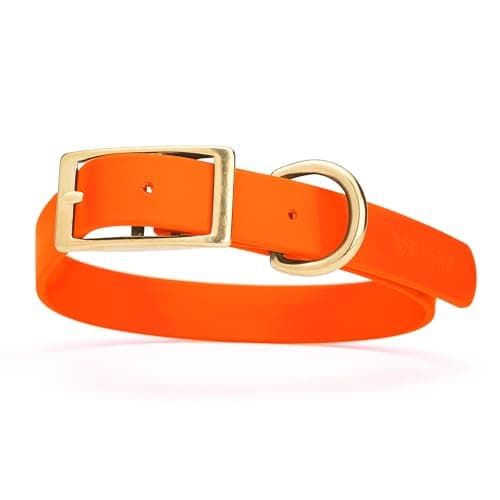
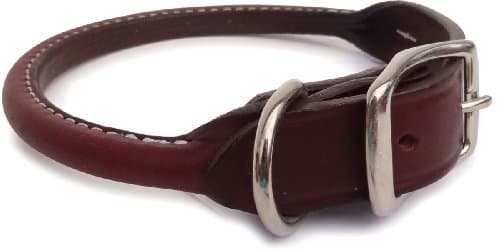
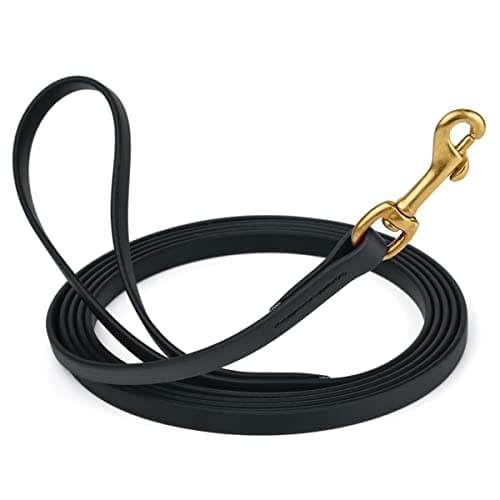
Biothane vs Leather
One is engineered to ignore water. The other is a natural material that hates it. Which you should buy comes down to a single question about your dog.
The one-line answer: if your dog gets wet — swimming, hunting, snow, mud — buy biothane. If your dog stays mostly dry and you want gear that looks better in five years than it did new, buy full-grain leather. That is genuinely the whole decision.
Side by side
| Biothane | Full-grain leather | |
|---|---|---|
| What it is | Polyester webbing with a TPU or PVC coating | The uncorrected upper layer of a tanned hide |
| Published strength | 1,000 lb break strength (Beta 520 PET, 1 in standard) | Rarely published by any collar maker |
| Water | Completely unaffected. Does not absorb | Repeated soaking dries it out and cracks it |
| Odor | Stinkproof — the maker’s own word | Absorbs odor over time |
| Cleaning | Wipe with soap and water; 10% bleach to disinfect | Needs conditioning; cannot be bleached |
| Cold weather | Stays flexible | Stiffens; cracks if frozen wet |
| Grip in the hand | Slick when wet — the real weakness | Excellent, and improves with use |
| Aging | Looks the same for years, then the coating splits | Develops a patina; gets better |
On strength, be careful what you are comparing
Biothane looks like the runaway winner on the strength row, and in a sense it is: 1,000 lb is a real, published, third-party-verifiable number from the material’s manufacturer. Almost no leather collar maker publishes a break strength at all.
But that number is the strap. On the same BioThane spec sheet, the buckle pull strength is 200 lb. A leather collar with a solid cast brass buckle may well be stronger, in the place it actually matters, than a biothane collar with a cheap buckle — and neither maker is going to tell you.
So do not choose on the strength number. Choose on the conditions, and then buy whichever one has the better hardware.
The verdict
Buy biothane if: your dog swims, hunts, works in snow or mud, or the collar will spend its life wet. Buy it for a long line without hesitation — a wet nylon long line is genuinely miserable. Wear gloves, or buy the textured “gummy” finish, because the smooth stuff is slick. Our best biothane leashes and long lines roundup has the specific picks.
Buy leather if: your dog is mostly dry, you want one collar for its life, and you like the way a worn leather collar looks. Buy from a maker who names the grade — “full grain” or “bridle leather,” not “genuine leather,” which is a label meaning almost nothing. The leather options sit alongside the rest in our most durable dog collars roundup.
Do not buy leather for a dog that swims. You will kill it in a season, and it is the more expensive of the two to replace.
Both beat nylon. That is the one thing this comparison agrees on completely.
Frequently asked questions
Is biothane better than leather for dogs?
For wet conditions, yes — decisively. Biothane does not absorb water, does not hold odor, wipes clean and stays flexible in cold. Leather cracks with repeated soaking. For dry conditions and long-term wear, full-grain leather is more comfortable, grips better in the hand, and ages better. The deciding question is simply whether your dog gets wet.
Does biothane last longer than leather?
In wet, dirty conditions, easily. Leather that is repeatedly soaked will dry out and crack, while biothane is unaffected. In dry conditions a well-conditioned full-grain leather collar can outlast biothane, whose coating eventually splits with age and flexing.
Is biothane strong enough for a big dog?
Yes. The animal-grade material (Beta 520 PET) has a published break strength of 1,000 lb in the standard 1 in profile. The limiting factor is not the strap but the hardware — the same spec sheet rates buckle pull strength at 200 lb, so the buckle a given seller has fitted matters far more than the material.
Why is my biothane leash so slippery?
Because the coating that makes it waterproof is smooth and non-absorbent, which means your hand cannot grip it either. It is the material's one real weakness and it matters most on long lines. Either wear gloves or buy a textured 'gummy' finish biothane, which is made specifically to solve this.
Sources
Every spec on this page traces to one of these. Where a manufacturer does not publish a figure, we say “not published” rather than estimating it.