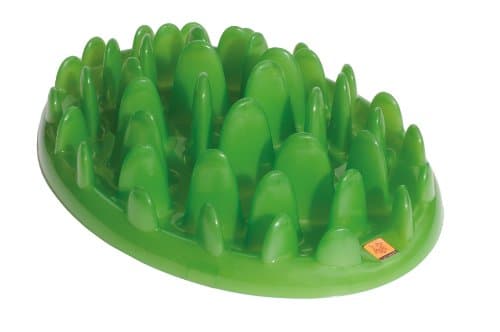
The Best Dog Bowls Under $20
A stainless bowl is close to a permanent object, so the thing you are really choosing is how it stays put. Under twenty dollars that is the whole decision - and no maker in this category will tell you what their steel is.
The verdict
Buy the OurPets Durapet stainless bowl. It is the one most people should own: dishwasher safe, effectively indestructible, and its bonded rubber base ringgenuinely stops the bowl traveling across a tiled floor — which is the only failure a floor bowl really has. If the bowl has to live inside a wire crate, buy the MidWest Snap’y Fit instead, because its bracket fastensto the wire with two wing nuts rather than hooking over it — the characteristic failure of every hook-on bowl is a dog nosing the whole assembly off. For a kennel run or a fence line with no crate wire to clamp to, the ProSelect pail hangs from anything, and you supply the hook. If the dog gulps its food, the Outward Hound Fun Feeder is the budget pick at under nine dollars and the cheapest sensible way to find out whether a slow feeder helps at all. One thing to settle first: no maker in this category publishes the grade of its stainless steel, at this price or at three times it. Prices come from our live price layer as of November 15, 2026.
Quick picks
The short answer, ranked and scored against our published durability rubric. Where a manufacturer does not publish a spec, we say so rather than estimating it.
| # | Photo | Product | What the maker publishes | Durability | Price |
|---|---|---|---|---|---|
| 1 | 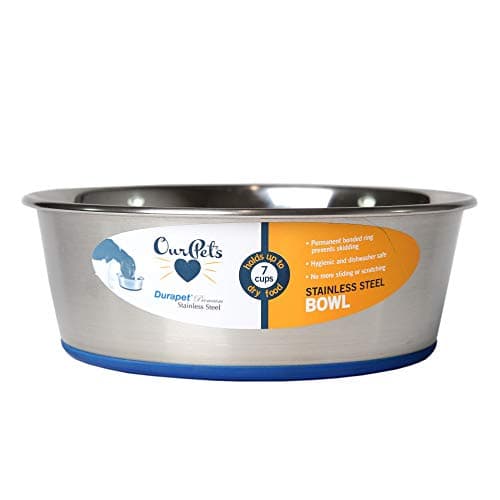 | OurPets Durapet Stainless Steel BowlThe sensible stainless bowl at a tenth of the price |
| 71/100 | $17.84 · Amazon |
| 2 | 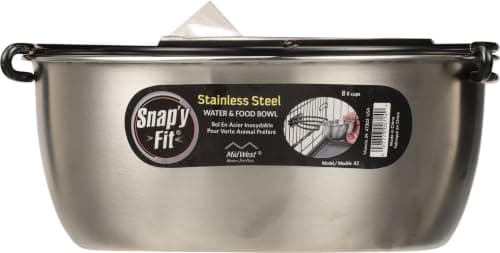 | MidWest Homes for Pets Snap'y Fit Stainless Steel Bowl (2 qt)A wire crate, where a bracket can be fastened rather than hooked |
| 64/100 | $18.99 · Amazon |
| 3 | 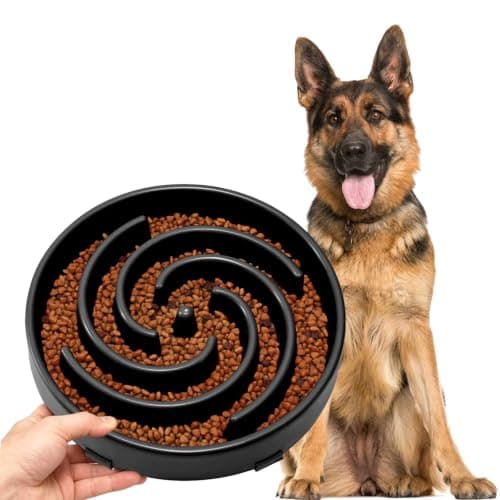 | JASGOOD Slow Feeder BowlThe cheapest way to find out whether a slow feeder helps your dog |
| 41/100 | $16.99 · Amazon |
| 4 | 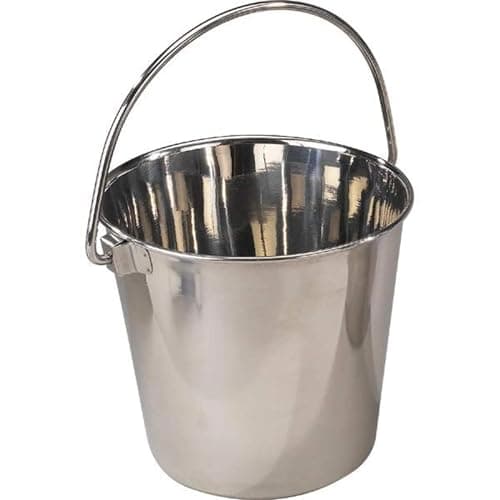 | ProSelect Heavy Duty Stainless Steel Pail (2 qt)A kennel run or a fence line, where there is no crate wire to bracket onto |
| 53/100 | $15.05 · Amazon |
| 5 | 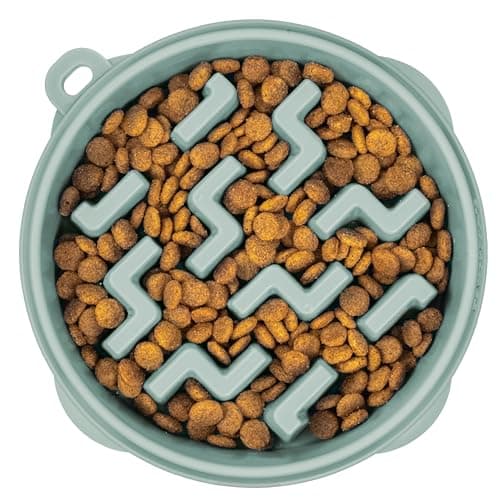 | Outward Hound Fun Feeder Slo BowlThe default slow feeder, in the widest range of maze patterns |
| 51/100 | $8.51 · Amazon |
Tap any row to jump to the full review. Specs are the manufacturer's own published figures; where a maker does not publish one we say "not published" rather than estimating it. Prices are pulled live from Amazon as of November 15, 2026; where we have no verified live price we show none rather than a stale number. #ad — how our links work.
The bowl is not the product — the mount is
Start with why a bowl roundup is not really about bowls. A stainless steel dish has no moving parts, no coating to wear through and no fabric to tear. Barring something extraordinary, it outlives the dog. So the component with an actual failure mode is whatever keeps it where you put it, and that is what separates the products on this page.
There are four mechanisms in this band and they are not interchangeable:
- A bonded rubber ring on the base, for a bowl that sits on a floor. It stops the bowl sliding when a dog pushes into it. This is the right answer for most households.
- A bracket bolted to crate wire with wing nuts, for a bowl inside a wire crate. It cannot be lifted off, which is the point.
- A bail handle over a hook, for a kennel run or a fence line where there is no wire mesh to bolt to. It swings, so it belongs outside a crate rather than in one.
- A non-slip ring plus maze geometry, for a dog that eats too fast. Here the bowl’s interior shape is the function.
A dog empties a bowl in one of two ways: pushing down on the rim, which a wide-mouth and narrow-base shape resists, or getting underneath and lifting, which only the mount resists. Decide where the bowl has to live before you look at anything else. The full treatment of the crate case is on the crate-mounted bowl roundup.
Every price here is read from our live price layer, stamped as of November 15, 2026, and none of it is typed into this article. Picks sit with margin under $20 rather than a cent beneath it, because prices drift between refreshes — and the table, not the headline, is the authority.
The specification nobody publishes, at any price
This is the finding that makes the $20 cap less costly than it looks. Not one maker in this category publishes the grade of its stainless steel. MidWest’s bowl page is the most informative maker page in the field and it says only “stainless steel,” describing its bracket as “rust resistant e-coated” without naming the base metal under the coating. OurPets says “stainless steel.” ProSelect publishes nothing.
The single material figure we have found anywhere is one retailer’s spec sheet listing the ProSelect pail line as 14/4 stainless at 0.5 mmin the 2 qt size — and we report that as unconfirmed, because we could not verify it against a second source and ProSelect does not publish it. If accurate, 14/4 is a lower-nickel alloy than the 18/8 most people picture when they read the word.
So the thing a skeptical buyer would most want to compare does not exist as published data at $14 or at $60. That is unusual, and it is the reason this band is good value rather than a compromise: the premium bowls in the category are better specified on everything except the one spec that matters, and they are not meaningfully better bowls.
It is worth saying that this is a pattern rather than a quirk of bowls. The same vacuum runs through the cheap end of the collar category, where no product publishes a load rating either — which is why our collars under $20 ranks on the one component you can check by hand. When a category stops publishing numbers, the honest move is to buy on the part you can see.
What the $20 cap actually rules out
Three things, and none of them is durability:
- An insulated double wall.YETI’s Boomer bowls are double-wall stainless — water stays cool longer and the outside does not sweat onto the floor. Both sizes sit above this cap. That is a real property and the only genuine material upgrade available in the category.
- A stand.Every elevated feeder in our registry is above $20. Raising a bowl is a separate decision with its own evidence base, and it is not a neutral one — we go through the bloat-risk literature rather than treating height as a convenience feature. One important practical note if you are tempted: a stand holds a bowl by its outer rim diameter, almost nobody publishes that figure, and capacity cannot be converted into it — a 3-cup bowl can be wide and shallow or narrow and deep.
- The better-engineered slow feeders. The upright-blade designs, which beat a maze once a dog has learned to bulldoze one, are above the cap. Under $20 you get a maze, and a maze is a reasonable first experiment.
What the cap does not cost you is the bowl. For a dog eating off a kitchen floor, a $17 bonded rubber-ring stainless bowl and a $60 one do the same job for the same number of years.
Inside a crate, the bracket is the entire decision
The MidWest Snap’y Fit is the default for a wire crate and it earns that on one structural point: the bracket is fastened to the wire with two wing nutsrather than hooked over it. A hooked bowl is a bowl a dog can nose off the crate wall, which is the characteristic failure of the whole hook-on category — and at 2 qt / 8 cups this is also the largest capacity in the band by a distance, and the only one that is a plausible day’s water for a big dog. One bracket pattern covers four capacities, so the puppy bowl and the adult bowl share hardware.
Its limits are specific and worth knowing before you order. Wire crates only— there is nothing for the bracket to clamp to on a plastic airline crate, an aluminum kennel or a soft-sided travel crate. MidWest names no crate models and publishes no wire diameter or spacing range, so fit on a non-MidWest crate is unknown until the box arrives. And it publishes no steel grade and no warranty terms on its own bowl page. For a bar-fronted plastic crate the mechanism you want is a bolt clamp instead: the SPOT coop cup with a bolt clamp sits in this band at the cheapest price on the page and is ranked on the crate-mounted roundup, alongside the Lixit hanging bowl for anyone who wants the bowl out one-handed every day.
Outside a crate: a pail, and the hook you have to buy
The ProSelect pail solves the one case a crate bracket cannot. On a kennel panel, a fence line or a gate, there is no mesh to bolt through — and a bail handle hangs from anything you can get a hook onto. There is also nothing to break: no fastener, no plastic holder, no coating to wear through, and 2 qt in a 6 in width takes less floor than a wide bowl of the same volume.
Two honest cautions. No hook or bracket comes in the box— you are buying a pail and sourcing the mount separately, which is easy and is still a second purchase. And a bail handle swings: this is the least spill-resistant shape here and we would not put it inside a crate. It is the right answer outside one and the wrong answer in it.
For a dog that eats too fast
Two slow feeders sit in the band and they answer slightly different questions. The Outward Hound Fun Feederis the category default and the budget pick here: the widest range of maze patterns and difficulty levels, which matters more than it sounds because a dog that has solved one pattern eats fast again. It has a non-slip base ring — essential, since a determined eater otherwise pushes the bowl into a corner and tips it — and it is cheap enough to own two patterns and rotate them.
The JASGOOD takes a different approach: a removable maze insert, so the outer bowl can be used normally if the slow feeder turns out not to suit the dog. That is a genuinely useful hedge, and the trade is that a removable insert is one more thing for a bored dog to pull out and chew, and the build quality is visibly below the branded option.
Two things to be straight about for both. The slow-down claims across this entire category are manufacturer figures, not independently verified ones— nobody publishes a tested number. And plastic ridges are a chewing target for a frustrated dog, where swallowed plastic is a worse problem than fast eating. If your dog chews plastic, a slow feeder is the wrong tool, and when a slow feeder is and is not the right answer goes through the four cases where it earns its place and the four where it does not.
The one maintenance rule worth following
Cheap bowls make this easier rather than harder, so it is worth stating. The FDA’s guidance on storing pet food is to wash food bowls after each use and water bowls daily, and to wash and dry any container between bags so residual fat and crumbs do not stay. Three of the five picks here are dishwasher safe and the deep-maze slow feeders are the hard ones to clean by hand — which is a practical argument for the removable-insert design and against the deepest mazes.
The picks, ranked
1. OurPets Durapet Stainless Steel Bowl
Durability score 71/100Best for: The sensible stainless bowl at a tenth of the price
The value answer, and honestly the one most people should buy. The premium bowls are better specified, not meaningfully better bowls.
- Material
- Stainless steel; alloy not published
- Base
- Bonded rubber non-slip ring
- Care
- Dishwasher safe
- Capacity
- Multiple sizes; per the live listing
Pros
- Does everything a stainless bowl needs to do at a fraction of the price of the premium options
- The bonded rubber ring genuinely stops the bowl traveling across a tiled floor
- Dishwasher safe and effectively indestructible
Cons
- The alloy is not published, only 'stainless steel', which covers a wide range of grades
- The bonded rubber ring can separate over years of dishwasher heat — the one wear point on an otherwise permanent object
How we assessed it: on published materials, hardware specs and construction — not long-term chew-tested. We say so because it is true, and because a claim we cannot back is worth nothing to you.
#ad Price as of November 15, 2026; Amazon prices change often, so check before you buy. How our links work.
2. MidWest Homes for Pets Snap'y Fit Stainless Steel Bowl (2 qt)
Durability score 64/100Best for: A wire crate, where a bracket can be fastened rather than hooked
The default for a wire crate, and it earns that on the one thing this category is actually decided by: the bracket fastens instead of hooking.
- Capacity
- 2 qt / 8 cups; also sold in 10 oz, 20 oz and 1 qt (MidWest)
- Mount
- Rust-resistant e-coated bracket, fixed to the crate wire with two wing nuts (MidWest)
- Fits
- A crate's wire mesh — MidWest names no crate models, wire diameter or spacing
- Steel grade
- Not published — MidWest says only 'stainless steel'
- Bracket metal
- Not published; MidWest states the e-coating, not the base metal
- Care
- Dishwasher safe (MidWest)
- Warranty
- Not published on MidWest's bowl page
Pros
- The bracket is fastened to the wire with two wing nuts rather than hooked over it, so the dog cannot nose the whole assembly off the crate — the characteristic failure of every hook-on bowl
- 2 qt / 8 cups is the largest capacity in this field by a distance, and the only one that is a plausible day's water for a big dog
- Dishwasher safe, stated by MidWest — the only mount here whose maker commits to a care instruction at all
- One bracket pattern across four capacities, so the puppy bowl and the adult bowl use the same hardware
Cons
- Wire crates only. There is nothing for the bracket to clamp to on a plastic airline crate, an aluminum kennel or a soft-sided travel crate
- MidWest publishes no steel grade, so 'rust-resistant' is a claim rather than a specification
- No published wire diameter or spacing range, so fit on a non-MidWest crate is unknown until the box arrives
- The bracket is e-coated and MidWest does not say what is under the coating — on a bracket that lives in a water bowl, the coating is the whole corrosion story
- No warranty terms on MidWest's own bowl page
How we assessed it: on published materials, hardware specs and construction — not long-term chew-tested. We say so because it is true, and because a claim we cannot back is worth nothing to you.
#ad Price as of November 15, 2026; Amazon prices change often, so check before you buy. How our links work.
3. JASGOOD Slow Feeder Bowl
Durability score 41/100Best for: The cheapest way to find out whether a slow feeder helps your dog
A low-risk experiment. If it works, buy a better one; if it does not, you have lost very little.
- Design
- Maze insert, some configurations with a stainless outer bowl
- Material
- Plastic insert; stainless outer on some configurations
- Care
- Dishwasher safe
- Published slow-down figure
- Not published
Pros
- A removable insert means the outer bowl can be used normally, which is genuinely useful if the slow feeder does not suit the dog
- Cheapest option here by a wide margin
Cons
- No published material or performance detail
- Removable inserts are one more thing for a bored dog to remove and chew
- Build quality is visibly below the branded options
How we assessed it: on published materials, hardware specs and construction — not long-term chew-tested. We say so because it is true, and because a claim we cannot back is worth nothing to you.
#ad Price as of November 15, 2026; Amazon prices change often, so check before you buy. How our links work.
4. ProSelect Heavy Duty Stainless Steel Pail (2 qt)
Durability score 53/100Best for: A kennel run or a fence line, where there is no crate wire to bracket onto
The right answer outside a crate and the wrong one inside it. Buy it for a run or a fence line, not for a crate door.
- Capacity
- 2 qt (Amazon listing)
- Width
- 6 in (Amazon listing)
- Mount
- Bail handle over a hook — no bracket or hook supplied
- Steel
- Not published by ProSelect. One retailer spec sheet lists the line as 14/4 stainless at 0.5 mm in the 2 qt size; we could not confirm that against a second source
- Warranty
- Not published
Pros
- It hangs from anything — a kennel panel, a fence clip, a gate hook — which is precisely where a crate bracket cannot go
- There is nothing to break: a bail-handled pail has no fastener, no plastic holder and no coating to wear through
- 2 qt in a 6 in footprint, so it takes less floor than a wide bowl of the same volume
Cons
- No bracket and no hook in the box. You are buying a pail and sourcing the mount separately
- A bail handle swings. This is the least spill-resistant shape on the page and we would not put it inside a crate
- The only steel figure we found anywhere for this line — 14/4 at 0.5 mm, from a single retailer — would be a lower-nickel alloy than the 18/8 most people picture when they read 'stainless', and ProSelect itself publishes neither number
- No published gauge, no spec sheet and no warranty on ProSelect's own pages
How we assessed it: on published materials, hardware specs and construction — not long-term chew-tested. We say so because it is true, and because a claim we cannot back is worth nothing to you.
#ad Price as of November 15, 2026; Amazon prices change often, so check before you buy. How our links work.
5. Outward Hound Fun Feeder Slo Bowl
Durability score 51/100Best for: The default slow feeder, in the widest range of maze patterns
The category default for good reason. Rotate the pattern before your dog learns to bulldoze it.
- Material
- Food-safe plastic
- Patterns
- Several maze designs at different difficulty levels
- Base
- Non-slip ring
- Care
- Top-rack dishwasher safe
- Published slow-down figure
- Not published as an independently verified figure
Pros
- The widest range of maze patterns and difficulty levels, which matters because a dog that has solved one pattern eats fast again
- Non-slip base — essential, because a determined eater will otherwise push the bowl into a corner and tip it
- Cheap enough to own two patterns and rotate them
Cons
- Plastic ridges are a chewing target for a frustrated dog, and swallowed plastic is a worse problem than fast eating
- The slow-down claims across this whole category are manufacturer figures, not independently verified ones
- Deep mazes are genuinely hard to clean by hand
How we assessed it: on published materials, hardware specs and construction — not long-term chew-tested. We say so because it is true, and because a claim we cannot back is worth nothing to you.
#ad Price as of November 15, 2026; Amazon prices change often, so check before you buy. How our links work.
Which one for your dog
- A bowl on a kitchen or utility floor. The OurPets Durapet. Bonded rubber ring, dishwasher safe, and effectively permanent. The one most people should buy.
- Inside a wire crate. The MidWest Snap’y Fit, because the bracket fastens instead of hooking. Wire crates only.
- A kennel run, a fence line or a gate. The ProSelect pail— and budget for a hook, because none is supplied.
- A dog that gulps. The Outward Hound Fun Feeder, the budget pick. Rotate the pattern before the dog learns to bulldoze it.
- You are not sure a slow feeder will suit the dog. The JASGOOD, for the removable insert — the outer bowl still works as a normal bowl.
- A dog that chews plastic. None of the slow feeders. A swallowed piece of bowl is a worse outcome than fast eating; use a stainless bowl and manage the speed another way.
- A flat-faced breed.Depth, not maze complexity, is the spec that matters — that is its own page.
When to spend more than $20
One material reason and one design reason. The material reason is insulation: a double-wall stainless bowl keeps water cool and does not sweat onto the floor, and that is a genuine property you cannot get under the cap. The design reason is the upright-blade slow feeder, which keeps working after a dog has learned to bulldoze a maze.
What more money does not buy is a published steel grade, or a bowl that lasts longer in any way you will notice. If you want the full field, including everything above the cap, the stainless steel bowl roundup and stainless versus ceramic are the pages.
The bottom line
Under twenty dollars this is one of the few categories where the cap costs you almost nothing real. Pick by where the bowl has to live — floor, crate wire, or a hook — buy stainless with a rubber ring for the floor and a bracket that bolts for the crate, and ignore every “premium stainless” claim until someone publishes an alloy. Then spend the difference on something that does have a failure mode, like the bed it sleeps on.
Frequently asked questions
What is the best dog bowl under $20?
The OurPets Durapet stainless steel bowl. It does everything a stainless bowl needs to do, it is dishwasher safe and effectively indestructible, and its bonded rubber base ring genuinely stops the bowl traveling across a tiled floor - which is the only failure a floor bowl really has. Its two honest limits: OurPets publishes only 'stainless steel' rather than an alloy, and the bonded rubber ring can separate after years of dishwasher heat, which is the one wear point on an otherwise permanent object.
What grade of stainless steel are dog bowls made from?
No maker in this category publishes it - at any price. MidWest's bowl page is the most informative maker page in the field and says only 'stainless steel', describing its bracket as 'rust resistant e-coated' without naming the base metal under the coating. The single material figure we have found anywhere is one retailer's spec sheet listing the ProSelect pail line as 14/4 stainless at 0.5 mm in the 2 qt size, which we report as unconfirmed because we could not verify it against a second source and ProSelect does not publish it. If accurate, 14/4 is a lower-nickel alloy than the 18/8 most people picture.
What is the best dog bowl for a crate?
The MidWest Snap'y Fit, and the reason is the bracket rather than the bowl: it fastens to the crate wire with two wing nuts instead of hooking over it, so the dog cannot nose the whole assembly off - the characteristic failure of every hook-on bowl. At 2 qt / 8 cups it is also the largest capacity in this price band and the only one that is a plausible day's water for a big dog. Limits: wire crates only, and MidWest publishes no wire diameter or spacing range, so fit on a non-MidWest crate is unknown until it arrives. For a bar-fronted plastic crate you want a bolt clamp instead.
What do you give up by buying a dog bowl under $20?
Three things, and durability is not one of them. An insulated double wall (YETI's Boomer bowls keep water cool and do not sweat onto the floor) is above the cap and is the only genuine material upgrade in the category. A stand is above the cap, and raising a bowl is a separate decision with its own evidence base rather than a convenience feature. And the better-engineered upright-blade slow feeders are above it, leaving maze designs under $20. For a dog eating off a kitchen floor, a $17 bowl and a $60 bowl do the same job for the same number of years.
Do slow feeder bowls actually work?
The honest answer is that nobody has published an independently verified figure - every slow-down claim in this category is a manufacturer number. What is clear is that the effect depends on the dog continuing to find the pattern difficult, which is why the range of maze patterns matters: a dog that has solved one pattern eats fast again. Two cautions: a non-slip base is essential, because a determined eater pushes the bowl into a corner and tips it, and plastic ridges are a chewing target - if your dog chews plastic, a swallowed piece of bowl is a worse problem than fast eating and a slow feeder is the wrong tool.
Can I use a crate bowl on a stand?
No, and it is the single most common mismatch in this category. A stand holds a bowl by its outer rim diameter, and a crate bowl's bracket lip or clamp collar is exactly what stops it sitting flat in a cutout. Worse, almost nobody publishes an outer rim diameter, and capacity cannot be converted into one - a 3-cup bowl can be wide and shallow or narrow and deep. Measure the cutout and buy the stand maker's own replacement bowl where one exists.
How often should a dog bowl be washed?
The FDA's guidance on handling pet food is to wash food bowls after each use and water bowls daily, and to wash and dry any food container between bags so residual fat and crumbs do not stay in it. This is a practical argument for buying cheap and dishwasher safe: three of the five picks on this page are dishwasher safe, while deep-maze slow feeders are genuinely hard to clean by hand - which is also the best argument for the removable-insert design.
Sources
Every spec on this page traces to one of these. Where a manufacturer does not publish a figure, we say “not published” rather than estimating it.
- MidWest Homes for Pets — bowls page: the four Snap'y Fit capacities (10 oz, 20 oz, 1 qt, 2 qt), the rust-resistant e-coated bracket fixed to the crate wire with two wing nuts, the 'attaches to a crate's wire mesh' fitment description, and dishwasher-safe care. No steel grade, no bracket base metal, no crate compatibility list and no warranty terms are published on it
- OurPets — brand site for the Durapet stainless bowl: the bonded rubber non-slip base ring, dishwasher-safe care, and the multiple capacities. The alloy is described only as 'stainless steel', which covers a wide range of grades
- Outward Hound — brand site for the Fun Feeder Slo Bowl: the food-safe plastic construction, the several maze patterns at different difficulty levels, the non-slip base ring and top-rack dishwasher-safe care. No independently verified slow-down figure is published - the slow-down claims across this entire category are manufacturer figures
- FDA — proper storage of pet food and treats: the guidance this page's cleaning advice rests on, including washing food bowls after each use and water bowls daily, and washing and drying a container between bags to remove residual fat and crumbs