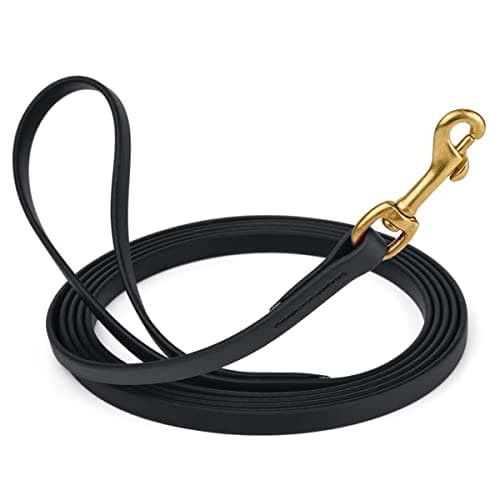
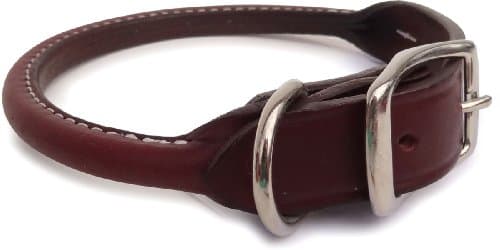
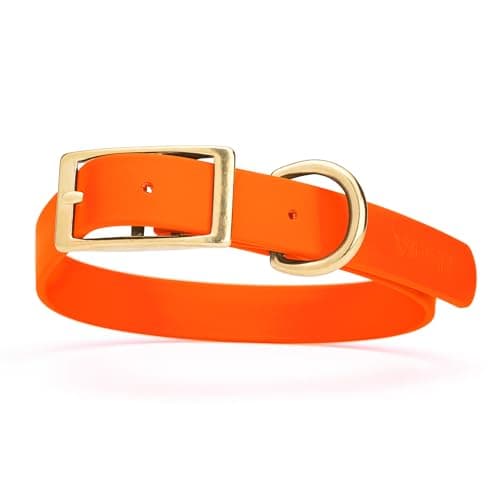
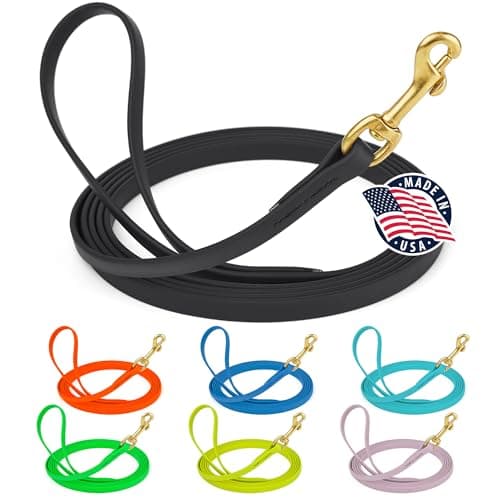
The Best BioThane Alternatives
People shop for a biothane alternative for three different reasons: chewing, grip, or price. The right answer is different for each, and one of them is not webbing at all.
The verdict
If you came to biothane because your dog chews leashes, the alternative is not another kind of webbing — it is the Mighty Paw chew-proof cable leash, a 2.34 mm braided stainless cable with an aluminium carabiner Mighty Paw rates at over 850 lb of pull force. If you came to it for wet field work and want rope in your hand rather than a flat strap, buy the Mendota British-style check cord: solid-braid polypropylene, made in the USA, and it floats. If you wanted biothane because you are tired of replacing chewed leashes and you want a normal leash to hold, the Leashboss double-handle is the one here whose warranty contemplates chewing rather than excluding it. One honest warning before any of them: BioThane Beta 520 publishes a 1,000 lb core break strength for the 1 in profile, and not one alternative on this page publishes a break strength at all.
Quick picks
The short answer, ranked and scored against our published durability rubric. Where a manufacturer does not publish a spec, we say so rather than estimating it.
| # | Photo | Product | Key specs | Durability | Price |
|---|---|---|---|---|---|
| 1 | 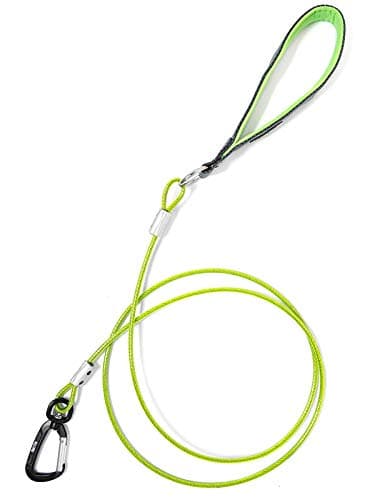 | Mighty Paw Chew-Proof Cable LeashA dog that chews through leashes |
| 82/100 | $13.99 · Amazon |
| 2 | 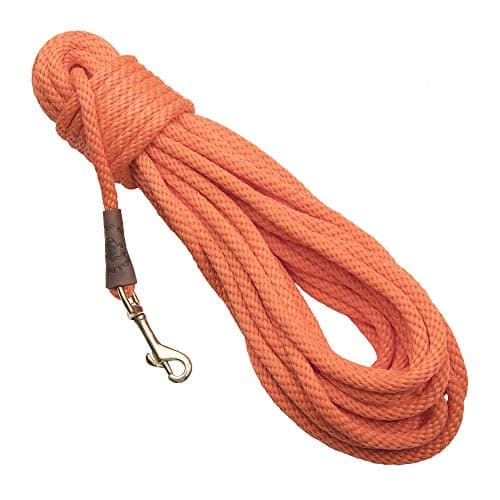 | Mendota Pet British Style Check CordField recall work — the traditional rope check cord, made in the USA |
| 67/100 | $27.99 · Amazon |
| 3 | 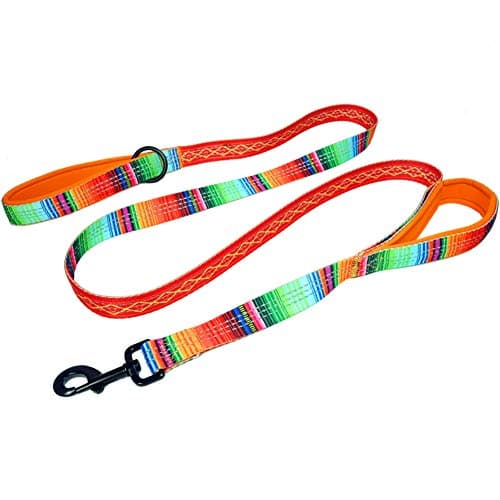 | Leashboss Double Handle LeashClose control on a big dog, with a warranty that covers chewing |
| 74/100 | $19.98 · Amazon |
| 4 | 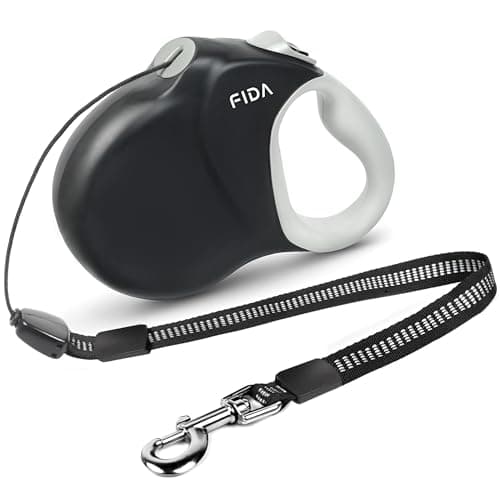 | Fida Check Cord Long LineThe cheapest long line worth owning |
| 45/100 | $25.98 · Amazon |
Tap any row to jump to the full review. Specs are the manufacturer's own published figures; where a maker does not publish one we say "not published" rather than estimating it. Prices are pulled live from Amazon as of October 18, 2026; where we have no verified live price we show none rather than a stale number. #ad — how our links work.
First, work out why you wanted biothane
“BioThane alternative” is one search with three completely different purchases behind it, and the single reason most people end up disappointed is that they buy for the wrong one.
- You want something a chewer cannot destroy. Biothane is tough but it is a polyester core under a coating, and teeth go through it. The real answer is steel.
- You want it for mud, water and snow.This is biothane’s genuine strength and the hardest to replace. The closest alternative is a polypropylene rope, which also sheds water and floats, and runs through the hand better in cover.
- You want it cheaper. Then you are shopping for nylon or rope, and the thing to buy on is the warranty, because nobody in the budget end publishes a strength figure.
If, having read that, biothane is still what you want, our biothane leash roundup ranks the material properly, and biothane against leather covers the comparison people usually mean next.
The number the alternatives have to beat
Biothane is unusual in this category because its material maker publishes real figures. BioThane Beta 520 PET in the 1 in standard profile is rated at a 1,000 lb core break strength, with a 200 lb buckle pull strength on the same material spec. Both numbers are worth reading carefully: the strength is in the polyester core, not in the coating, so you are not paying for the coating to be strong, and the buckle figure is five times lower than the strap figure, which tells you where a biothane lead actually fails.
Now the awkward part. Of the four alternatives on this page, exactly one publishes a rating on anything, and that rating is for the carabiner rather than the leash. Mighty Paw states over 850 lb of pull force on the clip and does not publish the cable’s own break strength. Mendota, Leashboss and Fida publish no break strength and no hardware rating at all. That is not a reason to avoid them — it is the condition of the entire leash market, and it is why our rubric scores warranty as its own metric: when nobody will state a number, what a maker is willing to replace becomes the most honest evidence available.
How the four materials actually behave
| Material | Wet behavior | Against a chewer | In the hand |
|---|---|---|---|
| Biothane (the benchmark) | Sheds water, wipes clean, stays flexible in cold | Chewable | Slick when wet; will burn hands on a long line |
| Stainless cable | Unaffected by water | The only construction teeth cannot bite through | Does not drape; marks hands and paintwork |
| Polypropylene rope | Floats; does not soak up water | Chewable | Best grip of anything here; tangles in brush |
| Nylon webbing | Absorbs water; holds smell; stiffens as it dries | Chewable, and the usual casualty | Familiar; padded handles available |
Two entries in that table deserve a sentence more. Polypropylene is less abrasion-resistant than nylon of the same diameter, so a rope check cord dragged over rock and gravel will fuzz before a nylon line of the same thickness does — it is a trade for grip and flotation, not a free upgrade. And a steel cable genuinely does not behave like a leash: it will not coil into a pocket, and it will mark a car door.
The clip is the weak point in every one of them
On a biothane lead the material maker publishes 1,000 lb for the strap and 200 lb for the buckle. The ratio does not improve on the alternatives; it just stops being measured. Mighty Paw is the exception and it is worth noticing whatit chose to publish — the clip, rated over 850 lb, on the one leash here where the strap is steel. Everywhere else the snap is unrated and it is the first thing we would replace.
If you want to understand what you are looking at, our guide to dog leash clips covers the difference between a bolt snap, a trigger snap and a screw-gate carabiner, and which of them can be opened by accident against a dog’s side.
What to look for, in order
- Match the material to the failure you are actually having. Chewing means steel. Mud and water mean rope or biothane. Price means a warranty.
- Read the chew exclusion.It is almost universal, and the exception is the reason to buy: Leashboss appears to be the only leash brand we have assessed whose standard warranty contemplates chewed leashes rather than carving them out. Mighty Paw’s lifetime warranty excludes excessive chewing — on a leash sold to chewers.
- Buy the clip, not the strap. It is the part that is rated least often and fails most.
- Length honestly. A 6 ft lead and a 30 ft long line are different tools; see the long lines if recall work is the job.
- Gloves for anything over 15 ft. True of biothane, truer of rope, and the one piece of advice nobody puts on a listing.
The picks, ranked
1. Mighty Paw Chew-Proof Cable Leash
Durability score 82/100Best for: A dog that chews through leashes
The right answer for a leash-chewer, and the only one here with a rated clip — just note the irony that the chew-proof leash's warranty excludes chewing.
- Cable
- 2.34 mm stainless steel braided wire — five bundles of seven wires
- Clip
- Aviation aluminum carabiner, holds over 850 lb of pull force
- Length
- 6 ft
- Cable break strength
- Not published
Pros
- A steel cable is the only leash construction a determined chewer cannot simply bite through
- The carabiner is rated — over 850 lb of pull force — which is more than most leash brands will state
- The 2.34 mm braided construction is specified down to the wire count
Cons
- Mighty Paw publishes the carabiner rating but not the cable's own break strength
- A steel cable will mark your hands and your car's paint; it does not drape like webbing
- Mighty Paw's lifetime warranty excludes excessive chewing — on a leash sold to chewers
How we assessed it: on published materials, hardware specs and construction — not long-term chew-tested. We say so because it is true, and because a claim we cannot back is worth nothing to you.
#ad Price as of October 18, 2026; Amazon prices change often, so check before you buy. How our links work.
2. Mendota Pet British Style Check Cord
Durability score 67/100Best for: Field recall work — the traditional rope check cord, made in the USA
The field-tradition choice, and the right shape for hand work — bought on Mendota's reputation rather than on any published number.
- Material
- Solid-braid polypropylene rope
- Format
- Check cord — rope, not flat webbing
- Origin
- Made in the USA per Mendota
- Break strength
- Not published
- Hardware
- Snap; rating not published
Pros
- Rope runs through the hand and through cover far better than flat webbing, which is the whole reason gundog handlers use a check cord rather than a long leash
- Polypropylene floats and does not soak up water the way a cotton or nylon line does
- A genuinely traditional design from a maker that has been building field leads for decades
Cons
- Mendota publishes no break strength and no hardware rating — the same silence as everywhere else in this category
- Rope tangles in brush more readily than biothane does
- Polypropylene is less abrasion-resistant than nylon of the same diameter
How we assessed it: on published materials, hardware specs and construction — not long-term chew-tested. We say so because it is true, and because a claim we cannot back is worth nothing to you.
#ad Price as of October 18, 2026; Amazon prices change often, so check before you buy. How our links work.
3. Leashboss Double Handle Leash
Durability score 74/100Best for: Close control on a big dog, with a warranty that covers chewing
Buy it for the traffic handle and the five-year promise; there is not much published spec behind it.
- Webbing
- Nylon (Leashboss does not publish a denier)
- Hardware
- Swivel clasp (metal type not published)
- Construction
- Padded handles, reflective stitching
- Length
- 6 ft, with a second traffic handle
- Warranty
- Boss Promise 5-year
Pros
- The traffic handle gives you instant close control at a curb or a trailhead
- Leashboss appears to be the only leash brand here whose standard warranty contemplates chewed leashes rather than excluding them
- Five-year warranty is a real commitment at this price
Cons
- No published denier, clasp metal or break strength — the warranty is doing all the work
- Their product and warranty pages block automated access, so the terms are harder to verify than they should be
How we assessed it: on published materials, hardware specs and construction — not long-term chew-tested. We say so because it is true, and because a claim we cannot back is worth nothing to you.
#ad Price as of October 18, 2026; Amazon prices change often, so check before you buy. How our links work.
4. Fida Check Cord Long Line
Durability score 45/100Best for: The cheapest long line worth owning
Honest budget recall gear. Fine for dry-ground training; replace it before it becomes the thing between your dog and a road.
- Material
- Braided rope
- Lengths
- Multiple; per the live Amazon listing
- Break strength
- Not published
- Hardware
- Snap; rating not published
Pros
- A third the price of the Mendota, in the same rope format
- Available in longer lengths than most branded lines
Cons
- No published material spec, break strength or hardware rating of any kind
- Rope construction absorbs water and stiffens as it dries
- The clip is the weak point and there is nothing published about it
How we assessed it: on published materials, hardware specs and construction — not long-term chew-tested. We say so because it is true, and because a claim we cannot back is worth nothing to you.
#ad Price as of October 18, 2026; Amazon prices change often, so check before you buy. How our links work.
Three things sold as biothane alternatives that are not
“Waterproof” coated nylon. A water-resistant finish on nylon webbing is not the same construction as a coated polyester core. It wets through at the stitching and it holds the smell, which is the specific problem biothane buyers are trying to solve.
Leather. Excellent material, wrong job. Leather hates repeated soakings and is the wrong choice for a swimmer, which is the whole reason anyone reaches for biothane in the first place. The comparison is worth reading on its own terms in biothane vs leather, and if it is collars rather than leashes you are choosing, leather against nylon is the closer match.
Bungee leads. A shock-absorbing section solves lunging, not weather or teeth. Worth owning for a different reason; see the hands-free leashes.
Pairing, and the honest summary
A chew-resistant lead fixes one end of the problem. If the dog is also destroying collars, the heavy-duty collar and leash sets are the cheaper route to replacing both, and for a strong dog on a working line the heavy-duty leash cut for German Shepherds goes through the same hardware questions at that size.
The summary we would give a friend: biothane is still the best material in this category for wet, filthy work, and the reason it is worth its price is that somebody publishes a number for it. Leave it for exactly two reasons. If your dog eats leashes, buy steel and accept that it does not drape. If you want rope in your hand in the field, buy the check cord and accept that it will fuzz. Everything else sold as an alternative is nylon with better marketing, and on nylon the only honest evidence left is what the maker will replace.
Frequently asked questions
What is the best alternative to a biothane leash?
It depends on why you wanted biothane. For a dog that chews through leashes, the Mighty Paw chew-proof cable leash - a 2.34 mm braided stainless cable, five bundles of seven wires, with an aviation aluminium carabiner Mighty Paw rates at over 850 lb of pull force. For wet field work where you want rope in the hand, the Mendota British-style check cord in solid-braid polypropylene, which floats and is made in the USA. For a conventional leash bought on its warranty, the Leashboss double-handle with its 5-year Boss Promise. None of them publishes a break strength, which biothane's material maker does.
Is biothane actually stronger than nylon or rope?
The honest answer is that biothane is the only one of them you can check. BioThane publishes a 1,000 lb core break strength for Beta 520 PET in the 1 in standard profile and a 200 lb buckle pull strength on the same spec. Mendota, Leashboss and Fida publish no break strength at all, and Mighty Paw publishes a figure for its carabiner but not for its cable. So biothane is not necessarily stronger than a good nylon lead - it is the one with a published number, which for a durability buyer is a different and often more useful kind of advantage.
Will a biothane leash survive a dog that chews?
No. Biothane is a polyester core under a TPU or PVC coating, and teeth go through both. If chewing is the failure you keep having, the only leash construction a determined chewer cannot simply bite through is a steel cable. Note the irony we flag on the pick itself: Mighty Paw's lifetime warranty excludes excessive chewing, on a leash sold specifically to owners of chewers. The one warranty we have found that contemplates chewed leashes rather than excluding them is Leashboss's.
Is a rope check cord better than a biothane long line?
For hand work, usually yes; for filth, usually no. Rope runs through the hand and through cover far better than flat webbing, which is exactly why gundog handlers use a check cord rather than a long leash, and polypropylene floats and does not soak up water. Against that: rope tangles in brush more readily than biothane, polypropylene is less abrasion-resistant than nylon of the same diameter, and a cheap braided rope absorbs water and stiffens as it dries. Biothane wipes clean and stays flexible in the cold, and it is slick - wear gloves on any long line over about 15 ft, whichever material you choose.
Why does a biothane leash cost more than a nylon one?
You are paying for a coated polyester webbing made to a published material specification, and for the practical consequences of it: it does not absorb water, it does not hold mud, it does not develop the smell a wet nylon line always develops, it wipes clean instead of going into the wash, and it stays flexible in cold. Whether that is worth the premium depends entirely on how wet and dirty your dog's work is. For dry-ground walking it is a luxury; for swamp, snow and tracking it is the correct material.
Is a steel cable leash safe to use?
It is a trade, and the trade is worth stating plainly. A braided stainless cable is the only construction here that teeth cannot get through, and Mighty Paw rates its carabiner at over 850 lb. But it does not drape or coil like webbing, it will mark your hands if a dog bolts and it will mark a car's paint. Mighty Paw publishes the clip rating and not the cable's own break strength. We would not use one as a long line, and we would not leave one clipped to a tie-out unsupervised.
What should I look for if no brand publishes a break strength?
Three things, in this order. The warranty - specifically whether chewing is excluded, because in this category it almost always is, and the exception is the thing worth paying for. The clip - a snap or carabiner is the part that is rated least often and fails most, and it is replaceable, so inspect it first. And the stitching pattern at the handle and at the clip, which is where load concentrates. Our rubric scores warranty as its own metric precisely because it is the most honest evidence left when nobody will state a number.
Sources
Every spec on this page traces to one of these. Where a manufacturer does not publish a figure, we say “not published” rather than estimating it.
- BioThane — Beta 520 PET material data: the 1,000 lb core break strength and 200 lb buckle pull strength for the 1 in standard profile quoted throughout
- Mighty Paw — chew-proof cable leash: the 2.34 mm braided stainless construction and the 850 lb carabiner figure
- Mendota Pet — maker page for the British-style check cord and the leather collar line (solid-braid polypropylene; made in the USA)
- Leashboss — leash range and the Boss Promise 5-year warranty referenced here