The Best Dog Long Lines
Thirty feet of line changes what a leash is for and what it can do to you. Two materials dominate, they fail differently, and one of them will burn your hands.
Buy the Viper biothane long line if your ground is wet — biothane is the only material in this roundup with a published break strength behind it, and the only one that comes out of a bog the same weight it went in.
Buy the Mendota check cord if you work the line by hand. Rope runs through a fist in a way flat webbing does not, which is the reason field handlers have used check cords for a century.
A long line is not a long leash
This distinction is not pedantry — it changes what you should buy. A walking leash is held taut and short, and its job is control. A long line is dragged, paid out and taken in, and its job is to give a dog freedom you can still end.
Which means a long line has to survive things a leash never encounters:
- Being dragged. Twenty of the thirty feet spend the walk on the ground, through mud, gravel, water and stubble.
- Absorbing water. A nylon or cotton line that soaks up water gains real weight and stiffens as it dries.
- Running through your hands under load. This is the one that injures people, and we come back to it below.
- Snagging. Every stump, root and fence post in the field is now part of the system.
Biothane versus rope, honestly
Biothane is a polyester webbing core sealed inside a TPU or PVC coating. Nothing is exposed, so nothing absorbs water, holds odor or rots. BioThane publishes a 1,000 lb break strength for the standard 1 in Beta 520 profile — a real figure, and one of the very few published anywhere in this category. It wipes clean and does not stiffen.
It is also slick, and that is not a minor complaint. A wet biothane line running through a bare hand under load will remove skin. Wear gloves. We would put that advice above any product recommendation on this page.
Rope is the traditional check cord and it is better in the hand by a wide margin — you can grip it, feed it and check a dog with it without gloves. Polypropylene floats and sheds water reasonably well. It also tangles in brush far more readily than a flat line does, and nobody publishes a break strength for any of it.
The honest summary: biothane wins on material evidence and on wet ground; rope wins on handling. Buy for whichever of those you actually do.
Length, and the number most people get wrong
Fifteen feet is a long leash — useful for sniffing walks, manageable in a park, and not really a training tool.
Thirty feet is the recall-training length: enough distance for a dog to genuinely choose to come back rather than simply being close enough that returning is trivial.
Fifty feet is for open ground with nothing to snag on and a handler who has practiced. It is also fifty feet of line to manage, and in the wrong place it is a hazard to your dog, to you, and to anyone walking past.
Start at thirty. It is the length that does the actual job.
Quick picks
The short answer, ranked and scored against our published durability rubric. Where a manufacturer does not publish a spec, we say so rather than estimating it.
| # | Photo | Product | Durability | Price |
|---|---|---|---|---|
| 1 | 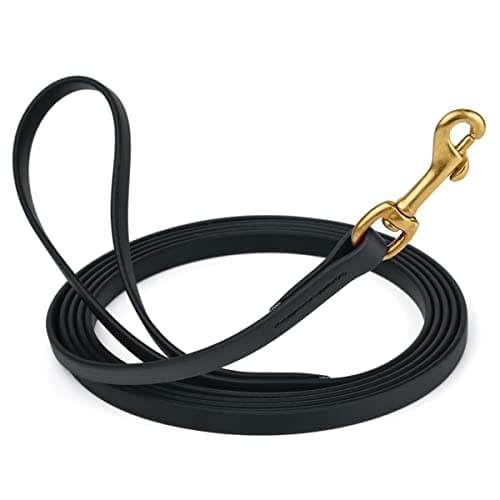 | Viper BioThane Long Line (30 ft)Wet ground and mud — the only material here with a published break strength | 73/100 | $59.99 · Amazon |
| 2 | 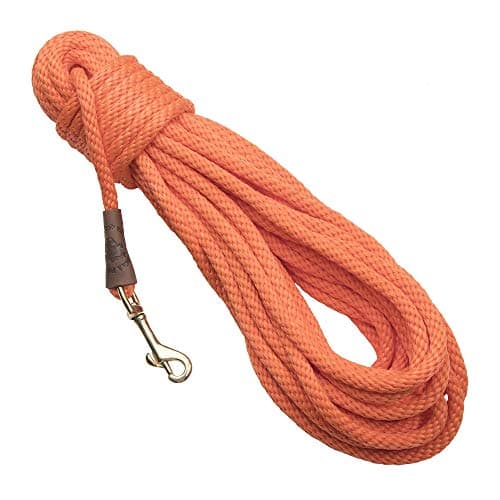 | Mendota Pet British Style Check CordField recall work — the traditional rope check cord, made in the USA | 67/100 | $27.99 · Amazon |
| 3 | 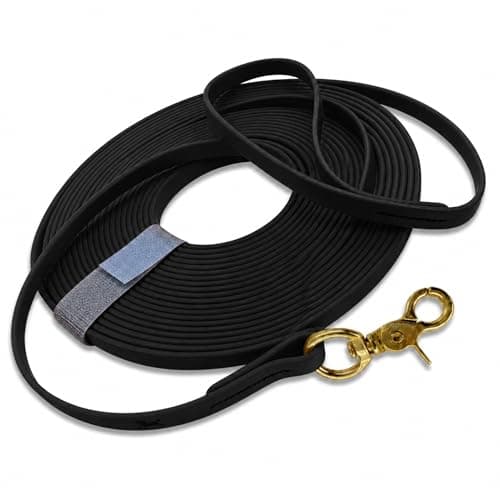 | Jim Hodges Dog Training Gummy K9 BioThane Long LineA grippier biothane long line | 69/100 | $49.99 · Amazon |
| 4 | 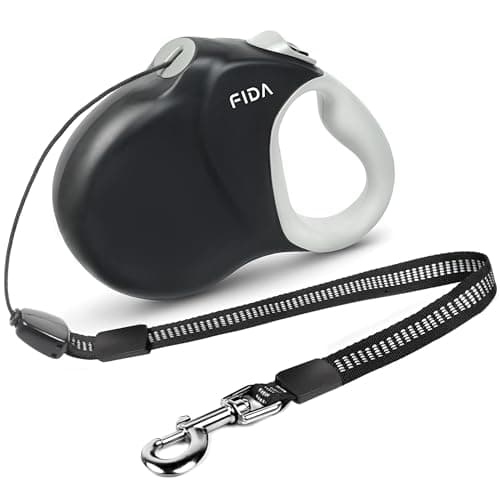 | Fida Check Cord Long LineThe cheapest long line worth owning | 45/100 | $25.98 · Amazon |
Tap any row to jump to the full review. Prices are pulled live from Amazon as of October 18, 2026; where we have no verified live price we show none rather than a stale number. #ad — how our links work.
The picks, ranked
1. Viper BioThane Long Line (30 ft)
Durability score 73/100Best for: Wet ground and mud — the only material here with a published break strength
The material answer to wet ground, and the only long line in this roundup with a real published number behind it. Buy gloves with it.
- Material
- BioThane coated webbing — polyester core in a TPU/PVC coating
- Published strap break strength
- 1,000 lb for standard 1 in Beta 520 (BioThane's own figure)
- Published buckle pull strength
- 200 lb (BioThane's own figure)
- Water behavior
- Does not absorb water, mud or odor
- Hardware rating on this line
- Not published by Viper
Pros
- The only long line here whose material carries a published break strength — BioThane states 1,000 lb for the standard 1 in profile
- Sheds mud and water completely; it wipes clean and never stiffens or stinks
- No fiber exposed to rot, which is what kills rope and webbing lines used in wet country
- The long line format that survives being dragged through a stream all season
Cons
- Slick in the hand, especially wet — wear gloves, and treat that as a requirement rather than advice
- Heavier than rope at the same length
- Viper does not publish a rating for the clip, so the 1,000 lb figure applies to the part that was never going to break
How we assessed it: on published materials, hardware specs and construction — not long-term chew-tested. We say so because it is true, and because a claim we cannot back is worth nothing to you.
#ad Price as of October 18, 2026; Amazon prices change often, so check before you buy. How our links work.
2. Mendota Pet British Style Check Cord
Durability score 67/100Best for: Field recall work — the traditional rope check cord, made in the USA
The field-tradition choice, and the right shape for hand work — bought on Mendota's reputation rather than on any published number.
- Material
- Solid-braid polypropylene rope
- Format
- Check cord — rope, not flat webbing
- Origin
- Made in the USA per Mendota
- Break strength
- Not published
- Hardware
- Snap; rating not published
Pros
- Rope runs through the hand and through cover far better than flat webbing, which is the whole reason gundog handlers use a check cord rather than a long leash
- Polypropylene floats and does not soak up water the way a cotton or nylon line does
- A genuinely traditional design from a maker that has been building field leads for decades
Cons
- Mendota publishes no break strength and no hardware rating — the same silence as everywhere else in this category
- Rope tangles in brush more readily than biothane does
- Polypropylene is less abrasion-resistant than nylon of the same diameter
How we assessed it: on published materials, hardware specs and construction — not long-term chew-tested. We say so because it is true, and because a claim we cannot back is worth nothing to you.
#ad Price as of October 18, 2026; Amazon prices change often, so check before you buy. How our links work.
3. Jim Hodges Dog Training Gummy K9 BioThane Long Line
Durability score 69/100Best for: A grippier biothane long line
Biothane with the slipperiness engineered out of it — the best-handling long line here, if you accept the unpublished specs.
- Material
- Coated webbing (BioThane-type), textured 'gummy' finish
- Core break strength
- Governed by the polyester core; Viper-grade Beta 520 PET publishes 1,000 lb
- Hardware rating
- Not published
Pros
- The textured finish addresses biothane's real weakness — it is far less slippery in a wet hand
- Made by a working-dog trainer for long-line work
Cons
- No manufacturer-published break strength or hardware rating
- The tacky surface picks up grit more than a smooth coating
How we assessed it: on published materials, hardware specs and construction — not long-term chew-tested. We say so because it is true, and because a claim we cannot back is worth nothing to you.
#ad Price as of October 18, 2026; Amazon prices change often, so check before you buy. How our links work.
4. Fida Check Cord Long Line
Durability score 45/100Best for: The cheapest long line worth owning
Honest budget recall gear. Fine for dry-ground training; replace it before it becomes the thing between your dog and a road.
- Material
- Braided rope
- Lengths
- Multiple; per the live Amazon listing
- Break strength
- Not published
- Hardware
- Snap; rating not published
Pros
- A third the price of the Mendota, in the same rope format
- Available in longer lengths than most branded lines
Cons
- No published material spec, break strength or hardware rating of any kind
- Rope construction absorbs water and stiffens as it dries
- The clip is the weak point and there is nothing published about it
How we assessed it: on published materials, hardware specs and construction — not long-term chew-tested. We say so because it is true, and because a claim we cannot back is worth nothing to you.
#ad Price as of October 18, 2026; Amazon prices change often, so check before you buy. How our links work.
The safety section, which most roundups skip
A long line is the most injury-prone piece of equipment in this hub, and every one of the risks is avoidable.
- Never loop it around your hand or wrist. A 70 lb dog hitting the end of thirty feet at a gallop generates enough force to break fingers. Hold it; do not tie yourself to it.
- Wear gloves with biothane. Not optional. The material is designed to be slick and it is at its slickest wet, which is exactly when a dog is most likely to bolt.
- Attach it to a harness, not a collar. A dog hitting the end of a long line generates far more force than it ever does on a walking leash, and concentrating that on the neck is the one scenario where the veterinary concerns about collar loading are genuinely relevant rather than theoretical. We go through what the literature does and does not support in harness versus collar.
- Watch your own legs. A line wrapped around a shin while a dog is running is how handlers get rope burns and worse.
- Do not use one in a crowd. Thirty feet of line at ankle height in a busy park is a tripping hazard for strangers, and the liability is yours.
The clip, again
The heaviest load any of your dog gear ever takes is a long line reaching its end, and the clip takes all of it. Every published number we have found in this category makes the same point: BioThane rates the strap at 1,000 lb and the matching buckle at 200 lb. The strap is five times stronger than the thing holding it on.
None of the lines here publishes a clip rating. So inspect it: work the gate, check it cannot be pushed open with a thumb, look for a gap where the gate meets the body. The full breakdown of clip types and how each fails is in dog leash clips explained.
Actually training with one
A long line is not a recall. It is what makes a recall safe to practice — it means you never have to find out whether the dog would have come back, because the answer is never allowed to be no.
The mistake to avoid is reeling the dog in. A line used to drag a dog back teaches the dog that the line means being dragged, and dogs learn very quickly to stay outside the range of anything that predicts that. Let it drag. Step on it if you need to. Recall the dog with your voice and pay it properly when it arrives, and use the line only as the thing that means the dog cannot make the wrong choice permanent.
A biothane line is much easier to step on than a rope one, which is a small argument in its favor that nobody mentions.
A campsite is a different job from a training field. Around a site the length that helps on open ground becomes a trip hazard and a wrap risk, and the temptation to clip the line to a table leg and walk away is the thing to resist — the snap is the one component nobody in this category rates. The campsite ranking, and why we would not use any of these as a tie-out, is on the best dog long lines for camping.
Frequently asked questions
What is the best long line for dog training?
For wet ground, a biothane line — it is the only material here with a published break strength (BioThane states 1,000 lb for the standard 1 in Beta 520 profile), it sheds mud and water completely and never stiffens or smells. For hand work, a rope check cord like the Mendota, because rope runs through a fist in a way flat webbing does not. Choose on whether your ground is wet or your hands are busy.
How long should a dog long line be?
Thirty feet for recall training. Fifteen feet is really a long leash — useful for sniffing walks but not enough distance for the dog to genuinely choose to return. Fifty feet is for open ground with nothing to snag on and a handler who has practiced managing it. Start at thirty, which is the length that does the actual training job.
Is biothane or rope better for a long line?
Biothane wins on material evidence and wet performance: a polyester core sealed in TPU or PVC, with a published 1,000 lb break strength, that does not absorb water, rot or hold odor. Rope wins decisively on handling — you can grip and feed it bare-handed, which biothane does not allow. Biothane is slick by design and a wet line running through a bare hand will remove skin.
Should a long line attach to a collar or a harness?
A harness. A dog hitting the end of a thirty-foot line at speed generates far more force than it ever does on a walking leash, and putting that through the neck is the one scenario where concerns about collar loading stop being theoretical. Pauli et al. (2006) found intraocular pressure rose significantly when force was applied through a collar and not through a harness — and a long line is the highest-force situation in ordinary dog handling.
Do I need gloves for a biothane long line?
Yes, and we would put that above any product recommendation on this page. Biothane is deliberately slick so it sheds mud and water, and it is slickest when wet — which is precisely when a dog is most likely to bolt. A wet biothane line running through a bare hand under load removes skin. Never loop any long line around your hand or wrist either: a large dog hitting the end of thirty feet can break fingers.
How do you train recall with a long line?
Let it drag, and never reel the dog in. A line used to drag a dog back teaches the dog that the line predicts being dragged, and dogs quickly learn to stay outside the range of anything that predicts that. Recall with your voice, pay the dog properly when it arrives, and treat the line purely as insurance so the wrong choice can never become permanent. Step on it if you need to — a flat biothane line is much easier to step on than rope.
Sources
Every spec on this page traces to one of these. Where a manufacturer does not publish a figure, we say “not published” rather than estimating it.
- BioThane — Beta 520 PET material spec (1,000 lb strap break strength; 200 lb buckle pull strength)
- BioThane — what the material actually is (polyester core, TPU/PVC coating)
- Ridgway (2026) — “Health implications of dog-worn equipment: a review of known and alleged physical risks”, Frontiers in Veterinary Science 13:1711781
- Center for Pet Safety — certified products list