Should You Use a Raised Dog Bowl?
For most dogs, probably not — and the reason is a 2000 JAVMA study that the entire elevated-feeder category has spent twenty-five years not mentioning.
The short answer. For a healthy dog of any size, a raised bowl is a convenience item with no established health benefit — and for large and giant breeds, the largest study on the question found raised feeders associated with increased risk of gastric dilatation-volvulus, not decreased. Keep the bowl on the floor unless a veterinarian has told you otherwise.
The study the category does not mention
Glickman et al. (2000), published in the Journal of the American Veterinary Medical Association, examined non-dietary risk factors for gastric dilatation-volvulus in large and giant breed dogs. Among its findings: having the food bowl raised was associated with an increased risk of GDV in the breeds studied. The authors estimated that a meaningful share of GDV cases in large and giant breeds were attributable to having a raised feeding bowl.
That is roughly the opposite of the reason most people buy an elevated feeder, and it is twenty-five years old. It is not obscure, retracted or superseded by a stronger contrary finding that we could locate.
Now the honest caveats, because a durability site that cites one study badly is no better than a listicle that cites none:
- It is an observational study. It establishes association, not causation.
- It concerns large and giant breeds — the population at meaningful GDV risk. It says nothing about a beagle.
- It is one study, and GDV risk is multifactorial: the AVMA’s owner information covers the broader picture including breed, chest conformation, age and eating speed.
What it does do is invert the burden of proof. The elevated-feeder category markets on health benefits it has never demonstrated, against a published finding pointing the other way. That is enough for us to say: do not elevate a large dog’s bowl for health reasons.
When elevation is genuinely the right call
There are real cases, and they are clinical rather than general:
- Megaesophagus. Dogs with this condition are typically fed in a markedly upright position — a Bailey chair or similar — so gravity moves food down. That is a veterinary management plan, not a feeder-height preference.
- Severe cervical or forelimb arthritis, where lowering the head is painful. Your vet is the one to make that call, and it is a comfort intervention.
- Post-operative or mobility recovery, temporarily and on advice.
- A very tall dog with a genuinely awkward reach — a mild elevation for comfort, understanding it is comfort and accepting the GDV caveat above if the dog is a large or giant breed.
Note what is not on that list: better digestion, cleaner floors, better posture in a healthy dog, or reduced bloat risk. The first three are unevidenced and the fourth points the wrong way.
The real reason people buy them, and a better fix
Most owners we would take at their word are buying an elevated feeder for mess: water slopped across a kitchen floor, kibble pushed under the cabinets, a bowl skating into the wall.
Elevation barely helps with that. What helps is containment and grip: a bowl with a bonded rubber base that will not skate, or a two-tier feeder whose upper basin drains spilled water into a lower reservoir. That second design solves the actual problem and is the reason the Neater Feeder is on this page at all.
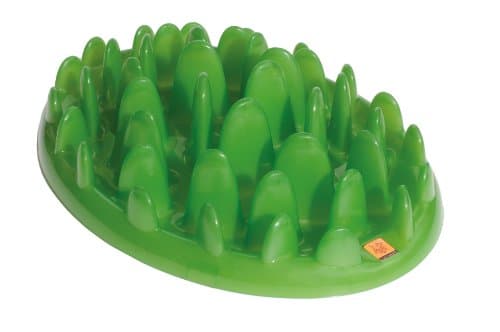
If the problem is speed rather than mess — a dog that inhales a meal — that is a different product and a better-evidenced one, because eating rapidly is among the factors associated with GDV risk. See slow feeder bowls.
One caveat on scope, because the search results blur it: everything above concerns large, deep-chested breeds, which is the population the research studied. The best dog bowls for flat-faced breeds covers the small brachycephalic dogs the finding does not transfer to, and what actually matters for them instead.
Quick picks
The short answer, ranked and scored against our published durability rubric. Where a manufacturer does not publish a spec, we say so rather than estimating it.
| # | Photo | Product | Durability | Price |
|---|---|---|---|---|
| 1 | 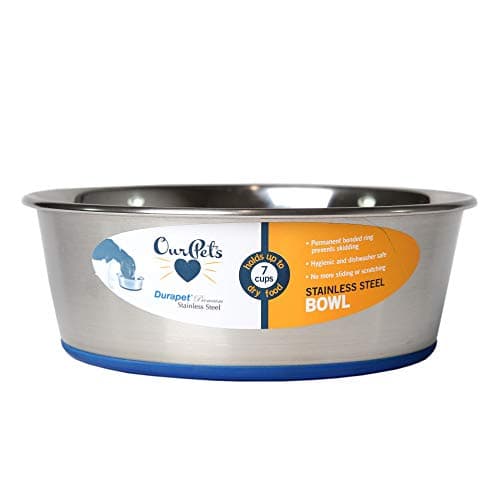 | OurPets Durapet Stainless Steel BowlThe sensible stainless bowl at a tenth of the price | 71/100 | $17.99 · Amazon |
| 2 | 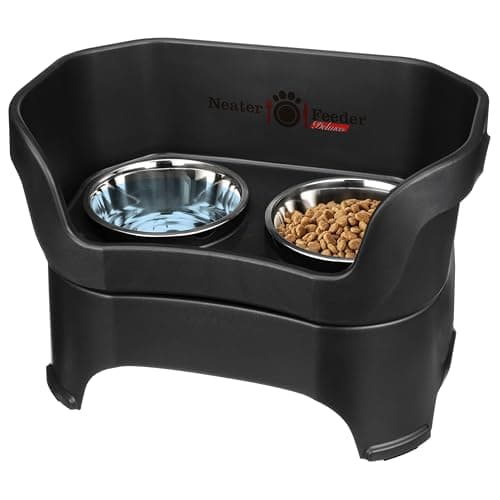 | Neater Pet Brands Neater Feeder DeluxeContaining the mess rather than just raising the bowl | 59/100 | $67.99 · Amazon |
| 3 | 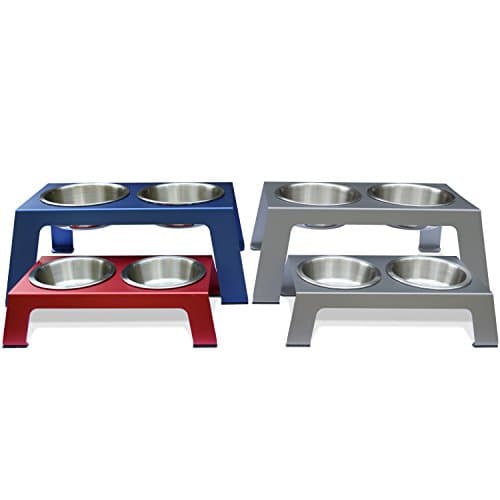 | PetFusion Elevated Dog FeederA clean stand that will not slide across a tile floor | 59/100 | $34.96 · Amazon |
| 4 | 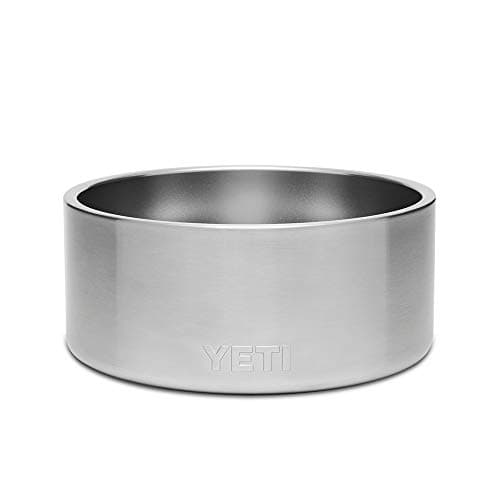 | YETI Boomer 8 Dog BowlA bowl that will outlive the dog, at a price that reflects it | 87/100 | $60.00 · Amazon |
Tap any row to jump to the full review. Prices are pulled live from Amazon as of October 18, 2026; where we have no verified live price we show none rather than a stale number. #ad — how our links work.
The picks, ranked
1. OurPets Durapet Stainless Steel Bowl
Durability score 71/100Best for: The sensible stainless bowl at a tenth of the price
The value answer, and honestly the one most people should buy. The premium bowls are better specified, not meaningfully better bowls.
- Material
- Stainless steel; alloy not published
- Base
- Bonded rubber non-slip ring
- Care
- Dishwasher safe
- Capacity
- Multiple sizes; per the live listing
Pros
- Does everything a stainless bowl needs to do at a fraction of the price of the premium options
- The bonded rubber ring genuinely stops the bowl traveling across a tiled floor
- Dishwasher safe and effectively indestructible
Cons
- The alloy is not published, only 'stainless steel', which covers a wide range of grades
- The bonded rubber ring can separate over years of dishwasher heat — the one wear point on an otherwise permanent object
How we assessed it: on published materials, hardware specs and construction — not long-term chew-tested. We say so because it is true, and because a claim we cannot back is worth nothing to you.
#ad Price as of October 18, 2026; Amazon prices change often, so check before you buy. How our links work.
2. Neater Pet Brands Neater Feeder Deluxe
Durability score 59/100Best for: Containing the mess rather than just raising the bowl
Buy it for the mess containment, which no other feeder here addresses, and treat the elevation as secondary.
- Format
- Two-tier — upper feeding basin drains spilled water to a lower reservoir
- Bowls
- Stainless steel, removable
- Height
- Published per size by Neater
- Material
- Molded plastic housing
- Warranty
- Not published in detail
Pros
- The two-tier design is the only genuinely different idea in this category: spilled water drains away from the food rather than sitting under it
- Stainless steel bowls, removable for washing — which is the only bowl material we would recommend
- Contains kibble scatter, which for a messy eater is worth more than the elevation itself
Cons
- Plastic housing, and it is the part that cracks if a big dog stands on it
- Bulkier on the floor than a simple stand
- No published warranty terms
How we assessed it: on published materials, hardware specs and construction — not long-term chew-tested. We say so because it is true, and because a claim we cannot back is worth nothing to you.
#ad Price as of October 18, 2026; Amazon prices change often, so check before you buy. How our links work.
3. PetFusion Elevated Dog Feeder
Durability score 59/100Best for: A clean stand that will not slide across a tile floor
The tidy option. It does the elevation job well and makes no attempt at the mess problem.
- Format
- Anodized aluminum stand with bowl insets (PetFusion)
- Bowls
- US food-grade stainless steel — two 3-cup bowls plus a shallow 1.1 in / 13 oz dish on the Short 4 in model
- Feet
- Anti-slip
- Height
- 4 in on this listing; PetFusion also lists a Tall 8 in option
- Warranty
- 12 months against manufacturing defects (PetFusion)
Pros
- Recessed bowl seats stop a determined eater tipping the bowl out of the stand, which is the usual failure of open frames
- Stainless bowls that lift straight out for the dishwasher
- Anti-slip feet — a stand that slides across tile is a stand a dog chases around the kitchen
- One of the very few feeders here that publishes a warranty at all: 12 months against manufacturing defects
Cons
- No mess containment at all, unlike the Neater Feeder
- The warranty covers defects only, and 12 months is short for a metal stand
- Fixed height per SKU — the 4 in and 8 in are different products, so it does not grow with a puppy
How we assessed it: on published materials, hardware specs and construction — not long-term chew-tested. We say so because it is true, and because a claim we cannot back is worth nothing to you.
#ad Price as of October 18, 2026; Amazon prices change often, so check before you buy. How our links work.
4. YETI Boomer 8 Dog Bowl
Durability score 87/100Best for: A bowl that will outlive the dog, at a price that reflects it
Objectively over-specified for a dog bowl, and the only one here whose steel alloy is actually stated. If you buy one bowl for the dog's life, this is defensible.
- Material
- 18/8 stainless steel, per YETI
- Capacity
- 8 cups
- Base
- Non-slip ring
- Care
- Dishwasher safe
- Wall construction
- Double-wall on YETI's insulated line; check the specific model
Pros
- 18/8 stainless is a named alloy specification rather than 'stainless steel', which is the level of disclosure we keep asking for and rarely get
- Non-slip ring is molded into the base rather than glued on, so it does not peel off in the dishwasher
- Genuinely a buy-it-for-life object — there is no wear mechanism on a stainless bowl short of the dog eating it
Cons
- Four to five times the price of an equivalent-capacity stainless bowl
- Heavy, which is a virtue at home and a liability in a pack
- You are paying a brand premium on a product where the material is the whole story
How we assessed it: on published materials, hardware specs and construction — not long-term chew-tested. We say so because it is true, and because a claim we cannot back is worth nothing to you.
#ad Price as of October 18, 2026; Amazon prices change often, so check before you buy. How our links work.
If you do elevate, get the height right
The common guidance is that the bowl rim should sit somewhere around the height of the dog’s lower chest or elbow, so the dog is not reaching up or stooping far down. Measure the dog rather than the box: floor to elbow, standing square.
Two errors are common. Too high forces the dog to reach up and swallow against gravity, which is the configuration you would least want given the GDV literature. Too low is simply a normal bowl with extra plastic around it.
The bowl matters more than the stand
Whatever height you land on, the bowl itself is where the durability question lives, and it is a short answer: stainless steel. It does not craze, does not harbor bacteria in cracks, survives a dishwasher indefinitely and cannot be chewed apart into swallowable pieces.
Note the disclosure gap even here: YETI states an 18/8 stainless alloy for its Boomer bowls, and almost nobody else in the category states an alloy at all — including bowls we happily recommend. We go through the whole comparison in stainless vs ceramic dog bowls and rank the bowls in the best stainless steel dog bowls.
What to look for in a stand, if you buy one
- Non-slip feet, not felt pads. Felt slides on tile and soaks up water.
- Recessed bowl seats. A bowl that lifts out of the stand when the dog noses it is a stand that has failed at its one structural job.
- Removable stainless bowls. If the bowls are molded plastic or not removable, walk away — you cannot clean it properly and plastic scratches.
- A wipeable base. Wood and MDF stands in a wet area are a short-term purchase.
Our position, stated plainly
A good stainless bowl with a rubber base, on the floor, is the right answer for most dogs. Elevate on veterinary advice, or when the dog is genuinely very tall and you accept that you are buying comfort rather than health. Buy a two-tier feeder if what you actually want is a dry floor.
The ranked elevated options, and the same evidence in more detail, are in the best elevated dog feeders.
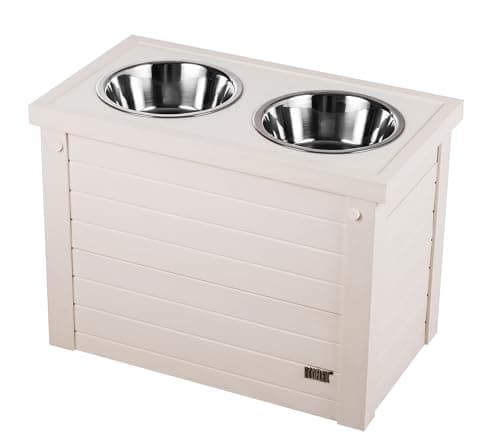
One caution if the model you are looking at also stores the food: that is a second purchase with its own failure modes, and raising the bowls to get a storage bin underneath is deciding the height question for the wrong reason. Feeders with built-in storage covers what the FDA actually says about keeping dry food, and which designs can be washed out between bags.
Bowl height and bowl difficulty are separate decisions, and they get conflated constantly in listings that sell a raised slow feeder as one upgrade. The height question is the one with an evidence base and it is the one answered above. Whether your dog needs a slow feeder at all — and the four situations where one is the wrong tool — is a different question, answered on when to use a slow feeder dog bowl.
Frequently asked questions
Are raised dog bowls bad for dogs?
For large and giant breeds, the evidence points the wrong way. Glickman et al. (2000) in JAVMA examined non-dietary risk factors for gastric dilatation-volvulus and found a raised food bowl associated with increased GDV risk, estimating that a meaningful share of cases in those breeds were attributable to it. It is an observational study, so it shows association rather than causation — but the elevated-feeder category markets health benefits it has never demonstrated against a published finding pointing the other way.
Should a large dog eat from a raised bowl?
Not for health reasons. Large and giant breeds are precisely the population Glickman et al. studied, and raised feeding was associated with increased bloat risk in that group. Keep the bowl on the floor unless a veterinarian has advised otherwise for a specific condition — megaesophagus, severe cervical or forelimb arthritis, or post-operative recovery are the genuine cases.
What are the benefits of an elevated dog feeder?
Honestly, fewer than the category claims. Better digestion, better posture in a healthy dog and reduced bloat risk are all unevidenced, and the last one has published evidence pointing the opposite way for large breeds. The real benefits are convenience for a very tall dog, and clinical management on veterinary advice. If your reason is mess, elevation barely helps — a bonded rubber base and a two-tier feeder that drains spilled water into a lower reservoir do far more.
How high should a raised dog bowl be?
Around the height of the dog's lower chest or elbow, measured on the dog rather than taken from the box: floor to elbow, standing square. Too high forces the dog to reach up and swallow against gravity, which is the configuration you would least want given the bloat literature. Too low is a normal bowl with extra plastic around it.
What is the best bowl material for a dog?
Stainless steel. It does not craze, harbors no bacteria in surface cracks, survives a dishwasher indefinitely and cannot be chewed into swallowable pieces. Note the disclosure gap even here: YETI states an 18/8 alloy for its Boomer bowls and almost no other brand in the category states an alloy at all, including bowls we recommend.
Do raised bowls help a dog that eats too fast?
No — and eating rapidly is itself among the factors associated with bloat risk, so it is worth addressing properly. A slow feeder bowl is the tool for that: a molded maze or upright 'grass blade' design that physically prevents a dog taking large mouthfuls. Elevation changes nothing about speed.
Sources
Every spec on this page traces to one of these. Where a manufacturer does not publish a figure, we say “not published” rather than estimating it.
- Glickman et al. (2000) — “Non-dietary risk factors for gastric dilatation-volvulus in large and giant breed dogs”, JAVMA 217(10):1492–9 (the study that found raised feeders associated with INCREASED risk)
- AVMA — gastric dilatation-volvulus (bloat) owner information
- 18/8 and 18/10 stainless — what the numbers mean (chromium and nickel content in the 300 series)