Dog Crate vs Kennel
The words get used interchangeably and they should not be. One is a settling place measured in inches; the other is containment measured in feet.
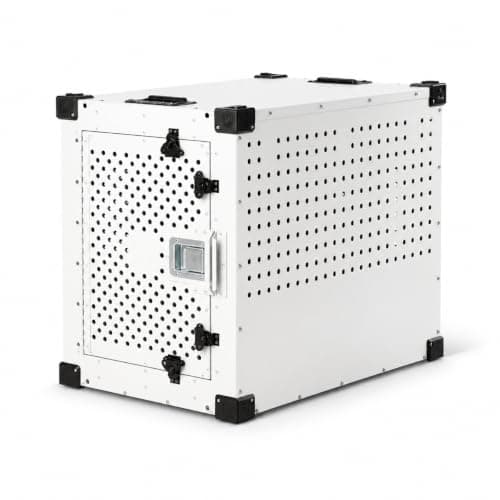
The short answer. A crate is an indoor, den-sized enclosure — big enough to stand, turn and lie stretched out, and no bigger. Its job is to be a settling place and a safe containment for hours at a time. A kennel is an outdoor run — measured in feet rather than inches, with room to move and, done properly, shade, shelter and a solid surface. Its job is secure containment while the dog is awake and active.
They are not sizes of the same thing, and neither substitutes for the other.
Side by side
| Crate | Kennel / run | |
|---|---|---|
| Where | Indoors, in a room people use | Outdoors, on a prepared surface |
| Sizing logic | Deliberately small: stand, turn, lie stretched — no more | Deliberately large: room to walk, turn and choose a spot |
| Typical materials | Coated wire, aluminum, steel, composite furniture | Galvanized welded wire panels on a steel frame |
| Primary job | Settling, house-training, safe confinement, travel base | Secure containment outdoors while active |
| Weather | Not a factor | The whole problem — shade, shelter, drainage, wind |
| Main failure mode | Latch operated by the dog | Digging out under the panels; gate left unsecured |
| Published specs | Poor — MidWest will not state a wire gauge | Worse — nobody in the run category publishes a gauge |
The sizing logic is genuinely opposite
This is the point most articles miss. A crate is small on purpose. The den-sized fit is what makes it a settling place and what makes it work for house-training — a dog will not usually soil where it sleeps, and a crate the dog can use as a bedroom at one end and a bathroom at the other defeats the mechanism entirely.
A kennel has the reverse logic. Too small is the failure. A run in which a dog cannot walk a few strides, choose sun or shade, and get away from its own mess is a poor place to spend a day. That is why the sizing rules in what size crate does my dog need do not transfer to a run, and applying them there produces something closer to a cage.
Time, and the honest limits
Neither is a place to leave a dog indefinitely, but the limits are different in kind.
- A crate is for hours, not a working day, and never for a dog in distress. Standard training guidance treats extended daytime crating as a management stopgap rather than a routine.
- A kennel can hold a dog for longer if it has shade, shelter, water and drainage — but it is containment, not company. A dog left in a run all day is alone outdoors, which for a social animal is its own problem regardless of how good the run is.
Quick picks
The short answer, ranked and scored against our published durability rubric. Where a manufacturer does not publish a spec, we say so rather than estimating it.
| # | Photo | Product | Durability | Price |
|---|---|---|---|---|
| 1 | 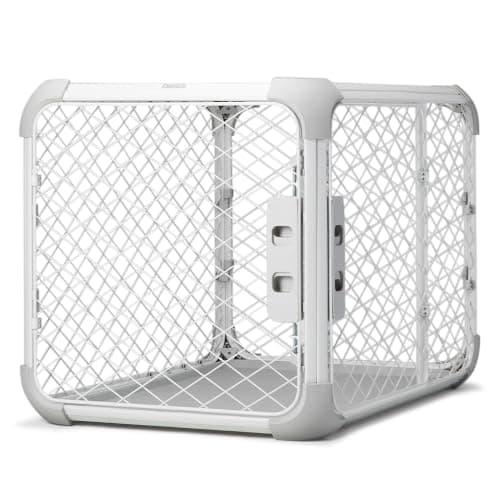 | Diggs Evolv Modular CrateA crate you can live with in a living room | 70/100 | $381.65 · Amazon |
| 2 | 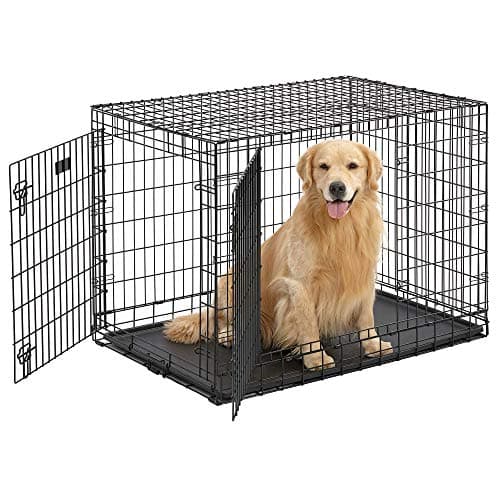 | MidWest Homes for Pets Ultima Pro Heavy-Duty CrateA stronger wire crate — with a hard limit you must understand | 43/100 | $154.99 · Amazon |
| 3 | 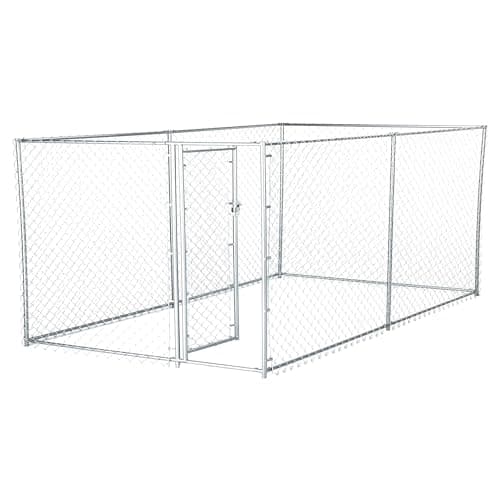 | Lucky Dog Uptown Welded Wire KennelA welded-wire run at the lowest sensible price | 59/100 | Check price |
| 4 | 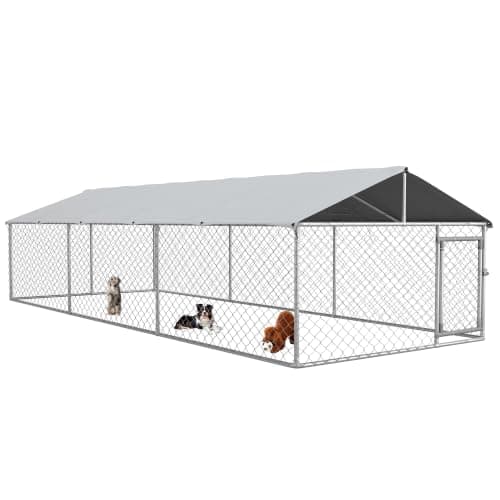 | PawHut Outdoor Dog KennelA covered galvanized run with the largest footprint here | 51/100 | $303.99 · Amazon |
Tap any row to jump to the full review. Prices are pulled live from Amazon as of October 18, 2026; where we have no verified live price we show none rather than a stale number. #ad — how our links work.
The picks, ranked
1. Diggs Evolv Modular Crate
Durability score 70/100Best for: A crate you can live with in a living room
The best-designed crate here and a genuinely clever latch — but it is not crash-certified, and its warranty walks away from chewers.
- Materials
- High-strength steel wire on a reinforced frame; nylon-coated steel, diamond mesh, rounded pet-safe edges (Diggs)
- Latch
- Dual latching system — Diggs states the two locks cannot be opened from inside the crate
- Capacity
- S up to 16 in / 30 lb; M 16–18 in / 30–50 lb; Intermediate 18–22 in / 50–70 lb; L 22–28 in / 70–90 lb; XL up to 29 in / 90–110 lb
- Size on this listing
- Intermediate — dogs 18–22 in tall (50–70 lb), Ash
- Warranty
- 1 year — and Diggs' warranty terms exclude 'damage caused by dogs who are not crate-trained or who chew on the product'
- Steel gauge
- Not published
- Crash certification
- None. Diggs holds no CPS certification at all today - its Passenger Carrier was certified at 18 lb in October 2021 and has since been delisted
Pros
- The dual latch genuinely defeats the paw-and-nose crate escapes that beat a single slide bolt — Diggs states it cannot be worked from inside
- Five sizes with published height AND weight bands, which is more than almost any crate maker publishes
- Modular panel construction, so it comes apart for storage without tools
- The only crate here that does not look like a piece of kennel equipment
Cons
- Diggs is sometimes remembered as a certified brand; its only CPS certificate was on the Passenger Carrier and it has been delisted. Nothing Diggs sells is crash-certified
- The warranty excludes chewers outright, which is a strange exclusion on a crate this expensive
- Diggs will not publish the steel gauge
- It breaks down into panels rather than folding flat — easier to store than a rigid crate, not as quick as a true collapsible
How we assessed it: on published materials, hardware specs and construction — not long-term chew-tested. We say so because it is true, and because a claim we cannot back is worth nothing to you.
#ad Price as of October 18, 2026; Amazon prices change often, so check before you buy. How our links work.
2. MidWest Homes for Pets Ultima Pro Heavy-Duty Crate
Durability score 43/100Best for: A stronger wire crate — with a hard limit you must understand
A decent home crate for a dog that is not trying to escape. It is not an escape-proof crate and it is emphatically not a car crate.
- Construction
- 'Professional-gauge, heavy duty steel'
- Wire gauge
- NOT PUBLISHED — MidWest will only say 'professional-gauge'
- Latches
- Slide-bolt
- Sizes
- 24, 30, 36, 42, 48 in
- Car safety
- None. CPS: wire crates 'will not provide significant protection in the case of an accident'
Pros
- Heavier wire than a standard folding crate, and the double doors are genuinely useful
- Cheap, and it folds flat
Cons
- MidWest markets it as 'professional-gauge' and then refuses to publish a number. That is marketing, not a spec
- Slide-bolt latches — the easiest latch for a determined dog to defeat
- Never use a wire crate as car restraint. In the Center for Pet Safety's 2015 crate study, MidWest wire crates failed, and CPS's conclusion is that wire crates should be treated as distraction prevention, not protection
How we assessed it: on published materials, hardware specs and construction — not long-term chew-tested. We say so because it is true, and because a claim we cannot back is worth nothing to you.
#ad Price as of October 18, 2026; Amazon prices change often, so check before you buy. How our links work.
3. Lucky Dog Uptown Welded Wire Kennel
Durability score 59/100Best for: A welded-wire run at the lowest sensible price
A sound welded-wire run at a fair price. Add a cover, and understand that nobody in this category will tell you the gauge.
- Construction
- Welded wire panels
- Finish
- Galvanized, per the manufacturer
- Wire gauge
- Not published
- Cover
- Not included in the base configuration
- Chew/escape rating
- None published
Pros
- Welded wire panels rather than chain link, which a dog cannot climb the same way
- Galvanized finish, which is what keeps an outdoor kennel out of the rust cycle
- Assembles without concrete or permanent fixings
Cons
- Wire gauge not published — the single specification that determines whether the panels resist a big dog
- No roof in the base configuration, and a climber will go over an uncovered run
- No published escape rating of any kind
How we assessed it: on published materials, hardware specs and construction — not long-term chew-tested. We say so because it is true, and because a claim we cannot back is worth nothing to you.
#ad We only show a price when we have a live one from Amazon. We don’t have one for this product right now, so we’re not going to guess. How our links work.
4. PawHut Outdoor Dog Kennel
Durability score 51/100Best for: A covered galvanized run with the largest footprint here
The most run for the money, with the same missing specification as everything else in the category.
- Construction
- Galvanized steel frame with wire panels
- Cover
- Included in this configuration
- Wire gauge
- Not published
- Footprint
- Published on the listing
Pros
- Cover included, and a larger footprint than the other covered options here
- Galvanized throughout rather than painted steel
Cons
- Gauge not published, again
- Assembly is long and needs two people
- Ground anchoring is essential and is not always included
How we assessed it: on published materials, hardware specs and construction — not long-term chew-tested. We say so because it is true, and because a claim we cannot back is worth nothing to you.
#ad Price as of October 18, 2026; Amazon prices change often, so check before you buy. How our links work.
If you are buying a run, the panels are the easy part
Every kennel we have looked at has the same missing specification — nobody publishes a wire gauge — so the panels are largely commodity, and what separates a good installation from a bad one is everything else:
- The floor. Bare earth is a digging invitation and a mud problem. Concrete, pavers, or a buried wire apron along the perimeter. Digging out under the panels is the number-one kennel escape.
- Shade, all day. Not shade at 9am. A run that bakes from noon is a welfare problem, and a covered top is the minimum. This is why covered configurations are worth the extra money.
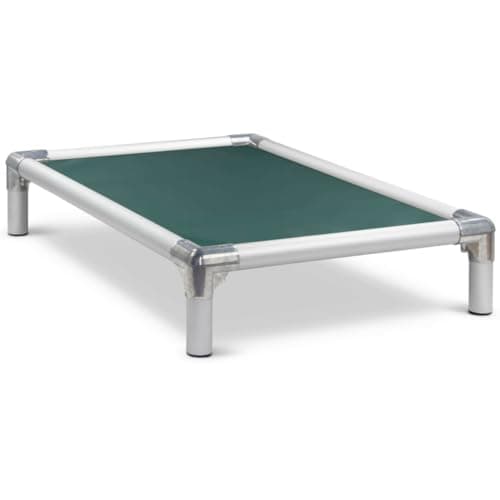
- Shelter from wind and rain, and somewhere off the wet ground. An elevated cot works well here — see elevated dog beds.
- Water that cannot be tipped. A bowl with a bonded rubber base, or a bracket-mounted bucket.
- A gate latch a dog cannot operate, and a habit of checking it. More dogs get out of runs through unlatched gates than through panels.
- Drainage. A run that holds water is unusable for weeks at a time.
We rank the runs themselves in the best outdoor dog kennels and runs.
Most households want both, and use them differently
A crate indoors for settling, house-training, recovery from surgery and a base when you travel. A run outdoors for the hour you need the dog secure while you are moving furniture, working in the yard, or have contractors in. Two tools, two jobs.
Where people go wrong is substituting one for the other: leaving a dog crated all day because there is no yard, or leaving a dog in a run overnight because the crate is too small for sleeping. Both are the wrong tool applied for the wrong duration.
And a third thing that is neither
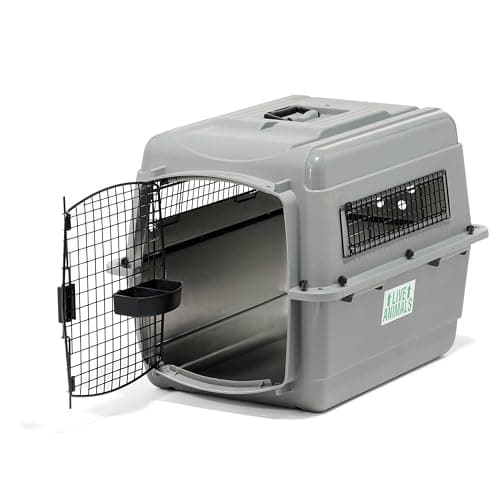
A travel crate is a distinct category again — designed for a moving vehicle or an aircraft hold, judged on crash certification and IATA compliance rather than on settling or containment. A home crate is not one of these, and the Center for Pet Safety’s position on wire crates in vehicles is unambiguous. See dog travel crates and crash-tested dog crates.
There is a third comparison people often mean to be making. Crate against kennel is a question about where and how a dog is contained; crate against bed is a question about whether containment is what you need at all. If you are not yet sure which problem you are solving, start with dog bed vs crate, which works through the comfort-or-containment decision before any product is involved.
And a fourth product that gets substituted for a crate constantly. An exercise pen buys floor space and contains nothing — no roof, no anchorage, and height as its only meaningful specification. Which of the two you actually need, by job rather than by price, is on dog crate vs playpen.
Frequently asked questions
What is the difference between a dog crate and a kennel?
A crate is an indoor, den-sized enclosure — big enough for the dog to stand, turn and lie fully stretched, and deliberately no bigger — used for settling, house-training and safe confinement for hours at a time. A kennel is an outdoor run measured in feet, with room to walk and choose a spot, plus shade, shelter and drainage, used for secure containment while the dog is awake. They are not two sizes of the same thing.
Is a kennel just a bigger crate?
No — the sizing logic is opposite. A crate is small on purpose: the den-sized fit is what makes it a settling place and what makes house-training work, because a crate roomy enough to sleep at one end and soil at the other defeats the mechanism. A run that is too small is the failure case, because a dog needs to walk a few strides, choose sun or shade, and get away from its own mess.
How long can a dog stay in a crate versus a kennel?
A crate is for hours rather than a working day, and never for a dog in distress — extended daytime crating is a management stopgap, not a routine. A kennel can hold a dog longer if it has shade, shelter, water and drainage, but it is containment rather than company: a dog left in a run all day is alone outdoors, which for a social animal is its own problem however good the run is.
How do you stop a dog escaping from an outdoor kennel?
Deal with the floor and the gate, in that order. Digging out under the panels is the number-one kennel escape, so the run wants concrete, pavers or a buried wire apron around the perimeter rather than bare earth. After that, more dogs get out through unlatched gates than through panels — fit a latch a dog cannot operate and build the habit of checking it.
What wire gauge should an outdoor dog kennel be?
Nobody will tell you. Not one manufacturer in the outdoor run category publishes a wire gauge, and the crate category is barely better — MidWest states only 'professional-gauge' for its heavy-duty line. Since the panels are effectively a commodity, judge the installation instead: floor surface, all-day shade, wind and rain shelter, un-tippable water, drainage, and a dog-proof gate latch.
Can I use a home crate for car travel?
No. Travel crates are a separate category judged on crash certification and IATA compliance rather than on settling or containment, and the Center for Pet Safety's position on wire crates in vehicles is that they will not provide significant protection in an accident. Home reinforcement does not change that.
Sources
Every spec on this page traces to one of these. Where a manufacturer does not publish a figure, we say “not published” rather than estimating it.
- MidWest Homes — Ultima Pro (“professional-gauge” steel; no numeric gauge published)
- ProSelect Empire — specs and warranty (20-gauge steel, 1/2 in reinforcing tube; excludes damage caused by user or dog)
- Center for Pet Safety — 2015 Crate Study (wire crates “will not provide significant protection in the case of an accident”)
- AKC — crate training and crate sizing guidance for owners