What Is a Tactical Dog Collar?
Nobody owns the word. There is no test, no rating and no certifying body behind it. So the useful question is which of the features it usually implies are real — and which are decoration.
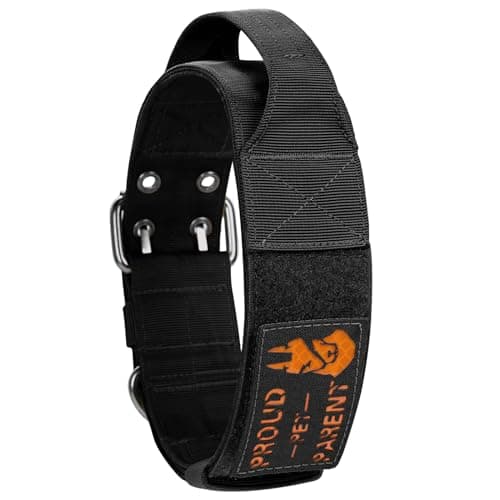
Let us start with the part nobody in the category will say out loud: “tactical” is not a specification. There is no standards body, no test method, no minimum load rating and no certification. Any manufacturer may print it on any collar. It describes an aesthetic — nylon webbing, a metal buckle, MOLLE-style laddering, a patch panel, coyote brown or ranger green — and an aesthetic borrowed from military and law-enforcement K9 equipment.
Which does not make it worthless. Borrowed designs are borrowed for reasons, and some of the features genuinely do the job they look like they do. The trick is separating the ones that change what the collar can survive from the ones that only change how it looks in a photograph.
Four features that are genuinely functional
1. A metal buckle instead of a plastic side-release
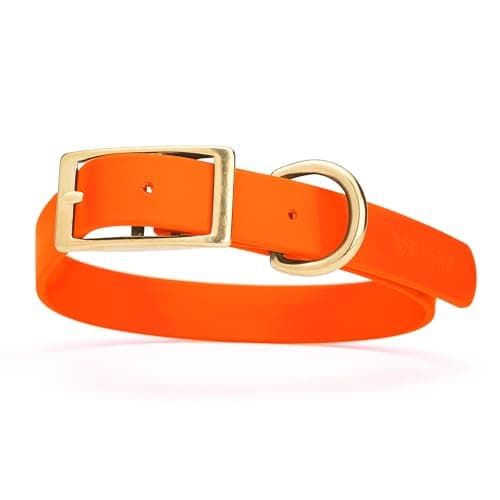
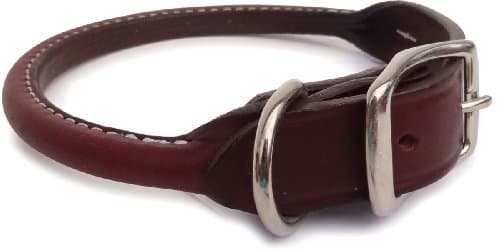
This is the real one. A side-release acetal buckle is convenient and it is also the part that cracks in cold weather and shatters under a shock load. A cast metal buckle — properly a “quick-release” cam or a plain welded ring and a friction adjuster — moves the weak point somewhere else.
Note the qualifier though: cast. Stamped or plated zinc dressed up as metal hardware is not an upgrade over good acetal, and it corrodes. The collar that wins our durable collar roundup wins on this axis, not on styling.
2. A control handle
A short loop of webbing sewn to the collar, sized for a fist. It gives you instant close control of a dog without grabbing at the collar itself, and on a big dog at a vet’s door or a car boot it is genuinely the most useful feature on this list. It is also the one that carries the highest load in normal use, which makes how it is attached the thing worth looking at.
3. Heavier webbing, when the denier is published
Most tactical collars use 1000D nylon, or say they do. Denier is a yarn-mass measure — grams per 9,000 meters under ASTM D1907 — so it is a thickness figure, not a strength one, and it only compares meaningfully within the same fiber. 1000D polypropylene is not automatically tougher than 500D nylon.
Note also that “1000D nylon” and “1000D Cordura” are different claims. Cordura is a specific branded high-tenacity fabric sold in 330D, 500D, 700D and 1000D weights. A brand that says nylon has not said Cordura, and reviews that upgrade the one to the other are inventing a spec.
4. A welded D-ring rather than a split ring
A split ring is a keyring: a coiled wire that can be levered open. A welded ring cannot. This is a small, cheap difference that changes the failure mode completely, and it is one of the few places where the tactical look and the engineering agree.
Three features that are mostly costume
- MOLLE / PALS laddering on a collar. On a vest it is a genuine load-carriage system. On a two-inch-wide collar there is nowhere useful to mount anything, and the extra rows of stitching are extra needle holes in the webbing.
- Hook-and-loop patch panels. Fine, harmless, sometimes useful for a “DO NOT PET” patch that genuinely changes how strangers behave around a working dog. Not structural.
- The word “military grade.” This has no meaning in a consumer context. There are real military specifications for webbing — MIL-W-17337 and the like — and if a brand meant one, it would cite the number. None of them do.
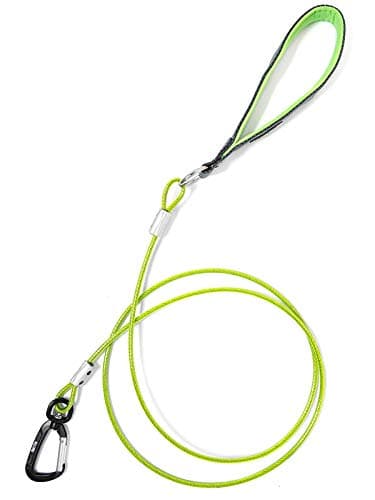
The grab handle is the one feature in this category with a genuine use case. Dog collars with handles works through what it is good for, what it is not, and why the traffic handle on a leash is usually the better version of the same idea.
How to read a tactical collar product page in ninety seconds
Four questions. If a page cannot answer them, the collar is styling.
- What is the buckle made of, and is it cast or stamped? “Metal buckle” without a material is a warning sign, because the honest answer is usually plated zinc.
- Is the D-ring welded? A photograph usually answers this faster than the copy does — look for a seam.
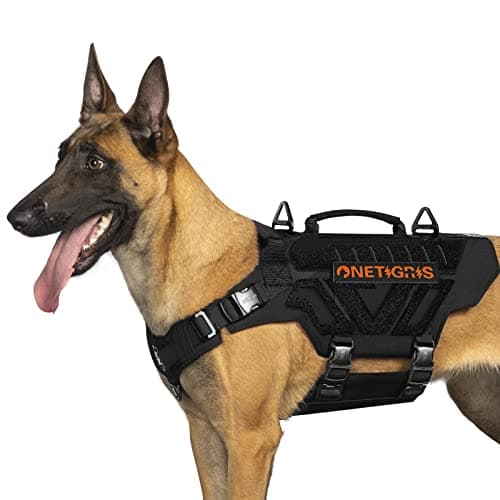
- Is there a published load rating anywhere? Almost nobody publishes one, which is exactly why the ones who do stand out. OneTigris publishes buckle and D-ring ratings in pounds on the X-Armor harness, and that single fact is why it wins our durability roundup. If a brand is willing to be pinned down, that tells you something beyond the number itself.
- What does the warranty exclude? Read the exclusions, not the headline duration. Chewing is excluded almost everywhere in this category.
Who should actually buy one
Worth it: a large, strong dog where a handle earns its keep; any dog you need to physically manage in tight quarters; working, field and gundog use where the collar takes real abuse; and cold climates, where acetal buckles genuinely fail.
Not worth it: a 15 lb dog, where a metal buckle and 1000D webbing are just weight the dog carries all day for no benefit; and any purchase where the deciding factor is that it looks the part. A heavy collar on a small dog is a worse collar.
If what you actually want is the vest-cut version of all this — MOLLE panels, load carriage, the full working-dog build — that is a harness rather than a collar, and it is covered in our tactical harness roundup.
Frequently asked questions
What makes a dog collar tactical?
Nothing formal. There is no standards body, test method or certification behind the word — any manufacturer may print it on any collar. In practice it signals an aesthetic borrowed from military and law-enforcement K9 gear: heavy nylon webbing, a metal buckle, MOLLE-style laddering, a patch panel and muted colors. Some of the features that come with the look are genuinely functional; several are decoration.
Is a tactical dog collar stronger than a normal one?
Sometimes, and for one specific reason: a cast metal buckle and a welded D-ring genuinely change the failure mode compared with an acetal side-release buckle and a split ring. Heavier webbing helps less than people assume, because denier is a thickness measure rather than a strength measure and only compares within the same fiber. Stamped or plated zinc hardware dressed up as metal is not an upgrade at all.
Does 1000D nylon mean Cordura?
No. Cordura is a specific branded fabric made with high-tenacity, air-jet-textured yarn, sold in 330D, 500D, 700D and 1000D weights. A collar described as 1000D nylon has not claimed Cordura, and a review that reports it as Cordura has invented a spec. Denier itself is defined by ASTM D1907 as grams per 9,000 meters of yarn — a mass measure, not a strength one.
Is MOLLE webbing on a dog collar useful?
Not really. On a vest, MOLLE/PALS laddering is a genuine load-carriage system for pouches. On a collar two inches wide there is nowhere useful to mount anything, and each extra row of stitching is another line of needle holes through the webbing. It is styling. The patch panel is more defensible — a visible 'DO NOT PET' patch really does change how strangers behave around a working dog.
Does 'military grade' mean anything on dog gear?
No. There are genuine military specifications for webbing — MIL-W-17337 among them — and a manufacturer meeting one would cite the number, because that is the entire point of a specification. In the dog-gear category nobody does. Treat 'military grade' as a styling claim and go and look at the buckle material and the ring construction instead.
Sources
Every spec on this page traces to one of these. Where a manufacturer does not publish a figure, we say “not published” rather than estimating it.
- OneTigris — X-Armor Tactical Harness (1000D nylon; published buckle and D-ring load ratings)
- Denier explained — ASTM D1907 skein method (grams per 9,000 meters)
- Cordura — Classic fabric yarn sizes (330D / 500D / 700D / 1000D)
- Ruffwear — warranty terms (chewing excluded; no duration stated)
- BioThane — Beta 520 PET material spec (1,000 lb strap break strength; 200 lb buckle pull strength)