The Best Dog Long Lines for Camping
Half the people shopping for this are really shopping for a tie-out, and that is the substitution worth stopping first. Everything else about a campsite line comes down to mud, abrasion and a clip no manufacturer will put a number on.
The verdict
For a campsite, buy coated webbing: the Viper BioThane long lineis the pick, because a campsite is wet, muddy and full of things that soak a rope, and BioThane does not absorb water, mud or odor — it is also the only line here with a published strap break strength (1,000 lb for standard 1 in Beta 520). Buy gloves with it; wet coated webbing is genuinely slick and that is a requirement, not a tip. If you want the same material with the slipperiness engineered out, the Jim Hodges gummy line handles best of anything here. If you prefer rope in the hand for recall work, the Mendota check cord is the field-tradition choice, made in the USA. One thing matters more than which line you pick: a long line is handled gear. It is not a tether to clip to a picnic table and walk away from, and none of these four publishes a rating for the clip — the part that would actually be holding your dog.
Quick picks
The short answer, ranked and scored against our published durability rubric. Where a manufacturer does not publish a spec, we say so rather than estimating it.
| # | Photo | Product | What the maker publishes | Durability | Price |
|---|---|---|---|---|---|
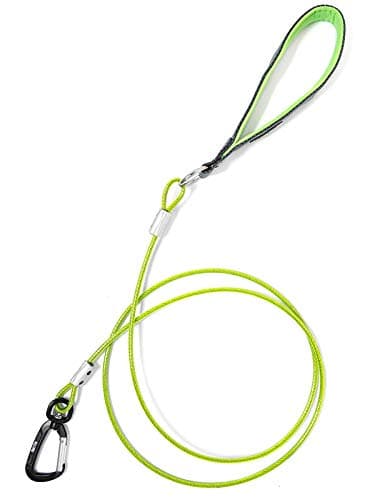
| 1 | 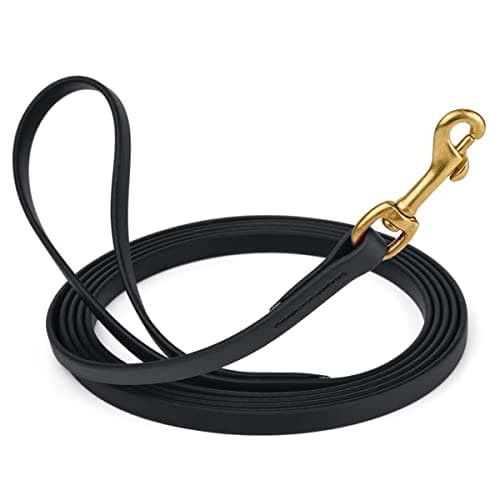 | Viper BioThane Long Line (30 ft)Wet ground and mud — the only material here with a published break strength |
| 73/100 | $59.99 · Amazon |
| 2 | 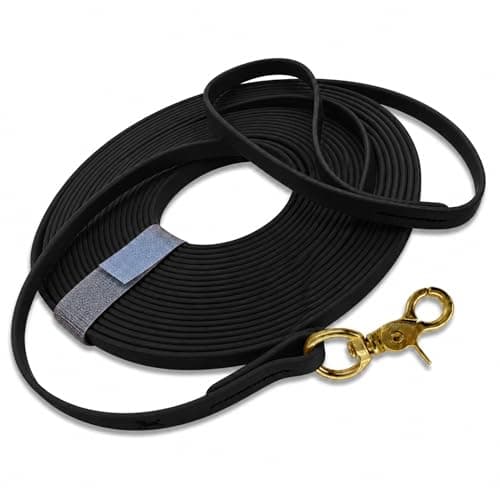 | Jim Hodges Dog Training Gummy K9 BioThane Long LineA grippier biothane long line |
| 69/100 | $49.99 · Amazon |
| 3 | 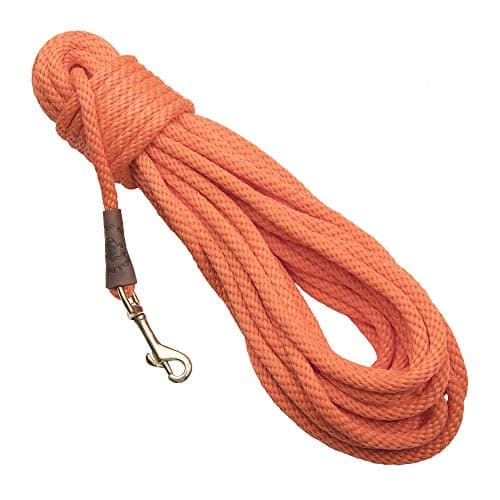 | Mendota Pet British Style Check CordField recall work — the traditional rope check cord, made in the USA |
| 67/100 | $27.99 · Amazon |
| 4 | 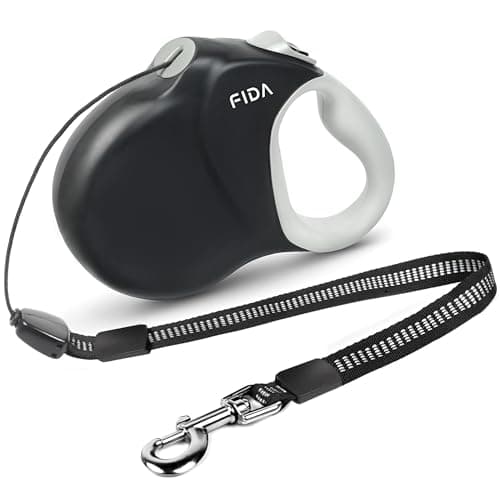 | Fida Check Cord Long LineThe cheapest long line worth owning |
| 45/100 | $25.98 · Amazon |
Tap any row to jump to the full review. Specs are the manufacturer's own published figures; where a maker does not publish one we say "not published" rather than estimating it. Prices are pulled live from Amazon as of October 18, 2026; where we have no verified live price we show none rather than a stale number. #ad — how our links work.
First: a long line is not a tie-out
This is the most important paragraph on the page, and it is the reason the page exists. A long line is a 15 to 50 foot leash you hold, or let drag while you stand at the other end of it. A tie-out is a fixed anchor system designed to be left attached to a dog. They are not interchangeable, and at a campsite people substitute one for the other constantly because the line is already in the bag.
Three concrete reasons not to:
- The clip is unrated and it is the whole system. Every line on this page publishes nothing about its snap. Viper publishes a 1,000 lb figure for the strap and nothing for the hardware; Mendota, Jim Hodges and Fida publish nothing for either. A dog that hits the end of 30 feet at a run is loading the one component nobody will put a number on.
- Length is the hazard.Thirty feet of line around a table leg, a tree, a guy line or the dog’s own body is a wrap, and a wrap on a running dog is an entanglement injury. A tie-out is short and anchored for exactly that reason.
- Nobody is holding it.A handled line fails safe — you feel the load building and you can give or take. An unattended line fails to whatever the clip does.
We do not currently assess tie-out stakes or cables, so this page recommends none. What we will say is that if your actual requirement is “dog stays at the site while I cook dinner,” the honest answers are a crate or a pen, and a travel crate in particular is the campsite tool that gets wrongly left at home — see the travel crates.
Coated webbing against rope, at a wet campsite
At a campsite the line spends its life on wet ground, in ash, in pine duff and through mud. That environment sorts the two materials cleanly.
| Coated webbing (BioThane type) | Rope / check cord | |
|---|---|---|
| Water and mud | Does not absorb either; wipes clean | Absorbs water and stiffens as it dries |
| Odor | Does not hold it — the reason field owners buy it | Holds everything the dog rolled in |
| In brush | Flat profile slides; fewer snags | Tangles in brush more readily |
| In the hand | Slick, especially wet — gloves required | The best feel here; rope is why check cords exist |
| Published numbers | BioThane publishes 1,000 lb for 1 in Beta 520 strap, 200 lb buckle pull | Nothing published by any rope maker here |
| Weight | Heavier than rope at the same length | Lighter to carry |
One honest note on the polypropylene rope that the traditional check cords use: it is less abrasion-resistant than nylon of the same diameter, and a campsite has more abrasion than a training field — rock, root, tailgate edge, fire ring. That is the argument against rope here, and it is a real one. The counter-argument is handling: rope is simply better to hold, which is why Mendota’s solid-braid cord is still what a lot of field people use.
Length: the campsite answer is shorter than the training answer
For recall training, long is the point — 30 to 50 feet gives the dog enough rope to make a real decision at a real distance. At a campsite that same length is mostly a trip hazard for everyone in the loop and a wrap waiting to happen.
- 15–20 ft— the practical campsite length. Enough for the dog to move around the site with you holding or standing on the line, short enough to manage.
- 30 ft— for actual recall work on open ground away from the site.
- 50 ft— field training only. On a campsite this is a rope on the ground that someone will catch a foot in.
If the same line has to do both jobs, buy the longer one and learn to shorten it properly — gathered in loops in the hand, never wrapped around a wrist or a fist. A wrapped hand on a line a dog sprints to the end of is how people break fingers.
Clip it to a harness, not a collar
A long line and a collar are a bad combination, and the physics is simple: a dog that hits the end of 20 feet at speed delivers that whole shock to its neck. On a harness the same load spreads across the chest. Every one of the lines here should be clipped to a well-fitted harness for off-leash-adjacent work — the large-dog harnesses and the most durable harnesses are the right roundups, and how leash clips actually work covers the snap types and which of them you should not trust at distance.
What to look for, in order
- Material matched to wet ground. Coated webbing if the site is wet, rope if handling matters more than hygiene.
- The best clip you can get. It is the unrated part of every line here, so buy the heaviest, simplest snap offered and inspect it before every trip.
- Gloves, if you buy coated webbing. Non-negotiable. Wet BioThane through a bare hand at speed is a burn.
- 15–20 ft for the site, 30 ft for training. Not 50 ft at a campsite.
- A color you can see on the ground. The practical safety feature nobody lists as a spec.
- A harness to clip it to. Never a long line on a flat collar.
The picks, ranked
1. Viper BioThane Long Line (30 ft)
Durability score 73/100Best for: Wet ground and mud — the only material here with a published break strength
The material answer to wet ground, and the only long line in this roundup with a real published number behind it. Buy gloves with it.
- Material
- BioThane coated webbing — polyester core in a TPU/PVC coating
- Published strap break strength
- 1,000 lb for standard 1 in Beta 520 (BioThane's own figure)
- Published buckle pull strength
- 200 lb (BioThane's own figure)
- Water behavior
- Does not absorb water, mud or odor
- Hardware rating on this line
- Not published by Viper
Pros
- The only long line here whose material carries a published break strength — BioThane states 1,000 lb for the standard 1 in profile
- Sheds mud and water completely; it wipes clean and never stiffens or stinks
- No fiber exposed to rot, which is what kills rope and webbing lines used in wet country
- The long line format that survives being dragged through a stream all season
Cons
- Slick in the hand, especially wet — wear gloves, and treat that as a requirement rather than advice
- Heavier than rope at the same length
- Viper does not publish a rating for the clip, so the 1,000 lb figure applies to the part that was never going to break
How we assessed it: on published materials, hardware specs and construction — not long-term chew-tested. We say so because it is true, and because a claim we cannot back is worth nothing to you.
#ad Price as of October 18, 2026; Amazon prices change often, so check before you buy. How our links work.
2. Jim Hodges Dog Training Gummy K9 BioThane Long Line
Durability score 69/100Best for: A grippier biothane long line
Biothane with the slipperiness engineered out of it — the best-handling long line here, if you accept the unpublished specs.
- Material
- Coated webbing (BioThane-type), textured 'gummy' finish
- Core break strength
- Governed by the polyester core; Viper-grade Beta 520 PET publishes 1,000 lb
- Hardware rating
- Not published
Pros
- The textured finish addresses biothane's real weakness — it is far less slippery in a wet hand
- Made by a working-dog trainer for long-line work
Cons
- No manufacturer-published break strength or hardware rating
- The tacky surface picks up grit more than a smooth coating
How we assessed it: on published materials, hardware specs and construction — not long-term chew-tested. We say so because it is true, and because a claim we cannot back is worth nothing to you.
#ad Price as of October 18, 2026; Amazon prices change often, so check before you buy. How our links work.
3. Mendota Pet British Style Check Cord
Durability score 67/100Best for: Field recall work — the traditional rope check cord, made in the USA
The field-tradition choice, and the right shape for hand work — bought on Mendota's reputation rather than on any published number.
- Material
- Solid-braid polypropylene rope
- Format
- Check cord — rope, not flat webbing
- Origin
- Made in the USA per Mendota
- Break strength
- Not published
- Hardware
- Snap; rating not published
Pros
- Rope runs through the hand and through cover far better than flat webbing, which is the whole reason gundog handlers use a check cord rather than a long leash
- Polypropylene floats and does not soak up water the way a cotton or nylon line does
- A genuinely traditional design from a maker that has been building field leads for decades
Cons
- Mendota publishes no break strength and no hardware rating — the same silence as everywhere else in this category
- Rope tangles in brush more readily than biothane does
- Polypropylene is less abrasion-resistant than nylon of the same diameter
How we assessed it: on published materials, hardware specs and construction — not long-term chew-tested. We say so because it is true, and because a claim we cannot back is worth nothing to you.
#ad Price as of October 18, 2026; Amazon prices change often, so check before you buy. How our links work.
4. Fida Check Cord Long Line
Durability score 45/100Best for: The cheapest long line worth owning
Honest budget recall gear. Fine for dry-ground training; replace it before it becomes the thing between your dog and a road.
- Material
- Braided rope
- Lengths
- Multiple; per the live Amazon listing
- Break strength
- Not published
- Hardware
- Snap; rating not published
Pros
- A third the price of the Mendota, in the same rope format
- Available in longer lengths than most branded lines
Cons
- No published material spec, break strength or hardware rating of any kind
- Rope construction absorbs water and stiffens as it dries
- The clip is the weak point and there is nothing published about it
How we assessed it: on published materials, hardware specs and construction — not long-term chew-tested. We say so because it is true, and because a claim we cannot back is worth nothing to you.
#ad Price as of October 18, 2026; Amazon prices change often, so check before you buy. How our links work.
The bottom line
Coated webbing is the right material for a campsite because a campsite is wet, and the Viper is the only line here with a real published number behind the strap. Buy gloves with it. Carry 15 to 20 feet for use around the site and a longer line only if you are genuinely going to do recall work. Clip it to a harness. And do not let it become a tie-out: the clip is the one part nobody will rate, and an unattended 30-foot line is an entanglement waiting for a reason. For general recall gear and the full field ranked on material and hardware, see the long lines roundup; for the rest of the pack list, the hiking gear checklist and what belongs in a dog first aid kit.
Frequently asked questions
What is the best dog long line for camping?
The Viper BioThane long line. A campsite is wet, muddy and full of things that soak a rope, and coated webbing does not absorb water, mud or odor - it wipes clean. It is also the only line here with a published strap break strength: BioThane states 1,000 lb for standard 1 in Beta 520 webbing. Two caveats that come with it: wet coated webbing is genuinely slick, so gloves are a requirement rather than a suggestion, and Viper publishes no rating for the clip, which is the part that would actually be holding your dog.
Can I use a long line as a tie-out at a campsite?
No, and this is the substitution worth avoiding. A long line is handled gear - you hold it or stand on it. Three reasons it is the wrong tool unattended: the snap is unrated on every line we have assessed, so the component taking the load is the one nobody will put a number on; 20 or 30 feet of line wraps around table legs, trees, guy lines and the dog itself, and a wrap on a running dog is an entanglement injury; and nobody is there to feel the load building. If the real requirement is that the dog stays at the site while you cook, the honest answers are a crate or a pen.
How long should a camping long line be?
Fifteen to twenty feet for use around the site, and thirty feet only if you are doing genuine recall work away from it. Fifty-foot lines belong on a training field - at a campsite that is a rope on the ground that someone will catch a foot in. If one line has to do both jobs, buy the longer one and gather it in loops in your hand to shorten it. Never wrap a line around your wrist or fist: a dog sprinting to the end of a wrapped line is how people break fingers.
Is biothane or rope better for a dog long line?
For a wet campsite, coated webbing. It does not absorb water, mud or odor, it wipes clean, its flat profile snags less in brush, and BioThane is the only material in the category with published strength data. Rope wins on handling - it is simply better to hold, which is why traditional check cords exist - but it absorbs water, stiffens as it dries, tangles more in brush, and the polypropylene used in check cords is less abrasion-resistant than nylon of the same diameter. If you buy coated webbing, buy gloves with it.
Should a long line attach to a collar or a harness?
A harness, always. A dog that hits the end of twenty feet at speed delivers that entire shock load to whatever it is attached to, and on a flat collar that is its neck. A well-fitted harness spreads the same load across the chest. This is also the one place where the collar's escape geometry matters least and the harness's load path matters most, so it is worth owning a harness specifically for long-line work rather than reusing a walking collar.
Do any long lines publish a break strength?
Only in the coated-webbing category, and only for the strap. BioThane publishes 1,000 lb for standard 1 in Beta 520 webbing and 200 lb buckle pull strength on the same material spec, and states that the strength comes from the polyester core rather than the coating. Viper sells on that material figure but publishes no rating for its own hardware. Mendota, Jim Hodges and Fida publish no break strength and no hardware rating at all. In practice that means every long line on the market is rated by its weakest unmeasured part: the snap.
Sources
Every spec on this page traces to one of these. Where a manufacturer does not publish a figure, we say “not published” rather than estimating it.
- BioThane — Beta 520 PET material data: the 1,000 lb break strength for standard 1 in webbing, the 200 lb buckle pull strength, and the statement that tensile strength comes from the polyester core rather than the coating
- Mendota Pet — maker site for the leather collar and the solid-braid check cord, including the made-in-the-USA claim