The Best Stainless Steel Dog Bowls
There is almost nothing to a dog bowl except the metal it is made of — which makes it remarkable that only one brand here will tell you which metal that is.
Buy the OurPets Durapet. It does everything a stainless bowl needs to do — smooth, non-porous, dishwasher-safe, effectively permanent — at a fraction of the premium options, and its bonded rubber base ring genuinely stops it traveling across tile.
Buy the YETI Boomer if you want the one bowl here whose alloy is actually stated: 18/8 stainless, with a non-slip ring molded into the base rather than glued on.
“Stainless steel” is not a specification
This is the finding that shaped the page. Stainless steel is a family of dozens of alloys, and they differ substantially in corrosion resistance.
18/8 — also called 304 — means 18% chromium and 8% nickel. It is the standard food-grade alloy, used for kitchen sinks and cookware, and it resists the acids and salts in food and saliva well.
Lower-grade alloys — the 200 series, for example — substitute manganese for some of the nickel. They are cheaper and they are more prone to pitting corrosion. A pitted bowl is a bowl with texture, and texture holds bacteria.
YETI states 18/8. Most of this category states “stainless steel,” which is approximately as informative as a harness saying “fabric.” We have scored materials on that disclosure, because on a product this simple the alloy genuinely is the product.
Why stainless at all
Because the surface is the point. A dog bowl holds wet food and saliva, is licked, and sits at room temperature between meals. Everything about that favors a hard, smooth, non-porous, dishwasher-safe surface.
- Plastic scratches, and scratches hold bacteria. It also absorbs odor and can leach with heat.
- Ceramic is fine until it chips, and then it has an exposed porous body and a sharp edge — which is a different failure from plastic’s, and a worse one, because it happens all at once.
- Stainless does not scratch meaningfully, does not chip and does not absorb. There is no wear mechanism short of the dog eating the bowl.
The base ring is the only part that fails
A stainless bowl is a permanent object with one consumable component: the non-slip ring on the bottom.
Bonded rubber (Durapet) works extremely well and can separate after years of dishwasher heat cycles. When it does, you have a bowl that skates.
Molded-in (YETI) does not separate, because it is not glued on. That is a real durability difference and it is most of what you are paying for.
Either way, this is the part to look at rather than the capacity. A bowl that slides is a bowl a dog chases into a corner and tips.
Quick picks
The short answer, ranked and scored against our published durability rubric. Where a manufacturer does not publish a spec, we say so rather than estimating it.
| # | Photo | Product | Durability | Price |
|---|---|---|---|---|
| 1 | 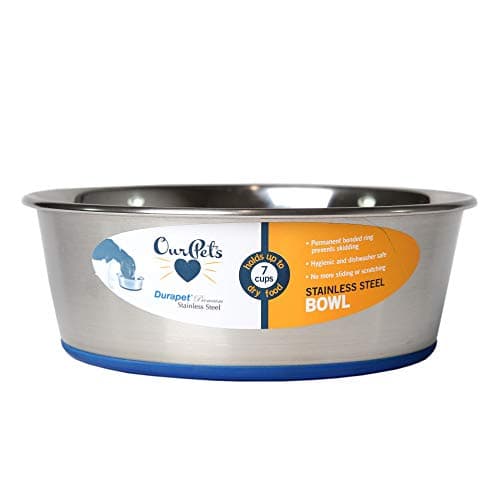 | OurPets Durapet Stainless Steel BowlThe sensible stainless bowl at a tenth of the price | 71/100 | $17.99 · Amazon |
| 2 | 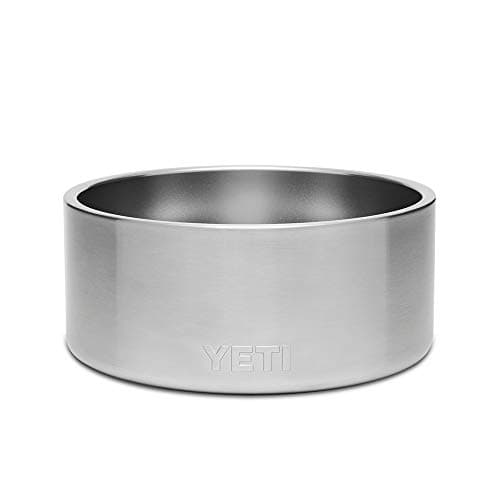 | YETI Boomer 8 Dog BowlA bowl that will outlive the dog, at a price that reflects it | 87/100 | $60.00 · Amazon |
| 3 | 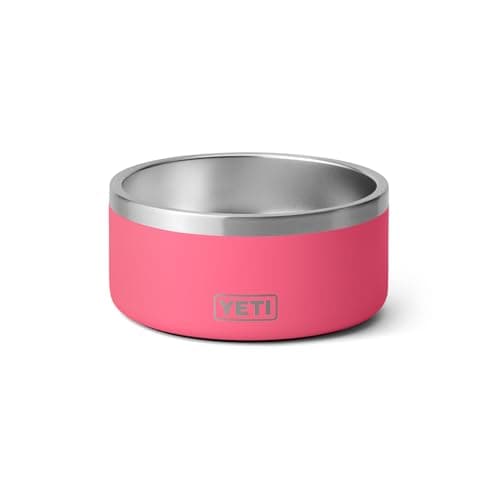 | YETI Boomer 4 Dog BowlThe same bowl for a smaller dog | 85/100 | $40.00 · Amazon |
Tap any row to jump to the full review. Prices are pulled live from Amazon as of October 18, 2026; where we have no verified live price we show none rather than a stale number. #ad — how our links work.
The picks, ranked
1. OurPets Durapet Stainless Steel Bowl
Durability score 71/100Best for: The sensible stainless bowl at a tenth of the price
The value answer, and honestly the one most people should buy. The premium bowls are better specified, not meaningfully better bowls.
- Material
- Stainless steel; alloy not published
- Base
- Bonded rubber non-slip ring
- Care
- Dishwasher safe
- Capacity
- Multiple sizes; per the live listing
Pros
- Does everything a stainless bowl needs to do at a fraction of the price of the premium options
- The bonded rubber ring genuinely stops the bowl traveling across a tiled floor
- Dishwasher safe and effectively indestructible
Cons
- The alloy is not published, only 'stainless steel', which covers a wide range of grades
- The bonded rubber ring can separate over years of dishwasher heat — the one wear point on an otherwise permanent object
How we assessed it: on published materials, hardware specs and construction — not long-term chew-tested. We say so because it is true, and because a claim we cannot back is worth nothing to you.
#ad Price as of October 18, 2026; Amazon prices change often, so check before you buy. How our links work.
2. YETI Boomer 8 Dog Bowl
Durability score 87/100Best for: A bowl that will outlive the dog, at a price that reflects it
Objectively over-specified for a dog bowl, and the only one here whose steel alloy is actually stated. If you buy one bowl for the dog's life, this is defensible.
- Material
- 18/8 stainless steel, per YETI
- Capacity
- 8 cups
- Base
- Non-slip ring
- Care
- Dishwasher safe
- Wall construction
- Double-wall on YETI's insulated line; check the specific model
Pros
- 18/8 stainless is a named alloy specification rather than 'stainless steel', which is the level of disclosure we keep asking for and rarely get
- Non-slip ring is molded into the base rather than glued on, so it does not peel off in the dishwasher
- Genuinely a buy-it-for-life object — there is no wear mechanism on a stainless bowl short of the dog eating it
Cons
- Four to five times the price of an equivalent-capacity stainless bowl
- Heavy, which is a virtue at home and a liability in a pack
- You are paying a brand premium on a product where the material is the whole story
How we assessed it: on published materials, hardware specs and construction — not long-term chew-tested. We say so because it is true, and because a claim we cannot back is worth nothing to you.
#ad Price as of October 18, 2026; Amazon prices change often, so check before you buy. How our links work.
3. YETI Boomer 4 Dog Bowl
Durability score 85/100Best for: The same bowl for a smaller dog
The small-dog version. Same argument, same premium, less capacity.
- Material
- Stainless steel, per YETI
- Capacity
- 32 oz (4 cups)
- Base
- Non-slip ring
- Care
- Dishwasher safe
Pros
- The right capacity for a small or medium dog, where the 8-cup bowl is simply a large object in the kitchen
- Same non-slip molded base and same material story
Cons
- Same premium pricing, on less bowl
- Too small for a large dog's water, which usually wants the larger size
How we assessed it: on published materials, hardware specs and construction — not long-term chew-tested. We say so because it is true, and because a claim we cannot back is worth nothing to you.
#ad Price as of October 18, 2026; Amazon prices change often, so check before you buy. How our links work.
Sizing, and the water bowl mistake
Food bowl: sized to the meal, and no larger. A large bowl with a small meal spreads kibble thinly, which for a fast eater makes it faster still.
Water bowl: bigger than you think, and refreshed rather than topped up. This is where most owners go wrong. A water bowl that gets topped up all week develops a biofilm — the slippery layer you can feel on the inside — and topping up does not remove it. Wash the bowl properly, daily, and stainless makes that trivial.
The cleaning point, which is the actual health argument
A dog bowl is one of the more contaminated objects in a household and it is cleaned less often than any dish a human eats from. The material choice is really an argument about how easy that cleaning is.
- Dishwasher, top rack, regularly. Every bowl here is dishwasher safe; nothing else in this article matters as much as actually doing it.
- Feel the inside. Slippery means biofilm, and biofilm means the bowl has been rinsed rather than washed.
- Own two of each. Same argument as crate pads: a bowl in the wash and a bowl in use means the washing actually happens.
Is the premium bowl worth it?
Honestly: the Durapet is the bowl most people should buy, and the premium bowls are better specified rather than meaningfully better bowls.
The argument for the YETI is narrow but real — a stated alloy, a molded-in base ring that cannot separate, and genuine buy-it-for-life construction on an object with no wear mechanism. If you are the kind of buyer who wants one bowl for the dog’s entire life and wants to know what it is made of, that is a defensible purchase. If you are not, the Durapet does the same job for a tenth of the money.
And if the actual problem is eating speed rather than the bowl, buy a slow feeder instead.
The bowl is only half the hygiene question
The FDA asks for the same treatment one step upstream: wash and dry the food container between finishing one bag and filling it with another, to get residual fat and crumbs off the surfaces. Old fat at the bottom of a bin goes rancid under the new food you pour on top of it, and no amount of bowl-washing fixes that. Feeders with food storage works through which storage designs can actually be emptied and washed, and why the FDA would rather you kept the bag.
One question we get about this category has an unsatisfying answer. Not one of the stainless bowls here publishes a country of origin, so if American manufacture is a hard requirement we cannot point you at a bowl with a published claim — and we will not infer one from a brand name. What does qualify across the rest of the site, and how to read the phrases that sound like origin claims but are not, is on which dog gear is actually made in the USA.
Frequently asked questions
What is the best stainless steel dog bowl?
The OurPets Durapet for most people — it does everything a stainless bowl needs to do at a fraction of the premium price, and its bonded rubber base ring genuinely stops it sliding on tile. The YETI Boomer is the one bowl here that states its alloy (18/8 stainless) and molds the non-slip ring into the base rather than gluing it on, which is a real durability difference on the only part of a stainless bowl that can fail.
What does 18/8 stainless steel mean on a dog bowl?
18% chromium and 8% nickel — also called 304, the standard food-grade alloy used for kitchen sinks and cookware. It resists the acids and salts in food and saliva well. Lower-grade alloys such as the 200 series substitute manganese for some of the nickel; they are cheaper and more prone to pitting corrosion, and a pitted bowl has texture, which holds bacteria. Most brands say only 'stainless steel', which covers all of it.
Are stainless steel dog bowls better than plastic?
Yes, and the reason is the surface rather than the material's virtue. Plastic scratches, and scratches hold bacteria in a way a smooth surface does not; plastic also absorbs odor and can leach with heat. Stainless does not scratch meaningfully, does not chip and does not absorb — there is no wear mechanism on a stainless bowl short of the dog eating it.
How often should you wash a dog bowl?
Daily, properly, in the dishwasher — and this matters more than any purchasing decision on this page. A water bowl that gets topped up all week develops a biofilm, the slippery layer you can feel on the inside, and topping up does not remove it. Feel the inside of the bowl: if it is slippery, it has been rinsed rather than washed. Owning two of each makes the washing actually happen.
Why does the rubber ring come off my dog bowl?
Years of dishwasher heat cycles eventually break the bond on a glued-on ring, which is the one consumable part of an otherwise permanent object. It is the trade-off with bonded designs like the Durapet. Bowls with the non-slip ring molded into the base rather than bonded to it — the YETI approach — do not have this failure mode, which is most of what the price premium buys.
Sources
Every spec on this page traces to one of these. Where a manufacturer does not publish a figure, we say “not published” rather than estimating it.