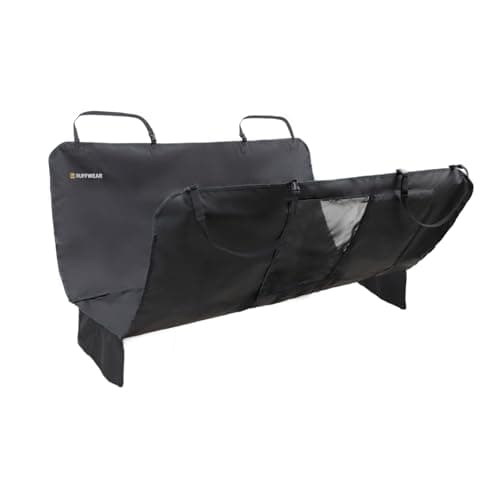
The Best Dog Car Barriers
A barrier keeps your dog out of your lap while you drive. That is a real safety benefit — and it is a completely different thing from restraining your dog in a crash. Nobody selling one should blur the two.
Start with the thing this category will not say plainly. The Center for Pet Safety’s certified list covers three product types: harnesses, carriers and travel crates. There is no barrier on it, and no barrier category on it. Not one product on this page is crash-certified, and we are not going to describe one as though it were.
To be fair to the manufacturers, CPS certification is voluntary and manufacturer-submitted, so a product that is absent from the list has not failed a test — it was never entered into one. But that cuts both ways. It means no company in this category has put a barrier in front of an independent laboratory, and it means there is no crash data on any of them for anyone to weigh, including us.
That is not a reason to skip a barrier. It is a reason to be precise about what you are buying. A barrier is a distraction-control device. It stops a dog climbing into the front, standing on the center console, or putting its head under your right arm at 60 mph. Distracted driving is a genuine, well-documented crash cause, and a barrier addresses it directly. That is the job. It is a real job, and it is worth doing well.
What a barrier does not do is restrain your dog in a collision. If you want that, it is a crash-tested harness or a certified crate, and a barrier sits alongside those rather than replacing them. We wrote a whole page on which of those two is right for you.
With that established: buy the Travall Guard if it is made for your exact vehicle, because nothing else here is. Buy the WeatherTech Pet Barrier if it is not, because it is the only universal barrier in this category that will tell you what it is actually made of.
What we scored, and why
Every barrier here ran through our published durability rubric — materials, hardware, construction, failure mode and warranty. Two of those need explaining for this category specifically.
Failure mode normally asks how a product fails when it fails. For a barrier we scored it on what a barrier is genuinely for: does it stay put, and does it keep the dog behind it, in normal driving? We did not score crash performance, because no barrier here has any crash data to score and inventing a judgment would be worse than admitting the gap.
Warranty did most of the separating, as it usually does. It is the one place a manufacturer has to stop marketing and write down what it actually believes — and in this category, what several of them believe is unflattering.
Not one barrier publishes a load rating
We looked for a published load rating on every barrier in this roundup. We found none. Not one manufacturer will tell you what force its barrier is built to take.
Nor will any of them publish a gauge. Travall does not publish a steel gauge. ZooKeeper calls its tubing “heavy gauge” and never says which gauge. MidWest does not publish a wire gauge — and its “2″ heavy duty wire mesh” line is the mesh opening, not a gauge, which is an easy and consequential thing to misread. PetSafe manages something more impressive still: it describes its frame as “metal” and never names the alloy, let alone the gauge.
Nobody publishes a dog weight limit either. Not one barrier here tells you the size of dog it was designed to hold — which, for a product category whose entire function is holding a dog, is a remarkable collective silence.
“Heavy duty” and “heavy gauge” are adjectives. WeatherTech is the only manufacturer here that publishes real numbers — a 3/4″ anodized aluminum extrusion, 5/8″ cross bars, 3-3/8″ bar spacing — and that transparency is most of why it finishes as high as it does.
The one “crash tested” claim, examined
Travall is the only manufacturer here that makes any safety-testing claim at all, and it is worth reading carefully. Travall says its guards are “crash tested” and “crafted to meet the globally recognized ISO 9001 quality standard.”
ISO 9001 is a quality-management-system standard. It is about how a company documents its processes. It is not a crash standard, it is not a safety test, and putting it in the same sentence as “crash tested” invites a reader to think it means something it does not.
Travall also says its guards are tested to the UN ECE R126 standard on a type-approval basis — and, to its real credit, Travall explains what that means in its own words: one guard is tested, and other guards built to the same design and process are then considered safe. That is a legitimate industrial practice. It is also not the same as the guard in your car having been tested. No test lab is named for any of it.
Here is the part that settles it. On its own blog, about a different product, Travall writes: “The Travall Dog Crate is independently certified by TÜV SÜD and tested to ECE R17 and ECE R129 standards” — and, in the same post, that “not all ‘tested’ claims are equal… independent certification is one of the most important things to look for.”
We agree with Travall. Travall names a laboratory for its crate and names nobody for its guards. By the company’s own published standard, the Guard’s testing claim is the weaker kind. It is still the best-built barrier here — we ranked it first — but buy it for the steel and the fitment, not for the word “tested.”
The crash-test halo to watch for
Kurgo does something genuinely admirable elsewhere in its range: it crash-tests its harnesses at a named laboratory (Calspan, in Buffalo, New York), against an adapted FMVSS 213, and publishes the rated dog weights. We have praised that on our crash-tested harness page.
None of that testing covers the Backseat Barrier. Kurgo does not claim it does — to be clear, we are not accusing Kurgo of lying. But the barrier’s Amazon listing sits inside a wall of Kurgo cross-sell ads whose alt text reads “Crash Tested,” and every one of those refers to a harness. If you take one thing from this page, take this: crash-test claims attach to a specific product, and a brand having tested something is not the same as a brand having tested the thing in your basket.
One more thing worth knowing while you compare them: the Amazon listings for both the PetSafe and the Kurgo name Radio Systems Corporation as manufacturer. Radio Systems owns both brands. These two barriers are not quite the independent competitors the shelf implies.
The warranties say the quiet part out loud
Four findings, in ascending order of how much they should bother you.
MidWest publishes a one-year warranty against manufacturing defects and states, in plain words, that it “does not cover damage by the dog.” On a product whose only purpose is stopping a dog. We give MidWest real credit for the honesty — it is one of only two manufacturers here that addresses the question at all — but you should read it for what it is.
PetSafe is the other, and it goes further: its warranty excludes “any damage to or defects in the products caused by any animal.” It is also non-transferable and terminates if you resell. The part worth knowing is where that term lives — not on PetSafe’s product page, which advertises only a 45-day satisfaction return. A returns window is not a warranty, and you have to go and find the separate warranty page to discover the real one-year term.
WeatherTech offers a lifetime limited warranty, which sounds like the best terms in the roundup until you read the exclusions: it explicitly excludes vehicle accidents. The warranty on a pet travel-safety product carves out the crash. It also follows the original purchaser and the original vehicle — on a universal-fit product whose entire selling point is that it moves between cars.
ZooKeeper is the one that should genuinely give you pause. Its real warranty is 90 days — the shortest here by a wide margin — and it is not stated on the Amazon listing, where most people buy it. The listing offers only a “no-hassle, money-back guarantee,” which is a returns policy, not a warranty. And ZooKeeper’s own warranty page still has another company’s name (“POLAR FUSION”) sitting in the liability clause, and warrants inflatable products the company does not appear to sell. It is an unedited template. Terms nobody proofread are terms nobody is standing behind.
Quick picks
The short answer, ranked and scored against our published durability rubric. Where a manufacturer does not publish a spec, we say so rather than estimating it.
| # | Photo | Product | Durability | Price |
|---|---|---|---|---|
| 1 | 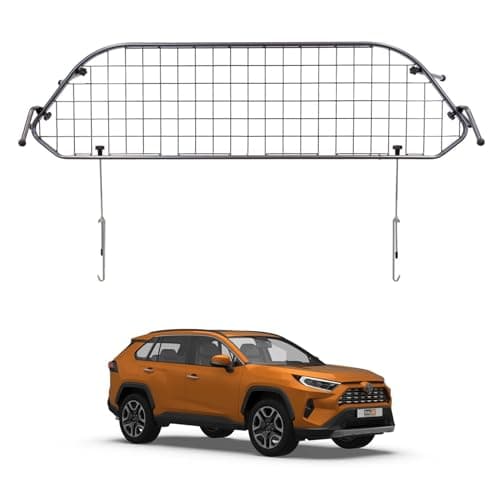 | Travall Guard (vehicle-specific)One exact vehicle, rather than a rough opening | 83/100 | $299.19 · Amazon |
| 2 | 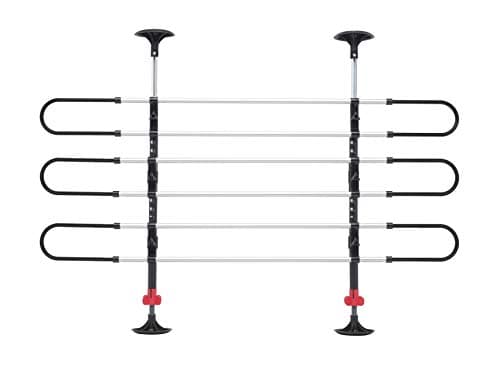 | WeatherTech Pet Barrier & Fence KitThe one materials sheet in this category with real numbers on it | 74/100 | $192.90 · Amazon |
| 3 | 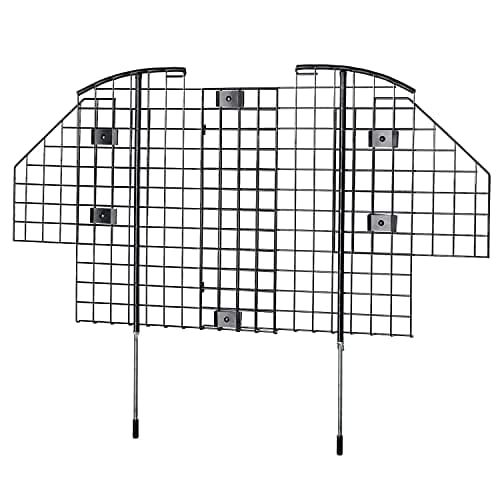 | MidWest Wire Mesh Car Barrier (Model 13)The most steel for the money | 62/100 | $89.32 · Amazon |
| 4 | 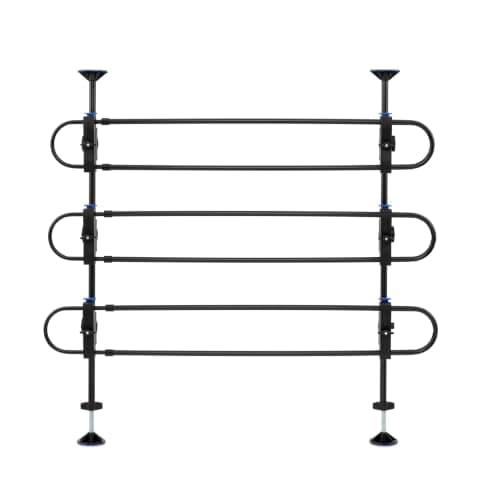 | PetSafe Happy Ride Metal Dog BarrierA metal barrier in a car with no headrests to hang it on | 57/100 | $69.98 · Amazon |
| 5 | 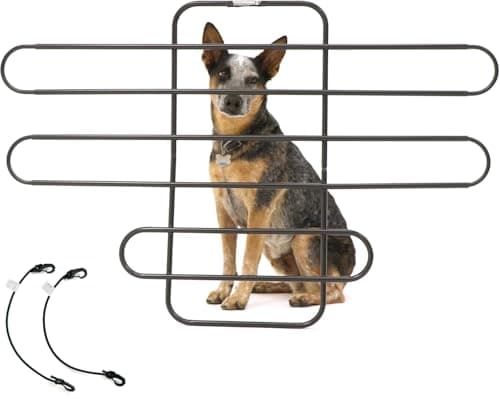 | ZooKeeper Original Pet BarrierA barrier that moves when your seats move | 56/100 | $129.95 · Amazon |
| 6 | 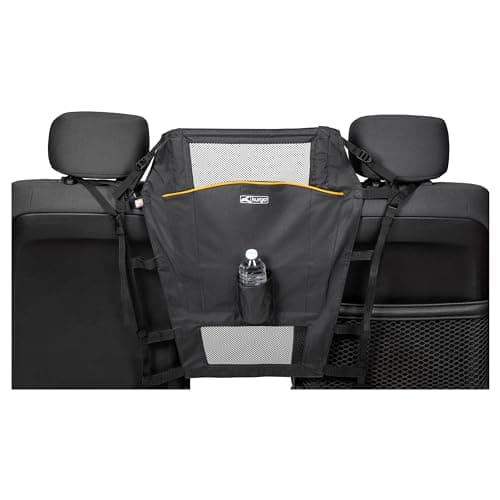 | Kurgo Backseat BarrierBlocking the footwell gap, not blocking a determined dog | 51/100 | $42.99 · Amazon |
Tap any row to jump to the full review. Prices are pulled live from Amazon as of October 18, 2026; where we have no verified live price we show none rather than a stale number. #ad — how our links work.
The picks, ranked
1. Travall Guard (vehicle-specific)
Durability score 83/100Best for: One exact vehicle, rather than a rough opening
The best-made barrier in the category and the only one built for a single vehicle — just do not read its "crash tested" line as certification, because Travall names a lab for its crate and pointedly does not for this.
- Material
- Nylon powder-coated mild steel (Travall)
- Steel gauge
- Not published
- Fitment
- Vehicle-specific — one SKU per model and generation, 800+ listed (Travall)
- Installation
- No drilling or modification; ~10–15 min (Travall)
- Warranty
- Lifetime, manufacturing defects only (Travall)
- Made in
- Derby, United Kingdom (Travall)
- Load rating
- Not published
Pros
- The only barrier here cut for one exact vehicle rather than tensioned into a roughly-right opening — which is the whole reason a guard stays where you put it
- Powder-coated mild steel, and Travall states plainly that it is made in Derby, UK — an origin claim two of its rivals will not make
- Fits without drilling or permanent modification, so it comes back out when you sell the car
- Lifetime warranty against manufacturing defects
Cons
- Vehicle-specific, so the listing and price we link are the RAV4 (2018+) fitment. Yours is a different SKU at a different price — across four models we checked, prices ran from $267.99 to $294.99
- Travall calls its guards "crash tested" and pairs that with ISO 9001. ISO 9001 is a quality-management standard, not a safety test, and the two do not belong in the same sentence
- Travall names TÜV SÜD as the lab that certified its dog crate, and names no lab at all for its guards. It knows exactly what an independent certification looks like
- Its ECE R126 testing is on a type-approval basis — one guard tested, the rest assumed to match — which Travall discloses, to its credit, but which is not the same as testing the guard you are sent
- No steel gauge and no load rating published
How we assessed it: on published materials, hardware specs and construction — not long-term chew-tested. We say so because it is true, and because a claim we cannot back is worth nothing to you.
#ad Price as of October 18, 2026; Amazon prices change often, so check before you buy. How our links work.
2. WeatherTech Pet Barrier & Fence Kit
Durability score 74/100Best for: The one materials sheet in this category with real numbers on it
The most transparent materials sheet in the category, undercut by a lifetime warranty that excludes the one event you bought it for.
- Main upright
- 1" diameter, injection-molded resin (WeatherTech)
- Internal upright
- 3/4" anodized aluminum extrusion (WeatherTech)
- Cross bars
- 5/8" diameter aluminum (WeatherTech)
- Bar spacing
- 3-3/8" (WeatherTech)
- Adjustment
- 30–46" high, 39–66" wide (WeatherTech)
- Weight
- 6.3 lb (WeatherTech) / 6.61 lb (Amazon listing)
- Warranty
- Lifetime limited — original purchaser, original vehicle
- Made in
- USA (WeatherTech)
- Load rating
- Not published
Pros
- Itemizes its materials with actual diameters — a 3/4in anodized aluminum extrusion and 5/8in aluminum cross bars. Nobody else in this category will tell you what their tubing is or how thick it is
- "100% designed, engineered and manufactured in the USA" is an unambiguous claim, and WeatherTech is willing to put it in writing
- The tightest published bar spacing here at 3-3/8in, which is what actually stops a determined head going through
- Fourteen adjustment positions and a genuinely wide 39–66in range
Cons
- The lifetime warranty explicitly excludes vehicle accidents. Read that twice: the exact event you are buying a barrier for is the event the warranty carves out
- The warranty follows the original purchaser AND the original vehicle. Change cars and it is gone — on a universal-fit product designed to move between cars
- This ASIN is the barrier-plus-fence-kit bundle, so WeatherTech's "no tools or drilling" line does not apply to it: its own FAQ says a screwdriver and/or hex key is needed once a fence kit is added
- WeatherTech's own pages listed both the barrier and the fence kit as coming soon / unavailable when we checked, while Amazon had stock — so direct-from-manufacturer may not be an option
- No load rating, and no crash testing of any kind is claimed
How we assessed it: on published materials, hardware specs and construction — not long-term chew-tested. We say so because it is true, and because a claim we cannot back is worth nothing to you.
#ad Price as of October 18, 2026; Amazon prices change often, so check before you buy. How our links work.
3. MidWest Wire Mesh Car Barrier (Model 13)
Durability score 62/100Best for: The most steel for the money
The most metal for the money, from the only manufacturer here blunt enough to print that its warranty will not cover your dog.
- Material
- Steel, black E-coat finish (MidWest / Amazon listing)
- Mesh opening
- 2" (MidWest) — this is the mesh spacing, NOT a gauge
- Wire gauge
- Not published
- Deployed dimensions
- Not published by MidWest (Amazon's 27.88 × 23.5 in is the carton)
- Weight
- 17.05 lb (Amazon listing)
- Warranty
- 1 year, defects only — "does not cover damage by the dog" (MidWest FAQ)
- Load rating
- Not published
Pros
- Real steel wire mesh and, at 17 lb, comfortably the heaviest barrier here — you are getting metal rather than resin
- The 2in mesh opening is genuinely hard for a dog to push a head through, which is more than the wide-bar designs can say
- Mounts on clamps and threaded rods rather than bungee cords wrapped round a headrest
- Non-reflective E-coat, so it does not throw glare into your mirror
Cons
- MidWest says out loud that its warranty "does not cover damage by the dog" — on a product whose entire job is stopping a dog. Credit for the honesty; it is still a one-year warranty that excludes the only thing likely to break it
- No wire gauge published anywhere. The "2in heavy duty wire mesh" line is the mesh opening, not a gauge, and it is easy to misread as one
- MidWest publishes no deployed dimensions at all. The measurements on the Amazon listing are the shipping carton, which tells you nothing about whether it fits your car
- No load rating
How we assessed it: on published materials, hardware specs and construction — not long-term chew-tested. We say so because it is true, and because a claim we cannot back is worth nothing to you.
#ad Price as of October 18, 2026; Amazon prices change often, so check before you buy. How our links work.
4. PetSafe Happy Ride Metal Dog Barrier
Durability score 57/100Best for: A metal barrier in a car with no headrests to hang it on
The pick if your car has nothing to hang a barrier from — and the clearest example in this category of a manufacturer publishing an adjective where a number belongs.
- Material
- "Metal" tubular frame (PetSafe) — no alloy named
- Tubing diameter / gauge
- Not published
- Adjustment
- 32–49" wide, 33–57" high (PetSafe)
- Mounting
- Pressure/tension mount — no headrests required (PetSafe)
- Installation
- No tools; threaded rods, six brackets, wingnuts (PetSafe manual)
- Weight
- 9.0 lb / 4.1 kg (Amazon listing; not published by PetSafe)
- Warranty
- 1 year limited — excludes damage "caused by any animal" (PetSafe)
- Made in
- Not published
- Load rating
- Not published
Pros
- Tensions into the opening rather than hanging off headrest posts, so it works in a vehicle the ZooKeeper and the Kurgo simply will not fit
- A genuinely wide adjustment range — 32–49in wide and 33–57in high is the most accommodating here
- Metal frame at the cheapest metal price in this roundup, and no tools to fit it
Cons
- PetSafe's warranty excludes "any damage to or defects in the products caused by any animal" — the most explicit pet-damage carve-out of the six, on a dog product
- The one-year term is not on PetSafe's own product page at all. That page offers only a 45-day satisfaction return, which is a returns policy, not a warranty — you have to find the separate warranty page to learn the real term
- It is non-transferable and terminates the moment you resell
- PetSafe says "metal" and stops. No alloy, no tube diameter, no gauge, no country of manufacture, and no load rating
- Its own spec table publishes exactly one specification. The weight only exists on Amazon
How we assessed it: on published materials, hardware specs and construction — not long-term chew-tested. We say so because it is true, and because a claim we cannot back is worth nothing to you.
#ad Price as of October 18, 2026; Amazon prices change often, so check before you buy. How our links work.
5. ZooKeeper Original Pet Barrier
Durability score 56/100Best for: A barrier that moves when your seats move
A genuinely clever mount bolted to a 90-day warranty the Amazon listing never mentions.
- Material
- "Heavy gauge steel tubing" (ZooKeeper); the Amazon listing says only "metal"
- Tubing gauge / diameter
- Not published
- Dimensions
- 28.75" high, adjusts 42–61" wide
- Weight
- 7.5 lb (Amazon spec) / 8 lb (Amazon comparison table)
- Mounts to
- Headrest posts, via two bungee cords
- Warranty
- 90 days (ZooKeeper) — not stated on the Amazon listing
- Made in
- "Engineered in the USA" / "Finished in USA" — no origin claim
- Load rating
- Not published
Pros
- Tilts, slides and reclines with the seat — the one genuine design idea in this category, and it means the barrier does not fight your passengers
- No tools and no drilling; the cords wrap around the headrest posts in a couple of minutes
- ZooKeeper has been selling this same barrier since 2001, which is its own kind of evidence
Cons
- A 90-day warranty — the shortest here by a distance — and ZooKeeper does not state it on the Amazon listing at all. The listing offers a "no-hassle, money-back guarantee", which is a returns policy, not a warranty
- Its own warranty page has a different company's name ("POLAR FUSION") left in the liability clause and warrants inflatable products ZooKeeper does not appear to sell. That is an unedited template, and it is hard to rely on terms nobody proofread
- "Engineered in the USA" and "Finished in USA" are not "Made in the USA" — and Amazon's country-of-origin field is empty
- Requires headrest posts. No headrests, no barrier
- "Heavy gauge" is an adjective. No gauge, no tube diameter, no load rating
How we assessed it: on published materials, hardware specs and construction — not long-term chew-tested. We say so because it is true, and because a claim we cannot back is worth nothing to you.
#ad Price as of October 18, 2026; Amazon prices change often, so check before you buy. How our links work.
6. Kurgo Backseat Barrier
Durability score 51/100Best for: Blocking the footwell gap, not blocking a determined dog
A well-warrantied cloth panel that solves distraction and nothing else — and whose biggest risk is a buyer mistaking Kurgo's harness crash testing for this product's.
- Material
- Cloth with an integrated mesh top; nylon (Kurgo / Amazon listing)
- Frame
- Horizontal and vertical steel support rods (Kurgo instructions)
- Rod diameter / gauge
- Not published
- Dimensions
- 22" wide × 27" long (Kurgo — published only in image alt text)
- Mounting
- Headrest straps plus an under-seat hook or straps (Kurgo)
- Weight
- 1.8 lb / 0.82 kg (Amazon listing; not published by Kurgo)
- Warranty
- Lifetime against defects, via an authorized seller (Kurgo)
- Crash testing
- None for this product — Kurgo's Calspan testing covers its harnesses only
- Load rating
- Not published
Pros
- Kurgo's lifetime warranty against manufacturing defects is the longest term here, and Kurgo publishes its terms properly rather than burying them
- At 1.8 lb it goes in and out in a minute and lives in a door pocket — the only barrier here you would genuinely bother to remove between trips
- The mesh top means the dog can still see you, which matters more for an anxious dog than the spec sheet suggests
- Kurgo runs a paid replacement service for chew and wear damage, which is at least a real answer to a real problem
Cons
- It is cloth. A steel-rodded cloth panel stops a dog wandering forward; it is not going to stop a big dog that has decided to come through, and it should not be bought as though it will
- Kurgo publishes crash testing at a named lab (Calspan, FMVSS 213) for its HARNESSES. That testing does not cover this barrier, and Kurgo does not claim it does — but the Amazon listing surrounds it with "crash tested" harness ads, and the halo is easy to catch by accident
- Kurgo's own site says it "will not work with 2-door cars or mini vans" while the Amazon listing calls it "Universal Fit". Amazon overstates it
- The lifetime warranty covers manufacturing defects only and excludes normal and abnormal wear, abuse, and products damaged while used in an unintended way. Chewing is not covered
- Kurgo publishes no dimensions on Amazon and only inside image alt text on its own site. No dog weight limit anywhere
How we assessed it: on published materials, hardware specs and construction — not long-term chew-tested. We say so because it is true, and because a claim we cannot back is worth nothing to you.
#ad Price as of October 18, 2026; Amazon prices change often, so check before you buy. How our links work.
Where the barrier attaches is the part nobody tests
The Center for Pet Safety publishes a cargo area connection advisory that applies squarely here, and it is blunt: “Cargo area anchors are not always weight-rated for the forces generated in an accident, and the cargo platform itself may not be as solid as it appears.” CPS adds that “even vehicle manufacturers face limitations with cargo-area connection points,” and advises owners to ask their vehicle manufacturer directly what the anchors are rated for.
So even setting aside that no barrier is crash-tested, the thing a barrier is tensioned or clamped against is frequently not rated either. This is the strongest available argument for treating a barrier as what it is — a device for stopping your dog reaching you while you drive — and not as a structure you are counting on in a collision.
Cargo barrier or backseat barrier?
These are two different products solving two different problems, and the category name blurs them.
A cargo barrier — the Travall Guard, the MidWest — spans the opening behind your rear seats and keeps the dog in the boot of an SUV, wagon or crossover. It is the stronger, more permanent installation, and it is what most people searching for a barrier actually want. It only exists as an option if your vehicle has a cargo area to close off.
A backseat barrier — the ZooKeeper, the WeatherTech, the Kurgo — mounts at the front seatbacks or headrests and keeps the dog out of the front. It works in a sedan. It is easier to fit and easier to remove, and it is generally the lighter-duty design of the two.
If you drive an SUV and the dog rides in the back, get a cargo barrier. If the dog rides on the back seat, or you drive a car, a backseat barrier is the only one of the two that applies to you.
Then check what it actually hangs on, because this is where people buy the wrong thing. The ZooKeeper and the Kurgo both need headrest posts — no headrests, no barrier, and Kurgo says outright that its barrier will not work in a two-door car or a minivan whatever the Amazon listing’s “universal fit” badge implies. The PetSafe tensions into the opening instead, which is the reason it is on this list: it is the answer for a vehicle with nothing to hang a barrier from.
What actually matters when you fit one
- Bar or mesh spacing. The single most under-considered spec. A determined dog gets a nose through, then a head, then a shoulder. WeatherTech’s 3-3/8″ spacing and MidWest’s 2″ mesh are the only two published figures in this roundup — which tells you how rare it is for anyone to state it.
- What it mounts to. A barrier tensioned against headrest posts is only as good as the headrest posts. The ZooKeeper needs them and will not fit a vehicle without them. Check before you buy, not after.
- Whether it moves with the seats. A rigid barrier that fights your seat adjustment gets removed within a month and then does nothing. The ZooKeeper is the only one here designed around this, and it is a genuinely good idea.
- Whether it comes back out. Travall’s no-drill fitment matters more than it sounds: a barrier that required drilling is a barrier that has permanently changed your car’s resale.
- It is not a restraint, so pair it with one. A barrier and a crash-tested harness solve different problems, and a dog in an SUV cargo area behind a barrier is unrestrained in a crash. The barrier stops the distraction. The harness or crate is what stands up in the collision.
The short version
If Travall makes a guard for your exact vehicle, buy it. A guard cut for one car will always beat a universal one tensioned into an approximate opening, and it is the only genuinely premium object in this category — mild steel, powder-coated, made in the UK, no drilling, lifetime defect warranty. Just ignore the “crash tested” line.
If Travall does not cover your vehicle, the WeatherTech is the honest universal pick, because it is the only one that publishes what it is built from. Accept that its lifetime warranty excludes accidents.
On a budget, the MidWest gives you the most steel per dollar and the tightest mesh here, and its warranty is at least candid about what it will not do. Take the PetSafe instead if your vehicle has no headrest posts to work with. The ZooKeeper has the best idea in the category attached to the worst paperwork — 90 days, unstated on Amazon, on a template with someone else’s company name still in it.
And buy the Kurgo only if you have understood what it is: a cloth panel on steel rods that keeps a well-behaved dog off your gearstick. It has the longest warranty here and it is the only barrier you will actually bother to take out between trips. It is also the one most likely to be bought for the wrong reason, by someone who saw “Kurgo” and “crash tested” on the same screen.
A barrier and a liner solve different halves of the same cargo area. The barrier keeps the dog behind it; the liner keeps the mess off the carpet, and neither does anything in a collision. If the liner is the half you are shopping for, the fit question is the one that decides it — measured, because almost everything in that category is sold as universal. It is covered on will a dog cargo liner fit my car.
Frequently asked questions
Are dog car barriers crash tested?
No. The Center for Pet Safety's certified list covers harnesses, carriers and travel crates only — no barrier appears on it. CPS certification is voluntary and manufacturer-submitted, so that is not evidence barriers fail a test; it means no manufacturer has submitted one, and there is no independent crash data on any barrier to weigh. Travall is the only manufacturer in this roundup that claims any safety testing for its guards, and it names no test laboratory for them (it does name TÜV SÜD for its dog crate). Treat a barrier as a distraction-control device, not as crash protection.
Does a dog car barrier protect my dog in a crash?
No. A barrier keeps your dog out of the front seat while you drive, which addresses distracted driving — a real crash cause. It does not restrain your dog in a collision, and no barrier publishes a load rating. For crash protection you need a CPS-certified harness or a certified travel crate; a barrier complements those rather than replacing them.
What's the difference between a cargo barrier and a backseat barrier?
A cargo barrier spans the opening behind your rear seats and keeps the dog in the boot of an SUV, wagon or crossover — it is the sturdier, more permanent fit. A backseat barrier mounts at the front seatbacks or headrests and is the only option that works in a sedan. Buy the cargo barrier if your dog rides in the back of an SUV. Note that the ZooKeeper and the Kurgo both require headrest posts; the PetSafe tensions into the opening and does not.
Are vehicle-specific dog guards worth the extra money?
If one is made for your exact vehicle, generally yes. A universal barrier is tensioned into an opening it was not shaped for, so its fit depends on the clamps holding. A vehicle-specific guard like Travall's is cut for one model and generation, which is why it is the pick here. The trade-off is price and availability: Travall lists one SKU per model, and across four models we checked prices ran from roughly $268 to $295.
Will a car barrier warranty cover it if my dog damages it?
Usually not. MidWest's one-year warranty states it 'does not cover damage by the dog,' and PetSafe's excludes damage 'caused by any animal.' WeatherTech's lifetime warranty excludes vehicle accidents and follows the original purchaser and original vehicle. Kurgo's lifetime warranty covers manufacturing defects only and excludes wear and unintended use, though Kurgo runs a separate paid replacement service for chew damage. ZooKeeper's warranty is 90 days and is not stated on its Amazon listing at all. Assume dog damage is on you.
Sources
Every spec on this page traces to one of these. Where a manufacturer does not publish a figure, we say “not published” rather than estimating it.
- Center for Pet Safety — the CPS Certified product list
- CPS — cargo area connection advisory (your car's anchors are not rated by CPS)
- Center for Pet Safety — about (501(c)(3); takes no funding from pet product manufacturers)
- Travall — dog guard FAQs (ISO 9001 + ECE R126 type-approval basis; no lab named)
- Travall — Toyota RAV4 (2018+) dog guard: nylon powder-coated mild steel, lifetime defect warranty
- Travall — "why a crash-tested dog crate is so important" (names TÜV SÜD for the crate; names no lab for the guards)
- Travall — about (made in Derby, UK; 800+ vehicle-specific fitments)
- WeatherTech — Pet Barrier specs (aluminum extrusion diameters, bar spacing, adjustment range)
- WeatherTech — lifetime limited warranty (explicitly excludes vehicle accidents; original purchaser and original vehicle only)
- MidWest — vehicle pet barrier (2in mesh, E-coat finish; no wire gauge published)
- MidWest — FAQ ("one year warranty against manufacturing defects only. The warranty does not cover damage by the dog")
- ZooKeeper — limited warranty (90 days; the POLAR FUSION liability clause)
- PetSafe — return and warranty information (1 year; excludes damage "caused by any animal"; non-transferable)
- PetSafe — Happy Ride Metal Dog Barrier (adjustment range; "metal" frame, no alloy named)
- Kurgo — dog harness crash-testing methodology (Calspan, FMVSS 213: covers the Impact and Tru-Fit HARNESSES, not the Backseat Barrier)
- Kurgo — lifetime warranty (manufacturing defects only; excludes wear, abuse and unintended use)
- Kurgo — Backseat Barrier (cloth with mesh top; "will not work with 2-door cars or mini vans")