Elevated vs Standard Dog Bed
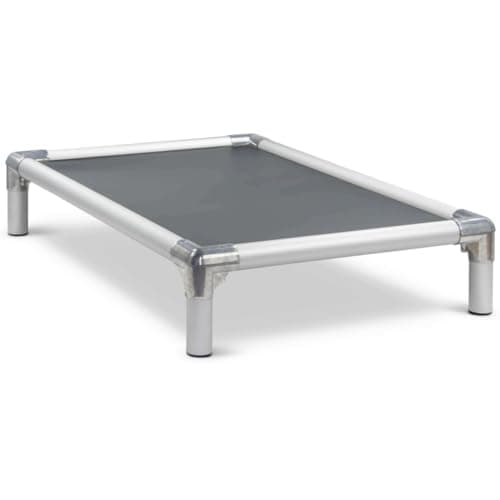
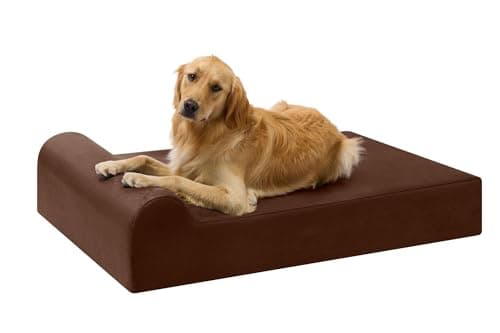
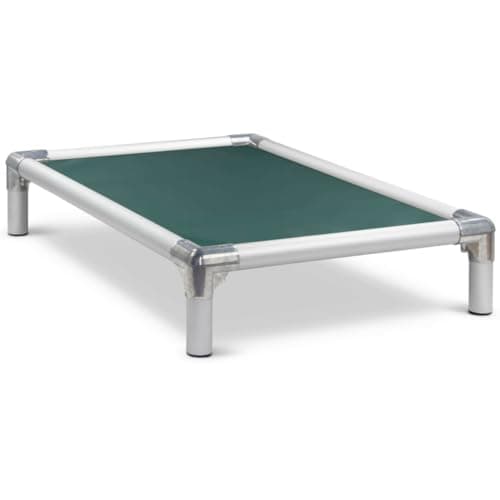
A cot is a frame with fabric stretched over it. A foam bed is a cushion. They fail differently, they cool differently, and one of them is genuinely hard to destroy.
The comparison
| Elevated cot | Standard foam bed | |
|---|---|---|
| Chew resistance | High — no foam, no stuffing, no loose edge | Low — a bag of foam behind one seam |
| Failure mode | A torn panel; replaceable | Foam out, ingestion risk; terminal |
| Joint support | Even but firm, with give from the fabric tension | Better, if the foam is thick and dense enough |
| Summer | Excellent — airflow underneath | Poor — foam insulates |
| Winter | Cold — draft underneath | Warm |
| Hygiene | Nothing absorbs; hose it off | The core absorbs and cannot be washed |
| Outdoor use | Designed for it | No |
| Getting up from it | Easy — firm and raised | Harder — the dog sinks in |
The hygiene argument, which is stronger than it looks
A foam bed has an absorbent core inside a cover. When a dog is sick on it, or is incontinent, or comes in soaked and lies down, the cover washes and the core does not.
That is the mechanism behind the bed nobody wants to admit they own: the one that smells, that has been washed repeatedly, and that still smells — because the smell is inside the foam.
A cot has no core. It is a fabric panel stretched on a frame, and liquid goes through it or wipes off it. For an incontinent senior dog, a recovering post-operative dog, or a puppy that has not finished house-training, that is a genuinely important difference and it is rarely part of the comparison.
The chew argument, stated honestly
We have said this across the hub and it bears repeating here because it is the strongest single case for a cot: nothing soft is chew-proof. Ballistic fabric raises the difficulty. Once a dog is through, a foam bed becomes a bag of foam, and swallowed foam is a surgical problem.
A cot changes the failure mode rather than raising the difficulty. There is no foam. A torn panel is visible, contained, and replaceable. That is a different category of risk, not a tougher version of the same one — and it is why Kuranda is willing to warrant its fabric against digging and scratching for a year while the soft-bed category almost universally excludes the dog. The full audit is in which warranties cover chewing.
Where the foam bed genuinely wins
A taut fabric panel distributes weight evenly and has some give from its tension, which is far better than a hard floor. It is not the same as four to seven inches of dense foam under an arthritic hip.
For an old dog with diagnosed joint disease, a thick, firm, solid-core bed is the more supportive surface and that is not really arguable. The AVMA notes difficulty rising among the signs owners report with arthritis, and while a cot is easy to get off — it is raised and firm — the surface itself is not what a painful joint wants for eight hours.
Which produces the obvious answer that most comparisons refuse to give: for many dogs the right choice is both. A cot on the porch and in summer; a foam bed indoors and in winter. They cost less together than one premium bed of either type, and each is doing the job it is actually good at.
Season is a bigger factor than breed
A cot lifts the dog into moving air on all sides. In summer that is exactly right, and it is why cots are the default in kennels and in hot climates.
In winter it is a draft. A dog on a cot in a cold room is losing heat from underneath as well as from above, and a thin-coated or elderly dog will feel it. The fix is trivial — a blanket or a pad on top of the cot, which keeps the frame’s chew resistance and adds insulation — but it has to be a deliberate decision rather than an oversight.
Which to buy
Cot if the dog chews, digs at bedding, is incontinent or recovering, lives somewhere hot, sleeps outdoors or on a porch, or has destroyed more than one bed. Our elevated bed roundup covers which frames and fabrics to look for.
Foam bed if the dog is old, has diagnosed joint disease, is thin or bony, lives in a cold house, and does not destroy bedding. Our orthopedic roundup covers what to look for, and are orthopedic beds worth it covers whether you need one at all.
Both if the dog is old and chews, which is more common than the category acknowledges — cot for unsupervised time, foam bed for supervised time. That is the honest answer and no product page will give it to you.
Frequently asked questions
Is an elevated bed or a normal dog bed better?
They are better at different things. A cot wins on chew resistance, hygiene, summer airflow, outdoor use and ease of standing up. A foam bed wins on joint support and winter warmth. For many dogs the right answer is both — a cot for hot weather and unsupervised time, a foam bed indoors in winter — and together they usually cost less than one premium bed of either type.
Are elevated dog beds better for chewers?
Yes, and it is the strongest single argument for a cot. Nothing soft is genuinely chew-proof; ballistic fabric raises the difficulty, and once a dog is through, a foam bed becomes a bag of foam and swallowed foam is a surgical problem. A cot changes the failure mode instead: no foam, no stuffing, and a torn panel that is visible, contained and replaceable rather than terminal.
Are elevated dog beds cold in winter?
They can be, because the dog loses heat from underneath as well as from above — a cot lifts the dog into moving air on all sides, which is exactly what you want in summer and a draft in January. The fix is simple: put a blanket or a pad on top of the cot, which keeps the frame's chew resistance while adding insulation. It just needs to be a deliberate decision rather than an oversight.
Are elevated beds good for arthritic dogs?
Mixed. A cot is raised and firm, so it is easier to stand up from than a soft bed that swallows the dog — and difficulty rising is among the signs owners report with arthritis. But a taut fabric panel is not the same as four to seven inches of dense foam under a painful hip for eight hours. For a dog with diagnosed joint disease, a thick solid-core foam bed is the more supportive surface.
Why do elevated dog beds smell less?
Because there is no absorbent core. A foam bed has a washable cover over a core that cannot be washed, so when a dog is sick on it, is incontinent, or comes in soaked and lies down, the smell ends up inside the foam and stays there. A cot is a fabric panel on a frame — liquid goes through it or wipes off it. For an incontinent senior dog or a puppy still house-training, that difference matters a lot.
Sources
Every spec on this page traces to one of these. Where a manufacturer does not publish a figure, we say “not published” rather than estimating it.