The Best Dog Carrier Backpacks
Search 'dog backpack' and you get two different products. This is the one where you carry the dog - and almost everything about buying it works differently.
The verdict
For a dog under 40 lb, the best dog carrier backpack is the Ruffwear Hitch Hiker: it is the only carrier in the category whose maker publishes what it is actually made of (a 150D polyester ripstop shell over a 160D nylon mono mesh back), the only one sized on girth as well as back length, and the only one whose warranty carries no expiry date. Above 40 lb, or past a 24 in back length, the K9 Sport Sack Knavigate is the pick instead - bought for its internal frame and padded hip belt rather than for published specs, of which it has almost none. If the reason you are shopping is getting an injured dog off a trail, buy the Fido Pro Airlift sling instead of any pack here.
Quick picks
The short answer, ranked and scored against our published durability rubric. Where a manufacturer does not publish a spec, we say so rather than estimating it.
| # | Photo | Product | Key specs | Durability | Price |
|---|---|---|---|---|---|
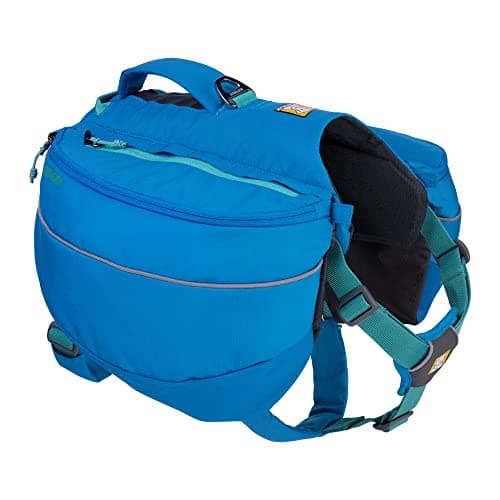
| 1 | 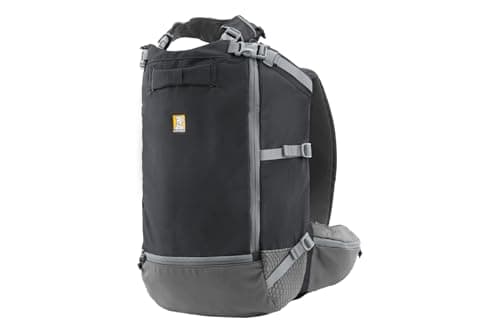 | Ruffwear Hitch Hiker Dog Backpack CarrierThe only carrier here whose maker publishes what it is made of |
| 76/100 | $99.99 · Amazon |
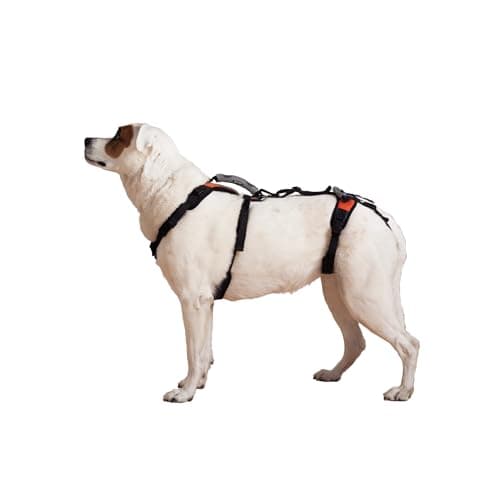
| 2 | 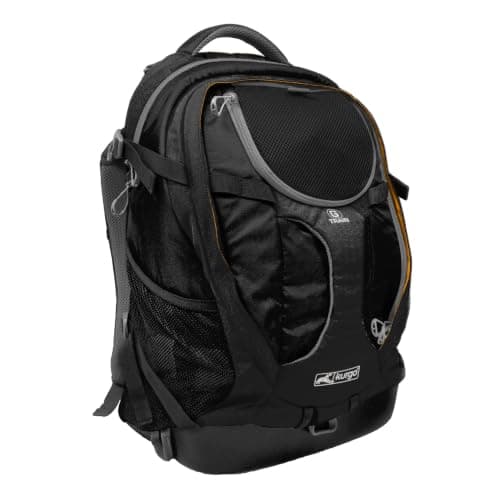 | Kurgo G-Train Carrier BackpackA small dog, a commute, and the longest warranty in the category |
| 69/100 | $144.95 · Amazon |
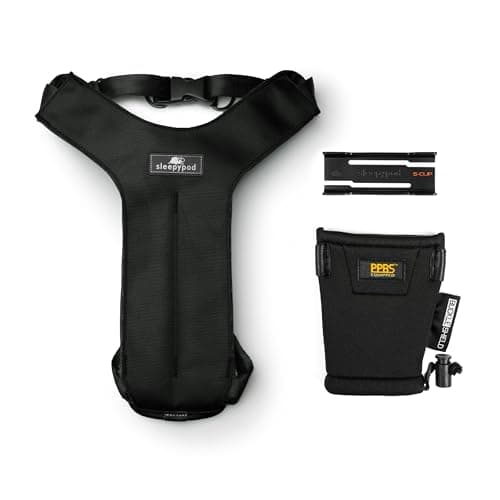
| 3 | 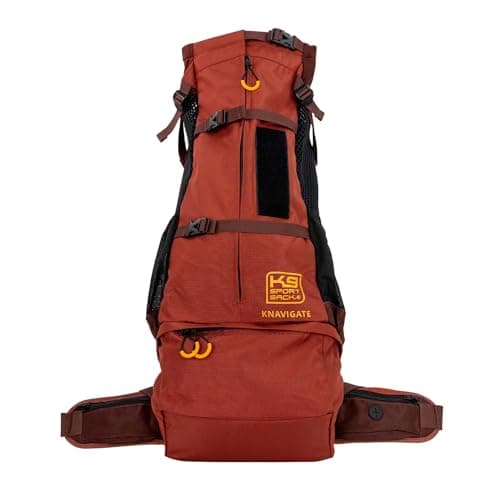 | K9 Sport Sack Knavigate Carrier (Large)A 40-50 lb dog and a long day - the only real load-carriage system under 50 lb |
| 65/100 | $199.95 · Amazon |
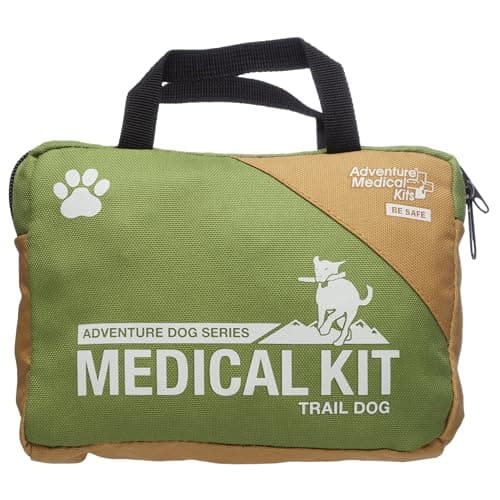
| 4 | 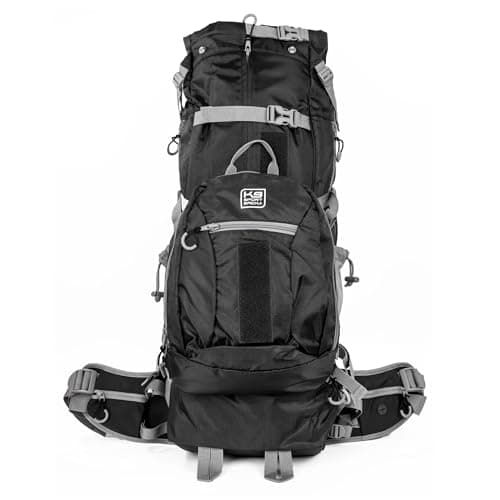 | K9 Sport Sack Kolossus Big Dog Carrier (Large)The only pack in the category that even attempts a big dog |
| 63/100 | $259.95 · Amazon |
| 5 | 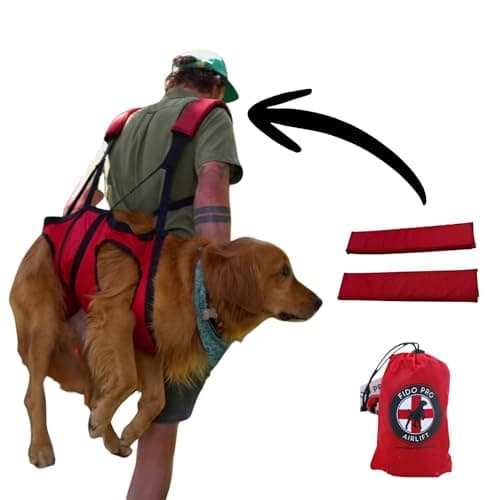 | Fido Pro Airlift Original V2 Rescue Sling (Large)Getting an injured dog out - the job a lot of people are really asking about |
| 62/100 | Check price |
Tap any row to jump to the full review. Specs are the manufacturer's own published figures; where a maker does not publish one we say "not published" rather than estimating it. Prices are pulled live from Amazon as of October 18, 2026; where we have no verified live price we show none rather than a stale number. #ad — how our links work.
Which one, for which dog
Buy the Ruffwear Hitch Hiker if your dog is under 40 lb. It is the only carrier we can find that publishes what it is actually made of - 150D polyester ripstop shell, 160D nylon mono mesh back - and the only one whose warranty has no expiry date on it.
Buy the Kurgo G-Train if the dog is genuinely small and the use is daily rather than occasional. It is the commuter’s carrier, it is the only one publishing an interior tether, and Kurgo warrants it for its lifetime against manufacturing defects.
Buy the K9 Sport Sack Knavigate if your dog is longer than 24 in or heavier than 40 lb. It is the only pack under 50 lb with both an internal frame and a padded hip belt, which is the difference between carrying a load and hanging one off your shoulders.
And if the reason you are reading this is that you are worried about getting a hurt dog off a trail, buy the Fido Pro Airlift instead. It is not a backpack. It is 12 oz of webbing that packs down to nothing and covers dogs up to 150 lb, and for that specific job it beats every pack on this page.
Two products, one search term
“Dog backpack” means two entirely different things, and half the frustration in this category comes from landing on the wrong one.
- The pack the dog wears. Saddlebags over the shoulders so the dog carries its own water and gear. That is a different product with different specs - volume, empty weight, and a load limit expressed as a share of the dog’s bodyweight - and it is covered in the dog backpacks roundup.
- The pack you wear, with the dog in it. This page. The dog is the cargo, the specs that matter are the dog’s measurements and your own load-carrying limits, and the failure modes are heat, containment and your lower back.
The people buying the second one are usually solving one of four problems: a small dog that cannot keep up on a long day; a senior or post-surgical dog that can walk some of a route but not all of it; a puppy that is not yet fully vaccinated or cleared for distance; or a city dog on transit, in an airport, or somewhere it is safer off the ground. Those are all legitimate, and they want slightly different packs.
What almost nobody is doing successfully is the fifth thing the search suggestions are full of: carrying a large dog for fun. The reason is arithmetic, and we get to it below.
The measurement that decides this is not your dog’s weight
Every carrier is advertised with a weight limit, and the weight limit is the least useful number for choosing a size. Two 30 lb dogs - a barrel-chested beagle and a lean whippet - do not fit the same pack, and the makers know it, which is why the actual size charts are built on something else. The problem is that they are not built on the same something else.
- K9 Sport Sack sizes on back length. Collar to the base of the tail, in a five-step chart from 9-12 in up to 23-25 in on the Knavigate, and out to 26-29 in on the Kolossus. Weight appears only as a coarse band across the range - 5-25 lb, 25-40 lb and 40+ lb.
- Ruffwear sizes on girth, and publishes a back-length ceiling as well. XXS is 13-17 in girth with a 19 in maximum back length; XS is 17-22 in girth and 22 in; S is 22-27 in girth and 24 in. That is the more useful pair of numbers, because girth is what decides whether a deep-chested dog goes in at all.
- Kurgo publishes neither. The G-Train is sold as one size with a 25 lb ceiling and pack dimensions of 13 x 21 x 10 in. You are measuring the bag, not the dog.
So measure both, once, before you shop: girth around the deepest part of the chest just behind the front legs, and back length from the base of the collar to the base of the tail. Our guide to measuring a dog for a harness covers the girth measurement in detail, and it is the same measurement here.
The practical consequence: a long-backed dog will size out of a carrier long before it hits the weight limit. A dachshund cross at 22 lb is inside every weight ceiling on this page and outside the back-length chart of the smallest sizes. Buy on the measurement, then check the weight.
Every published weight limit in the category, and what it is really protecting
Here is the whole published range, which is worth seeing in one place because it is much narrower than the marketing suggests:
- Kurgo G-Train: up to 25 lb. The lowest ceiling here, and the most common one in the category as a whole.
- Ruffwear Hitch Hiker: up to 40 lb. Ruffwear states it as “comfortably accommodates dogs up to 40 lbs.”
- K9 Sport Sack Knavigate: “built for dogs up to 50 lbs.” The highest limit on a conventional carrier.
- K9 Sport Sack Kolossus: listed “Up to 80 lbs” in K9 Sport Sack’s own carrier collection - the highest figure published anywhere in this category. Note that the Kolossus product page itself states no weight at all, only back lengths.
Now the part that changes how you should read those numbers. On the two K9 Sport Sack packs, the stated limit is not a suggestion, it is a condition of the warranty. K9 Sport Sack’s warranty explicitly does not cover “use of dogs exceeding the weight and height limit set for each product.” Put a 55 lb dog in a 50 lb pack and you have not stretched a guideline; you have moved outside cover entirely.
That is a rare piece of honesty in a category that mostly publishes adjectives, and it tells you what the ceilings are for. They are not comfort recommendations. They are the load at which the maker stops standing behind the stitching, the zippers and the strap anchors.
The limit nobody prints is you
The dog weight ceiling describes the pack. The number that decides whether you will ever use the thing twice is your own load-carrying capacity, and no manufacturer will do that arithmetic for you - not least because not one carrier here publishes its own empty weight. On the packs the dog wears, Ruffwear publishes empty weight for every size. On the packs that carry the dog, nobody does.
Run the numbers anyway, because they are unforgiving:
- A 25 lb dog in a carrier that weighs roughly 3 lb, with water and a lead, is comfortably over 30 lb on your back. That is a heavier load than most people ever carry on a day hike.
- A 50 lb dog is a heavy multi-day backpacking load, carried by someone who has not trained for it, usually on trail, and often unexpectedly.
- A live load is worse than a dead one. A dog shifts, leans and looks over your shoulder, and every one of those movements moves your center of gravity while you are stepping down a rock.
Which is why the single most important feature on a carrier is the least photogenic one: a padded hip belt that actually transfers load onto your pelvis. Shoulder straps alone put the entire dog on your trapezius and your lumbar spine. The Knavigate and the Kolossus have proper hip belts and adjustable torso systems; the Hitch Hiker has a hip belt fitting waists from 21 to 58 in; the G-Train has a padded waist strap, which is a stabilizer rather than a load-carrying belt.
If your honest answer to “can I carry 50 lb for two hours” is no, the Kolossus is not the answer to your problem, and no carrier is. That is the point at which the sling further down this page, or simply a shorter route, becomes the sensible purchase.
Two lifetimes, one sixty-day window
On a rubric that weights warranty at 15% and materials at 25%, this category sorts itself out quickly, because the gap between the best and worst terms here is enormous.
Kurgo is the strongest. A lifetime guarantee covering “manufacturer’s defects caused by poor craftsmanship or defective hardware or materials when purchased through authorized Kurgo dealers.” Read the exclusions before you celebrate: normal and abnormal wear and tear are both excluded, as is damage from using the product in an unintended way. It is a manufacturing-defect warranty with no clock on it, which is genuinely valuable, and it is not a promise that the pack survives your dog.
Ruffwear is the same shape. A guarantee against defects in materials and craftsmanship, with no stated period, honored for products bought from authorized retailers. Chewing, cleaning, alterations, normal wear and misuse are excluded.
K9 Sport Sack is the outlier, and it is worth reading twice. The page is headed “1 Year Warranty.” The terms underneath describe cover for manufacturer defects, product malfunctions, sizing issues and incompatible dog personalities “within 60 days of purchase”, and exclude damage from chewing or tearing, common wear from use, and any dog over the stated limits. A sizing-and-personality return window inside 60 days is a useful thing to have on a pack this expensive. It is not the same product as a year of cover, and the heading implies that it is.
None of the three covers the thing most likely to end a carrier’s life, which is a dog chewing the mesh panel it is sitting behind. That is not unique to carriers - it is the same carve-out we found across the dog bed warranties - but it is worth knowing before you assume “lifetime” means what it sounds like.
One use case sits outside everything these makers publish. Dog backpacks for biking and motorcycles covers what changes at road speed, and the warranty clause that excludes it outright.
The picks, ranked
1. Ruffwear Hitch Hiker Dog Backpack Carrier
Durability score 76/100Best for: The only carrier here whose maker publishes what it is made of
The pack to buy if your dog is under 40 lb, because it is the only one here that tells you what it is made of and the only one whose warranty has no expiry date.
- Dog weight limit
- Up to 40 lb / 18 kg (Ruffwear)
- Sizing
- By girth, with a maximum back length as well: XXS 13-17 in girth (19 in back), XS 17-22 in (22 in), S 22-27 in (24 in)
- Shell
- 150D polyester ripstop (40% recycled) with a nonfluorinated DWR and PU coating
- Back panel
- 160D nylon mono mesh
- Ventilation
- Air mesh side panels at the base
- Riding position
- Head and front legs out, facing forward, held by an integrated adjustable harness with cinch straps
- Closure
- Dual locking zippers
- Human fit
- Hip belt fits waists 21-58 in
- Empty weight
- Not published
- Warranty
- Defects in materials and craftsmanship, with no stated time limit. Chewing, normal wear and unauthorized-retailer purchases are excluded
Pros
- The only carrier in this roundup that publishes a fabric spec at all - 150D polyester ripstop shell, 160D nylon mono mesh back - which on a rubric that weights materials at 25% is the whole ballgame
- Sizes on GIRTH, which is the measurement that decides whether a deep-chested dog fits, and still gives a maximum back length so you can check both
- The dog rides facing forward with its front legs out rather than folded into a bag, and the integrated harness cinches it in place
- The warranty has no clock on it - Ruffwear guarantees against defects in materials and craftsmanship rather than for a fixed number of days
- The hip belt fits waists from 21 to 58 in, so one pack can genuinely be shared between two people of very different sizes
Cons
- 40 lb is a real ceiling, and the size run stops at a 24 in back length - a lab or a shepherd is simply not a candidate for this pack
- 150D is a light ripstop. It is published, which is more than anyone else here manages, but it is not pack cloth
- No published empty weight, so you cannot do the total-load arithmetic before you buy
- Chewing is excluded from the warranty, and the mesh back panel is the obvious thing a bored dog chews
- Warranty claims are honored only for authorized retailers, so check who is actually selling the listing before you rely on it
How we assessed it: on published materials, hardware specs and construction — not long-term chew-tested. We say so because it is true, and because a claim we cannot back is worth nothing to you.
#ad Price as of October 18, 2026; Amazon prices change often, so check before you buy. How our links work.
2. Kurgo G-Train Carrier Backpack
Durability score 69/100Best for: A small dog, a commute, and the longest warranty in the category
The best-warrantied carrier here and the most sensibly built for daily use - as long as your dog is genuinely under 25 lb.
- Dog weight limit
- Up to 25 lb (Kurgo)
- Dimensions
- 13 in w x 21 in h x 10 in d
- Base
- Waterproof, muckproof Armorsole bottom
- Structure
- Fiberglass support rods
- Ventilation
- Ventilated mesh back and side panels
- Riding position
- Enclosed, with a zip-open mesh top the dog's head comes out of
- Restraint
- Interior tether to clip to the dog's harness
- Storage
- Padded laptop compartment, water bottle holders, zippered pockets, grab handles
- Fabric denier
- Not published
- Empty weight
- Not published on Kurgo's product page
- Warranty
- Lifetime, covering 'manufacturer's defects caused by poor craftsmanship or defective hardware or materials when purchased through authorized Kurgo dealers'
Pros
- The longest warranty in the category by a distance: Kurgo's lifetime guarantee has no end date, where the biggest brand in carriers describes a 60-day claim window
- An interior tether to clip the dog's harness to is a second point of containment, and it is the only one published on any pack here
- Fiberglass support rods mean the pack holds its shape rather than collapsing around the dog when you set it down
- The waterproof Armorsole base is the right answer for the one accident that ruins a carrier
- The only pack here built around commuting rather than trail use - laptop sleeve, bottle holders, grab handles
Cons
- 25 lb is the lowest ceiling in this roundup, and it rules out a lot of dogs people try to put in it
- The dog rides enclosed with only its head out, so cooling depends entirely on the mesh panels rather than on air moving over the dog
- Read what 'lifetime' covers: manufacturing defects only. Normal AND abnormal wear and tear are both excluded, as is damage from using the pack in an unintended way
- Warranty claims require an authorized dealer, which is a real condition on a marketplace listing
- No published denier and no published empty weight on the product page
How we assessed it: on published materials, hardware specs and construction — not long-term chew-tested. We say so because it is true, and because a claim we cannot back is worth nothing to you.
#ad Price as of October 18, 2026; Amazon prices change often, so check before you buy. How our links work.
3. K9 Sport Sack Knavigate Carrier (Large)
Durability score 65/100Best for: A 40-50 lb dog and a long day - the only real load-carriage system under 50 lb
The right pack for a dog too big or too long for the first two, bought for its frame and its size run rather than for anything its maker is willing to publish.
- Dog weight limit
- 'Built for dogs up to 50 lbs' (K9 Sport Sack)
- Sizing
- By back length, collar to tail: XS 9-12 in, S 13-16 in, M 17-19 in, L 20-22 in, XL 23-25 in
- Load carriage
- Internal frame and a padded hip belt (K9 Sport Sack product page and the live Amazon listing)
- Materials
- Not published - K9 Sport Sack says only 'durable adventure-grade construction'
- Empty weight
- Not published
- Ventilation
- Not published on the product page
- Warranty
- Headed '1 Year Warranty'. The terms describe claims 'within 60 days of purchase' and exclude chewing and 'use of dogs exceeding the weight and height limit set for each product'
Pros
- Five sizes covering 9 to 25 in of back length is the widest size run in the category - nothing else here comes close
- An internal frame and a padded hip belt are what move a live 40 lb load off your shoulders and onto your hips, and no other pack under 50 lb publishes both
- Sized on a five-step measured chart rather than S/M/L, so a long-bodied dog can actually be fitted
- The 50 lb stated ceiling covers dogs the Ruffwear and the Kurgo simply cannot take
Cons
- Publishes almost nothing: no denier, no empty weight, no ventilation spec. 'Adventure-grade construction' is an adjective, not a material
- The warranty is headed '1 Year' but the terms describe a 60-day claim window - read it before you assume the headline
- Exceeding the stated weight or height limit voids the warranty outright, which makes the 50 lb figure a condition rather than a guideline
- Roughly twice the price of the Ruffwear for a fraction of the published specification
- Chewing is excluded, and this is a pack a dog sits in unsupervised behind your head
How we assessed it: on published materials, hardware specs and construction — not long-term chew-tested. We say so because it is true, and because a claim we cannot back is worth nothing to you.
#ad Price as of October 18, 2026; Amazon prices change often, so check before you buy. How our links work.
4. K9 Sport Sack Kolossus Big Dog Carrier (Large)
Durability score 63/100Best for: The only pack in the category that even attempts a big dog
The only honest answer for a large dog, bought with clear eyes: the pack can take the weight for a great deal longer than you can.
- Sizing
- By back length, collar to tail: L 20-22 in, XL 23-25 in, XXL 26-29 in
- Dog weight limit
- K9 Sport Sack's carrier collection lists the Kolossus 'Up to 80 lbs', the highest stated figure in the category. The product page itself states no weight
- Second use
- Converts to a gear pack of 'up to 60 liters' when the dog is not in it
- Load carriage
- Adjustable shoulder and torso sizing; the live listing describes a 'Professional-Grade 60L Hiking Pack'
- Materials
- Not published
- Empty weight
- Not published
- Warranty
- The same K9 Sport Sack terms: a '1 Year Warranty' heading over a 60-day claim window, excluding chewing and over-limit dogs
Pros
- The only carrier here sized for a 26-29 in back length, which is where a lot of large breeds actually measure
- The only stated capacity in the category anywhere near a big dog
- Converts into a genuine 60 L backpacking pack, so it is not dead weight on the days the dog walks
- Full adjustable torso and shoulder sizing, which matters far more once the load is this heavy
Cons
- The published ceiling describes the pack, not you. Sixty to eighty pounds of live, shifting weight is a serious carry for a fit adult and a very short one for everyone else
- The most expensive product in this roundup by a wide margin
- Nothing published about materials or empty weight, on a pack sold on its load-carrying credentials
- The same 60-day warranty terms as the Knavigate, with the same clause voiding cover for an over-limit dog
- Three sizes, all large. A 30 lb dog is in the wrong product here
How we assessed it: on published materials, hardware specs and construction — not long-term chew-tested. We say so because it is true, and because a claim we cannot back is worth nothing to you.
#ad Price as of October 18, 2026; Amazon prices change often, so check before you buy. How our links work.
5. Fido Pro Airlift Original V2 Rescue Sling (Large)
Durability score 62/100Best for: Getting an injured dog out - the job a lot of people are really asking about
Not a backpack, and the right purchase anyway for a lot of people asking this question: the thing you carry in case the dog cannot walk out.
- Format
- Emergency rescue sling, not a backpack
- Sizing
- M 9-14 in / 20-45 lb, L 13-18 in / 45-70 lb, XL 17-24 in / 70-150 lb
- Sling weight
- 11.8-13.9 oz without pads, 14.8-16.9 oz with the shoulder padding, by size
- Packed size
- 3.5 x 6.5 x 11 in, all sizes
- Support
- Patented 8-point suspension system that 'fully supports your dog from head to rear' with 'no pressure points'
- Construction
- Heavy duty webbing frame, high strength pack cloth body, modular foam shoulder padding, side release buckles
- Intended use
- Fido Pro's own words: for 'emergency situations, not extended everyday use'
- Warranty
- Lifetime warranty when bought direct from Fido Pro
Pros
- Covers dog weights no carrier backpack approaches - the XL is listed for 70-150 lb dogs
- Weighs less than a liter of water and packs to roughly the size of a rolled fleece, so it can live in a daypack all season without being noticed
- The only maker in this roundup that publishes its product's own weight for every size, and the packed dimensions with it
- An 8-point suspension spreads the load head to rear rather than folding the dog around a strap
- Honest about what it is for, which is more than most of this category manages
Cons
- It is not a carrier backpack. There is no hip belt and no load transfer - the weight is on your shoulders and your arms
- Fido Pro says plainly it is for emergencies rather than everyday carrying, and that is the right way to read it
- At the heavy end this is a two-person carry in practice, and Fido Pro lists a two-person assisted version for that reason
- The lifetime warranty is stated for direct purchase, so a marketplace order forfeits it - buy direct if the warranty is what you are paying for
- Your hands are not free the way they are with a pack, which changes what you can do on technical ground
How we assessed it: on published materials, hardware specs and construction — not long-term chew-tested. We say so because it is true, and because a claim we cannot back is worth nothing to you.
#ad We only show a price when we have a live one from Amazon. We don’t have one for this product right now, so we’re not going to guess. How our links work.
Search Amazon for the Fido Pro Airlift Original V2 Rescue Sling (Large)
How the dog actually rides: legs out, head out, or enclosed
The three designs here are not variations on a theme. They put the dog in genuinely different positions, and that is the decision most buyers make by accident.
- Head and front legs out, facing forward (Ruffwear). The dog sits upright against your back with its forelegs through the front and an integrated harness cinched around it, so it can see where it is going. Best airflow around the dog’s front end, and the position most dogs settle into fastest.
- Head out of a zip-open mesh top, body enclosed (Kurgo). The dog is contained in a structured box with fiberglass rods holding the shape, mesh on the back and sides, and an interior tether clipped to its harness. The most secure of the three, and the most dependent on those mesh panels for cooling.
- Upright with the legs through the pack (K9 Sport Sack). The design the brand is known for, on a frame with a hip belt. K9 Sport Sack says it “worked with a veterinarian to review the ergonomics of the carrier design, prioritizing long-term spinal and joint health.” We are reporting that as the manufacturer’s claim, because it is one - there is no published study, no independent test and no third-party standard behind any carrier in this category.
Heat is the failure mode to think hardest about, whichever you buy. A dog in a carrier is pressed against a human body that is working hard and radiating heat, with much of its own surface area covered. That is the opposite of how a dog sheds heat. On a warm day the carrier is the hottest place on the trail, which is why we would take an enclosed design out of summer service entirely and why the same heat-load reasoning we applied to cooling vests applies here with more force.
Bikes, motorcycles and cars: the honest answer
A large share of the searches that land on pages like this one are about riding: dog backpack for biking, for cycling, for a motorcycle. It deserves a straight answer rather than a photograph of someone doing it.
Nothing in this category is crash tested. No maker here publishes an impact test, a load rating, or a speed above which the pack should not be used. The Center for Pet Safety’s certification program covers vehicle restraints - harnesses, car carriers and crates tested to its standard - and no backpack carrier appears on it. If you want the detail on what certification does and does not mean, we wrote it up in how CPS crash testing actually works.
For the car, that settles it: a carrier backpack is not a restraint, and a dog in one on a seat is an unrestrained dog. Use a certified harness or a certified crate - the crash-tested harnesses are the short list - and check what your state actually requires, because several have rules about unsecured animals.
For a bicycle, Ruffwear does list biking among the Hitch Hiker’s uses, and a slow, upright ride on a path is a different proposition from a road descent. The load is high on your back and it moves, which changes your handling more than people expect.
For a motorcycle, we would not. Not one manufacturer in this category publishes anything at all about motorcycle use - no speed limit, no securing method, no test - and a pack designed to hold a dog against gravity at walking pace is being asked to do something else entirely at 45 mph, on top of the wind, the exhaust heat and the noise. The absence of published guidance is the finding here, and it is not a small one.
The test to run before you spend the money
A significant number of these packs are bought, used twice and resold, because the dog never accepted being in one. That is not a fault in the pack. It is a training question that most buyers skip.
Ruffwear is the only maker here that publishes usable guidance, and it is worth following whichever pack you own: “start with short 15-30 minute sessions to help your dog adjust, gradually increasing duration as they become more comfortable,” and “give your dog a break every 30-45 minutes, especially during longer outings.” It also says what a dog that has had enough looks like - “restlessness, whining, or repositioning frequently” - and recommends asking your veterinarian whether a backpack-style carrier is appropriate for a dog with a health condition at all.
Two practical additions from the buying side. First, do the loading and the walking around the house before the trailhead, with the pack on the floor and the dog stepping into it rather than being posted into it. Second, if a carrier is a maybe rather than a certainty, K9 Sport Sack’s entry-level model costs a fraction of the Knavigate and answers the only question that matters at that stage, which is whether your dog will tolerate the position at all. Buying the cheap one first is not the advice that pays us best; it is the advice that stops most people wasting the price of the expensive one.
When the answer is not a carrier at all
Three jobs get mistaken for this one, and each has a better tool.
- Getting an injured dog out. A rescue sling, not a pack. The Fido Pro Airlift weighs under a pound, packs to roughly the size of a rolled fleece and is sized up to 150 lb dogs, which is why it lives in a first aid kit rather than in a gear closet. Pair it with a proper dog first aid kit and you have covered the realistic backcountry emergency.
- Helping a dog that can still walk. A stiff or post-operative dog that needs assistance up stairs or into a car wants a lifting or support harness, which keeps the dog on its own feet. Carrying a dog that could be walking is not a kindness to its muscles.
- Carrying the gear rather than the dog. If the load you are trying to solve is water, food and a first aid kit, the dog can carry a fair share of it. Start with the dog packs and the hiking gear checklist.
What we would not buy
The cheap end of this category is enormous, and it shares a short list of tells:
- No published weight limit. Every serious maker here states one, because it is the line their warranty depends on. A listing that only says “small and medium dogs” has not committed to anything.
- One size, sold on a photograph. If there is no measurement chart, the maker has no idea whether your dog fits and neither do you.
- Shoulder straps with no hip belt. Fine for a 10 lb dog across a parking lot. Not fine for anything heavier or longer, and this is where most of the “it hurt my back” reviews come from.
- No internal tether or harness. Something has to hold the dog if it decides to climb out over your shoulder. On the packs here that is an integrated harness or a clip-in tether; on the cheap ones it is often nothing.
- “Ventilated” with mesh on one panel. The dog is against your back. Airflow has to come from the sides and the top, because the back panel is sealed against a warm human.
The honest summary of the whole category: a carrier backpack is a specialist tool for a small-to-medium dog and a limited distance, sold with more enthusiasm than data. Two makers publish enough to check, one publishes almost nothing and warrants it for sixty days, and none of them has ever been independently tested. Buy on the measurement, respect the ceiling, and be honest about which of you is really the limiting factor.
The mirror-image safety question belongs to the other product. Everything above is about a pack you wear with the dog inside it. The pack the dog wears raises an entirely different set of questions — published load limits, growing skeletons, heat and load balance — and exactly one maker in that category publishes a ceiling. We answer those on are dog backpacks bad for dogs.
Frequently asked questions
What is the best dog backpack carrier?
For a dog under 40 lb, the Ruffwear Hitch Hiker. It is the only carrier we can find whose maker publishes a fabric specification - a 150D polyester ripstop shell and a 160D nylon mono mesh back panel - and the only one sized on girth as well as back length, which is the pair of measurements that actually decides whether a deep-chested dog fits. Its warranty against defects in materials and craftsmanship has no stated time limit. For a dog between 40 and 50 lb, or one longer than 24 in in the back, the K9 Sport Sack Knavigate is the alternative, bought for its internal frame and padded hip belt rather than for its published specs, of which there are almost none.
How big a dog can you carry in a backpack?
The published ceilings run from 25 lb (Kurgo G-Train) to 40 lb (Ruffwear Hitch Hiker) to 50 lb (K9 Sport Sack Knavigate), and K9 Sport Sack lists the Kolossus at up to 80 lb in its carrier collection - the highest figure published anywhere in the category. Those numbers describe the pack, not you. A 50 lb dog is a heavy multi-day backpacking load carried by someone who has not trained for it, and a live load shifts while you walk. On the K9 Sport Sack packs the limit is also a warranty condition: cover excludes 'use of dogs exceeding the weight and height limit set for each product'.
How do I size a dog carrier backpack?
Measure two things before you shop: girth, around the deepest part of the chest just behind the front legs, and back length, from the base of the collar to the base of the tail. K9 Sport Sack sizes entirely on back length (XS 9-12 in through XL 23-25 in, and out to 26-29 in on the Kolossus). Ruffwear sizes on girth and publishes a maximum back length for each size as well (XXS 13-17 in girth / 19 in back, XS 17-22 in / 22 in, S 22-27 in / 24 in). Kurgo publishes neither and sells one size with a 25 lb ceiling. A long-backed dog will often size out of a carrier well before it reaches the weight limit, so buy on the measurement and check the weight afterwards.
Are dog carrier backpacks safe for the dog?
There is no independent standard for them, so 'safe' is not something anyone has certified. What exists is manufacturer guidance and common sense. K9 Sport Sack states it worked with a veterinarian on the ergonomics of its design - a manufacturer claim, not a published study. Ruffwear publishes the only usable duration guidance in the category: start with 15-30 minute sessions, take a break every 30-45 minutes on longer outings, watch for restlessness, whining or frequent repositioning, and ask your veterinarian whether a backpack-style carrier suits a dog with a health condition. The risk we would weigh most heavily is heat: the dog is pressed against a working human body with much of its surface area covered, which is the opposite of how a dog cools itself.
Can you carry a dog on a motorcycle or a bike in a carrier backpack?
Nothing in this category is crash tested. No manufacturer publishes an impact test, a load rating or a speed limit, and the Center for Pet Safety's certification program covers vehicle restraints - harnesses, car carriers and crates - not backpacks. On a bicycle, Ruffwear does list biking among the Hitch Hiker's intended uses, and a slow ride on a flat path is a different proposition from a road descent with a live load high on your back. On a motorcycle we would not: not one maker in this category publishes anything at all about motorcycle use, and a pack designed to hold a dog against gravity at walking pace is being asked to do something entirely different at highway speed. In a car, a carrier backpack is not a restraint - use a crash-tested harness or crate.
Which dog carrier backpacks have a padded hip belt?
The K9 Sport Sack Knavigate and the Kolossus are the two packs here with both an internal frame and a padded hip belt, which is what moves a live load off your shoulders and onto your pelvis. The Ruffwear Hitch Hiker has a hip belt that fits waists from 21 to 58 in. The Kurgo G-Train has a padded waist strap, which stabilizes the pack rather than carrying its weight. The Fido Pro Airlift has no hip belt at all - it is a sling, so the load sits on your shoulders and arms. Above roughly 25 lb of dog, treat a genuine load-bearing hip belt as the feature that decides whether you use the pack twice or sell it.
Does any dog carrier backpack warranty cover chewing?
No - not one of the three warranties in this roundup covers it. Ruffwear guarantees against defects in materials and craftsmanship but excludes chewing, cleaning, alterations, normal wear and misuse. Kurgo's lifetime guarantee covers manufacturer's defects only and excludes both normal and abnormal wear and tear. K9 Sport Sack excludes damage from chewing or tearing outright, along with any dog over the stated weight and height limits. That gap matters because the mesh panel the dog sits behind is the first thing a bored dog goes for, and it is the part no maker here will replace.
What size carrier does a long-backed dog like a dachshund need?
Measure back length - base of the collar to the base of the tail - and shop on that number rather than on weight, because a long-backed dog usually sizes out of a carrier well before it reaches the weight ceiling. A 22 lb dachshund cross is inside every weight limit on this page and outside the back-length chart of the smallest sizes. K9 Sport Sack publishes the widest chart: XS 9-12 in through XL 23-25 in on the Knavigate, and out to 26-29 in on the Kolossus. Ruffwear publishes a maximum back length alongside each girth range - 19 in on XXS, 22 in on XS, 24 in on S. Kurgo publishes no dog measurement at all, only the pack's own 13 x 21 x 10 in dimensions.
Is a dog carrier backpack or a sling better?
They solve different problems. A backpack is for planned carrying: the load sits on a frame and a hip belt, your hands are free, and a dog can ride in one for a stretch of trail. A sling like the Fido Pro Airlift is for the unplanned carry - an injured or exhausted dog that has to come out. It weighs 11.8 to 13.9 oz depending on size, packs to about 3.5 x 6.5 x 11 in, uses an 8-point suspension that supports the dog head to rear, and is sized up to 150 lb dogs, which no backpack approaches. Fido Pro is explicit that it is for 'emergency situations, not extended everyday use'. If you hike with a big dog, the sling is the one that belongs in your pack; if you walk a small dog a long way, the backpack is the one that belongs on your back.
Sources
Every spec on this page traces to one of these. Where a manufacturer does not publish a figure, we say “not published” rather than estimating it.
- Ruffwear - Hitch Hiker carrier: published fabric spec (150D polyester ripstop, 160D nylon mono mesh), 40 lb limit, girth-based sizing and the acclimation guidance quoted here
- Ruffwear - warranty terms (defects in materials and craftsmanship; chewing, normal wear and unauthorized retailers excluded)
- Kurgo - G-Train product page: 25 lb limit, 13 x 21 x 10 in, Armorsole base, fiberglass support rods, interior tether, zip-open mesh top
- Kurgo - lifetime warranty terms (manufacturer's defects, authorized dealers; normal and abnormal wear and tear and unintended use excluded)
- K9 Sport Sack - Knavigate: 'built for dogs up to 50 lbs', the five-size back-length chart, internal frame and padded hip belt
- K9 Sport Sack - Kolossus: L/XL/XXL back-length sizing to 29 in and the 60 L gear-pack conversion
- K9 Sport Sack - carrier collection: the 5-25 / 25-40 / 40+ lb weight bands, the Kolossus 'Up to 80 lbs' figure, and the veterinarian-ergonomics claim
- K9 Sport Sack - warranty terms: a '1 Year Warranty' heading over claims 'within 60 days of purchase', excluding chewing and dogs over the stated weight and height limits
- Fido Pro - Airlift Original V2: size chart to 150 lb, sling weights in ounces, packed dimensions, 8-point suspension, and its own 'emergency situations, not extended everyday use' statement