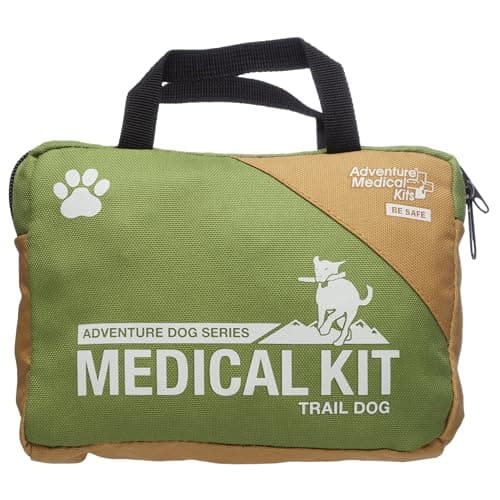
The Best Dog Boots
Everything about a boot that matters is the sole and the closure. One brand here names its rubber and sizes in quarter-inch steps. The rest describe.
If your dog goes onto rock, buy the Ruffwear Grip Trex. It is the only boot in this roundup whose sole is a specification rather than an adjective — a non-marking Vibram outsole — and the only one sized in quarter-inch increments across eight widths.
If the hazard is snow, that is the Polar Trex. If you want a warranty and a lower price, the Kurgo Blaze Cross. If your dog fights having its foot enclosed at all, the wide opening on the Ultra Paws is the practical answer.
Everything is the sole
A dog boot is a piece of rubber with a bag attached to hold it on. The bag matters for fit; the rubber decides whether the boot survives a season on shale. So the useful question about any boot is: what is the rubber?
Across this category, the answer is almost always “rubber.” Ruffwear publishes non-marking Vibram with a lug pattern — a named compound from a named supplier with a reputation to protect. Kurgo says rubber. Ultra Paws says non-slip. Neither is lying; neither is telling you anything you can compare.
This is the same pattern we keep finding across the site: the component that fails is the component nobody specifies. On harnesses it is the buckle, on leashes it is the clip, on boots it is the sole.
The closure decides whether they stay on
“They fall off” is the universal complaint about dog boots, and it is nearly always a closure or sizing problem rather than a product one.
Ruffwear specifies a YKK hydrophobic hook-and-loop cinch with hardware, and states that it “maintains holding power when wet”. That qualifier is the entire point: ordinary hook-and-loop loses grip once it is soaked and packed with grit, which is precisely the condition boots are used in.
Whatever boot you buy, cinch it above the dew claw on the narrowest part of the leg, not around the fleshy paw. A closure tightened on the paw works its way down and off within a mile.
Sizing, and why eight sizes is not excessive
Ruffwear’s size run is 1.50 in to 3.25 in in quarter-inch steps, and its measuring instruction is specific: “across widest part of the paw when bearing weight.”
Both halves matter. A paw spreads under load, so measuring an unweighted paw gives you a boot that is too tight. And most dogs have larger front paws than back — which means the honest answer for a lot of dogs is two different sizes, and therefore two purchases when boots are sold in pairs.
Quick picks
The short answer, ranked and scored against our published durability rubric. Where a manufacturer does not publish a spec, we say so rather than estimating it.
| # | Photo | Product | Durability | Price |
|---|---|---|---|---|
| 1 | 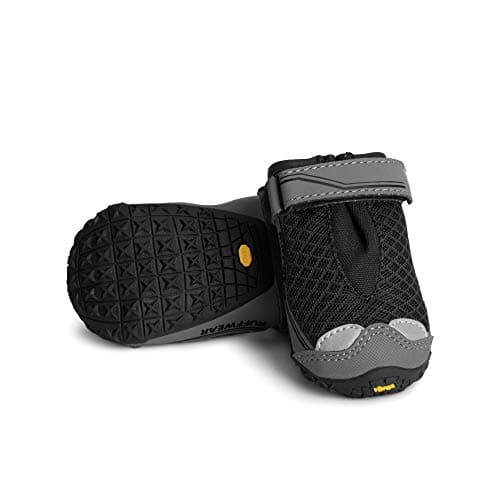 | Ruffwear Grip Trex BootsSharp rock and scree — the only boot here with a named outsole | 80/100 | $49.99 · Amazon |
| 2 | 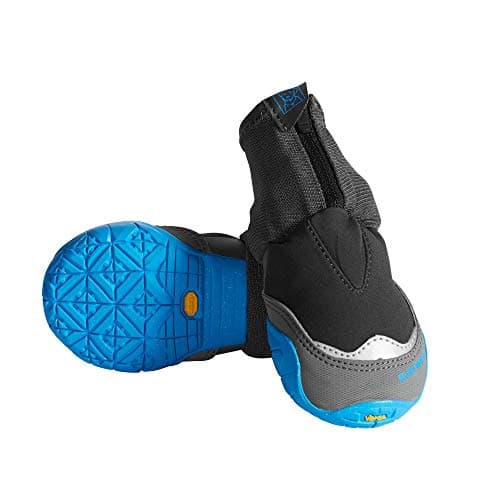 | Ruffwear Polar Trex BootsWinter — insulation and a taller gaiter over the same sole philosophy | 73/100 | $46.74 · Amazon |
| 3 | 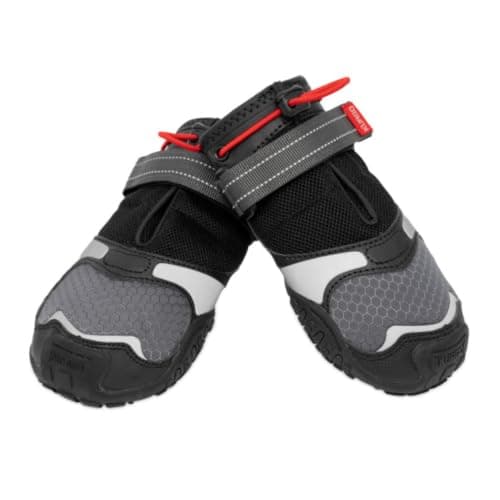 | Kurgo Blaze Cross Dog ShoesA mid-price boot with a lifetime defect warranty behind it | 67/100 | $37.49 · Amazon |
| 4 | 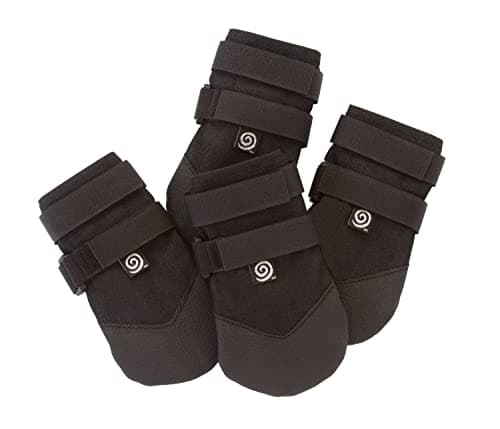 | Ultra Paws Durable Dog BootsA wide-opening boot for a dog that fights having its foot enclosed | 53/100 | $27.50 · Amazon |
Tap any row to jump to the full review. Prices are pulled live from Amazon as of October 18, 2026; where we have no verified live price we show none rather than a stale number. #ad — how our links work.
The picks, ranked
1. Ruffwear Grip Trex Boots
Durability score 80/100Best for: Sharp rock and scree — the only boot here with a named outsole
The reference boot for sharp ground, and the only one here whose sole is a specification rather than a description.
- Outsole
- Non-marking Vibram, lug pattern
- Upper
- 100% polyester tightly woven air mesh
- Closure
- YKK hydrophobic hook-and-loop cinch with hardware
- Sizing
- Eight widths, 1.50–3.25 in in 0.25 in steps
- How to measure
- Across the widest part of the paw when bearing weight
- Sold as
- Sets of two
- Weight
- Not published
Pros
- A named Vibram outsole — the only boot in this roundup where the rubber has an identity rather than an adjective
- Eight sizes in quarter-inch steps, which is the level of granularity boot fit actually requires
- Ruffwear publishes the correct measuring method: across the widest part of the paw, bearing weight
- YKK hydrophobic hook-and-loop, specified to maintain holding power when wet — the usual reason boots come off
Cons
- Sold in sets of two, so a full set of four is two purchases and most dogs need two different sizes
- No published weight
- Ruffwear's standard warranty excludes chewing, which is exactly how boots most often die
- Air mesh upper is built for breathability, not for warmth — this is a summer and rock boot, not a winter one
How we assessed it: on published materials, hardware specs and construction — not long-term chew-tested. We say so because it is true, and because a claim we cannot back is worth nothing to you.
#ad Price as of October 18, 2026; Amazon prices change often, so check before you buy. How our links work.
2. Ruffwear Polar Trex Boots
Durability score 73/100Best for: Winter — insulation and a taller gaiter over the same sole philosophy
The right Ruffwear if the hazard is snow and cold rather than rock — but note that no dog boot on the market carries a published temperature rating.
- Outsole
- Vibram, winter-specific compound and tread
- Upper
- Insulated, with an extended gaiter
- Closure
- Hook-and-loop cinch
- Sold as
- Sets of two
- Weight
- Not published
- Temperature rating
- Not published
Pros
- A winter-specific Vibram compound rather than the same rubber in a warmer upper
- The extended gaiter is the feature that actually keeps snow out and the boot on
- Insulated, which the Grip Trex is deliberately not
Cons
- Ruffwear publishes no temperature rating, so 'winter boot' is a category rather than a claim you can check
- Sold in twos, like the Grip Trex
- Considerably warmer than most dogs need for ordinary winter pavement walking — this is a snow-country boot
How we assessed it: on published materials, hardware specs and construction — not long-term chew-tested. We say so because it is true, and because a claim we cannot back is worth nothing to you.
#ad Price as of October 18, 2026; Amazon prices change often, so check before you buy. How our links work.
3. Kurgo Blaze Cross Dog Shoes
Durability score 67/100Best for: A mid-price boot with a lifetime defect warranty behind it
The sensible mid-price choice, with the caveat that the part doing the work — the sole compound — is the part Kurgo will not name.
- Outsole
- Rubber; compound not published
- Upper
- Not published in detail
- Closure
- Hook-and-loop strap
- Warranty
- Kurgo lifetime warranty on manufacturing defects
- Warranty exclusions
- Wear and tear; misuse; damage from abuse or accidents
Pros
- Kurgo's lifetime defect warranty is the longest in the boot category
- Roughly a quarter less than the Ruffwear
- Sold as a set of four rather than in pairs, which is genuinely more convenient
Cons
- The rubber compound is not named, so there is no way to compare the sole to a Vibram one
- Wear and tear — which is what happens to boots — is explicitly outside the free warranty and routed to paid replacement
- Fewer size increments than the Ruffwear's quarter-inch run
How we assessed it: on published materials, hardware specs and construction — not long-term chew-tested. We say so because it is true, and because a claim we cannot back is worth nothing to you.
#ad Price as of October 18, 2026; Amazon prices change often, so check before you buy. How our links work.
4. Ultra Paws Durable Dog Boots
Durability score 53/100Best for: A wide-opening boot for a dog that fights having its foot enclosed
The easy-on boot, and a reasonable everyday winter choice — but not the boot to take onto scree.
- Outsole
- Non-slip sole; compound not published
- Upper
- Not published in detail
- Closure
- Double hook-and-loop straps
- Sold as
- Set of four
- Warranty
- Not published
Pros
- Double straps give two independent points of tension, which helps on a leg shape that defeats a single cinch
- Sold as a set of four
- A wide opening makes them among the easiest boots here to get onto an unwilling foot
Cons
- No named sole compound and no published upper material
- No published warranty
- Built for pavement, salt and everyday protection rather than for sharp rock
How we assessed it: on published materials, hardware specs and construction — not long-term chew-tested. We say so because it is true, and because a claim we cannot back is worth nothing to you.
#ad Price as of October 18, 2026; Amazon prices change often, so check before you buy. How our links work.
Match the boot to the hazard, not to the season
Sharp ground — scree, shale, lava, stubble, glass: Grip Trex. This is a laceration risk and only a real outsole addresses it.
Snow and cold: Polar Trex, for the winter compound and the extended gaiter that keeps snow out of the boot. Note that no dog boot on the market carries a published temperature rating, so “winter boot” is a category rather than a specification.
Salt and de-icer on city pavements: honestly, paw wax. It is cheaper, needs no sizing, cannot be lost, and the dog does not object. We make that case properly in dog boots versus paw wax.
Hot pavement: boots help the pads and do nothing for the dog. Washington State University reports asphalt around 143 °F at 87 °F air temperature. The AVMA’s answer is to “avoid hot surfaces” and walk in the cooler hours, and that answer is both free and better.
Conditioning the dog, which is not optional
The high-stepping, shaking, freezing reaction to boots is normal and it passes for most dogs — but only with deliberate work, and only if you do it before you need them.
- Indoors, one boot, thirty seconds, food, take it off before the dog objects.
- Build to all four, indoors, over several sessions across several days.
- Short walk on familiar ground.
- Only then, the trailhead.
Doing this for the first time at the trailhead is the reliable way to end up carrying four boots and a barefoot dog over the exact terrain you bought them for.
A warranty note
Kurgo’s lifetime warranty is the longest here, and it covers “manufacturer’s defects caused by poor craftsmanship or defective hardware or materials”. It explicitly does not cover normal or abnormal wear and tear, which is routed to a paid replacement service instead.
Boots are a wear item. Read that warranty as insurance against a bad seam, not against the sole wearing out — because the sole wearing out is not a defect, it is the boot doing its job.
If you are not yet convinced your dog needs boots at all, that is a fair position and we have written the sceptical version of it: which dogs genuinely benefit, which hazards a boot does and does not solve, and the honest acclimation problem that sends most sets of boots to the back of a cupboard. It is on are dog boots worth it.
Frequently asked questions
What are the best dog boots for hiking?
The Ruffwear Grip Trex, on published evidence. It is the only boot in this category whose outsole is named — a non-marking Vibram with a lug pattern — rather than described as 'rubber', and it is sized across eight widths from 1.50 to 3.25 inches in quarter-inch steps. For sharp ground the sole is the whole product, and it is the one component nobody else will specify.
How do I measure my dog for boots?
Measure across the widest part of the paw while the dog is bearing weight on it — that is Ruffwear's published instruction and it matters, because the paw spreads under load and an unweighted measurement produces a boot that is too tight. Measure all four paws: most dogs have larger front paws than back, which means many dogs genuinely need two different sizes.
Why do dog boots keep falling off?
Almost always the closure position or the size. Cinch above the dew claw on the narrowest part of the leg, never around the fleshy part of the paw, or the closure walks down and off within a mile. Ordinary hook-and-loop also loses grip once soaked and packed with grit, which is why Ruffwear specifies a hydrophobic YKK closure stated to maintain holding power when wet.
Do dog boots protect against hot pavement?
They protect the pads, which is real, but they do nothing about the dog overheating from above. Washington State University reports asphalt reaching about 143 °F when the air is 87 °F. The AVMA's guidance is simply to avoid hot surfaces and walk during the cooler hours of the day — which works better than any product and costs nothing.
How do I get my dog used to boots?
In stages, indoors, before you need them. One boot, thirty seconds, food, off before the dog objects. Build to four boots indoors over several days, then a short walk on familiar ground, then the trailhead. The high-stepping and shaking is a normal first reaction and it passes for most dogs — but not on the day you first need them in the field.
Are there winter dog boots with a temperature rating?
No. We checked, and no dog boot on the market publishes a temperature rating. Winter models like the Ruffwear Polar Trex use a winter-specific Vibram compound and an extended gaiter to keep snow out, both of which are real differences — but 'winter boot' is a product category rather than a specification you can compare between brands.
Sources
Every spec on this page traces to one of these. Where a manufacturer does not publish a figure, we say “not published” rather than estimating it.
- Ruffwear — Grip Trex specs (non-marking Vibram outsole; 100% polyester air mesh; 1.50–3.25 in sizing)
- Kurgo — lifetime warranty terms (defects covered; wear and tear routed to paid replacement)
- Washington State University — protect your pet’s feet from heat and burns (asphalt temperature figures)
- AVMA — Warm weather pet safety (signs of heat stress; avoid hot surfaces; never leave a pet in a car)
- Ruffwear — warranty terms (chewing excluded; no duration stated)