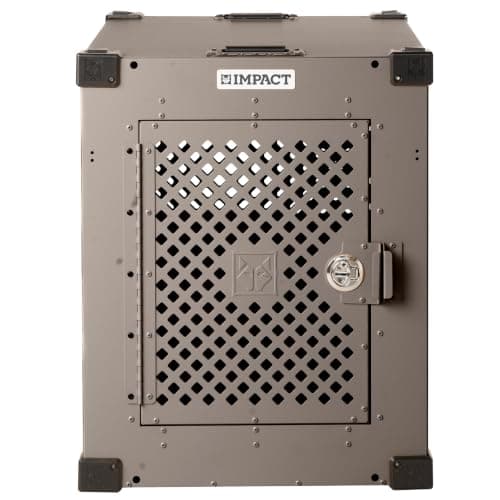
Will a Dog Bed Fit in a Crate?
Crates are advertised on their outside, beds on a nominal size, and the dog needs headroom in whatever is left. Three of those four numbers are usually missing from the listing.
The verdict
Usually not the bed you already own, and the reason is arithmetic rather than bad luck: a crate is advertised by its exteriorlength, a bed by a nominal size, and the dog still needs to stand up in whatever is left. Work in this order — crate interior, bed footprint, bed depth, the dog’s standing height — and the choice makes itself. For a dog that chews, the pick is the Kuranda chewproof elevated crate bed: it removes the soft object entirely, carries the same one-year chew warranty covering digging and scratching as the full-size Kurandas, and gets the dog off the plastic pan so nothing pools underneath. If you want something genuinely soft, the K9 Ballistics Armored padded crate bed is the one built flat for a crate rather than bunched into a corner. If budget is the constraint and the dog chews, the K9 Ballistics Tough crate pad is the only pad we have assessed with a chew-replacement promise behind it.
Why a 42 in bed does not fit a 42 in crate
Three different conventions collide here, and none of the listings warn you:
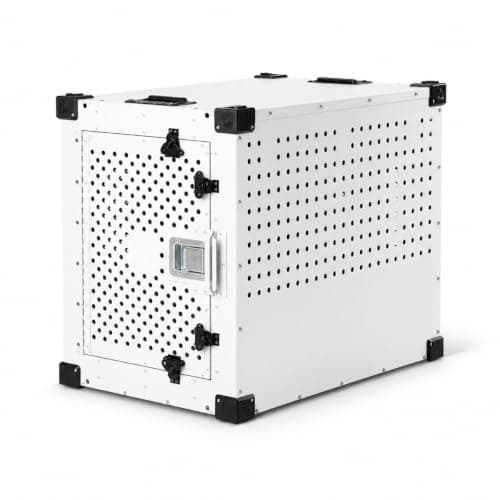
- Crates are sold on exterior dimensions.A “42 in crate” is 42 in on the outside. Door frames, corner posts and a moulded pan all eat into the inside, and the gap between the two numbers is not trivial. On the premium crate side the difference gets published often enough to prove the point: Dakota 283’s X-Large has a 38.75 in interior inside a 41 in exterior.
- Beds are sold on a nominal size. The number on a bed listing frequently describes the mattress before the bolster, or the cover rather than the insert.
- Nobody accounts for the dog standing up.Crate height is also exterior. Put a 7 in mattress in and you have removed 7 in of the dog’s headroom.
The four measurements that decide it
| Measure | How | Why it decides the purchase |
|---|---|---|
| Crate interior, floor | Tape inside the crate, pan in place, corner to corner | This is the only length and width that matters, and it is rarely in the listing |
| Crate interior, height | Pan surface to the lowest point of the roof | Your headroom budget. Everything you put in spends it |
| Dog standing height | Floor to the top of the shoulders, then to the top of the head | The dog must stand without ducking after the bed goes in |
| Bed depth, compressed | Push down on it; foam loses height under a dog | A cot’s height is fixed; a mattress’s is not |
Do the crate measurement before the bed one, always. If the crate is not bought yet, size it to the dog first — what size crate your dog needs is the measurement, and it also explains why a crate that is too big is a problem rather than a kindness. If you are in the position where your measurement is bigger than anything on sale, the large-dog crates covers where the premium market quietly stops.
Can you put an orthopedic bed in a crate?
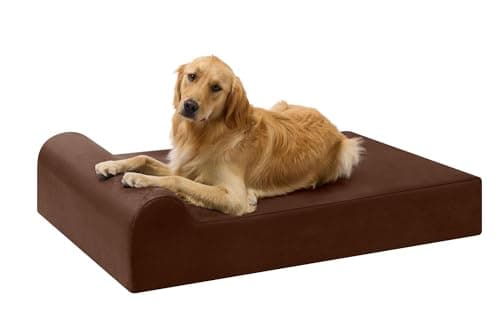
You can, and it is a real trade rather than a free upgrade. Depth is the whole point of an orthopedic bed — the reason a 7-inch mattress supports a heavy dog is that there is seven inches of foam under it — and depth is exactly what a crate does not have spare. So the honest sequence is:
- Measure headroom first.If the crate interior height minus the bed depth is less than the dog’s standing height, the answer is no, whatever the footprint says.
- Prefer a flat crate-specific mattress over a living-room bed. A bolster bed in a crate loses its bolster against a wall, gains a fold, and the fold is where a chewer starts.
- Accept that no maker publishes foam density.K9 Ballistics does not, on any product. Neither does anyone else in the chew-resistant category. So “orthopedic support” inside a crate cannot be verified from a spec sheet — see orthopedic against memory foam for what the words do and do not mean, and the orthopedic roundup for the beds where depth is the point and there is room for it.
For an older or stiff dog where the depth genuinely matters more than the containment, the better answer is often a full bed outside the crate and a thin pad inside it. The beds for that job are on our senior dog bed roundup.
If the dog chews, the fit question changes shape
A bed inside a crate is a soft object locked in a box with a bored dog, which is why the crate pad is the single most-destroyed object in dog ownership. Two routes work and they are genuinely different:
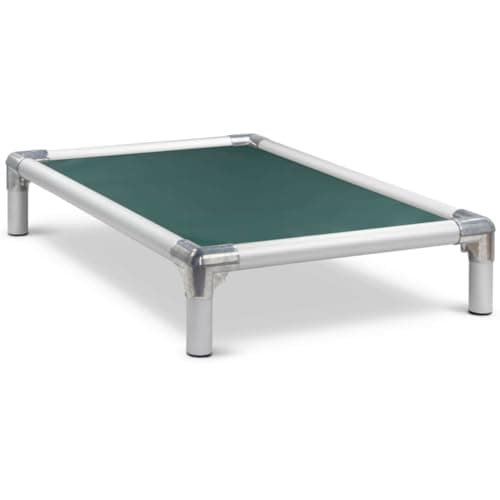
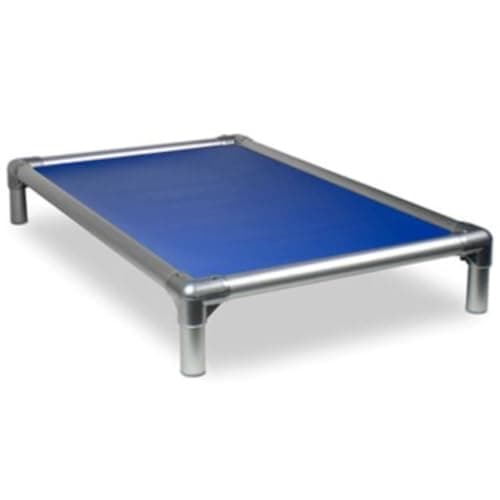
Remove the soft object. A low-profile elevated bed sized to sit inside the crate gives the dog something off the pan with no foam, no stuffing and no seam to start on. That is the Kuranda crate bed: aluminium frame, stainless fasteners, vinyl surface, and the same one-year chew warranty that covers digging and scratching. It costs vertical space, so measure headroom, and it is a hard surface like every cot. The trade-off worth knowing is the one Kuranda states itself: the chew warranty does not extend to outdoor mesh, bed pads or accessories, cosmetic damage is excluded, and a marketplace purchase is claimed through the retailer.
Armour the soft object.K9 Ballistics publishes 1200 denier ballistic fabric — a real number almost nobody else in this category will give you — and on the Armored line the 120-day chew warranty replaces the whole bed rather than just the cover. Two things to hold in mind: 120 days is one-time, a quarter the length of Kuranda’s, and K9 Ballistics’ own 10-year and 1-year warranties both exclude chewing, so only the 120-day one is doing the work. K9 Ballistics also says plainly that no bed is 100% indestructible, which is the correct way to sell this category.
The full field for the thing that goes inside the crate is on our crate pad roundup, and if the chewing is the headline problem rather than the fit, the chew-proof beds and our answer on whether an indestructible bed exists are the places to start. For a giant-breed chewer, the large-dog indestructible beds carries the only published weight rating we have found in that corner of the market. And if you would rather build than buy, how to make a chew-proof dog bed is the DIY route.
What to look for, in order
- An interior dimension, published or measured.Never shop a bed against a crate’s exterior number.
- A flat profile. Crate-specific beds are flat for a reason: a fold is a starting point for teeth and a waste of floor.
- A removable, washable cover. This, more than fabric weight, decides whether a crate bed survives a year.
- Chew coverage, and its clock. One year with digging and scratching included, or 120 days one-time, or nothing. Those are the three real options.
- Headroom after the bed is in. The dog has to stand up. This is the check people skip and then live with.
Quick picks
The short answer, ranked and scored against our published durability rubric. Where a manufacturer does not publish a spec, we say so rather than estimating it.
| # | Photo | Product | Durability | Price |
|---|---|---|---|---|
| 1 | 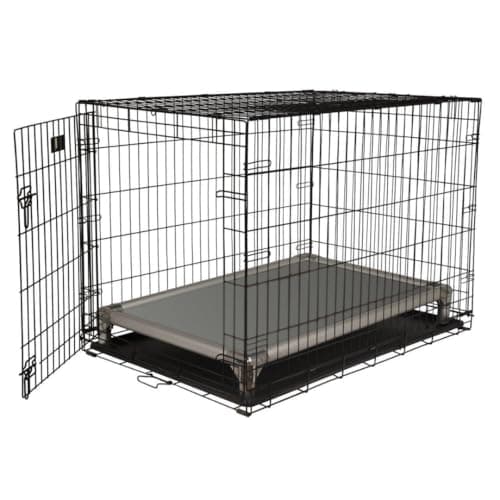 | Kuranda Chewproof Elevated Crate Bed (30 x 20)Getting a dog off a wire crate pan entirely | 91/100 | $144.95 · Amazon |
| 2 | 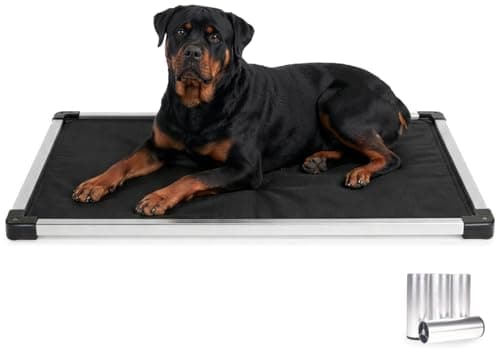 | K9 Ballistics Chew Proof Armored Padded Crate Bed (XL)A soft bed for a big chewer, with a full-bed replacement rather than a cover | 77/100 | $210.00 · Amazon |
| 3 | 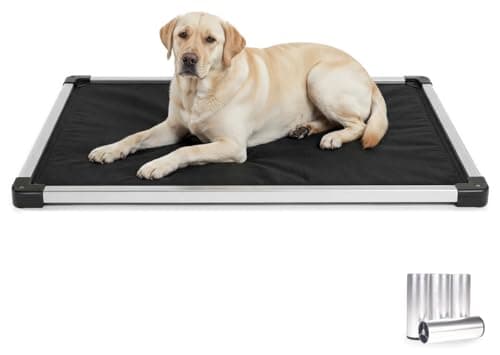 | K9 Ballistics Tough Crate PadThe only crate pad here with a genuine chew-replacement promise | 82/100 | $165.00 · Amazon |
Tap any row to jump to the full review. Prices are pulled live from Amazon as of October 18, 2026; where we have no verified live price we show none rather than a stale number. #ad — how our links work.
The picks, ranked
1. Kuranda Chewproof Elevated Crate Bed (30 x 20)
Durability score 91/100Best for: Getting a dog off a wire crate pan entirely
The best answer for a crate-chewer, because it removes the soft object rather than trying to armor it.
- Frame
- Aluminum with stainless fasteners
- Fabric
- Vinyl (this configuration)
- Format
- Low-profile elevated bed sized to fit inside a crate
- Chew warranty
- 1 year, covering digging and scratching
- Fabric denier
- Not published
Pros
- Solves the problem a crate pad cannot: the dog is off the plastic pan entirely, so urine and water do not pool under it
- Same chew warranty as the full-size Kuranda beds, including digging and scratching
- Nothing to shred — no foam, no stuffing, no seam a dog can start on
Cons
- Takes vertical space inside the crate, so measure the dog's standing height first
- Hard surface, like every cot
- Sized to specific crate footprints, so getting the fit right takes measuring rather than guessing
How we assessed it: on published materials, hardware specs and construction — not long-term chew-tested. We say so because it is true, and because a claim we cannot back is worth nothing to you.
#ad Price as of October 18, 2026; Amazon prices change often, so check before you buy. How our links work.
2. K9 Ballistics Chew Proof Armored Padded Crate Bed (XL)
Durability score 77/100Best for: A soft bed for a big chewer, with a full-bed replacement rather than a cover
The best soft bed for a big chewer, and the only line here whose chew warranty replaces the whole bed - but the clock runs out after 120 days.
- Fabric
- 1200 denier ballistic - K9 Ballistics likens the weave to flak jacket material
- Chew warranty
- 120 days. On the Armored line this is a one-time replacement of 'the cover or bed', not cover-only
- Flatten warranty
- K9 Ballistics publishes a separate 10-year cover for a mattress that flattens more than 2 in - confirm it applies to the SKU you order
- Foam density
- Not published
- Sizing
- Sold by size letter rather than by dog weight - read the maker's size chart against your crate
Pros
- 1200 denier is a real, published fabric number, and almost no bed maker in this category will give you one
- The Armored line is the half of the K9 Ballistics range that gets a whole-bed replacement under the 120-day chew warranty - the Tough Ripstop line does not
- A genuinely soft, padded bed that a chewer can use, which no cot can offer
- Flat crate-bed profile, so it does not bunch into a corner the way a bolster bed does
Cons
- 120 days is one-time only, and a quarter the length of Kuranda's chew warranty
- No published foam density, so how well it supports a 110 lb dog cannot be checked
- The 10-year and 1-year warranties both exclude chewing - only the 120-day one covers it
- K9 Ballistics says so itself: no bed is 100% indestructible
How we assessed it: on published materials, hardware specs and construction — not long-term chew-tested. We say so because it is true, and because a claim we cannot back is worth nothing to you.
#ad Price as of October 18, 2026; Amazon prices change often, so check before you buy. How our links work.
3. K9 Ballistics Tough Crate Pad
Durability score 82/100Best for: The only crate pad here with a genuine chew-replacement promise
The crate pad to buy if the dog chews, and the only one whose maker will do something about it when the dog wins.
- Fabric
- Ballistic weave; K9 Ballistics publishes 1200 denier on its Armored line
- Format
- Flat pad sized to standard crate footprints
- Chew coverage
- K9 Ballistics chew replacement, per its published warranty terms
- Fill density
- Not published
- Washability
- Removable cover
Pros
- The only crate pad in this roundup backed by a chew-replacement promise rather than a defects-only warranty
- Ballistic weave is a real fabric category rather than a marketing adjective — K9 Ballistics publishes 1200 denier across its chew-resistant line
- Flat profile fits a crate without bunching, which is what defeats a folded bed
- Removable, washable cover — the thing that actually determines whether a crate pad survives a year
Cons
- Fill density is not published, so orthopedic support cannot be verified
- By a wide margin the most expensive pad here
- Chew coverage is a replacement promise, not an indestructibility claim — a determined dog will still open it
How we assessed it: on published materials, hardware specs and construction — not long-term chew-tested. We say so because it is true, and because a claim we cannot back is worth nothing to you.
#ad Price as of October 18, 2026; Amazon prices change often, so check before you buy. How our links work.
The bottom line
The reason this question keeps getting asked is that the two product categories are sold on incompatible numbers. Measure the crate’s inside, measure the dog standing up, and treat bed depth as something you are spending rather than something you are gaining. For a chewer, the most defensible purchase on the market is still the one that removes the soft object rather than armouring it — and if you want soft anyway, buy the line whose warranty replaces the whole bed and know that the clock is 120 days.
Frequently asked questions
Will a dog bed fit in a crate?
Only if you measure the crate's interior rather than trusting its advertised size. Crates are sold on exterior dimensions - door frames, corner posts and a moulded pan all eat into the inside, and on the premium side the published figures prove it: Dakota 283's X-Large has a 38.75 in interior inside a 41 in exterior. Beds are sold on a nominal size that often describes the mattress before the bolster. Measure the crate floor corner to corner with the pan in place, measure the interior height from the pan to the lowest point of the roof, and measure your dog standing. Then buy a bed whose footprint fits the first number and whose depth leaves the third intact.
Can you put an orthopedic dog bed in a crate?
You can, but depth is the whole point of an orthopedic bed and depth is what a crate does not have spare. A 7 in mattress removes 7 in of your dog's headroom, so check that crate interior height minus bed depth still exceeds the dog's standing height before anything else. Prefer a flat crate-specific mattress to a living-room bolster bed, which loses its bolster against a crate wall and gains a fold that a chewer will start on. And note that no maker in the chew-resistant category publishes foam density, K9 Ballistics included, so orthopedic support inside a crate cannot be verified from a spec sheet.
What is the best chew-proof bed for a crate?
The Kuranda chewproof elevated crate bed, because it solves the problem by removing the soft object rather than armouring it: an aluminium frame with stainless fasteners, a vinyl surface, nothing to shred, and the dog is off the plastic pan so urine and water do not pool underneath. It carries the same one-year chew warranty as the full-size Kurandas, including damage from digging and scratching - the most confident chew cover in the bed category. Two costs: it takes vertical space inside the crate, and it is a hard surface like every cot.
How much space should be left around a dog bed in a crate?
Enough that the bed lies flat and the dog can still turn around, which in practice means buying a bed slightly smaller than the crate's interior rather than wedging one in. A bed that has to be forced in will fold, and a fold does two bad things: it wastes crate floor and it gives a bored dog a raised seam to work on. Bed makers size crate beds to standard crate footprints for exactly this reason, so check the maker's chart against your measured interior rather than against your crate's model name.
Is a crate pad or a crate bed better?
A pad costs almost no headroom and is the right answer when the crate is tight or the dog is only in it for short periods. A low-profile elevated crate bed costs vertical space and is the right answer for a chewer or for a dog in a kennel run, because it gets the dog off the pan entirely. The deciding factor is usually the warranty: of the crate pads we have assessed, only the K9 Ballistics Tough crate pad carries a chew-replacement promise rather than a defects-only warranty, and the elevated Kuranda carries a full year covering digging and scratching.
Why do crate beds get destroyed so quickly?
Because a crate bed is the only soft object in a box with a bored dog, and the usual failure sequence is predictable: the bed folds or bunches, the fold raises a seam, the dog opens the seam, and the fill comes out. Two things reduce it more than fabric weight does. A flat bed sized to the measured interior, so there is no fold to start on. And a removable washable cover, which is what actually determines whether a crate bed lasts a year - a bed that cannot be washed gets thrown away long before it gets chewed through.
Sources
Every spec on this page traces to one of these. Where a manufacturer does not publish a figure, we say “not published” rather than estimating it.
- Kuranda — warranty terms: the 1-year chew warranty that explicitly covers damage from digging and scratching, and the exclusions (outdoor mesh, pads, accessories, cosmetic damage)
- K9 Ballistics — warranty terms: the 120-day one-time chew replacement, the Armored line's whole-bed rather than cover-only replacement, and the 10-year/1-year warranties that both exclude chewing