The Best GPS Dog Trackers
The whole category divides on one question: does the tracker need a cell network? Where your dog is likely to get lost decides which half you should be shopping in.
There are two completely different products sold under one name here, and choosing the wrong one is the expensive mistake.
The Garmin Alpha 300i talks to the dog’s collar over direct radio. No cell network, no tracking subscription. The Tractive unit talks over the cellular network, which gives unlimited range where there is coverage and no range at all where there is none — and it requires a subscription indefinitely.
Two picks, not three, and that is deliberate. This category consolidated in 2025: Tractive bought Whistle from Mars Petcare and switched the Whistle servers off on 31 August 2025, which stopped every Whistle tracker working — including the ones already buckled to dogs. We had the Whistle Go Explore ranked here. It is not demoted, it is deleted, because the product no longer functions at any price. If you own one, it is not broken and it is not a subscription problem; the service behind it is gone.
The only question that matters
Where is your dog realistically going to get lost?
If the answer is “out of the yard, through the gate, three streets away” — a cellular tracker is the right product. Suburbs have coverage, the range is effectively unlimited, and the up-front cost is a fraction of the Garmin.
If the answer is “over the ridge, in the timber, out of contact” — a cellular tracker is close to useless, because the terrain that loses a dog is disproportionately the terrain with no signal. That is the case the Garmin system exists for, and it is why houndsmen and field trialers buy it despite the price.
Almost every roundup in this category ranks these products against each other on features. They are not competitors. They solve different problems in different places.
The subscription, stated plainly
Cellular trackers do not work without an active plan. Stop paying and the hardware becomes an inert plastic box on your dog’s collar — not a degraded service, no service. Over five years the subscription usually exceeds the purchase price, often by a lot.
Garmin’s dog tracking needs no subscription, because the handheld and the collar talk to each other directly. The Alpha 300i’s inReach satellite messaging and SOS do need one, but that is a feature for the handler, not for the dog.
There is a second, harsher version of the subscription risk, and the Whistle shutdown is what it looks like. A cellular tracker depends not only on your plan being current but on the company continuing to run the servers. When Tractive bought Whistle it retired the platform outright, and the hardware went inert on a date its owners did not choose. Nothing about the Garmin system can fail that way, because there is no company in the middle of the link — the handheld receives the collar directly.
Whichever you choose, do the five-year arithmetic before you compare the sticker prices. That single calculation reorders this category for a lot of buyers.
A tracker is not a containment system
This is worth being blunt about. A GPS tracker tells you where your dog went. It does not stop the dog going, and the sequence in a real escape is: dog leaves, you notice, you look at a phone, you drive. The tracker compresses the search; it does not prevent the event.
Which means the tracker is the second purchase. The first is a collar that stays on the dog with a tag on it, because a stranger with your phone number solves the problem faster than any technology — and a fitted collar is also what a tracker clips to. Our durable collar roundup covers what actually survives being worn every day.
The cheap alternative people weigh against all of these is not a tracker in the same sense. AirTag vs a GPS dog collar compares the three architectures side by side, including how to mount a beacon on a collar if that is the right answer for where you live.
Quick picks
The short answer, ranked and scored against our published durability rubric. Where a manufacturer does not publish a spec, we say so rather than estimating it.
| # | Photo | Product | Durability | Price |
|---|---|---|---|---|
| 1 | 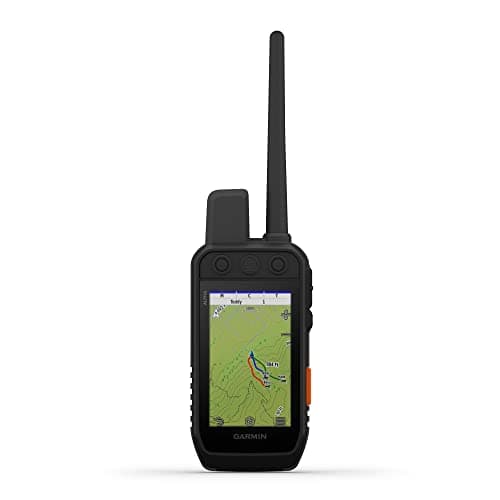 | Garmin Alpha 300i HandheldTracking with no cell coverage at all — the only true off-grid system here | 87/100 | $849.99 · Amazon |
| 2 | 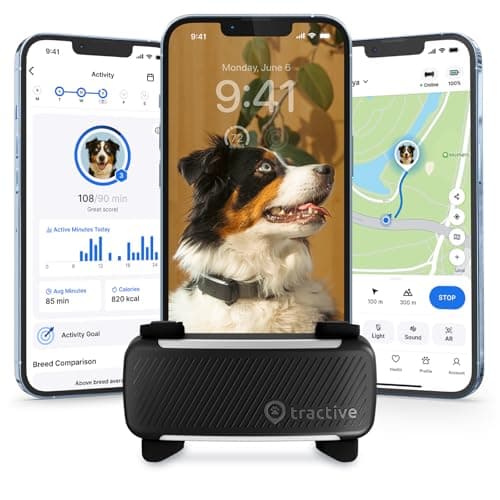 | Tractive GPS DOG 6Unlimited-range tracking anywhere there is cell coverage | 61/100 | $47.40 · Amazon |
Tap any row to jump to the full review. Prices are pulled live from Amazon as of October 18, 2026; where we have no verified live price we show none rather than a stale number. #ad — how our links work.
The picks, ranked
1. Garmin Alpha 300i Handheld
Durability score 87/100Best for: Tracking with no cell coverage at all — the only true off-grid system here
The serious tool. If your dog ranges where there is no cell signal, nothing on the consumer market is a substitute for it.
- Link type
- Direct radio between handheld and dog device — no cellular network required
- Range to dog device
- Up to 9 miles to a compatible Alpha collar
- Display
- 3.5 in sunlight-readable touchscreen
- Battery
- Up to 55 hours; about 50 with satellite features active. USB-C charging
- Satellite messaging
- inReach two-way messaging and SOS (subscription required)
- Subscription for tracking
- None — the dog-tracking link itself is not a subscription service
- Dogs tracked
- Up to 20 with additional dog devices
- Dog device
- Sold separately for this handheld
Pros
- The only system here that works with no cell coverage whatsoever, because the handheld talks to the collar directly over radio rather than through a network
- No subscription is required for the dog tracking itself — a genuine cost difference over the cellular trackers, which are subscription-dependent forever
- Tracks up to 20 dogs at up to 9 miles, which is why this is the system houndsmen and field trainers actually use
- Up to 55 hours on a charge, and the battery is replaceable rather than sealed in — a real advantage on a multi-day hunt
- inReach satellite SOS covers the handler as well as the dog
Cons
- By far the most expensive option here, and the dog collar device is a separate purchase on top
- Bulky handheld — this is field equipment, not a pet gadget
- inReach messaging and SOS do require their own subscription, even though tracking does not
How we assessed it: on published materials, hardware specs and construction — not long-term chew-tested. We say so because it is true, and because a claim we cannot back is worth nothing to you.
#ad Price as of October 18, 2026; Amazon prices change often, so check before you buy. How our links work.
2. Tractive GPS DOG 6
Durability score 61/100Best for: Unlimited-range tracking anywhere there is cell coverage
The right tracker for a pet that might get out of the yard. The wrong tracker for a dog that ranges beyond cell coverage.
- Link type
- Cellular (LTE) plus GPS — requires network coverage
- Subscription
- Required; the hardware does not function without an active plan
- Range
- Unlimited within cell coverage
- Battery
- Published by Tractive as up to 2 weeks; the XL variants claim up to 6
- Attachment
- Clips to an existing collar up to 1.1 in wide
- Water resistance
- Published by Tractive as IP68
- Health monitoring
- Heart rate, respiratory rate, sleep, bark and scratch monitoring
Pros
- Unlimited range wherever there is a cell signal, which is the case that covers most escaped pet dogs
- Clips to the collar you already own rather than replacing it
- Now carries the health and behavior monitoring that used to be the reason to buy a Whistle instead — heart rate, respiratory rate, sleep, barking and scratching
- Far cheaper up front than the Garmin
Cons
- The subscription is not optional — stop paying and you own an inert plastic box, which is the single biggest thing to understand before buying
- No cell coverage means no tracking, which is exactly the terrain a hunting or field dog gets lost in
- Battery life is measured in weeks at best and days in heavy use, and a flat tracker is no tracker
How we assessed it: on published materials, hardware specs and construction — not long-term chew-tested. We say so because it is true, and because a claim we cannot back is worth nothing to you.
#ad Price as of October 18, 2026; Amazon prices change often, so check before you buy. How our links work.
Battery life is the spec that bites
A flat tracker is not a tracker, and cellular units are measured in days rather than weeks because GPS acquisition and an LTE radio are both expensive in power terms.
The practical consequence: a tracker only works if charging it is a habit. Realistically, that means charging it on a schedule tied to something you already do, not when you remember. A device that is flat 20% of the time is a device that is absent on one escape in five.
The health-monitoring question
Health monitoring used to be the reason to buy a Whistle rather than a Tractive. That distinction is gone: Whistle is off the market, and the current Tractive publishes heart rate, respiratory rate, sleep, barking and scratching alongside location. The feature won by outlasting the company that popularized it.
We are generally skeptical of feature bloat, and we think this one is defensible: a scratching trend over weeks genuinely can surface a skin or joint problem before an owner notices it, because owners see the dog every day and miss gradual change.
The honest caveat is that it is trend data, not diagnosis, and you should treat it as something to raise with a vet rather than as an answer. We hold no veterinary credential and neither does a collar sensor.
What we would buy
Suburban pet dog, escape artist: Tractive. Cheapest route to unlimited range where the coverage exists, and it clips to the collar you already have.
Hunting, field trial, or any dog that ranges beyond coverage: Garmin, and it is not a close call. The Alpha 300i tracks up to 20 dogs at up to nine miles and needs no network. Note the collar device is a separate purchase.
A dog in the car on the way to any of that: restraint first. A tracker is no help in a collision, and the certification picture is in our crash-tested harness roundup.
Whether the category is worth owning at all is a separate question, and it turns on two things the shelf price hides: the subscription, which is not optional on a cellular tracker, and coverage, because “unlimited range” means unlimited inside cell coverage — and the terrain that loses dogs is often the terrain that loses signal. We work through it on are GPS dog collars worth it.
Frequently asked questions
What is the best GPS dog tracker?
It depends entirely on where your dog would get lost. For a suburban dog that gets out of the yard, a cellular tracker like the Tractive gives unlimited range wherever there is coverage, cheaply. For a dog that ranges into terrain without cell signal — hunting, field trials, back country — the Garmin Alpha system is the only real answer here, because the handheld talks to the collar directly over radio rather than through a network.
Do GPS dog trackers need a subscription?
Cellular ones do, permanently. Tractive stops functioning entirely without an active plan — not a degraded service, no service — and over five years the subscription typically exceeds the hardware price. Garmin's dog tracking needs no subscription because the handheld and collar communicate directly; its inReach satellite messaging and SOS do require one, but that feature is for the handler rather than the dog.
What happened to the Whistle dog tracker?
Tractive acquired Whistle from Mars Petcare in July 2025 and shut the Whistle service down on 31 August 2025. Whistle trackers stopped reporting on that date, including units already in use, because a cellular tracker is only as alive as the servers behind it. Tractive offered affected owners a replacement tracker and credited pre-paid Whistle subscriptions, but that claim window closed on 30 September 2025. We removed the Whistle Go Explore from this page rather than ranking it lower — it is not a weaker product now, it is a non-functioning one.
Do GPS trackers work where there is no cell service?
Cellular trackers do not, and this is the category's central limitation: the terrain that loses a dog is disproportionately the terrain without coverage. The Garmin Alpha system does work, because the handheld receives directly from the dog device over radio rather than routing through a network. If your dog ranges beyond coverage, that difference is the whole purchase decision.
How long does a dog GPS tracker battery last?
Cellular trackers are measured in days rather than weeks, because GPS acquisition and an LTE radio are both power-hungry. The practical implication matters more than the number: a tracker only works if charging it is a routine habit tied to something you already do. A device that is flat 20% of the time is absent on one escape in five.
Is a GPS tracker better than a microchip?
They do different jobs and you want both. A microchip is permanent, needs no power and identifies your dog at any vet or shelter — but it is passive and only helps once someone has already caught the dog. A GPS tracker tells you where the dog is right now, but only while it is charged and attached. Neither stops the dog leaving, which is why a well-fitted collar with a legible tag is still the first purchase.
Sources
Every spec on this page traces to one of these. Where a manufacturer does not publish a figure, we say “not published” rather than estimating it.
- Garmin — Alpha 300i handheld product page
- Garmin — Alpha 300 and 300i announcement (specifications, 11 May 2023)
- Tractive — GPS DOG 6 product, specifications and subscription information
- Engadget — Whistle pet trackers shutting down (Tractive acquisition and 31 Aug 2025 service end)
- Center for Pet Safety — certified products list