Heavy-Duty Dog Collars for German Shepherds
Neck size is the easy part. The double coat is what actually decides which collar you should own, and it is the one thing every roundup on this query ignores.
Buy the Auburn Leathercrafters rolled collar. It is full-grain bridle leather — Auburn is one of the very few collar makers anywhere that names its grade rather than writing “genuine leather” and hoping you do not know what that means — it runs to 34 in, and the rolled profile is the only construction here that does not mat a shepherd’s ruff into felt.
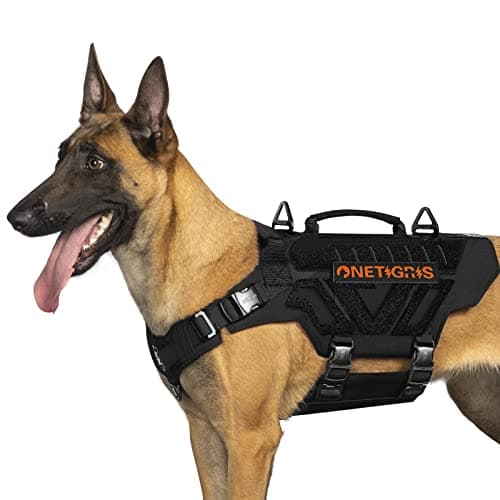
Buy the OneTigris tactical collar instead if what you need is a handle. On a 90 lb working-line dog, being able to take hold of the collar itself — at the vet, at the tailgate, when a stranger’s off-lead dog appears — is worth more than any material argument on this page.
The double coat is the real design constraint
A German Shepherd has a dense undercoat under a coarse guard coat, and around the neck that undercoat is at its thickest. A flat 1 in nylon collar sits on top of it and works it, hour after hour, walk after walk, in exactly one spot. The result is the mat every shepherd owner eventually finds: a felted pad under the collar line that a brush will not open and that has to be cut out.
This is not a cosmetic problem. Three things follow from it:
- Matting traps moisture. A wet felted pad against skin stays wet, and the skin under it stays wet with it.
- You stop being able to check the fit. Two fingers under a collar is the standard, and it is meaningless once there is a compacted pad of undercoat in the way.
- You stop being able to see the collar. Wear at the buckle and fraying at the D-ring are the things you are supposed to catch early. A matted ruff hides both.
A rolled collar solves it, and it is genuinely the traditional answer for heavy-coated breeds rather than a marketing angle: a round cross-section parts the coat and rolls through it instead of pressing it flat. That is why it leads this page. It is also why the same collar would not lead a Rottweiler page — a short-coated dog has no matting problem, and there a round profile just concentrates load on a narrower line.
Neck size, and the number to actually measure
Adult German Shepherds usually land somewhere between an 18 in and a 24 in neck, with large working-line males above that. That is a wide enough band that guessing from the breed name is useless, and it is wide enough that plenty of collars sold as “large” will not close on a big male at all.
Measure the dog, not the breed. Run a soft tape around the neck where the collar will actually sit — high, just behind the ears, not down at the shoulders where it is thickest — and add two fingers’ clearance. The full method, including the mistake that makes every harness measurement wrong, is in how to measure a dog for a harness and collar.
One practical note on sizing charts: Auburn publishes sizes from 10 to 34 in. Most of the nylon collars in this category top out well below that, which is why so many shepherd owners end up on a “tactical” collar by default — not because it is better, but because it is one of the few that closes.
Hardware, and what nobody publishes
This is where the category gets thin. Of the five collars below, not one publishes a break strength or a working load for the collar as a unit. That is not us failing to look; it is the state of the market, and it is the reason our rubric weights hardware at 25% and rewards disclosure.
What you can still judge, without a number:
- Buckle type. A metal buckle with a tongue through a punched hole is a different object from an acetal side-release. Max and Neo puts a metal buckle on a low-priced nylon collar, which is genuinely unusual.
- The ring. A welded ring is a closed loop of steel. A split ring is a bent strip that can be opened by force applied the wrong way. Ruffwear uses an anodized 6061-T6 aluminum V-ring across its line; on the rolled leather it is a nickel-plated dee.
- Plating. Nickel plating over zinc is the default in this category, and it wears through. Auburn is explicit that its hardware is bright nickel-plated rather than solid stainless, which we count as honesty rather than a flaw.
For a sense of scale on what small hardware actually holds: a commodity 1/2 in nickel-plated zinc bolt snap of the kind used on cheap leads publishes a 90 lb working load. A shepherd hitting the end of a lead generates well over that. The strap is almost never the problem — the small metal parts are.
Quick picks
The short answer, ranked and scored against our published durability rubric. Where a manufacturer does not publish a spec, we say so rather than estimating it.
| # | Photo | Product | Durability | Price |
|---|---|---|---|---|
| 1 | 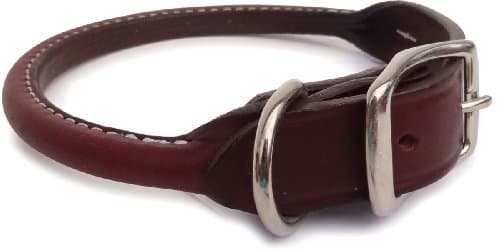 | Auburn Leathercrafters Rolled Leather CollarThe buy-it-for-life leather collar | 78/100 | $67.00 · Amazon |
| 2 | 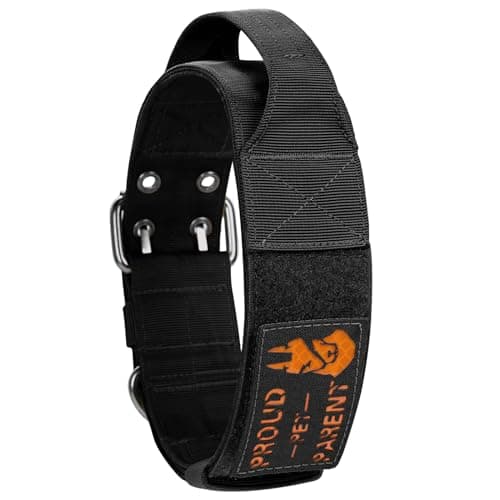 | OneTigris Tactical Dog CollarA control handle on the collar itself | 64/100 | $18.99 · Amazon |
| 3 | 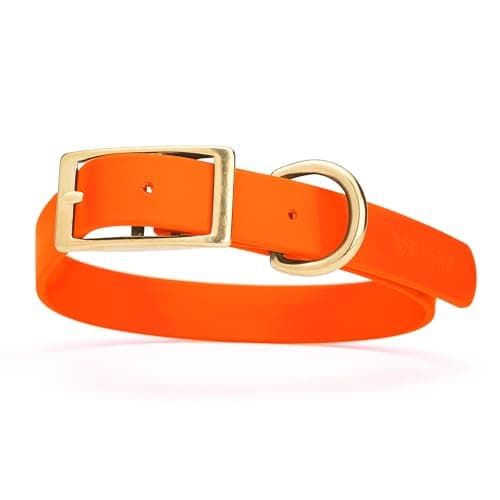 | Viper BioThane Waterproof CollarA dog that swims, rolls, and stinks up a nylon collar | 72/100 | $24.99 · Amazon |
| 4 | 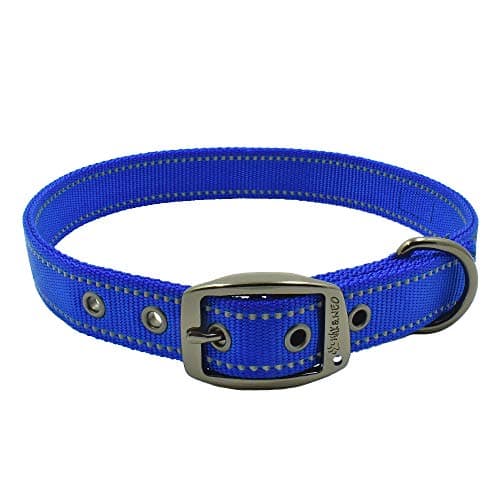 | Max and Neo MAX Reflective Metal Buckle CollarA metal-buckle nylon collar that funds a rescue | 61/100 | $15.99 · Amazon |
| 5 | 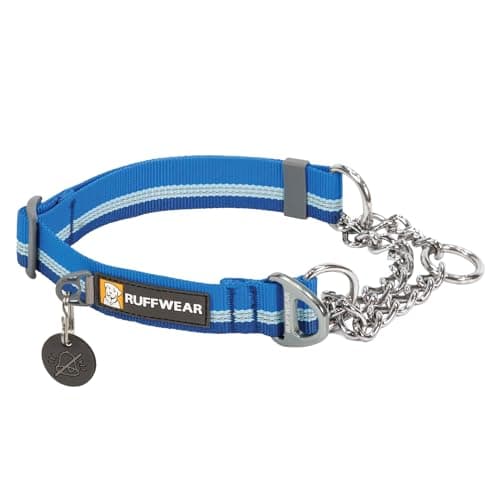 | Ruffwear Chain Reaction CollarA dog that backs out of a flat collar | 70/100 | $29.99 · Amazon |
Tap any row to jump to the full review. Prices are pulled live from Amazon as of October 18, 2026; where we have no verified live price we show none rather than a stale number. #ad — how our links work.
The picks, ranked
1. Auburn Leathercrafters Rolled Leather Collar
Durability score 78/100Best for: The buy-it-for-life leather collar
The one collar here that names its leather grade, and that alone puts it ahead of every unlabeled 'genuine leather' collar on the market.
- Leather
- Full-grain bridle leather
- Hardware
- Bright nickel-plated buckle and dee ring; smooth capped rivets
- Construction
- Beveled and hand-polished edges; extended D-end pattern on large sizes
- Sizes
- 10–34 in; widths 1/2 to 1-1/4 in
- Made in
- Central New York State, USA
Pros
- Full-grain bridle leather — the top of the grade hierarchy, and Auburn names it, which almost no collar seller does
- Rolled construction resists matting the coat on long-haired dogs
- Capped rivets and beveled edges are real construction detail, not marketing
Cons
- Nickel-plated hardware, not solid stainless — plating wears through eventually
- No published break strength
- Sold in single-collar quantities at a real premium over mass-market nylon
How we assessed it: on published materials, hardware specs and construction — not long-term chew-tested. We say so because it is true, and because a claim we cannot back is worth nothing to you.
#ad Price as of October 18, 2026; Amazon prices change often, so check before you buy. How our links work.
2. OneTigris Tactical Dog Collar
Durability score 64/100Best for: A control handle on the collar itself
A genuinely useful control handle; just note the published-spec discipline OneTigris shows elsewhere does not extend to this one.
- Design
- Padded collar with an integrated control handle (Amazon listing)
- Width
- 2 in, stated in the listing title — the only dimension OneTigris publishes for it
- Denier
- Not published for this model
- Load rating
- Not published for this model
Pros
- The handle gives you immediate close control without reaching for the leash
- Heavier webbing than a typical flat collar
Cons
- OneTigris publishes load ratings on its X-Armor harness but not on this collar
- The handle adds bulk that some dogs will not tolerate
How we assessed it: on published materials, hardware specs and construction — not long-term chew-tested. We say so because it is true, and because a claim we cannot back is worth nothing to you.
#ad Price as of October 18, 2026; Amazon prices change often, so check before you buy. How our links work.
3. Viper BioThane Waterproof Collar
Durability score 72/100Best for: A dog that swims, rolls, and stinks up a nylon collar
The right collar for a dog that lives in water and filth — just understand that the 1,000 lb number belongs to the strap, not to the buckle holding it shut.
- Material
- Coated webbing: polyester core with a TPU or PVC coating
- Core break strength
- BioThane Beta 520 PET, 1 in standard: 1,000 lb (material maker's published figure)
- Buckle pull strength
- 200 lb on the same material spec — the hardware, not the strap, is the limit
- Cleaning
- Soap and water; disinfects with 10% bleach solution
Pros
- Genuinely waterproof and, per BioThane's own FAQ, stinkproof — the reason working and hunting owners buy it
- The polyester core carries a published 1,000 lb break strength in the standard 1 in profile
- Wipes clean; no absorbed mud, lake water or dead-thing smell
- Stays flexible in cold weather
Cons
- The coating adds no strength at all — BioThane says plainly that the tensile strength comes from the polyester webbing inside
- The material spec puts buckle pull strength at 200 lb, five times lower than the webbing. The buckle is the failure point, and Viper does not publish theirs
- Stiffer than nylon and it can feel slick
How we assessed it: on published materials, hardware specs and construction — not long-term chew-tested. We say so because it is true, and because a claim we cannot back is worth nothing to you.
#ad Price as of October 18, 2026; Amazon prices change often, so check before you buy. How our links work.
4. Max and Neo MAX Reflective Metal Buckle Collar
Durability score 61/100Best for: A metal-buckle nylon collar that funds a rescue
The cheapest honest way to get off plastic buckles.
- Buckle
- Metal (Amazon listing)
- Webbing
- Nylon, reflective stitching (Amazon listing)
- Load rating
- Not published
Pros
- A metal buckle at a price where almost everything is plastic
- Max and Neo donates a collar to a rescue for each one sold
Cons
- No published load rating or webbing spec
- Reflective stitching, not reflective webbing
How we assessed it: on published materials, hardware specs and construction — not long-term chew-tested. We say so because it is true, and because a claim we cannot back is worth nothing to you.
#ad Price as of October 18, 2026; Amazon prices change often, so check before you buy. How our links work.
5. Ruffwear Chain Reaction Collar
Durability score 70/100Best for: A dog that backs out of a flat collar
The right answer for a dog that slips its collar, with the standard martingale caveat: not for unsupervised wear.
- Design
- Martingale-style limited-slip with a chain control loop (Amazon listing)
- Hardware
- Metal chain loop, aluminum V-ring
- Load rating
- Not published
Pros
- The limited-slip loop tightens just enough to stop a dog reversing out of it
- Metal control loop instead of a fabric one
Cons
- A martingale must never be left on an unsupervised dog — the loop is a snag hazard
- No published load rating
How we assessed it: on published materials, hardware specs and construction — not long-term chew-tested. We say so because it is true, and because a claim we cannot back is worth nothing to you.
#ad Price as of October 18, 2026; Amazon prices change often, so check before you buy. How our links work.
A collar is not the right place for a shepherd to pull
Everything above assumes a collar that carries ID, holds a light and gives you a handhold. If your shepherd genuinely pulls, the collar is the wrong tool and no amount of hardware fixes that.
Shih et al. (2021) measured leash tension across collars and harnesses in 52 dogs, and the finding most relevant here is not the one usually quoted: a back-connection harness produced the highest maximum tension of anything tested — 16.87 N against 6.97 N on a collar — because a dog with its shoulders in a yoke pulls better, not worse. A front connection is the thing that changes the mechanics. We go through the whole picture in do harnesses help with pulling and rank the gear in the best no-pull harnesses.
On the collar-safety question specifically, Ridgway’s 2026 review in Frontiers in Veterinary Science is worth reading before you accept the usual internet position. It states that claims of collar-related injury to the thyroid, trachea, jugular veins or carotid arteries from routine leash pulling “are not supported in the literature” — while separately reporting that all harness types studied alter gait and restrict thoracic excursion. Neither piece of equipment is free.
If the dog does actual work
Working-line shepherds do things pet dogs do not, and two of them change the collar decision:
- Water and filth. A dog that swims, works ditches or spends winter in slush will destroy leather on a schedule. Leather hates repeated soakings — it is the one material here that gets worse with water rather than merely wetter. That is the case for the biothane collar: a polyester core sealed in TPU, which BioThane states does not absorb water or hold odor, and which cleans with soap and water or a 10% bleach solution.
- Bite work and equipment grabs. If a decoy, a handler or another dog can get a hand or a mouth on the collar, the handle collar earns its bulk. If nothing ever grabs it, the handle is just something to catch on brush.
The shepherd that backs out
A shepherd’s head is not much wider than its neck, and a spooked one can reverse out of a flat collar in about a second. If yours has ever done it, buy a limited-slip — a martingale tightens to the neck circumference and stops, and it cannot choke the way a slip lead can. The Chain Reaction is the version of that with a metal control loop rather than a fabric one.
The standing rule with all of them: a martingale never stays on an unsupervised dog. The loop is a snag hazard in a crate, on a fence and on another dog’s jaw. The full case is in our martingale roundup.
Frequently asked questions
What size collar does a German Shepherd need?
Most adult German Shepherds take an 18–24 in collar, with large working-line males above that — but the band is wide enough that you must measure rather than guess. Run a soft tape high on the neck, just behind the ears where the collar will actually sit, and allow two fingers of clearance. Check the maker's top size before buying: plenty of nylon collars sold as 'large' will not close on a big male, and Auburn's 10–34 in range is unusually generous for the category.
Why does my German Shepherd's collar mat the fur underneath?
Because a flat collar presses a dense undercoat flat in one spot for hours a day, and matted undercoat felts. A rolled collar has a round cross-section that parts the coat and rolls through it rather than compressing it, which is why rolled leather has been the traditional answer for heavy-coated breeds for a very long time. It matters beyond appearance: a matted pad traps moisture against the skin and hides both the fit check and any wear developing at the buckle.
Is leather or biothane better for a German Shepherd?
Leather if the dog is mostly dry, biothane if it is not. Leather is the buy-it-for-life material and full-grain bridle leather softens to the dog rather than degrading — but it hates repeated soakings, and a shepherd that swims or works wet ground will destroy it on a schedule. Biothane is a polyester core sealed in TPU or PVC; BioThane publishes a 1,000 lb break strength for the standard 1 in Beta 520 profile, and states the material neither absorbs water nor holds odor.
Are tactical collars with handles worth it for a German Shepherd?
If something will actually grab it, yes. A handle on the collar gives you immediate close control without reaching for a leash, which is worth real money at a vet's office, at a tailgate or when a loose dog appears. If nothing ever grabs it, you are carrying bulk that catches on brush for no return. Note also that OneTigris publishes load ratings on its X-Armor harness but not on this collar — the disclosure discipline does not extend across the line.
Should a German Shepherd wear a collar or a harness for walks?
A collar for ID, a light and a handhold; a harness if the dog pulls. Shih et al. (2021) found the highest maximum leash tension of anything they tested on a back-connection harness — 16.87 N against 6.97 N on a collar — so a back-clip harness is not the answer to pulling. A front connection is what changes the mechanics. Ridgway's 2026 review is also worth reading: it reports that the usual claims of collar injury to the thyroid, trachea or major vessels from routine pulling are not supported in the literature, while noting that harnesses alter gait.
How strong does a German Shepherd collar need to be?
Stronger than anything in this category publishes, which is the honest answer. Not one collar here states a break strength or a working load for the collar as a unit. What you can judge is hardware type: a metal tongue buckle over an acetal side-release, a welded ring over a split one, and solid stock over plating that will eventually wear through. For scale, a commodity 1/2 in nickel-plated zinc bolt snap publishes a 90 lb working load, and a shepherd hitting the end of a lead beats that comfortably. The small metal parts fail first, not the strap.
Sources
Every spec on this page traces to one of these. Where a manufacturer does not publish a figure, we say “not published” rather than estimating it.
- Auburn Leathercrafters — rolled collar specs (full-grain bridle leather; 10–34 in sizes; made in Central New York)
- Leather grades — full grain, top grain, corrected grain and splits, explained
- BioThane — Beta 520 PET material spec (1,000 lb strap break strength; 200 lb buckle pull strength)
- BioThane — what the material actually is (polyester core, TPU/PVC coating), and why it does not hold odor
- Shih et al. (2021) — “Comparison of Leash Tension When Walking Dogs Using Different Collars and Harnesses”, Frontiers in Veterinary Science 8:735680
- Ridgway (2026) — “Health implications of dog-worn equipment: a review of known and alleged physical risks”, Frontiers in Veterinary Science 13:1711781
- Campbell 1/2 in. nickel-plated zinc bolt snap — published 90 lb working load (Ace Hardware catalog)