The Best Leather Dog Collars
The specification that decides whether a leather collar lasts a decade or a season is the grade of the hide. Not one maker in this roundup will state it.
Buy the Auburn Leathercrafters rolled collar if you have a long-coated dog: a round cross-section slides through the coat instead of parting and matting it along two edges, and that is a functional reason rather than a stylistic one.
Buy the Soft Touch padded collar for everyday wear, the Mendota for field use from a gundog-gear maker, and the Perri’s if you want equestrian-trade leatherwork.
The grade is the spec, and nobody publishes it
This is the finding that shaped the whole page. Leather is graded, the grades are standard, and the difference between the top and the bottom is enormous:
- Full grain — the outermost layer with the grain surface intact, where the fiber structure is densest. Strongest, and it patinas rather than wearing through. This is the buy-it-for-life material.
- Top grain — full grain sanded and refinished to remove blemishes. Slightly weaker, more uniform, still genuinely good.
- Corrected grain / “genuine leather” — a lower split, heavily sanded, embossed with an artificial grain. “Genuine leather” is a grade and it is a low one.
- Bonded leather — leather dust and offcuts in polyurethane, rolled onto a backing. Particle board rather than timber. It fails faster than cheap nylon webbing.
Not one of the four collars in this roundup states its grade on the live listing. That is a remarkable omission on a category whose whole selling proposition is longevity, and it is why we scored these on construction, hardware and maker pedigree instead — because that is what is actually disclosed.
How to read a leather collar listing anyway
Four reliable tells, in order of usefulness:
- A maker with full grain says “full grain.” It costs more and they want the credit. Silence is information.
- Look at the cut edge in the photographs. Full grain shows a dense, even fiber structure through the thickness. Bonded leather shows a uniform, slightly plasticky layer over a fabric backing — you can often see the backing.
- Price is a weak but real signal. Full-grain hide has a floor price. A “genuine leather” collar at eight dollars is not full grain, and no amount of copy changes that arithmetic.
- Tannage matters and is almost never stated. Vegetable-tanned leather is firmer, ages better and takes conditioner well; chrome-tanned is softer and cheaper. If a maker mentions veg tan at all, it is a good sign about the rest of their disclosure.
The rolled collar case
A rolled collar is a cylinder of leather rather than a flat strap. On a setter, collie, spaniel, retriever or any dog with feathering at the neck, a flat collar parts and mats the coat along both its edges over months; a round section slides through it.
It is also structurally interesting: rolling puts the leather in a shape that resists creasing, and a crease is where a flat strap eventually cracks. That is a real durability argument as well as a coat one.
Quick picks
The short answer, ranked and scored against our published durability rubric. Where a manufacturer does not publish a spec, we say so rather than estimating it.
| # | Photo | Product | Durability | Price |
|---|---|---|---|---|
| 1 | 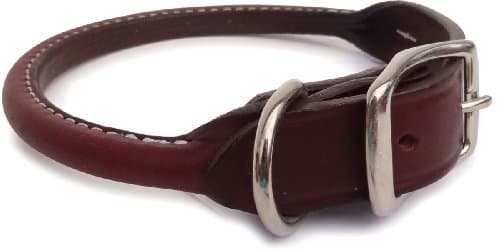 | Auburn Leathercrafters Rolled Leather CollarThe buy-it-for-life leather collar | 78/100 | $67.00 · Amazon |
| 2 | 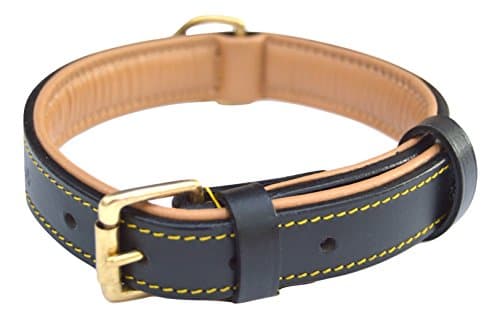 | Soft Touch Collars Padded Leather CollarA leather collar that will outlive the dog | 66/100 | Check price |
| 3 | 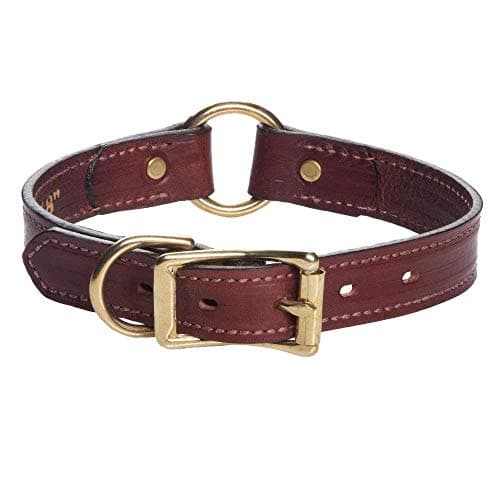 | Mendota Pet Leather Dog CollarA working leather collar from a field-gear maker | 67/100 | $44.49 · Amazon |
| 4 | 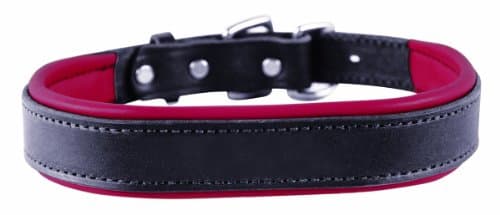 | Perri's Leather Dog CollarEquestrian-trade leatherwork applied to a dog collar | 65/100 | $39.95 · Amazon |
Tap any row to jump to the full review. Prices are pulled live from Amazon as of October 18, 2026; where we have no verified live price we show none rather than a stale number. #ad — how our links work.
The picks, ranked
1. Auburn Leathercrafters Rolled Leather Collar
Durability score 78/100Best for: The buy-it-for-life leather collar
The one collar here that names its leather grade, and that alone puts it ahead of every unlabeled 'genuine leather' collar on the market.
- Leather
- Full-grain bridle leather
- Hardware
- Bright nickel-plated buckle and dee ring; smooth capped rivets
- Construction
- Beveled and hand-polished edges; extended D-end pattern on large sizes
- Sizes
- 10–34 in; widths 1/2 to 1-1/4 in
- Made in
- Central New York State, USA
Pros
- Full-grain bridle leather — the top of the grade hierarchy, and Auburn names it, which almost no collar seller does
- Rolled construction resists matting the coat on long-haired dogs
- Capped rivets and beveled edges are real construction detail, not marketing
Cons
- Nickel-plated hardware, not solid stainless — plating wears through eventually
- No published break strength
- Sold in single-collar quantities at a real premium over mass-market nylon
How we assessed it: on published materials, hardware specs and construction — not long-term chew-tested. We say so because it is true, and because a claim we cannot back is worth nothing to you.
#ad Price as of October 18, 2026; Amazon prices change often, so check before you buy. How our links work.
2. Soft Touch Collars Padded Leather Collar
Durability score 66/100Best for: A leather collar that will outlive the dog
Leather is the buy-it-for-life material, but without a published grade you are trusting the seller — read our materials guide before you spend.
- Material
- Leather, padded (Amazon listing)
- Size on this listing
- Medium — 20 in long x 1 in wide, for a 14.5-17.5 in neck (Amazon listing)
- Leather grade
- Not published — see our collar materials guide on why that matters
- Hardware
- Not published
Pros
- Real leather softens and conforms to the dog rather than degrading
- Padding keeps the edge off the neck
Cons
- The listing does not state the leather grade, and grade is the whole story with leather
- Leather needs conditioning and hates repeated soakings — the wrong choice for a swimmer
How we assessed it: on published materials, hardware specs and construction — not long-term chew-tested. We say so because it is true, and because a claim we cannot back is worth nothing to you.
#ad We only show a price when we have a live one from Amazon. We don’t have one for this product right now, so we’re not going to guess. How our links work.
Search Amazon for the Soft Touch Collars Padded Leather Collar
3. Mendota Pet Leather Dog Collar
Durability score 67/100Best for: A working leather collar from a field-gear maker
A proper working collar from a proper working brand — and the grade of leather, which decides everything, is the thing nobody will state.
- Material
- Leather; grade not published on the listing
- Origin
- Made in the USA per Mendota
- Hardware
- Buckle and D-ring; material not published
- Warranty
- Not published in detail
Pros
- From a maker whose business is field and gundog gear rather than fashion, which shows in the hardware proportions
- Made in the USA, which Mendota states plainly
- Traditional buckle-and-tongue closure — no plastic to crack in cold
Cons
- The listing does not state the leather grade, which is the single specification that determines how long a leather collar lasts
- Hardware material not published
- No published warranty terms
How we assessed it: on published materials, hardware specs and construction — not long-term chew-tested. We say so because it is true, and because a claim we cannot back is worth nothing to you.
#ad Price as of October 18, 2026; Amazon prices change often, so check before you buy. How our links work.
4. Perri's Leather Dog Collar
Durability score 65/100Best for: Equestrian-trade leatherwork applied to a dog collar
The tack-shop option. The trade pedigree is real; the specification disclosure is not better than anyone else's.
- Material
- Leather; grade not published on the listing
- Trade origin
- Equestrian leather goods manufacturer
- Hardware
- Buckle and D-ring; material not published
- Warranty
- Not published in detail
Pros
- Built by a manufacturer whose main trade is horse tack, where leather has to survive weather and load daily
- Padded and lined constructions available across the range
Cons
- Grade not published, again
- Hardware material not published
- Priced above the mass-market leather collars without a published spec to justify it
How we assessed it: on published materials, hardware specs and construction — not long-term chew-tested. We say so because it is true, and because a claim we cannot back is worth nothing to you.
#ad Price as of October 18, 2026; Amazon prices change often, so check before you buy. How our links work.
The hardware, which decides it regardless of the leather
We keep making this point across the hub because it keeps being true: the strap almost never fails. BioThane’s own numbers illustrate it best — a 1,000 lb strap held shut by a 200 lb buckle.
On a leather collar the equivalents are:
- A welded D-ring, not a split ring. A split ring is a keyring and it can be levered open. This is cheap to get right and it changes the failure mode entirely.
- Solid brass or stainless, not plated zinc. Plating breaks, zinc corrodes, and it does it from inside where you cannot inspect it. On a collar worn every day in all weather this is the difference between five years and one.
- A roller buckle if you can get one. The roller lets the tongue turn rather than dragging on the leather, which is the wear point on any buckle-and-tongue closure.
None of the four collars here publishes its hardware material either. We have scored what we can verify and said so.
There is one corner of the leather-collar market where a maker does state it. Collars sold with an engraved nameplate are personalization products, so their listings are unusually detailed — and two of them name the buckle metal outright, one as solid brass and one as nickel-plated. If you want a leather collar and want to know what the buckle is made of, start with the nameplate collar roundup, where that disclosure decided the ranking.
Making a leather collar last
- Condition it twice a year. Leather fails by drying out and cracking, not by wearing through. A conditioned collar outlives an unconditioned one by years, and this is the single highest-value thing you can do.
- Never dry it near heat. A radiator or a hot car will cook the oils out of wet leather and leave it hard and brittle. Room temperature, slowly, then condition.
- Keep it off a swimming dog. Repeated soaking destroys leather and rots the stitching before the leather itself gives. If your dog swims, buy biothane and keep the leather for dry days — the full comparison is in biothane versus leather.
- Watch the tongue holes. The hole in daily use elongates, then tears. Once a hole has gone oval, move to the next one and treat the collar as being on notice.
The straight answer
A genuinely full-grain leather collar with brass hardware is the longest-lived collar you can buy, and it will outlive several nylon ones — provided you condition it and keep it off a swimming dog. If either of those conditions fails, buy nylon or biothane instead and spend the money on hardware. We put that comparison side by side in leather versus nylon, and the wider material picture is in the collar materials guide.
The question we are asked more than any other about leather is whether it is safe. The honest answer begins with what nobody publishes: not one leather collar we have assessed states its tannage, and only one names its grade. So we answer it on what a buyer can actually check — closure type, hardware, how the collar handles water, and fit — on are leather dog collars safe.
One other specification separates this category, and it is three words long. Two of the collars here publish where they are made — Auburn names Central New York State, Mendota says made in the USA — and most of the field publishes nothing at all. What genuinely qualifies, and why “engineered in the USA” is not an origin claim, is on which dog gear is actually made in the USA.
Frequently asked questions
What is the best leather dog collar?
For a long-coated dog, a rolled collar such as the Auburn Leathercrafters — a round cross-section slides through the coat instead of parting and matting it along two edges, and it also resists the creasing that eventually cracks a flat strap. For everyday wear on a short-coated dog, a padded flat collar with brass or stainless hardware. Note that none of the collars in this roundup publishes its leather grade, which is the specification that actually decides longevity.
How can I tell if a dog collar is real full-grain leather?
Four tells. A maker with full grain says so on the page, because it costs more and they want the credit — silence is information. Look at the cut edge in the photographs: full grain shows a dense, even fiber structure through the thickness, while bonded leather shows a uniform plasticky layer over a visible fabric backing. Price has a floor: an eight-dollar 'genuine leather' collar is not full grain. And any mention of vegetable tanning is a good sign about the maker's disclosure generally.
Is 'genuine leather' good quality?
No — it is a grade, and a low one. It typically means a lower split of the hide, heavily sanded and embossed with an artificial grain pattern. It is real leather and it is not good leather. The grades above it are top grain and full grain; the grade below it is bonded leather, which is leather dust in polyurethane and fails faster than inexpensive nylon webbing.
How do I care for a leather dog collar?
Condition it twice a year — leather fails by drying out and cracking rather than by wearing through, so conditioning is the single highest-value thing you can do. Never dry it near heat, which cooks the oils out and leaves it brittle; dry slowly at room temperature and condition afterwards. Keep it off a swimming dog, because repeated soaking rots the stitching before the leather gives. And watch the tongue hole in daily use: once it has gone oval, the collar is on notice.
What is a rolled leather collar for?
Long coats. A flat collar parts and mats the coat along both its edges over months, while a round cross-section slides through it. On a setter, collie, spaniel or retriever that is a functional reason rather than a style choice. Rolling also puts the leather into a shape that resists creasing, and a crease is where a flat strap eventually cracks — so there is a durability argument as well.
Sources
Every spec on this page traces to one of these. Where a manufacturer does not publish a figure, we say “not published” rather than estimating it.
- Leather grades — full grain, top grain, corrected grain and splits, explained
- BioThane — Beta 520 PET material spec (1,000 lb strap break strength; 200 lb buckle pull strength)
- BioThane — what the material actually is (polyester core, TPU/PVC coating)
- Ridgway (2026) — “Health implications of dog-worn equipment: a review of known and alleged physical risks”, Frontiers in Veterinary Science 13:1711781
Related
 Which Dog Gear Is Actually Made in the USA?
- Are Leather Dog Collars Safe?
 The Most Durable Dog Collars
 The Best Dog Collars With Nameplates
- Leather vs Nylon Dog Collar
- Biothane vs Leather
- Dog Collar Materials: What Actually Lasts
- Heavy-Duty Dog Collars for Rottweilers
- How we test — the durability rubric in full