Dog Car Harness vs Walking Harness
Everyone shopping for a car harness asks the same follow-up: can I just walk the dog in it? The honest answer is no, and the reason is that the two jobs pull in opposite directions.
The verdict
Buy two harnesses. A car restraint has to hold a dog’s whole deceleration load through a seat belt path, so it is built stiff, heavily padded and short-tethered; a walking harness has to let a dog move, so it is built light and loose. The products that try to do both do the car job least well, and none of the five here is certified by the Center for Pet Safety. If you genuinely want one harness for both, the Kurgo Impactis the most defensible, not because it is certified — it is not — but because Kurgo publishes its whole test methodology: the Calspan lab in Buffalo, the FMVSS 213 standard, the June 2018 date and the 25 / 50 / 75 lb test dog weights. Read one thing before you rely on any of it: an earlier Kurgo Tru-Fit was independently crash-tested by CPS and recorded catastrophic failures in the small and large sizes. And treat the PetSafe 3 in 1’s car function as what it is — a tether point, not a restraint.
Quick picks
The short answer, ranked and scored against our published durability rubric. Where a manufacturer does not publish a spec, we say so rather than estimating it.
| # | Photo | Product | What the maker publishes | Durability | Price |
|---|---|---|---|---|---|
| 1 | 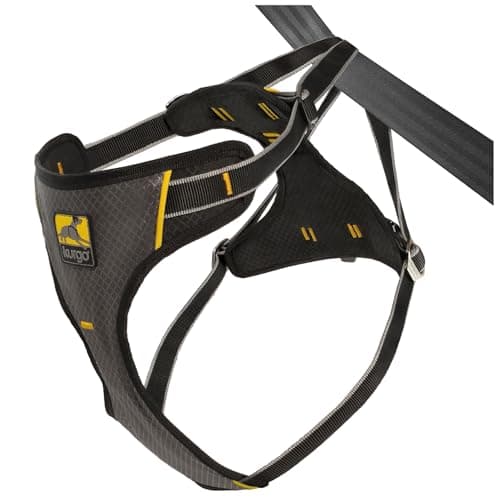 | Kurgo Impact Seatbelt HarnessManufacturer-tested restraint — but read what that means |
| 73/100 | $78.95 · Amazon |
| 2 | 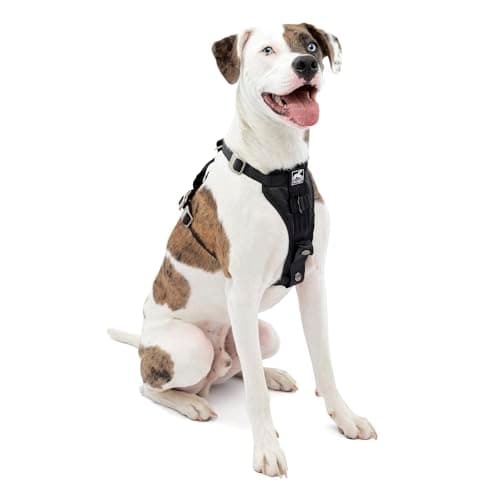 | Kurgo Enhanced Strength Tru-Fit HarnessBuyers who want the longest warranty in the category |
| 69/100 | $39.95 · Amazon |
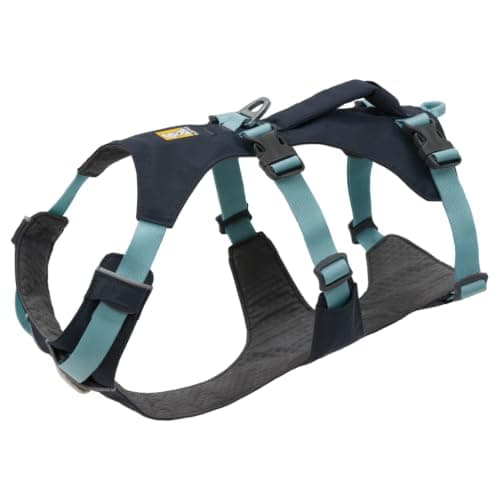
| 3 | 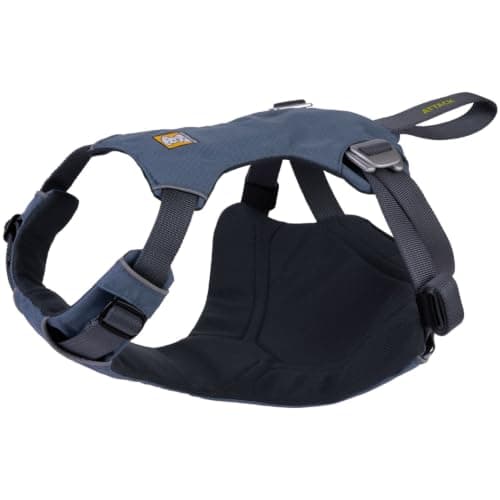 | Ruffwear Load Up HarnessStrength-rated hardware, no certification |
| 66/100 | $99.99 · Amazon |
| 4 |  | EzyDog Drive HarnessAnother self-certified option — same caveat |
| 66/100 | $125.00 · Amazon |
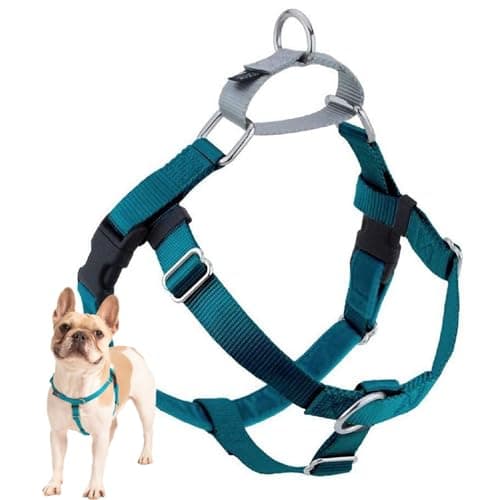
| 5 | 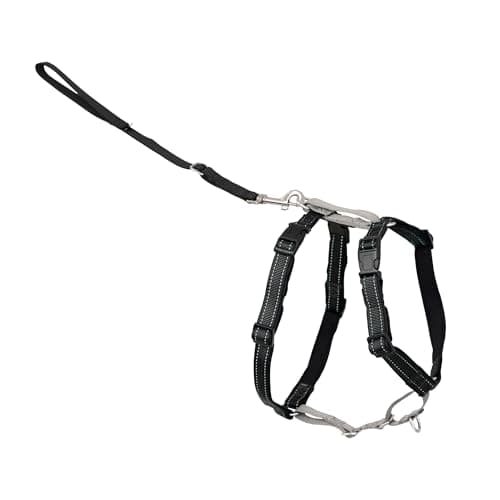 | PetSafe 3 in 1 HarnessA budget harness that also does duty as a car restraint tether point |
| 42/100 | $29.99 · Amazon |
Tap any row to jump to the full review. Specs are the manufacturer's own published figures; where a maker does not publish one we say "not published" rather than estimating it. Prices are pulled live from Amazon as of October 18, 2026; where we have no verified live price we show none rather than a stale number. #ad — how our links work.
The two jobs pull in opposite directions
This is the part no listing explains, and once you see it the dual-use question answers itself.
| A car restraint | A walking harness | |
|---|---|---|
| Load it must take | The dog’s entire body weight multiplied by deceleration, once | A fraction of body weight, continuously, for years |
| Built to | Spread an impact across the chest; limit forward excursion | Let the shoulders move freely |
| Therefore | Stiff, broad-panelled, heavily padded, short tether | Light, flexible, minimal, long lead |
| Evidence available | Independent CPS certification, per product and per dog weight | Nothing independent exists at all |
A harness optimised for the first column is uncomfortable for a long walk and awkward to put on twice a day. A harness optimised for the second column is, in a crash, straps that were never designed for the load. The compromise products sit in the middle and are worse at the column where the consequences are permanent.
Only one body certifies these, and none of these five holds it
The Center for Pet Safety runs the only independent crash-certification program in this category, certification is issued per product and per dog weight, and we never call a product certified unless CPS says it is. None of the five harnesses on this page appears on the CPS certified list. The genuinely certified harnesses — there are three on the market — are ranked on our crash-tested harness roundup, and how CPS testing actually works explains what certification does and does not cover.
What the five here do have is a spectrum of self-reported evidence, and the differences are worth knowing:
- Kurgo publishes its methodology in full. The Impact was tested at Calspan in Buffalo, New York, to FMVSS 213, in June 2018, at Small 25 lb, Medium 50 lb and Large 75 lb. Most brands publish nothing at all, and publishing the lab, the standard, the date and the dog weights is a real difference in kind. It is still manufacturer-commissioned testing, not independent certification.
- EzyDog’s listing says “Crash Tested and Certified (US-FMVSS 213)” and EzyDog does not appear on the CPS certified list. Certified by whom is the question the listing does not answer, and it is the question that matters.
- Ruffwear calls the Load Up’s hardware “strength-rated” and does not publish the rating — which is the entire point of having one.
- PetSafe’s 3 in 1 offers a car-restraint attachment, which is a tether point rather than a restraint, on a two-strap harness with no published webbing or hardware specification.
- The Tru-Fit has history. An earlier version was independently tested by CPS and did not pass: CPS recorded a catastrophic failure in the small and large sizes. Kurgo tested v3 itself at Calspan. Both of those facts belong in the same sentence, and most reviews publish only one of them.
The one thing never to do
Do not clip a seat belt to a collar, and do not clip it to a walking harness that has no seat-belt path designed into it. Both concentrate the entire deceleration load of the dog into a component chosen for a completely different job. Rhode Island’s restraint statute actually writes the collar point into law, requiring a harness restraining the animal “by means other than neck restraints” — the state-by-state picture is on our restraint laws page.
The honest alternative: a crate
For many dogs the better answer is not a harness at all. A certified crate protects a dog differently and, at the large end, the certified harness weights run out well before the certified crate sizes do. That trade is the whole subject of dog car harness against crate, and the certified crate list is on the crash-tested crates. If the cargo area is where the dog travels, a barrier and a liner are solving containment and mess rather than impact, and it is worth being clear with yourself about which problem you are buying for.
What to look for, in order
- CPS certification, at your dog’s weight. It either has it or it does not, and the weight band is part of the certification rather than a footnote.
- If not certified: published methodology. Lab, standard, date, test dog weights. Kurgo is the benchmark for this and it is a low bar that almost nobody else clears.
- A designed seat-belt path.Not a D-ring you can thread a belt through — a load path the maker intended.
- Steel buckles over plastic, and tubular rather than flat webbing where the belt runs.
- Honesty about the walk.If you will not actually put a stiff, padded restraint on the dog twice a day, buy a proper walking harness too — the no-pull harnesses for a puller, the escape-proof harnesses for an escaper, and the large-dog harnesses if the dog is past the usual charts.
The picks, ranked
1. Kurgo Impact Seatbelt Harness
Durability score 73/100Best for: Manufacturer-tested restraint — but read what that means
The most transparent of the self-tested harnesses, and genuinely cheaper than the certified options — but self-tested is not certified, and you should know which you are buying.
- Crash testing
- Kurgo tested the Impact (v1) at Calspan, Buffalo NY, to FMVSS 213, June 2018
- Rated dog weights
- Small 25 lb · Medium 50 lb · Large 75 lb (Kurgo's own testing)
- CPS certification
- NONE — the Impact is not on the Center for Pet Safety certified list
- Construction
- Tubular webbing, high-strength steel buckles (Amazon listing)
- Warranty
- Lifetime against defects
Pros
- Kurgo publishes its full crash-test methodology — the lab, the standard, the date and the excursion limits. Most brands publish nothing
- Steel buckles and tubular webbing
- Lifetime warranty, and far cheaper than a Sleepypod
Cons
- Manufacturer-run testing is NOT independent certification. Kurgo commissioned this test itself; the Center for Pet Safety did not certify the result
- The Impact does not appear anywhere on the CPS certified list
- Kurgo's earlier Tru-Fit was independently tested by CPS and recorded catastrophic failures in the small and large sizes — history that is worth knowing before trusting the brand's own results
How we assessed it: on published materials, hardware specs and construction — not long-term chew-tested. We say so because it is true, and because a claim we cannot back is worth nothing to you.
#ad Price as of October 18, 2026; Amazon prices change often, so check before you buy. How our links work.
2. Kurgo Enhanced Strength Tru-Fit Harness
Durability score 69/100Best for: Buyers who want the longest warranty in the category
A lot of warranty and a lot of published methodology for the money — but read our crash-testing page before you rely on it as a car restraint.
- Construction
- Ripstop fabric; five points of adjustment (Amazon listing)
- Buckles
- Steel (Amazon listing)
- Denier
- Not published
- Crash testing
- Kurgo tested v3 at Calspan to FMVSS 213 (June 2018) — see the caveat below
- Warranty
- Lifetime, against manufacturing defects
Pros
- Kurgo's lifetime warranty is the longest in this hub, and it does not require registration
- Kurgo publishes its crash-test methodology in full — the facility, the standard, and the dog weights
- Five-point adjustment and a steel buckle at a genuinely low price
Cons
- Kurgo does not publish a denier for the ripstop, so the fabric cannot be compared like-for-like
- An earlier version of the Tru-Fit was crash-tested independently by the Center for Pet Safety and did not pass: CPS recorded a catastrophic failure in the small and large sizes
- Kurgo's own testing is not the same as an independent CPS certification, and this harness does not carry one
How we assessed it: on published materials, hardware specs and construction — not long-term chew-tested. We say so because it is true, and because a claim we cannot back is worth nothing to you.
#ad Price as of October 18, 2026; Amazon prices change often, so check before you buy. How our links work.
3. Ruffwear Load Up Harness
Durability score 66/100Best for: Strength-rated hardware, no certification
Well made, uncertified, and rated to a number Ruffwear will not print.
- Hardware
- Strength-rated metal hardware (Amazon listing)
- CPS certification
- NONE — not on the certified list
- Load rating
- Not published
Pros
- Strength-rated metal hardware and a universal seat-belt attachment
- Ruffwear build quality
Cons
- No CPS certification
- Ruffwear says the hardware is 'strength-rated' but does not publish the rating — which is the entire point of a rating
How we assessed it: on published materials, hardware specs and construction — not long-term chew-tested. We say so because it is true, and because a claim we cannot back is worth nothing to you.
#ad Price as of October 18, 2026; Amazon prices change often, so check before you buy. How our links work.
4. EzyDog Drive Harness
Durability score 66/100Best for: Another self-certified option — same caveat
A well-made harness whose 'certified' claim is not backed by the one independent body that certifies these products.
- Claim
- 'Crash Tested and Certified (US-FMVSS 213)' (Amazon listing)
- CPS certification
- NONE — not on the Center for Pet Safety certified list
- Testing detail
- Not published at the level Kurgo publishes
Pros
- Padded and well built
- Claims testing against the same FMVSS 213 standard
Cons
- The listing says 'Crash Tested and Certified' but EzyDog does not appear on the CPS certified list. 'Certified' by whom is the question the listing does not answer
- Less published methodology than Kurgo offers
How we assessed it: on published materials, hardware specs and construction — not long-term chew-tested. We say so because it is true, and because a claim we cannot back is worth nothing to you.
#ad Price as of October 18, 2026; Amazon prices change often, so check before you buy. How our links work.
5. PetSafe 3 in 1 Harness
Durability score 42/100Best for: A budget harness that also does duty as a car restraint tether point
Reasonable value as a walking harness. Do not read the car-restraint function as a safety claim — it is not certified and we would not use it as one.
- Functions
- Walking harness, no-pull front clip, and car restraint attachment
- Webbing
- Nylon; denier not published
- Crash certification
- None — not CPS certified
- Hardware
- Not published
Pros
- Three functions in one at a low price, including a front clip for pulling
- Widely available in a full size run
Cons
- The car-restraint function is NOT crash certified — the Center for Pet Safety has not certified this harness, and a tether point is not a restraint
- No published webbing or hardware specification
- Two-strap construction offers less escape resistance than a three-strap design
How we assessed it: on published materials, hardware specs and construction — not long-term chew-tested. We say so because it is true, and because a claim we cannot back is worth nothing to you.
#ad Price as of October 18, 2026; Amazon prices change often, so check before you buy. How our links work.
The bottom line
One harness for both jobs is a convenience purchase sold as a safety purchase. The safety half of it is the half with permanent consequences, and it is the half where independent evidence exists — so buy that half on certification, at your dog’s weight, and buy the walking harness separately on fit. If you are going to compromise anyway, compromise towards the brand that publishes its testing rather than the one whose listing simply says “certified”.
Frequently asked questions
Can you use a car harness as a walking harness?
You can physically, and it is usually a poor experience for both of you. A car restraint is built stiff, broad-panelled and heavily padded so it can spread an impact across the chest and limit forward excursion; that construction restricts shoulder movement, which is exactly what a walking harness must allow. The harnesses that try to do both are worse at the car job, which is the job with permanent consequences. Our recommendation is two harnesses: one bought on certification for the car, one bought on fit for the walk.
Is any dog car harness crash certified?
Three harnesses on the market hold Center for Pet Safety certification, and none of the five on this page is one of them. CPS runs the only independent crash-certification program in the category and issues certification per product and per dog weight, so a harness certified with a 75 lb dog is not certified for a 110 lb one. Our crash-tested harness roundup keeps the real list; this page exists for the separate question of whether a dual-use harness is a sensible purchase.
What does 'crash tested' mean on a dog harness listing?
Almost always that the manufacturer paid for a test and is reporting its own result. Kurgo is the most transparent example and a useful benchmark: it publishes the facility (Calspan, Buffalo NY), the standard (FMVSS 213), the date (June 2018) and the test dog weights (25, 50 and 75 lb) for the Impact. That is manufacturer-commissioned testing, not independent certification, and Kurgo does not appear on the CPS certified list. At the other end, EzyDog's listing says 'Crash Tested and Certified (US-FMVSS 213)' while EzyDog is not on the CPS certified list - the listing does not say who certified it.
Is the PetSafe 3 in 1 harness safe for the car?
We would not use it as a car restraint. The third of its three functions is a car-restraint attachment, which is a tether point rather than a restraint: the harness is not certified by the Center for Pet Safety, PetSafe publishes no webbing or hardware specification for it, and the two-strap construction offers less escape resistance than a three-strap design. As an inexpensive walking harness with a front clip it is reasonable value. Treat the car function as a convenience, not a safety claim.
Should I use a harness or a crate to restrain my dog in the car?
It depends mostly on your dog's size and your vehicle. Certified harness weights run out well before certified crate sizes do, so for a large dog a certified crate is often the only certified option available. A crate also needs somewhere to go and, in a cargo area, something to anchor it. We treat the full trade-off on its own page - harness against crate - and keep the certified crate list separate so neither gets mixed into a walking roundup.
Can I clip the seat belt to my dog's collar?
No. It concentrates the whole deceleration load of the dog into its neck, and no crash-certified restraint in the Center for Pet Safety program works that way. Rhode Island writes the point into statute, requiring that an animal be restrained by a harness 'by means other than neck restraints'. The same logic rules out clipping a belt to a walking harness with no designed seat-belt path: the load goes into components chosen for a different job entirely.
Sources
Every spec on this page traces to one of these. Where a manufacturer does not publish a figure, we say “not published” rather than estimating it.
- Center for Pet Safety — certified products: the only independent crash certification in the category
- Kurgo — published crash-test methodology: the Calspan facility in Buffalo NY, the FMVSS 213 standard, the June 2018 date and the 25 / 50 / 75 lb test dog weights
- Kurgo — lifetime warranty terms: manufacturing defects only; wear and tear and unintended use excluded
- PetSafe — maker site for the 3 in 1 harness (walking, front-clip and car-restraint attachment functions)