The Best Leashes for Walking Two Dogs
Most people arrive at this looking for a coupler. We would talk you out of it — and then hand you the setup that actually works, which is not much more expensive.
Buy the Kurgo Quantum if you want one object that does this. It reconfigures six ways, one of which is a genuine double-dog lead, and Kurgo backs it with a lifetime warranty on manufacturing defects.
Buy the Ruffwear Trail Runner belt system if you want the setup we would actually use: a proper waist belt carrying two independent leads, so each dog is attached to you rather than to the other one.
The case against a coupler, in one paragraph
A coupler is a short Y that clips two dogs to one leash. It looks tidy. What it actually does is tie the two dogs to each other, with you as an anchor at the far end of a single line — and that creates three problems that do not exist with two leads:
- Every input is shared. When one dog lunges, the other one is pulled with it. A calm dog walking politely gets jerked sideways by its housemate — repeatedly, walk after walk. That is a training problem you are actively creating.
- You cannot manage the dogs separately. No way to shorten one and not the other, no way to put one behind you, no way to move one to your other side while the other holds a sit. Every correction is a group correction.
- Escalation is instant. If one dog reacts to something, the other is physically dragged into the encounter facing the same direction. If they ever redirect on each other, they are tethered together at a fixed short distance.
There is a narrow case where a coupler is fine: two small, similarly sized, well-matched dogs who already walk politely and never react. That is a real set of dogs. It is just not the set of dogs whose owners go looking for a two-dog leash.
What we would use instead
A waist belt with two separate leads clipped to it. Total cost is roughly a coupler plus a second leash, and it fixes all three problems at once:
- Each dog is attached to you, so one dog’s lunge goes into your hips rather than into the other dog.
- Your hands are free to shorten whichever lead needs it, without touching the other.
- Your hips and core take the load rather than your hands, wrists and shoulders — which is the whole argument for hands-free walking in general, covered in our hands-free leash roundup.
One honest caveat, and it applies to all hands-free walking: you cannot let go of a waist leash quickly. With a genuinely reactive dog, or two dogs whose combined weight exceeds what you can brace against, that is a reason to keep at least one dog in your hand.
The weight rule nobody states
Two dogs is not twice one dog. It is two dogs pulling in different directions at the same time, and the failure mode is you being turned rather than out-pulled.
A practical threshold: if the two dogs together outweigh you, or if either one alone can turn you when it lunges, walk them separately or take a second handler. That is unfashionable advice and it is the correct advice. No leash configuration fixes a physics problem.
Tangling, and the fix that costs nothing
The usual complaint about two leads is tangling. Almost all of it comes from letting the dogs swap sides, and almost all of it disappears with one rule: each dog has a side. Left dog stays left, right dog stays right, and you enforce it for a fortnight until it stops being a decision.
Two hardware details help. Swivel clips at both ends let a lead untwist rather than accumulate turns. And leads of different lengths — say four feet and six — keep the dogs offset rather than side by side, which is where crossing starts.
Quick picks
The short answer, ranked and scored against our published durability rubric. Where a manufacturer does not publish a spec, we say so rather than estimating it.
| # | Photo | Product | Durability | Price |
|---|---|---|---|---|
| 1 | 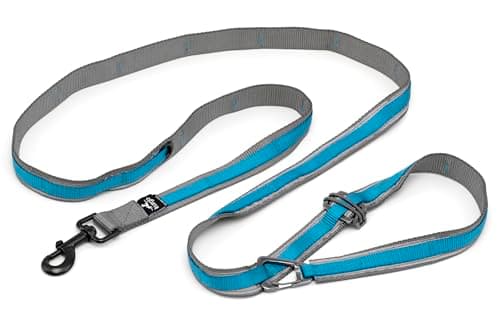 | Kurgo Quantum 6-in-1 LeashOne leash that reconfigures into six things, with a lifetime warranty | 57/100 | $29.95 · Amazon |
| 2 | 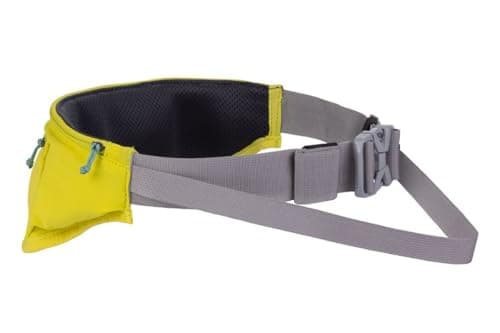 | Ruffwear Trail Runner Belt SystemRunning — a belt built to carry water and a phone as well as a dog | 69/100 | $49.99 · Amazon |
| 3 | 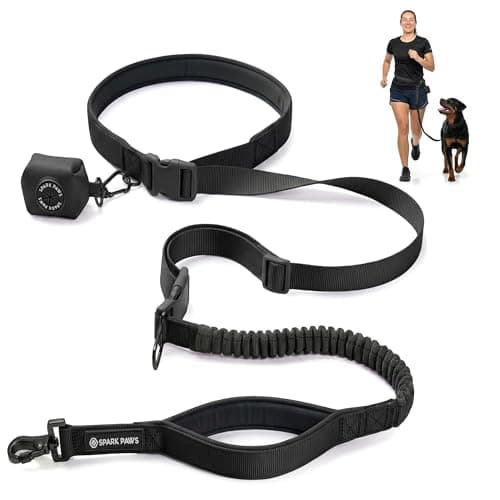 | Spark Paws Hands Free Bungee Waist LeashA bungee belt with the pouch built in — and nothing you can check | 49/100 | $25.99 · Amazon |
| 4 | 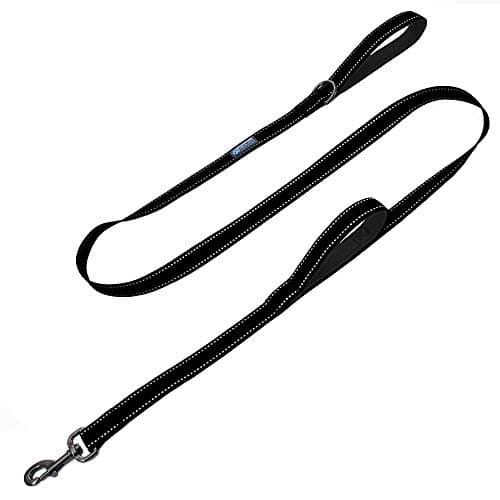 | Max and Neo Double Handle Traffic LeashA traffic handle on a budget | 61/100 | $16.99 · Amazon |
| 5 | 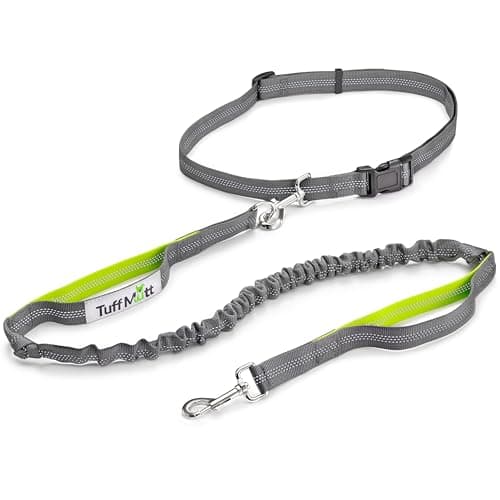 | Tuff Mutt Hands Free Bungee LeashThe cheapest reflective bungee belt leash here | 42/100 | $27.97 · Amazon |
Tap any row to jump to the full review. Prices are pulled live from Amazon as of October 18, 2026; where we have no verified live price we show none rather than a stale number. #ad — how our links work.
The picks, ranked
1. Kurgo Quantum 6-in-1 Leash
Durability score 57/100Best for: One leash that reconfigures into six things, with a lifetime warranty
The value pick and a genuinely versatile leash. Just note that every extra ring and clip is another unrated component.
- Configurations
- Six, including hands-free waist, shoulder, double-dog and traffic lead
- Webbing
- Nylon; denier not published
- Hardware
- Two clips and adjustable rings; ratings not published
- Warranty
- Kurgo lifetime warranty on manufacturing defects
Pros
- Genuinely six usable configurations, and the traffic-lead and double-dog modes are the two that get used
- Lifetime defect warranty
- Costs well under the Ruffwear belt setups while covering more configurations than either of them
Cons
- Kurgo publishes no webbing denier and no hardware ratings
- Reconfigurable leashes carry more hardware than a fixed one — more parts is more failure points
- No bungee section, so a lunge transmits straight into your hips
How we assessed it: on published materials, hardware specs and construction — not long-term chew-tested. We say so because it is true, and because a claim we cannot back is worth nothing to you.
#ad Price as of October 18, 2026; Amazon prices change often, so check before you buy. How our links work.
2. Ruffwear Trail Runner Belt System
Durability score 69/100Best for: Running — a belt built to carry water and a phone as well as a dog
Buy it if you run regularly and would otherwise be carrying a belt anyway. Otherwise the Roamer does the leash job for less.
- Format
- Padded running belt with leash attachment
- Storage
- Integrated pockets; bottle compatible
- Leash
- Sold as a system or separately, depending on configuration
- Waist range
- Published by Ruffwear per size
- Clip load rating
- Not published
Pros
- A running belt first and a dog attachment second, which is the right way round for anyone who actually runs
- Carries water and a phone, so it replaces gear rather than adding to it
- Padded belt distributes a lunge across the hips rather than pulling on a single narrow strap
Cons
- Costs meaningfully more than a simple bungee belt leash
- System pricing means you may be buying components you already own
- No clip load rating published
How we assessed it: on published materials, hardware specs and construction — not long-term chew-tested. We say so because it is true, and because a claim we cannot back is worth nothing to you.
#ad Price as of October 18, 2026; Amazon prices change often, so check before you buy. How our links work.
3. Spark Paws Hands Free Bungee Waist Leash
Durability score 49/100Best for: A bungee belt with the pouch built in — and nothing you can check
A competent bungee belt leash at a fair price that publishes nothing you can verify — and carries one listing claim, the car seat belt, that you should ignore.
- Format
- Waist belt with a shock-absorbing bungee leash; poop bag holder pouch included (Amazon listing)
- Sizing
- 'Small to Large' — no waist adjustment range and no dog weight band published
- Webbing
- Not published
- Hardware
- 'Heavy-duty clip'; no material and no load rating published
- Car use
- The listing markets the clip as doubling as a car seat belt. It is not a crash restraint and holds no certification
- Warranty
- None stated on the Amazon listing
Pros
- The bungee takes the shock of a lunge out of your lower back, which is the entire reason to wear a leash rather than hold one
- The pouch is integrated rather than clipped on, so nothing swings loose at a run
- Fair price for a belt and bungee together
Cons
- Nothing measurable is published: no webbing, no denier, no clip rating, no belt width and no waist range
- 'Small to Large' is not a size chart. Every other leash here at least tells you what its belt adjusts to
- The listing suggests clipping it to a car seat belt. Do not — a leash is not a crash restraint and nothing about this clip has been tested as one
- No warranty stated on the listing at all
How we assessed it: on published materials, hardware specs and construction — not long-term chew-tested. We say so because it is true, and because a claim we cannot back is worth nothing to you.
#ad Price as of October 18, 2026; Amazon prices change often, so check before you buy. How our links work.
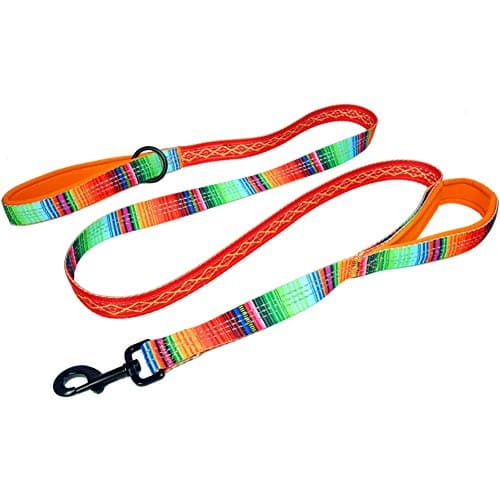
4. Max and Neo Double Handle Traffic Leash
Durability score 61/100Best for: A traffic handle on a budget
A well-thought-out budget leash with nothing published behind it.
- Webbing
- Nylon, reflective (Amazon listing)
- Hardware
- Metal clasp (Amazon listing)
- Load rating
- Not published
Pros
- Traffic handle and reflective webbing, cheap
- A collar is donated to a rescue with each sale
Cons
- No published break strength
- Standard bolt snap, which is the usual failure point
How we assessed it: on published materials, hardware specs and construction — not long-term chew-tested. We say so because it is true, and because a claim we cannot back is worth nothing to you.
#ad Price as of October 18, 2026; Amazon prices change often, so check before you buy. How our links work.
5. Tuff Mutt Hands Free Bungee Leash
Durability score 42/100Best for: The cheapest reflective bungee belt leash here
Fine for a light dog and a short run. Not the leash for a strong dog that lunges at cyclists.
- Format
- Waist belt with bungee leash
- Reflectivity
- Reflective stitching along the leash
- Webbing
- Nylon; denier not published
- Hardware
- Snap; rating not published
- Warranty
- Not published in detail
Pros
- Reflective stitching along the whole leash, which is the feature you want on an early-morning run
- Lowest price in this roundup
Cons
- No published webbing, hardware or warranty detail
- Thin belt with limited padding
- Built to a price and it shows at the snap
How we assessed it: on published materials, hardware specs and construction — not long-term chew-tested. We say so because it is true, and because a claim we cannot back is worth nothing to you.
#ad Price as of October 18, 2026; Amazon prices change often, so check before you buy. How our links work.
Two dogs, twice the hardware, same weak point
Everything we say about clips applies twice here, and the numbers are worth repeating because they are so much lower than people assume: a 3/8 in nickel-plated zinc bolt snap publishes a 50 lb working load and a 1/2 in publishes 90 lb. Two dogs hitting the end of their leads simultaneously in opposite directions is the highest shock load in ordinary dog handling.
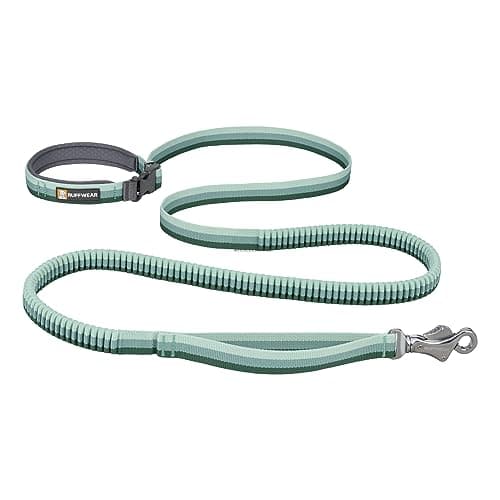
The Roamer is the one component here that names its clip — an anodized 6061-T6 aluminum Talon Clip — and even Ruffwear does not publish a rating for it. Everything else you inspect by hand. The types and their failure modes are in dog leash clips explained.
Harness both dogs
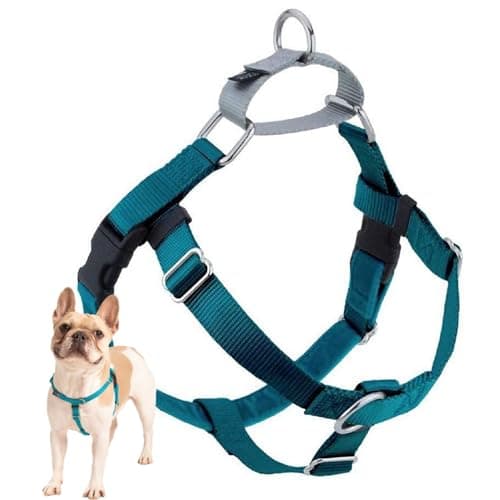
With two dogs, a sideways yank from the other dog is a routine event rather than an accident, and a collar is a poor place to receive one. Harness both, and if either dog pulls, use a front connection: Shih et al. (2021) measured the highest maximum leash tension of anything tested on a back-connection harness, 16.87 N against 6.97 N on a collar, because a shoulder yoke helps a dog pull.
If the two dogs are very different sizes, they need different harnesses rather than two of the same in different sizes — see harnesses for small dogs for why the small one is a different engineering problem.
The part that is not gear
Two things make two-dog walking work, and neither is purchasable:
- Walk them separately first. A dog that does not walk politely alone will not walk politely in a pair; it will just be harder to fix. Two weeks of separate walks is the cheapest equipment upgrade available.
- Stop as a unit. Both dogs sit at every curb, every time. It gives you a default position to fall back to when something happens, which is the thing you will actually need.
Frequently asked questions
Is a double dog leash coupler a good idea?
Usually not. A coupler ties the two dogs to each other with you as an anchor at the far end of one line, which creates three problems: every input is shared, so one dog's lunge jerks the other; you cannot manage the dogs separately, so every correction is a group correction; and if one dog reacts, the other is dragged into the encounter at a fixed short distance. The narrow exception is two small, similarly sized, well-matched dogs who already walk politely and never react.
What is the best way to walk two dogs at once?
A waist belt with two independent leads clipped to it. It costs about the same as a coupler plus a second leash and fixes all three coupler problems: each dog is attached to you rather than to the other dog, your hands are free to shorten whichever lead needs it, and the load goes into your hips and core rather than your hands and shoulders. The caveat that applies to all hands-free walking is that you cannot release a waist leash quickly.
How do I stop two dog leashes tangling?
Give each dog a side and enforce it — left dog stays left, right dog stays right — for about a fortnight, until it stops being a decision. Almost all tangling comes from dogs swapping sides. Two hardware details help: swivel clips at both ends let a lead untwist instead of accumulating turns, and using leads of different lengths (say four feet and six) keeps the dogs offset rather than side by side, which is where crossing starts.
Can I walk two large dogs on one leash?
Physically you can; we would not. Two dogs is not twice one dog, it is two dogs pulling in different directions at once, and the failure mode is being turned rather than out-pulled. The practical threshold: if the two dogs together outweigh you, or if either one alone can turn you when it lunges, walk them separately or bring a second handler. No leash configuration solves a physics problem.
Should both dogs wear harnesses when walked together?
Yes. With two dogs a sideways yank from the other dog is a routine event rather than an accident, and a collar is a poor place to receive one. If either dog pulls, use a front connection rather than a back one — Shih et al. (2021) measured the highest maximum leash tension of anything tested on a back-connection harness, 16.87 N against 6.97 N on a collar, because a shoulder yoke helps a dog pull.
What length leashes are best for two dogs?
Four to six feet each, and deliberately different from each other. Different lengths keep the dogs offset front to back rather than side by side, which removes most crossing before it starts. Avoid retractables entirely with two dogs: two thin cords under load with plastic brakes, in a situation where you may need to shorten one instantly, is the wrong hardware for the job.
Sources
Every spec on this page traces to one of these. Where a manufacturer does not publish a figure, we say “not published” rather than estimating it.
- Kurgo — lifetime warranty terms (defects covered; wear and tear routed to paid replacement)
- Ruffwear — Roamer leash specs (25 mm engineered webbing 81/11/8; anodized 6061-T6 Talon Clip; 48 in waist)
- Baron 3/8 in. nickel-plated zinc bolt snap — published 50 lb working load (Ace Hardware catalog)
- Campbell 1/2 in. nickel-plated zinc bolt snap — published 90 lb working load (Ace Hardware catalog)
- Shih et al. (2021) — “Comparison of Leash Tension When Walking Dogs Using Different Collars and Harnesses”, Frontiers in Veterinary Science 8:735680