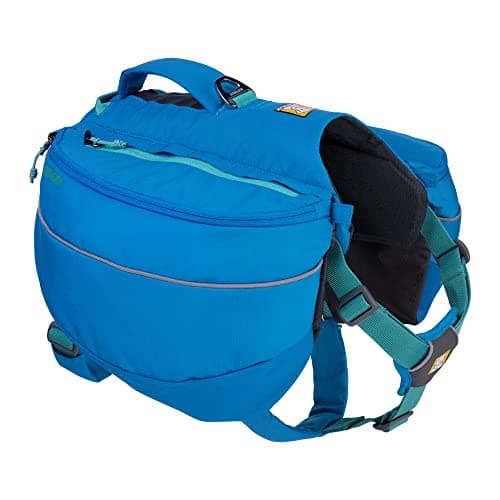
Dog First Aid Kit vs Human First Aid Kit
The overlap is bigger than the pet industry admits and the differences matter more than the overlap. Four missing items, and one category that is actively dangerous.
The short answer. Roughly two-thirds of a good human kit is directly useful on a dog. Four things are missing from every human kit, and one category in it — human painkillers — is a genuine hazard. Build one kit that covers both, or buy a dog kit and add the four items yourself.
What transfers, what does not
| Item | In a human kit? | Use on a dog |
|---|---|---|
| Sterile gauze, pads, tape | Yes | Works unchanged |
| Saline / eye wash | Usually | Works unchanged — flushing wounds and eyes |
| Scissors, tweezers, gloves | Yes | Works unchanged |
| Emergency blanket | Usually | Works — shock and cold |
| Adhesive plasters | Yes | Useless — they do not stick to fur |
| Self-adhesive cohesive bandage | Sometimes | Essential — grips itself, not fur |
| Muzzle (or gauze to make one) | No | Add it — an injured dog bites |
| Tick removal tool | Rarely | Add it — tweezers are the wrong tool |
| Styptic powder | No | Add it — torn nails bleed a lot |
| Digital thermometer | Sometimes | Add a dedicated one — rectal, and not shared |
| Ibuprofen / naproxen / paracetamol | Yes | Never — see below |
The reason not to simply grab the cupboard kit
Every human first aid kit contains painkillers, and this is the single most important line on this page: do not give a dog human pain medication.
The FDA publishes owner-facing guidance on pain relievers for pets and is explicit that human NSAIDs such as ibuprofen and naproxen should not be given to dogs. The AVMA lists human medications among common household hazards for pets. Paracetamol/acetaminophen is a separate and serious hazard again.
The practical risk is not that you would deliberately dose a dog. It is that in an emergency, with an injured animal and adrenaline running, a kit full of familiar human medicine is exactly the wrong thing to be reaching into. If you build one kit for both, put the human medication in a separate sealed bag and label it plainly.
The four items every human kit is missing
A muzzle, or gauze you know how to tie as one. The most important addition and the least intuitive. A frightened, painful dog bites — including yours, including a dog that has never bitten anyone. You cannot treat a wound you cannot get to, and a bite two miles from the car turns one casualty into two. Never muzzle a dog that is vomiting or having difficulty breathing.
A proper tick removal tool. A hooked or slotted tool that lifts the tick out whole. Tweezers squeeze the body, which is the thing you are trying to avoid.
Styptic powder. A torn nail is one of the most common dog injuries and it bleeds impressively. Styptic stops it in seconds and there is no human-kit equivalent.
Self-adhesive cohesive bandage. Sticks to itself and not to fur. The entire adhesive-plaster section of a human kit is dead weight on a dog, and this replaces it. Wrap it firmly, never tightly — cohesive bandage tightens as it settles.
Two more that cost nothing: your vet’s number and the nearest 24-hour emergency clinic, written on paper inside the kit, and a photograph of your dog’s vaccination record on your phone.
Quick picks
The short answer, ranked and scored against our published durability rubric. Where a manufacturer does not publish a spec, we say so rather than estimating it.
| # | Photo | Product | Durability | Price |
|---|---|---|---|---|
| 1 | 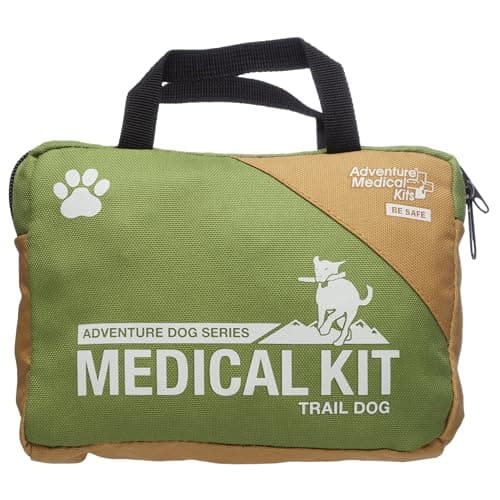 | Adventure Medical Kits Trail Dog Medical KitA kit built by a wilderness-medicine company rather than a pet brand | 72/100 | $20.99 · Amazon |
| 2 | 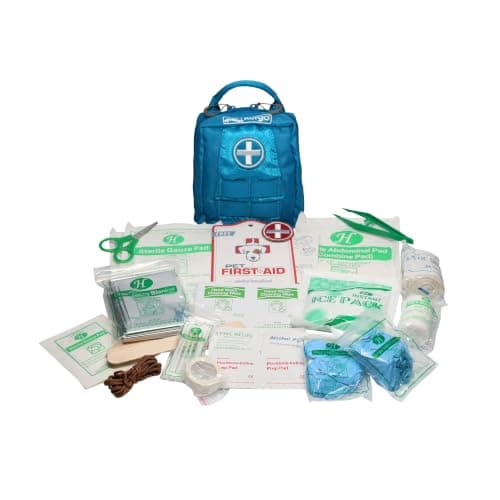 | Kurgo RSG Dog First Aid KitA kit that rides on the harness or the belt, not in the boot | 62/100 | $30.95 · Amazon |
Tap any row to jump to the full review. Prices are pulled live from Amazon as of October 18, 2026; where we have no verified live price we show none rather than a stale number. #ad — how our links work.
The picks, ranked
1. Adventure Medical Kits Trail Dog Medical Kit
Durability score 72/100Best for: A kit built by a wilderness-medicine company rather than a pet brand
The best starting point, precisely because it was assembled by people who treat humans in the backcountry — but it is a starting point, not a finished kit.
- Contents
- Dressings, bandages, tools; per the live Amazon listing
- Instructions
- Includes a printed instruction manual
- Format
- Lightweight, compact pack
- Contains medication
- No
- AVMA checklist coverage
- Partial — see the checklist comparison on this page
Pros
- Built by a wilderness-medicine company, and it shows in the dressing selection rather than in the packaging
- Includes a printed manual, which matters because you will be reading it one-handed in poor light
- Genuinely light and compact enough to live in a pack rather than in a cupboard
Cons
- Like every commercial kit, it does not contain the AVMA's first listed item — your vet's phone numbers. You add those
- No thermometer in the compact configuration
- Contents lists vary between retailers and configurations, so check the pack you are actually buying
How we assessed it: on published materials, hardware specs and construction — not long-term chew-tested. We say so because it is true, and because a claim we cannot back is worth nothing to you.
#ad Price as of October 18, 2026; Amazon prices change often, so check before you buy. How our links work.
2. Kurgo RSG Dog First Aid Kit
Durability score 62/100Best for: A kit that rides on the harness or the belt, not in the boot
The kit that goes with you rather than the one that stays in the boot. Buy it for the mounting and the guide, then finish it yourself against the AVMA's list.
- Contents
- 49 pieces — gauze pads (4x4 and 2x2), 2 in gauze rolls, a 5x9 trauma pad, 2 in crepe bandage, tape roll, alcohol and iodine prep pads, sting-relief pads, cleansing wipes, tongue depressors, cotton swabs, tweezers, scissors, gloves, instant cold pack, emergency blanket, parachute cord and a first-aid guide (Kurgo)
- Format
- MOLLE-compatible detachable pouch; mounts to the RSG harness or Active Utility Belt (Kurgo)
- Contains medication
- No
- Warranty
- Kurgo lifetime warranty on manufacturing defects (the pouch, not the contents)
Pros
- It attaches to the dog's harness or your belt, which is the difference between a kit you own and a kit you have with you
- The printed first-aid guide is included, and under stress that is worth more than the item count
- A 5x9 trauma pad and 2 in gauze rolls — the sizes that actually matter on a dog-sized wound
- Kurgo's warranty covers the pouch itself
Cons
- A warranty on a first aid pouch is close to meaningless — it is the contents that expire
- No thermometer, no muzzle, and no styptic powder
- Still needs the AVMA's phone-number card added by you
- Compact by design, so it is a trail kit rather than the one you keep in the car
How we assessed it: on published materials, hardware specs and construction — not long-term chew-tested. We say so because it is true, and because a claim we cannot back is worth nothing to you.
#ad Price as of October 18, 2026; Amazon prices change often, so check before you buy. How our links work.
Should you buy a dog kit or build one?
Either, but know what you are getting. Pre-built dog kits are convenient and none of the ones we have examined contains medication — which is correct and worth stating, because it means no kit on the market will dose your dog for you.
What they consistently under-supply is the same short list every time: the muzzle, enough cohesive bandage, and styptic powder. We audit each kit against the AVMA-derived checklist in the best dog first aid kits, and the full contents list is in what should be in a dog first aid kit.
Our own preference is a wilderness-medicine kit as the base — built by people whose business is field medicine rather than pet accessories, and supplied with a printed instruction manual, which matters more than the item count when you are using it under stress.
The case for two kits, not one
We keep two, and it is a deliberate choice rather than duplication:
- A vehicle kit. Bigger, heavier, contains everything, lives in the car and is never raided. This is the one that gets used most, because most dog injuries happen within a short drive of home.
- A pack kit. Small, light, carried on hikes. Cohesive bandage, gauze, styptic, tick tool, a muzzle, a few pads and gloves. Everything else is a compromise you make for weight.
Do not let the dog carry the first aid kit. If the dog is the casualty, the kit is on the casualty — and possibly on the wrong side of whatever just happened. The load rules for dog packs are in the dog hiking gear checklist.
Maintaining it, which nobody does
- Check it twice a year. Saline and antiseptic expire. Cohesive bandage perishes. Adhesive tape dries out.
- Replace what you use, the same week. A kit missing the one item you needed last time is the classic failure.
- Read the manual before you need it. The instruction booklet is the most valuable thing in a good kit and the least-read.
- Practice the muzzle tie once, on a calm dog, with a treat. Two minutes now against a situation where you will not be able to learn it.
Frequently asked questions
Can I use a human first aid kit on a dog?
Most of it, yes — sterile gauze, pads, tape, saline, scissors, tweezers, gloves and an emergency blanket all work unchanged. Two things do not: adhesive plasters are useless because they do not stick to fur, and the painkillers are a hazard. Four items are missing entirely from every human kit: a muzzle, a tick removal tool, styptic powder and self-adhesive cohesive bandage.
Can I give my dog human painkillers in an emergency?
No. The FDA's owner guidance on pain relievers for pets is explicit that human NSAIDs such as ibuprofen and naproxen should not be given to dogs, and the AVMA lists human medications among common household hazards for pets. The practical risk is reaching for something familiar under stress with an injured animal, so if you keep one kit for both people and dog, seal the human medication separately and label it.
What does a dog first aid kit have that a human one does not?
Four things. A muzzle, or gauze you know how to tie as one — a frightened, painful dog bites, including yours, and you cannot treat a wound you cannot reach. A proper hooked or slotted tick removal tool, because tweezers squeeze the body. Styptic powder for a torn nail, which bleeds impressively and has no human-kit equivalent. And self-adhesive cohesive bandage, which grips itself rather than fur and replaces the entire plaster section.
Do pre-built dog first aid kits contain medication?
None of the ones we have examined do, and that is correct — it means no kit on the market will dose your dog for you. What they consistently under-supply is the same short list every time: a muzzle, enough cohesive bandage, and styptic powder. Buy a kit and add those three, or start from a wilderness-medicine kit that comes with a printed instruction manual, which matters more under stress than the item count.
Should I carry a first aid kit on my dog's back?
No. If the dog is the casualty, the kit is on the casualty — and possibly on the wrong side of whatever just happened. Carry it yourself. We keep two kits: a larger vehicle kit that lives in the car and never gets raided, since most dog injuries happen within a short drive of home, and a small pack kit with cohesive bandage, gauze, styptic, a tick tool, a muzzle, pads and gloves.
How often should you check a dog first aid kit?
Twice a year, and immediately after any use. Saline and antiseptic expire, cohesive bandage perishes and adhesive tape dries out. Replace anything you use the same week — a kit missing the one item you needed last time is the classic failure. Read the instruction booklet before you need it, and practice the muzzle tie once on a calm dog with a treat.
Sources
Every spec on this page traces to one of these. Where a manufacturer does not publish a figure, we say “not published” rather than estimating it.