What Should Be in a Dog First Aid Kit
This is the American Veterinary Medical Association's own checklist, reproduced with its warnings intact — because the warnings are the part most articles delete.
The AVMA’s pet first aid kit checklist
This is the list published by the American Veterinary Medical Association in its 2025 Pet First Aid brochure. We are reproducing it as they wrote it — including the parenthetical warnings, which are part of the AVMA’s list and which a startling number of articles quietly drop.
- Important phone numbers — your veterinarian, the emergency hospital, poison control, animal control, and the non-emergency police line
- A copy of your pet’s medical record, including any medications they are receiving
- Digital thermometer to take your pet’s temperature
- Muzzle to prevent bites. “(DO NOT muzzle your pet if they are vomiting.)”
- Spare leash and collar
- Gauze roll for wrapping wounds or muzzling an injured animal
- Clean towels for restraining, cleaning, or padding
- Nonstick bandages or strips of clean cloth to control bleeding or protect wounds
- Self-adhering, nonstick tape for bandages
- Adhesive tape for securing bandages
- Blunt-ended scissors for safely cutting bandage material
- Disposable gloves
- Small flashlight for examining eyes and wounds
- Tweezers to remove small foreign objects
- Eye dropper (or a large syringe without a needle) to give oral treatments or flush wounds
- Sterile lubricating jelly
- Activated charcoal to absorb poison. “(Use only if instructed to do so by your veterinarian or a poison control center.)”
- 3% hydrogen peroxide to induce vomiting. “(Always contact your veterinarian or poison control center before inducing vomiting. Do not give more than one dose unless otherwise instructed by your veterinarian. Do not use hydrogen peroxide on wounds.)”
- Saline solution for cleansing wounds or flushing eyes
Source: AVMA Pet First Aid brochure, 2025. The AVMA also notes your vet may recommend additional items based on your dog’s medical condition.
The hydrogen peroxide contradiction
Here is something worth knowing, because reputable sources genuinely disagree and one of them is wrong.
The American Kennel Club lists hydrogen peroxide in its first aid kit and says: “An antiseptic like hydrogen peroxide is always a good idea to have on hand in your first-aid kit, to prevent infection in the event of any injury.”
The AVMA also lists hydrogen peroxide — but attaches this instruction to it: “Do not use hydrogen peroxide on wounds.”
Those are opposite instructions about the same bottle. We are not going to adjudicate a clinical question we are not qualified to adjudicate, so we will simply note which body is which: the AVMA is the professional association of American veterinarians. The AKC is a breed registry. Where they conflict on a medical question, we follow the veterinary body, and we would suggest you do the same.
On the other use of hydrogen peroxide — inducing vomiting — every authority we checked says the same thing, emphatically. The AVMA:
“Do not try to induce vomiting or give any medication to your pet unless directed to do so by a veterinarian or poison control center.”
And the Pet Poison Helpline: “Do NOT induce vomiting without consulting a vet or Pet Poison Helpline.”
So the peroxide belongs in the kit — the AVMA puts it there. It is not something you use on your own initiative. We are not going to publish a dose, because no authoritative source publishes one to owners, and a stranger on the internet inventing a dose for your dog is exactly how dogs get hurt.
The phone numbers — put them in the kit
The AVMA’s first listed item is not a bandage. It is phone numbers. Write these on a card and put it in the kit, because you will not be searching calmly on your phone when you need them.
- Your own vet, and your nearest 24-hour emergency veterinary hospital. Look up the emergency one now, not at 2am.
- ASPCA Animal Poison Control Center: (888) 426-4435. The ASPCA states that “A consultation fee may apply” — they do not publish a figure, and we are not going to invent one.
- Pet Poison Helpline: (855) 764-7661. They do publish their fee: “$89 incident fee applies.”
What must NOT go in the kit
Notice what is absent from the AVMA’s list: any oral medication at all, other than the two items explicitly gated behind professional instruction. That is not an oversight.
The AVMA’s rule is categorical:
“Never give your pet any medication, including non-prescription medicines and dietary supplements, unless directed by your veterinarian.”
The FDA is specific about why human painkillers are so dangerous. On acetaminophen (Tylenol), the FDA states it can cause “Dose-dependent liver damage… that may lead to liver failure” and “Red blood cell damage that causes these cells to lose their ability to carry oxygen”, and that “dogs are more likely to get liver damage.” The AVMA lists acetaminophen, ibuprofen (Advil, Motrin), naproxen (Aleve) and aspirin among household hazards.
The FDA also notes that “No over-the-counter NSAIDs for dogs and cats are FDA-approved” — every approved pet NSAID is prescription-only.
So: do not put your painkillers in the dog’s kit “just in case.” There is no case. That bottle is the emergency, not the answer to it.
Handling an injured dog
The AVMA is direct about something owners consistently get wrong: a hurt dog is not the dog you know.
“An injury may not only cause your pet pain, but also fear and confusion. These things can make even the gentlest of pets unpredictable or even dangerous. To protect you both: Avoid any attempt to hug an injured pet. Keep your face away from your pet’s mouth. Apply a muzzle if your pet threatens to bite.”
Which is why a muzzle is on the list — and why the AVMA’s warning not to muzzle a vomiting dog is on the list right next to it.
Two more places the AVMA tells owners to stop rather than to act:
- On splints and bandages: “Since a poorly applied bandage or splint can do more harm than good, leave this step to the veterinarian if you’re uncertain.”
- On foreign objects: “If there’s a foreign object in the wound, do not try to remove it.”
We find that genuinely reassuring, and worth repeating. The most authoritative veterinary body in the country tells ordinary owners, twice, that the right move is often to not do the thing.
Building the kit for the truck
Everything above is the AVMA’s medical content, quoted. What follows is the one thing we are qualified to talk about — the container.
If the kit lives in a vehicle it needs to survive a vehicle. The Red Cross recommends a waterproof container, and that is the right call: a cardboard box of gauze in a truck bed is a wet box of gauze by winter. Keep it sealed, keep it somewhere you can reach without unloading the dog, and check the contents periodically — hydrogen peroxide degrades over time and expires.
Note the Red Cross list is dated March 2007. We are citing it for the container advice, not as current medical guidance, and we would point you to the AVMA’s current 2025 brochure for anything clinical.
And the last item on our own list, which no first aid kit contains: know where your nearest 24-hour emergency vet is before you need it. If you travel with your dog, look it up for where you are going. That costs nothing and it is the single most useful preparation you can make.
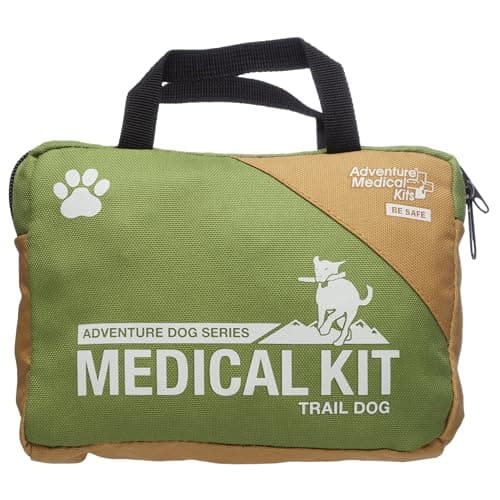
Building a kit for the trail rather than the house? The list above is the same list, but the constraint changes: a kit only helps if it is actually with you, which rules out most of the big cases and makes mounting and weight the deciding specifications. We rank the three trail kits on exactly that on the best dog first aid kits for hiking.
Frequently asked questions
What should be in a dog first aid kit?
The AVMA's official checklist: important phone numbers; a copy of your pet's medical record; a digital thermometer; a muzzle (but not if the dog is vomiting); a spare leash and collar; gauze roll; clean towels; nonstick bandages; self-adhering tape; adhesive tape; blunt-ended scissors; disposable gloves; a small flashlight; tweezers; an eye dropper or needleless syringe; sterile lubricating jelly; activated charcoal (only if instructed by a vet or poison control); 3% hydrogen peroxide (only on veterinary instruction, and never on wounds); and saline solution.
Should I use hydrogen peroxide on my dog's wound?
The AVMA says no. Its first aid kit checklist lists 3% hydrogen peroxide but attaches the explicit instruction: 'Do not use hydrogen peroxide on wounds.' Notably, the American Kennel Club recommends the opposite, describing it as an antiseptic to prevent infection. Where a breed registry and the veterinary profession's own association disagree on a medical question, follow the veterinary body — and ask your vet.
Can I make my dog vomit with hydrogen peroxide?
Not on your own initiative. The AVMA states: 'Do not try to induce vomiting or give any medication to your pet unless directed to do so by a veterinarian or poison control center.' The Pet Poison Helpline says the same. Hydrogen peroxide belongs in the kit — the AVMA puts it there — but it is used only when a professional tells you to. No authoritative body publishes an owner-facing dose, and we are not going to invent one.
What is the pet poison control number?
The ASPCA Animal Poison Control Center is (888) 426-4435; the ASPCA notes that 'a consultation fee may apply' but does not publish an amount. The Pet Poison Helpline is (855) 764-7661 and publishes its fee as '$89 incident fee applies'. Put both numbers, plus your own vet and your nearest 24-hour emergency hospital, on a card inside the kit.
Can I give my dog ibuprofen or Tylenol?
No — not unless your veterinarian directs it. The AVMA's rule is categorical: 'Never give your pet any medication, including non-prescription medicines and dietary supplements, unless directed by your veterinarian.' The FDA warns that acetaminophen can cause dose-dependent liver damage that may lead to liver failure in dogs, and lists ibuprofen, naproxen and aspirin as hazards. The FDA also notes that no over-the-counter NSAIDs are FDA-approved for dogs.
Is a first aid kit enough in an emergency?
No, and the AVMA says so directly: 'First aid care is not a substitute for veterinary care, but it may save your pet's life until you can get them veterinary care.' They add that 'any first aid administered to your pet should be followed by immediate veterinary care.' The kit buys you time to reach a vet — that is its entire job.
Sources
Every spec on this page traces to one of these. Where a manufacturer does not publish a figure, we say “not published” rather than estimating it.
- AVMA — Pet First Aid brochure (2025): the official kit checklist and poisoning protocol
- AVMA — First aid tips for pet owners
- AVMA — Household hazards (“Never give your pet any medication… unless directed by your veterinarian”)
- AVMA — Pets and disasters (“First aid care is not a substitute for veterinary care”)
- FDA — Get the facts about pain relievers for pets (acetaminophen, ibuprofen, naproxen)
- ASPCA Animal Poison Control Center — (888) 426-4435
- Pet Poison Helpline — (855) 764-7661
- AKC — Dog first aid kit essentials (the hydrogen-peroxide-as-antiseptic advice AVMA contradicts)
- American Red Cross — pet first aid kit list (waterproof container advice; dated March 2007)