Orthopedic vs Memory Foam Dog Beds
These are not two categories. Orthopedic is an unregulated claim; memory foam is a specific material with a specific and slightly awkward property.
The framing is wrong before the comparison starts, so let us fix it.
“Orthopedic” is a marketing term with no standard behind it. It describes an intention — support for joints — and any maker may apply it to any bed.
“Memory foam” is a material: viscoelastic polyurethane foam. It has measurable, specific properties. It is one possible filling for a bed that is being sold as orthopedic, and the two words are not alternatives to each other.
The real comparison is therefore memory foam versus high-resilience polyfoam — the two materials that actually fill the beds sold under the orthopedic label.
Side by side
| Memory foam (viscoelastic) | High-resilience polyfoam | |
|---|---|---|
| How it responds | Slowly conforms to the body and holds the shape | Springs back immediately |
| Pressure distribution | Excellent — the reason it exists | Good, less conforming |
| Temperature behavior | Softens when warm, stiffens when cold | Essentially unaffected |
| Heat retention | Traps heat against the dog | More breathable |
| Ease of standing up from | Harder — the dog sinks in | Easier — it pushes back |
| Longevity | Density-dependent; low-density versions bottom out | Density-dependent; generally recovers better |
| Density published? | Almost never | Almost never |
The temperature property, which matters more for dogs
Memory foam is viscoelastic, and the defining behavior of viscoelastic foam is that its stiffness changes with temperature. It softens as it warms and stiffens as it cools.
For a person in a heated bedroom under a duvet, that is barely noticeable. For a dog it can be, because dog beds live in places human mattresses do not: an unheated porch, a garage, a cold hallway, a truck.
A memory foam bed in a cold room in January is a firmer bed than the same bed in July. In a genuinely cold space it can be noticeably hard until the dog has been lying on it for a while — which is the opposite of what an arthritic dog needs from the first moment it lies down.
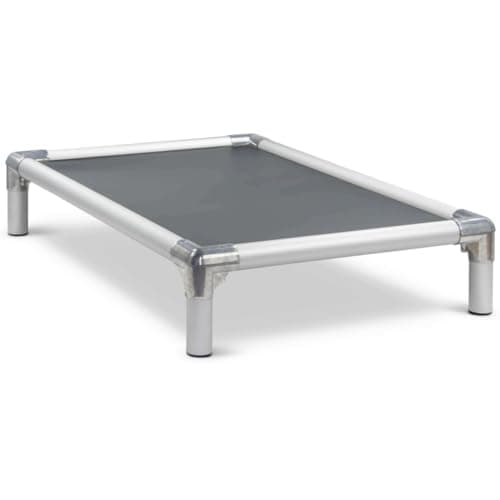
The other side of the same property is heat retention. Memory foam holds warmth against the dog, which is a benefit for a thin-coated old dog in winter and a genuine drawback for a double-coated dog in summer. If your dog seeks out tile floors in July, a memory foam bed is working against it — and an elevated cot may be the better summer answer.
Getting up, which is where polyfoam quietly wins
This is the practical point that decides the comparison for a lot of senior dogs, and it is almost never mentioned.
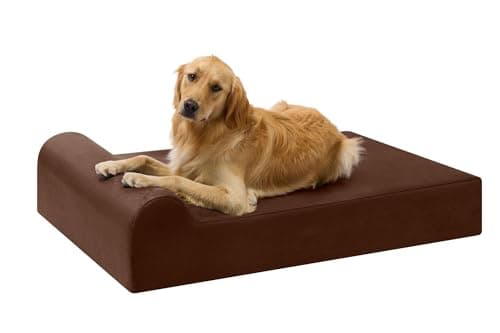
Memory foam conforms and holds. That is exactly what you want while the dog is lying down — and it means the dog is in a dish, with nothing solid to push against, when it tries to stand. A high-resilience foam pushes back, which gives the dog a platform.
For a dog with hind-end weakness, that difference is repeated many times a day and it is not trivial. The AVMA notes difficulty rising among the changes owners report with arthritis, and a bed that makes rising harder is working against the reason it was bought.
If your dog needs help getting up regularly, the equipment conversation extends beyond the bed — see our support harness roundup and the ramp roundup.
Gel-infused, cooling and other qualifiers
“Gel-infused memory foam” and “cooling gel” are attempts to address the heat-retention problem. They are real modifications and they are also not quantified anywhere in this category — no maker publishes a thermal figure, a test method or a temperature differential.
Treat those phrases the way we treat “military grade” on a collar: a claim without a number. If cooling genuinely matters for your dog, a cot with airflow underneath does more than any foam additive, and it does it by a mechanism you can see.
Which to buy
Memory foam if the dog is thin, bony, elderly, has pressure sores or calluses, and lives somewhere warm. Its pressure distribution is genuinely the best available and that is the case it is built for.
High-resilience polyfoam if the dog is large, struggles to stand, is double-coated, or the bed lives anywhere cold. It stays consistent, it breathes better, and it gives the dog something to push off.
Either way, buy on density and thickness rather than on the foam type — and note that almost nobody publishes density, which is why we lean so heavily on the no-flatten warranty as a proxy in our orthopedic roundup and why are orthopedic beds worth it goes through the numbers that would settle it.
Frequently asked questions
What is the difference between an orthopedic and a memory foam dog bed?
They are not two categories. 'Orthopedic' is an unregulated marketing term describing an intention — joint support — that any maker can apply to any bed. 'Memory foam' is a specific material, viscoelastic polyurethane foam, with measurable properties. The real comparison is between memory foam and high-resilience polyfoam, which are the two materials that actually fill the beds sold under the orthopedic label.
Does memory foam get hard in the cold?
Yes, and it matters more for dogs than for people. Memory foam is viscoelastic, meaning its stiffness changes with temperature — it softens as it warms and stiffens as it cools. A human mattress lives in a heated bedroom; a dog bed often lives on an unheated porch, in a garage or in a truck. In a genuinely cold space a memory foam bed can feel noticeably hard until the dog has warmed it, which is the opposite of what an arthritic dog needs on first lying down.
Is memory foam good for old dogs?
For pressure distribution, it is the best available, which suits a thin, bony or callus-prone dog. But there is a real counterpoint that rarely gets mentioned: memory foam conforms and holds, so the dog is in a dish with nothing solid to push against when it stands up. High-resilience foam pushes back and gives a platform. For a dog with hind-end weakness repeating that movement many times a day, that difference is significant.
Does memory foam make a dog hot?
It retains heat against the dog, which is a benefit for a thin-coated old dog in winter and a genuine drawback for a double-coated dog in summer. If your dog seeks out tile floors in July, a memory foam bed is working against it. 'Gel-infused' and 'cooling' variants are real modifications but nobody publishes a thermal figure or test method for them — an elevated cot with airflow underneath does more, by a mechanism you can actually see.
Should I buy memory foam or regular foam for my dog?
Memory foam for a thin, bony or elderly dog with pressure sores or calluses, living somewhere warm. High-resilience polyfoam for a large dog, a dog that struggles to stand, a double-coated dog, or a bed that lives anywhere cold. Either way, buy on density and thickness rather than on foam type — and since almost nobody publishes density, a long no-flatten warranty is the best available proxy for foam quality.
Sources
Every spec on this page traces to one of these. Where a manufacturer does not publish a figure, we say “not published” rather than estimating it.
- ASTM D3574 — standard test methods for flexible cellular materials (the tests that define foam density and ILD)
- AVMA — arthritis in pets: owner information on signs and management
- Big Barker — 10-year no-flatten warranty terms
- Bully Beds — chew-proof bed warranty (200 days; the bed must be “completely unusable with the cover and foam destroyed and in pieces”)