How to Make a Dog Crate Escape-Proof
Dogs do not usually break out of crates. They open them. Which means the fix is almost always at the door, and it is almost always cheaper than a new crate.
Start at the door. The overwhelming majority of crate escapes we can find any account of are not dogs bending steel. They are dogs working a latch — nosing a slide bolt sideways, hooking a tongue or a paw through the bars, or worrying a single-point latch until it lifts.
That is good news, because latches are the cheapest thing on a crate to fix.
Seven fixes, in order of effect per dollar
Add a second, independent latch point. A carabiner — a real one, not a keyring — through the door frame and the crate frame, positioned away from the existing latch. Most escapes stop here. Two independent points at opposite ends of the door require two different actions, and dogs do not co-ordinate two actions.
Move the latch out of nose reach. A latch a dog can reach with its muzzle through the bars is a latch a dog will eventually operate. If you can move the crate so the door faces a wall corner, or add a latch high on the frame, do it.
Check the door for play. Grip the door and shake it. If it moves in the frame, the dog can build on that movement. Take up the slack with a zip tie or a hose-clamp on the hinge side; a door with no play cannot be worked open.
Look at the corners, not the panels. On wire crates the failure is almost always a corner where panels join, because that is where a dog can get leverage. Reinforce corners with cable ties or wire before you consider a new crate.
Sit the crate on something with grip. A crate that slides lets a dog use a wall as a brace. A rubber mat under it removes that and quiets the crate at the same time, which matters more than it sounds.
Remove everything that gives purchase. A bed bunched against the door, a hanging water bottle, a blanket the dog can pull inside. Every soft object is a step stool and a distraction.
Then, and only then, consider a stronger crate. If the dog is genuinely deforming the structure rather than operating the door, you have a different problem and we get to it below.
Two things not to do
- Do not padlock a crate with a dog inside. If there is a fire, a flood or a medical emergency, somebody has to get that dog out and they will not have your key. Use fastenings that open by hand.
- Do not leave a collar on a crated dog. This is the injury nobody expects. A tag, a buckle or a martingale loop catching on a crate bar while the dog is alone is how a dog strangles. Take the collar off. Every time. A handle collar is worse again, and so is any collar with a hanging tag.
When the dog is genuinely destroying the crate
Deformed bars, a bent door frame, injuries to the mouth or paws — this is a different category and it is worth being clear about what the market will actually sell you.
Nearly every heavy-duty crate excludes damage caused by the dog. ProSelect’s one-year warranty explicitly excludes “breakage or damage caused by user or dog.” Diggs excludes dogs who are not crate-trained or who chew the product. MidWest will not even publish a wire gauge, only “professional-gauge.”
The exception is real and it is narrow: Impact’s High Anxiety crate carries a Lifetime Dog Damage Guarantee — if your dog breaks it, they replace it. That guarantee applies to the High Anxiety line only, not to Impact’s Collapsible or Stationary crates, which carry a two-year defect warranty that excludes dog damage. Read the model name, not the brand.
Quick picks
The short answer, ranked and scored against our published durability rubric. Where a manufacturer does not publish a spec, we say so rather than estimating it.
| # | Photo | Product | Durability | Price |
|---|---|---|---|---|
| 1 | 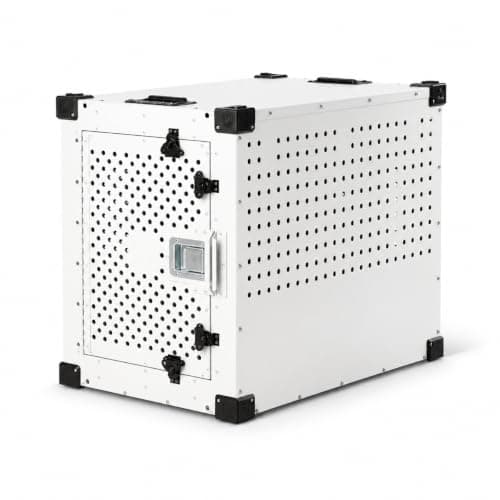 | Impact High Anxiety CrateThe genuine escape artist — and the only warranty that pays out when a dog wins | 91/100 | Check price |
| 2 | 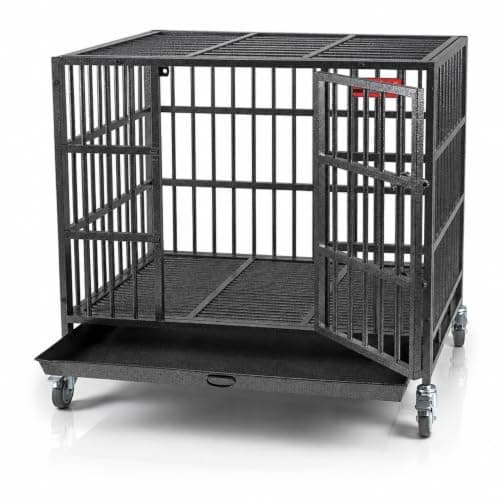 | ProSelect Empire Dog CageRaw steel strength per dollar | 73/100 | $389.85 · Amazon |
| 3 | 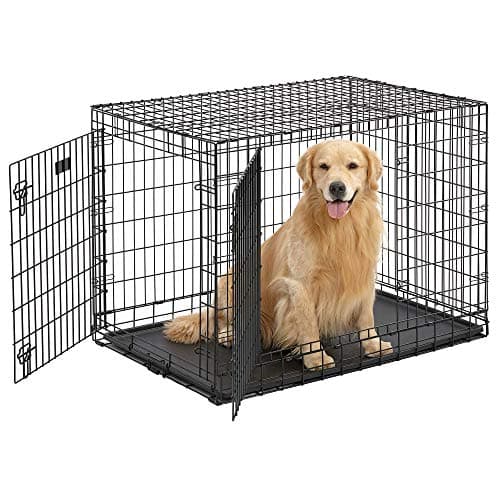 | MidWest Homes for Pets Ultima Pro Heavy-Duty CrateA stronger wire crate — with a hard limit you must understand | 43/100 | $154.99 · Amazon |
Tap any row to jump to the full review. Prices are pulled live from Amazon as of October 18, 2026; where we have no verified live price we show none rather than a stale number. #ad — how our links work.
The picks, ranked
1. Impact High Anxiety Crate
Durability score 91/100Best for: The genuine escape artist — and the only warranty that pays out when a dog wins
The only heavy-duty crate whose maker will stand behind it when the dog wins — which, in a category built on excluding exactly that, is the whole argument.
- Material
- Powder-coated aluminum
- Warranty
- Lifetime Dog Damage Guarantee — 'If your dog breaks it, we'll replace it'
- Warranty scope
- High Anxiety crates ONLY — not the Collapsible or Stationary models
- Aluminum gauge
- Not published for this model
Pros
- This is the only crate we found, at any price, whose standard warranty actually covers your dog destroying it
- Every other heavy-duty brand — Gunner, Lucky Duck, ProSelect, Diggs, and even Impact's own other crates — excludes dog damage
- Aluminum, powder-coated, built for dogs that defeat everything else
Cons
- The most expensive crate here by a wide margin
- The Dog Damage Guarantee applies ONLY to the High Anxiety line. Buy the Collapsible instead and you lose it
- Heavy and not genuinely portable
- Impact does not publish the aluminum gauge
How we assessed it: on published materials, hardware specs and construction — not long-term chew-tested. We say so because it is true, and because a claim we cannot back is worth nothing to you.
#ad We only show a price when we have a live one from Amazon. We don’t have one for this product right now, so we’re not going to guess. How our links work.
2. ProSelect Empire Dog Cage
Durability score 73/100Best for: Raw steel strength per dollar
The most steel for the money and the most honest spec sheet in the category — sold with a warranty that excludes the exact thing you are buying it for.
- Steel
- 20-gauge steel reinforced by 1/2 in diameter steel tubes
- Frame
- 3/4 in tube frame
- Latches
- Dual door latches
- Warranty
- 1 year — explicitly excludes 'breakage or damage caused by user or dog'
Pros
- It publishes an actual steel gauge — 20-gauge, with 1/2 in reinforcing tubes — which MidWest will not do
- Genuinely heavy, welded steel construction at a mid-range price
- Dual latches on the door
Cons
- The warranty is the category's central absurdity: this crate is sold 'for powerful dogs that are able to claw or chew their way out of other cages', and the warranty then excludes damage caused by the dog
- One year only
- Extremely heavy; the casters are doing real work
How we assessed it: on published materials, hardware specs and construction — not long-term chew-tested. We say so because it is true, and because a claim we cannot back is worth nothing to you.
#ad Price as of October 18, 2026; Amazon prices change often, so check before you buy. How our links work.
3. MidWest Homes for Pets Ultima Pro Heavy-Duty Crate
Durability score 43/100Best for: A stronger wire crate — with a hard limit you must understand
A decent home crate for a dog that is not trying to escape. It is not an escape-proof crate and it is emphatically not a car crate.
- Construction
- 'Professional-gauge, heavy duty steel'
- Wire gauge
- NOT PUBLISHED — MidWest will only say 'professional-gauge'
- Latches
- Slide-bolt
- Sizes
- 24, 30, 36, 42, 48 in
- Car safety
- None. CPS: wire crates 'will not provide significant protection in the case of an accident'
Pros
- Heavier wire than a standard folding crate, and the double doors are genuinely useful
- Cheap, and it folds flat
Cons
- MidWest markets it as 'professional-gauge' and then refuses to publish a number. That is marketing, not a spec
- Slide-bolt latches — the easiest latch for a determined dog to defeat
- Never use a wire crate as car restraint. In the Center for Pet Safety's 2015 crate study, MidWest wire crates failed, and CPS's conclusion is that wire crates should be treated as distraction prevention, not protection
How we assessed it: on published materials, hardware specs and construction — not long-term chew-tested. We say so because it is true, and because a claim we cannot back is worth nothing to you.
#ad Price as of October 18, 2026; Amazon prices change often, so check before you buy. How our links work.
The part a crate cannot fix
Here is the uncomfortable half of this question. A dog that is frantically trying to get out of a crate — bloodied gums, broken nails, soaking with drool, destroying its own mouth on the bars — is not solving a puzzle. It is panicking, and a stronger crate contains the panic without addressing it.
Ogata’s 2016 review in the Journal of Veterinary Behavior summarizes what is understood about separation-related problems in dogs, and the short version relevant here is that this is a treatable behavioral condition rather than a containment failure. A crate is a management tool inside a plan; it is not the plan.
Signs it is distress rather than opportunism:
- It happens only in your absence, and starts within minutes of you leaving.
- The dog injures itself — nails, gums, teeth.
- Vocalization is continuous rather than intermittent.
- Damage is concentrated at exit points: the door, the nearest wall.
If that is your dog, escalating the hardware is the wrong move and can make things worse. We go through what the literature supports in crates and separation anxiety.
Size and training, which prevent most of this
Two things stop escape attempts starting in the first place:
- The right size. Big enough to stand without ducking, turn around, and lie fully stretched on its side. Too small creates the pressure to escape; too large lets a dog get leverage against the far wall. Method in what size crate does my dog need.
- The crate has to be a good place. Feed in it. Give the best chew in it. Leave the door open when you are home. Never use it as a punishment. A dog that likes its crate does not test the latch.
And it is still not a car crate
A crate reinforced with carabiners and cable ties is a home crate, not a vehicle restraint. The Center for Pet Safety’s 2015 crate study concluded that wire crates will not provide significant protection in the case of an accident, and no amount of home reinforcement changes that. The genuinely certified list is in crash-tested dog crates.
Frequently asked questions
How do I stop my dog escaping from its crate?
Start at the door, because almost every escape is a latch being operated rather than a panel failing. Add a second independent latch point — a real carabiner through the door and crate frames, positioned away from the existing latch — so escape requires two different actions. Then move latches out of nose reach, take up any play in the door, reinforce the corners where panels join, and put a rubber mat underneath so the crate cannot slide against a wall for leverage.
Can I padlock a dog crate?
Do not. If there is a fire, a flood or a medical emergency, whoever needs to get that dog out will not have your key. Use fastenings that open by hand — a carabiner gives you the same second latch point without locking anyone out. And never leave a collar on a crated dog: a tag, buckle or martingale loop catching on a bar while the dog is alone is a strangulation risk.
Which heavy-duty crate warranty covers damage caused by the dog?
Impact's High Anxiety crate, and essentially nothing else. It carries a Lifetime Dog Damage Guarantee — if the dog breaks it, Impact replaces it — and that guarantee applies to the High Anxiety line only, not to Impact's Collapsible or Stationary models. By contrast, ProSelect's one-year warranty explicitly excludes breakage or damage caused by user or dog, and Diggs excludes dogs who are not crate-trained or who chew the product.
My dog is injuring itself trying to get out of the crate. What should I do?
Stop escalating the hardware. Bloodied gums, broken nails, continuous vocalization, soaking drool and damage concentrated at exit points during your absences point to distress rather than opportunism, and a stronger crate contains panic without addressing it. Ogata's 2016 review in the Journal of Veterinary Behavior treats separation-related problems as a behavioral condition with treatment options; a crate is a management tool inside a plan, not the plan.
Does crate size affect escape attempts?
Yes, in both directions. Too small creates the pressure to escape. Too large gives the dog room to brace against the far wall and work the door. The right size is tall enough to stand without ducking, long enough to lie fully stretched on its side, and wide enough to turn around — measure the dog rather than guessing from a breed chart.
Will reinforcing a wire crate make it safe for the car?
No. The Center for Pet Safety's 2015 crate study concluded that wire crates will not provide significant protection in the case of an accident, and carabiners and cable ties do not change that. Vehicle crash protection is a separate, independently certified product category, and the genuinely certified list is far shorter than the marketing in this space implies.
Sources
Every spec on this page traces to one of these. Where a manufacturer does not publish a figure, we say “not published” rather than estimating it.
- Impact Dog Crates — Lifetime Dog Damage Guarantee (High Anxiety line only)
- ProSelect Empire — specs and warranty (20-gauge steel, 1/2 in reinforcing tube; excludes damage caused by user or dog)
- MidWest Homes — Ultima Pro (“professional-gauge” steel; no numeric gauge published)
- Ogata (2016) — “Separation anxiety in dogs: What progress has been made in our understanding of the most common behavioral problems in dogs?”, Journal of Veterinary Behavior 16:28–35
- Center for Pet Safety — 2015 Crate Study (wire crates “will not provide significant protection in the case of an accident”)
- AKC — crate training and crate sizing guidance for owners