The Best Hunting Dog Vests
A neoprene waterfowl vest and an upland chest protector are not variants of the same product. One keeps a dog warm in water; the other keeps briars out of its chest.
Before you compare anything, decide which product you are buying, because the two halves of this category do not overlap at all.
- Waterfowl / neoprene: the job is thermal. Cold water, repeated retrieves, long stationary waits. Neoprene works the way a wetsuit works — by trapping a thin layer of water against the dog and letting body heat warm it.
- Upland / abrasion shell: the job is mechanical. Briar, thorn, barbed wire, cut stubble and cane, all of it at chest height on a dog running flat out. There is no thermal function at all, and adding one would be actively harmful in early-season heat.
Buying a neoprene vest for upland work overheats a dog that is already working hard. Buying an upland shell for cold water does nothing at all. Most roundups in this category rank them against each other, which is how owners end up with the wrong garment.
The number almost nobody publishes
For a neoprene vest, one specification determines almost everything about how it performs: thickness. Dive and surf wetsuits are sold in millimeters — 3 mm, 5 mm, 7 mm — because that number is the product.
When we first wrote this page, exactly one vest published it — the Browning stated 5 mm on the listing itself, and neither Avery nor Rig’Em Right stated a figure anywhere, which on cold-water safety equipment is a remarkable omission. Both listings have since been rewritten. The Avery now states 5 mm, and the Rig’Em Right describes a 3 mm neoprene body with 5 mm through the chest under a canvas outer.
We have rescored the Avery for it, and we are still scoring on the published number rather than assigning warmth ratings we cannot support. Thickness remains the only warmth comparison these three listings actually allow.
Working versus waiting, which are different garments
Here is a distinction the Avery Boater’s Dog Parka gets right and most of the category ignores.
A waterfowl dog spends most of a morning stationary and wet, not swimming. That is when it gets cold — a working dog generates heat, a waiting dog does not. A vest cut for swimming is minimal and mobile; a vest cut for waiting has more coverage and does more of its work out of the water.
The Avery is built for the waiting. That is a genuine design intent rather than a marketing variant, and if your dog does a lot of sitting in a blind it is the more sensible buy even though it is less versatile in the water.
Quick picks
The short answer, ranked and scored against our published durability rubric. Where a manufacturer does not publish a spec, we say so rather than estimating it.
| # | Photo | Product | Durability | Price |
|---|---|---|---|---|
| 1 | 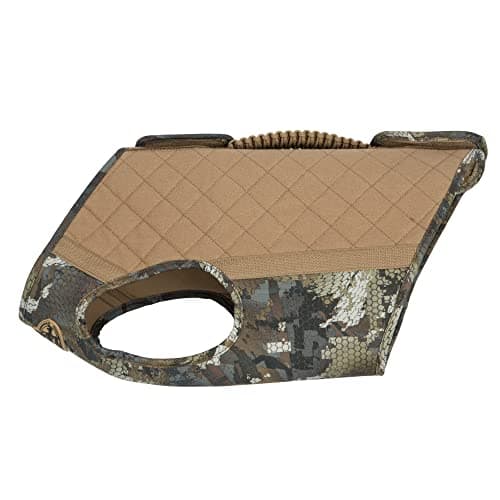 | Rig'Em Right Neoprene Dog VestThe serious waterfowl build, at the serious price | 62/100 | $82.84 · Amazon |
| 2 | 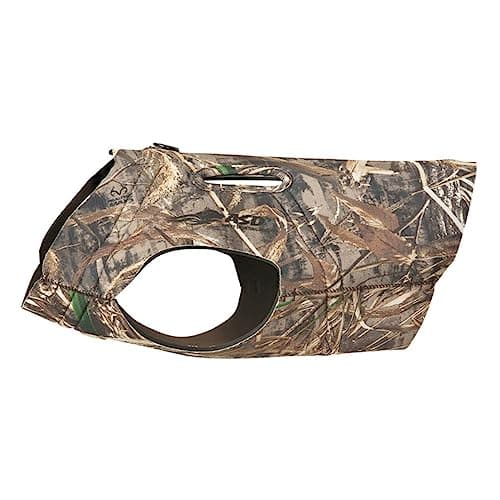 | Avery Boater's Dog ParkaWaiting in the boat rather than working in the water | 59/100 | $48.29 · Amazon |
| 3 | 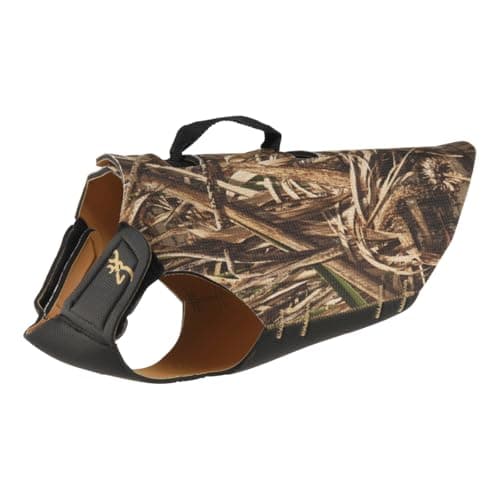 | Browning Neoprene Dog VestCold-water retrieving — a published thickness and a warranty term stated in writing | 61/100 | $46.44 · Amazon |
| 4 | 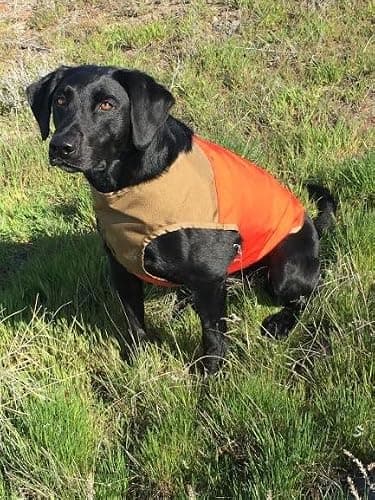 | Orvis Upland Hunting Dog VestUpland cover — this is a chest protector, not an insulator | 65/100 | $89.99 · Amazon |
Tap any row to jump to the full review. Prices are pulled live from Amazon as of October 18, 2026; where we have no verified live price we show none rather than a stale number. #ad — how our links work.
The picks, ranked
1. Rig'Em Right Neoprene Dog Vest
Durability score 62/100Best for: The serious waterfowl build, at the serious price
The specialist choice. The listing now states its thickness and its layered build; what it still does not state is a warranty, and the price premium over the Browning is left to reputation.
- Material
- Three-layer body: neoprene, a foam flotation layer and a heavy-duty canvas outer (Amazon listing)
- Thickness
- 3 mm neoprene in the body, 5 mm through the chest — published on the listing
- Intended use
- Waterfowl, hard use
- Closure
- Belly straps
- Warranty
- Not published in detail
Pros
- The specialist-brand build, and it is priced accordingly — this is what serious waterfowlers buy
- Reinforced at the wear points the budget vests leave plain
Cons
- Meaningfully more expensive than the Browning, and the listing publishes no warranty terms to help justify the difference
- 3 mm in the body is thinner than the Browning's 5 mm — the foam layer and the 5 mm chest panel carry the warmth argument, not the body neoprene
- Narrow availability compared with the mass-market brands
How we assessed it: on published materials, hardware specs and construction — not long-term chew-tested. We say so because it is true, and because a claim we cannot back is worth nothing to you.
#ad Price as of October 18, 2026; Amazon prices change often, so check before you buy. How our links work.
2. Avery Boater's Dog Parka
Durability score 59/100Best for: Waiting in the boat rather than working in the water
Buy it for the waiting, not for the swimming — that is genuinely a different garment and Avery has built for the right one.
- Material
- 5 mm neoprene, tapered cut (Amazon listing)
- Thickness
- 5 mm — published on the listing
- Intended use
- Waterfowl — insulation while waiting, not only while swimming
- Coverage
- Extended body coverage
- Construction
- Double-tacked seams, internal webbing harness, integral carry handles, full-length zipper cover (Amazon listing)
- Warranty
- Not published in detail
Pros
- Cut for the part of the day a waterfowl dog actually spends stationary and wet, which is where dogs get cold
- More coverage than a swimming-focused vest
- Publishes its thickness — 5 mm, the same figure as the Browning — and states the seam and internal-harness construction on the listing
Cons
- The extra coverage is a liability once the dog is working hard
- No published warranty terms
How we assessed it: on published materials, hardware specs and construction — not long-term chew-tested. We say so because it is true, and because a claim we cannot back is worth nothing to you.
#ad Price as of October 18, 2026; Amazon prices change often, so check before you buy. How our links work.
3. Browning Neoprene Dog Vest
Durability score 61/100Best for: Cold-water retrieving — a published thickness and a warranty term stated in writing
The vest that publishes the number and the warranty term. Not the cheapest neoprene vest here any more, but you know exactly what you are buying.
- Material
- 5 mm neoprene
- Thickness
- 5 mm — published on the listing
- Intended use
- Waterfowl — thermal protection in cold water
- Closure
- Hook-and-loop shoulder and back closures
- Protection
- Flexible chest plate; easy-grab lift handle
- Warranty
- One-year limited, original purchaser, defects in material and workmanship
Pros
- Publishes its thickness — 5 mm, stated on the listing, which is the number that decides how warm it is
- Neoprene is the correct material for the job — it works by trapping a warmed water layer, not by staying dry
- A flexible chest plate and a lift handle, and a warranty term stated in writing rather than left blank
Cons
- One year, original purchaser only, is a thin warranty next to the lifetime terms elsewhere in our reviews
- 5 mm is a lot of insulation — right for late-season water, more than a dog needs in mild conditions
- Hook-and-loop closures on neoprene are still the usual wear point, and they lose grip once they pick up grit and hair
How we assessed it: on published materials, hardware specs and construction — not long-term chew-tested. We say so because it is true, and because a claim we cannot back is worth nothing to you.
#ad Price as of October 18, 2026; Amazon prices change often, so check before you buy. How our links work.
4. Orvis Upland Hunting Dog Vest
Durability score 65/100Best for: Upland cover — this is a chest protector, not an insulator
The right vest for upland cover and the wrong vest for water. The two jobs are not interchangeable and most roundups conflate them.
- Intended use
- Upland — abrasion protection in heavy cover
- Material
- Abrasion-resistant shell; denier not published
- Visibility
- Blaze orange
- Insulation
- None — this is not a thermal garment
- Warranty
- Not published in detail
Pros
- Solves a completely different problem from the neoprene vests: barbed wire, thorn, briar and stubble on the chest
- Blaze orange is a safety feature in the field, not a colorway
Cons
- No thermal value whatsoever — buying this for cold water is a category error
- Denier not published, on a garment whose whole job is abrasion resistance
- Adds heat load on a dog already working hard in warm early-season conditions
How we assessed it: on published materials, hardware specs and construction — not long-term chew-tested. We say so because it is true, and because a claim we cannot back is worth nothing to you.
#ad Price as of October 18, 2026; Amazon prices change often, so check before you buy. How our links work.
The upland case, and why blaze orange is a spec
An upland vest is armor. The failure mode it prevents is a chest laceration from wire or cane on a dog quartering at speed through cover, and no amount of conditioning prevents that — the dog cannot see it coming.
Blaze orange belongs on the same page as the abrasion shell rather than in a color-picker. A dog working ahead of guns in heavy cover is safer when it is visible, and that is a function, not a style choice.
The frustration is the same as everywhere: the Orvis vest’s job is abrasion resistance, and no denier is published for the shell. On a garment sold specifically to survive briar, that is the one number a buyer would want.
Fitting a working vest
- Nothing under the front legs. A vest that catches the elbow on a full-extension gallop will rub a dog raw within an hour, and a dog will keep running on it.
- Belly straps snug, checked wet. Neoprene loses tension when soaked; a vest that is right on a dry dog is loose on a wet one, and a loose neoprene vest flushes water rather than trapping it, which defeats the entire mechanism.
- Nothing that can snag. Loose straps, dangling hardware and D-rings on an upland vest are hazards in cover — the exact thing the vest is there to protect against.
- Watch the neck opening on a retrieving dog. A vest that rides up over the shoulders when the dog is swimming with a bird will restrict the front end.
The rest of the field kit
A vest solves one problem. Two others sit alongside it and are worth thinking about at the same time.
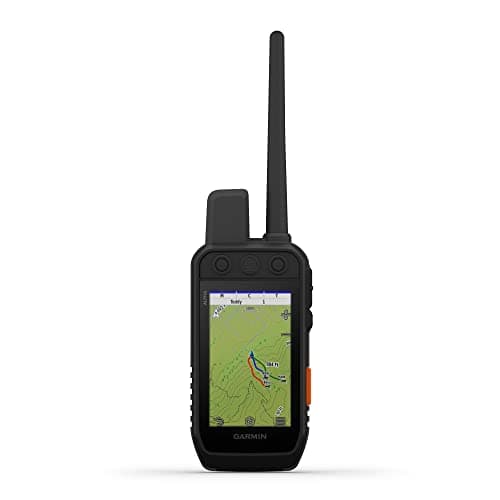
Locating the dog. Cellular trackers do not work in the terrain a bird dog works in, which is exactly the point we make in our GPS tracker roundup. If you hunt beyond coverage, the radio-based Garmin system is the only real option.
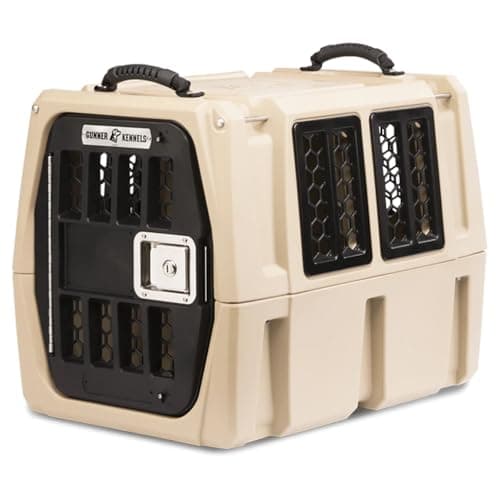
Getting there and back. A dog in a truck bed or a cargo bay needs restraint, and the certification picture is genuinely narrow — see crash-tested crates and the state-by-state open-bed rules in dog car restraint laws, where California’s 46-inch rack requirement catches a lot of people out.
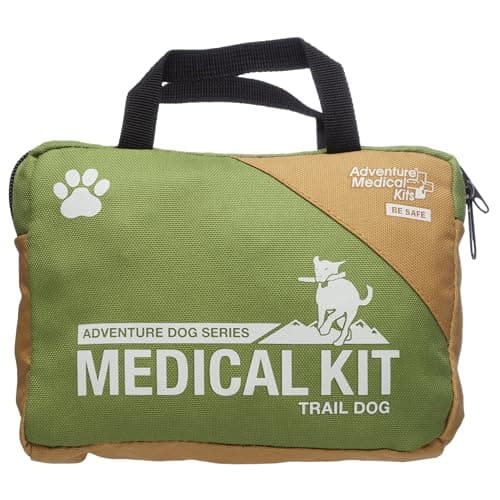
And carry a first aid kit that is actually finished. Field dogs get cut, and the audit of what commercial kits leave out is in our first aid kit roundup.
Flotation is a separate product from insulation. A neoprene vest keeps a dog warm in cold water and adds a little buoyancy as a side effect; a life jacket is designed to float the dog and to be lifted by, which is why its grab handle sits over the shoulders. If the water is deep, moving, or a long way from the bank, buy the jacket as well — the dog life jackets ranks them on shell weight and foam placement.
The naming in that category is worth one warning. “Life jacket” and “flotation vest” mean the same thing here, because no maker publishes a buoyancy figure and none claims certification — so a neoprene vest sold as adding flotation is not a substitute for a jacket with a grab handle. The distinction is on dog life jacket vs flotation vest.
Frequently asked questions
What is the difference between an upland and a waterfowl dog vest?
They solve opposite problems. A waterfowl vest is neoprene and its job is thermal — it traps a thin layer of water against the dog which body heat then warms, exactly like a wetsuit. An upland vest is an abrasion shell with no insulation at all; its job is to stop briar, thorn, barbed wire and cut cane reaching the chest of a dog running through cover. Using either in the other's role is a category error.
How thick should a neoprene dog vest be?
Thickness is the specification that determines how warm a neoprene vest is — wetsuits are sold in millimeters for exactly that reason. All three neoprene vests in this roundup now publish it on their live listings: the Browning and the Avery both state 5 mm, which suits late-season cold water and is more insulation than a dog needs in mild conditions, and the Rig'Em Right states a 3 mm neoprene body with 5 mm through the chest under a canvas outer. When we first wrote this page only the Browning published a figure; the other two listings have since been rewritten. The millimeter figure is still the only like-for-like warmth comparison the three listings support.
Does a hunting dog need a vest in warm weather?
For upland work in cover, an abrasion shell still earns its place, because the hazard is mechanical rather than thermal — though it does add some heat load on a dog already working hard. A neoprene vest in warm weather is actively counterproductive: it is insulation, and the dog does not need insulation. Match the vest to the hazard, not to the season.
Why is blaze orange used on upland dog vests?
Visibility, and it is a function rather than a colorway. A dog quartering ahead of guns in heavy cover is safer when it can be seen, and blaze orange is the standard because it is the color that stands out against every kind of cover in every light. Treat it the same way you treat the abrasion shell itself: part of the vest's job.
How should a hunting dog vest fit?
Nothing under the front legs, because a vest that catches the elbow at full extension will rub a running dog raw within an hour and the dog will keep going on it. Belly straps snug and checked wet, since neoprene loses tension when soaked and a loose neoprene vest flushes water rather than trapping it, which defeats the mechanism entirely. And no loose straps or dangling hardware, which are snag hazards in the cover the vest exists to handle.
Sources
Every spec on this page traces to one of these. Where a manufacturer does not publish a figure, we say “not published” rather than estimating it.