The Best Elevated Dog Feeders
Before the products: a large study found raised feeders associated with higher bloat risk in big dogs, not lower. That is the opposite of how they are usually sold.
The study that should shape this purchase
Elevated feeders are routinely marketed as easier on a dog’s neck and joints, and sometimes as reducing the risk of bloat — gastric dilatation-volvulus, a rapidly fatal emergency in deep-chested dogs.
In 2000, Glickman and colleagues published a study of non-dietary risk factors for GDV in large and giant breed dogs in the Journal of the American Veterinary Medical Association. Among its findings, raised feeding was associated with an increased risk of GDV, not a reduced one — and the association was substantial in the giant breeds.
That is the opposite of the marketing, and it has been in the veterinary literature for a quarter of a century. We are reporting it rather than adjudicating it: it is one observational study, subsequent work has been mixed, and we are not qualified to tell you what to do about your specific dog. But an owner buying a raised feeder for a Great Dane deserves to know the study exists, and almost no product page will tell them.
Who a raised feeder is genuinely for
There are real, uncontroversial cases:
- Megaesophagus and certain swallowing disorders, where upright feeding is specifically prescribed. This is a veterinary instruction, not a preference.
- Severe cervical arthritis or spinal disease, where lowering the head is genuinely painful. Ask your vet.
- Mess containment, which is the honest reason most people actually want one and is a perfectly good reason on its own.
If none of those applies and your dog is a large or giant deep-chested breed, we would raise the Glickman finding with your vet before buying.
Mess containment is the feature worth paying for
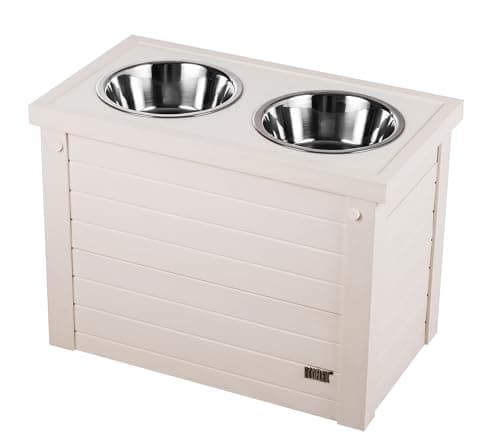
The Neater Feeder is the only genuinely different design in this category: an upper feeding basin that drains spilled water into a lower reservoir, so the water ends up somewhere other than under the food and on the floor.
For a messy drinker — and for anyone whose kitchen floor is the actual problem — that is worth more than the elevation. The PetFusion takes the opposite approach: a clean open stand with recessed bowl seats so a determined eater cannot lever the bowl out, and no attempt at containment at all.
Quick picks
The short answer, ranked and scored against our published durability rubric. Where a manufacturer does not publish a spec, we say so rather than estimating it.
| # | Photo | Product | Durability | Price |
|---|---|---|---|---|
| 1 | 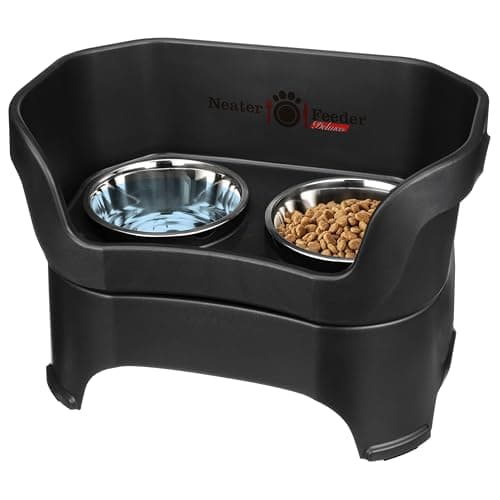 | Neater Pet Brands Neater Feeder DeluxeContaining the mess rather than just raising the bowl | 59/100 | $67.99 · Amazon |
| 2 | 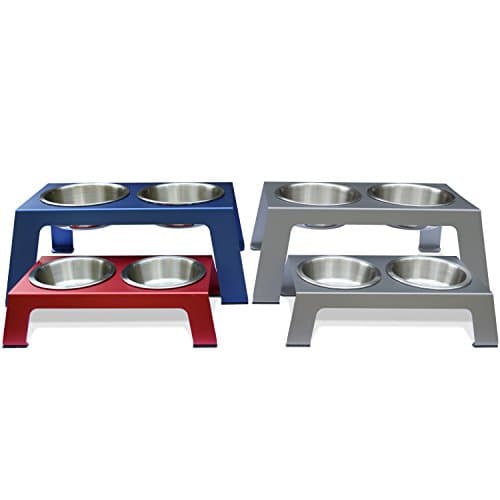 | PetFusion Elevated Dog FeederA clean stand that will not slide across a tile floor | 59/100 | $34.96 · Amazon |
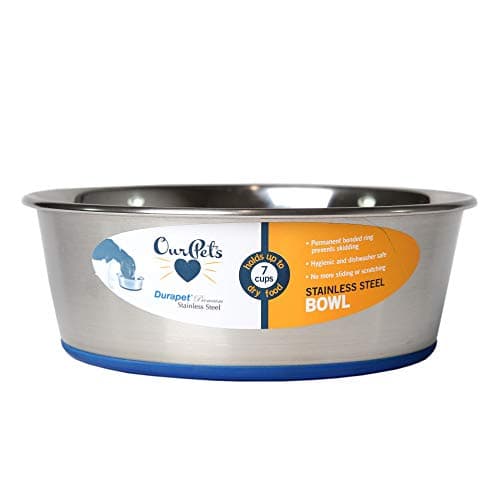
| 3 | 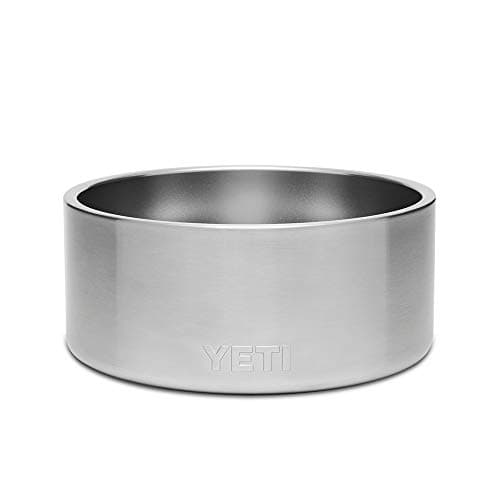 | YETI Boomer 8 Dog BowlA bowl that will outlive the dog, at a price that reflects it | 87/100 | $60.00 · Amazon |
Tap any row to jump to the full review. Prices are pulled live from Amazon as of October 18, 2026; where we have no verified live price we show none rather than a stale number. #ad — how our links work.
The picks, ranked
1. Neater Pet Brands Neater Feeder Deluxe
Durability score 59/100Best for: Containing the mess rather than just raising the bowl
Buy it for the mess containment, which no other feeder here addresses, and treat the elevation as secondary.
- Format
- Two-tier — upper feeding basin drains spilled water to a lower reservoir
- Bowls
- Stainless steel, removable
- Height
- Published per size by Neater
- Material
- Molded plastic housing
- Warranty
- Not published in detail
Pros
- The two-tier design is the only genuinely different idea in this category: spilled water drains away from the food rather than sitting under it
- Stainless steel bowls, removable for washing — which is the only bowl material we would recommend
- Contains kibble scatter, which for a messy eater is worth more than the elevation itself
Cons
- Plastic housing, and it is the part that cracks if a big dog stands on it
- Bulkier on the floor than a simple stand
- No published warranty terms
How we assessed it: on published materials, hardware specs and construction — not long-term chew-tested. We say so because it is true, and because a claim we cannot back is worth nothing to you.
#ad Price as of October 18, 2026; Amazon prices change often, so check before you buy. How our links work.
2. PetFusion Elevated Dog Feeder
Durability score 59/100Best for: A clean stand that will not slide across a tile floor
The tidy option. It does the elevation job well and makes no attempt at the mess problem.
- Format
- Anodized aluminum stand with bowl insets (PetFusion)
- Bowls
- US food-grade stainless steel — two 3-cup bowls plus a shallow 1.1 in / 13 oz dish on the Short 4 in model
- Feet
- Anti-slip
- Height
- 4 in on this listing; PetFusion also lists a Tall 8 in option
- Warranty
- 12 months against manufacturing defects (PetFusion)
Pros
- Recessed bowl seats stop a determined eater tipping the bowl out of the stand, which is the usual failure of open frames
- Stainless bowls that lift straight out for the dishwasher
- Anti-slip feet — a stand that slides across tile is a stand a dog chases around the kitchen
- One of the very few feeders here that publishes a warranty at all: 12 months against manufacturing defects
Cons
- No mess containment at all, unlike the Neater Feeder
- The warranty covers defects only, and 12 months is short for a metal stand
- Fixed height per SKU — the 4 in and 8 in are different products, so it does not grow with a puppy
How we assessed it: on published materials, hardware specs and construction — not long-term chew-tested. We say so because it is true, and because a claim we cannot back is worth nothing to you.
#ad Price as of October 18, 2026; Amazon prices change often, so check before you buy. How our links work.
3. YETI Boomer 8 Dog Bowl
Durability score 87/100Best for: A bowl that will outlive the dog, at a price that reflects it
Objectively over-specified for a dog bowl, and the only one here whose steel alloy is actually stated. If you buy one bowl for the dog's life, this is defensible.
- Material
- 18/8 stainless steel, per YETI
- Capacity
- 8 cups
- Base
- Non-slip ring
- Care
- Dishwasher safe
- Wall construction
- Double-wall on YETI's insulated line; check the specific model
Pros
- 18/8 stainless is a named alloy specification rather than 'stainless steel', which is the level of disclosure we keep asking for and rarely get
- Non-slip ring is molded into the base rather than glued on, so it does not peel off in the dishwasher
- Genuinely a buy-it-for-life object — there is no wear mechanism on a stainless bowl short of the dog eating it
Cons
- Four to five times the price of an equivalent-capacity stainless bowl
- Heavy, which is a virtue at home and a liability in a pack
- You are paying a brand premium on a product where the material is the whole story
How we assessed it: on published materials, hardware specs and construction — not long-term chew-tested. We say so because it is true, and because a claim we cannot back is worth nothing to you.
#ad Price as of October 18, 2026; Amazon prices change often, so check before you buy. How our links work.
The bowls matter more than the stand
Whatever stand you buy, insist on stainless steel bowls that lift out.
Plastic bowls scratch, and the scratches hold bacteria in a way a smooth surface does not. Both feeders here ship with stainless. If a stand ships with plastic bowls, buy replacement stainless ones in the same diameter — it costs very little and it is the single most useful upgrade you can make to any feeder.
Our stainless bowl roundup covers what to look for, including the alloy question that almost nobody in this category will answer.
Getting the height right, if you are buying one
The usual guidance is that the top of the bowl should sit at roughly the height of the dog’s lower chest, or a little below the shoulder — so the dog reaches slightly down rather than stretching up or bending far down.
Note that both feeders here are fixed height, which means they do not grow with a puppy and do not adjust as an older dog loses height through the topline. If height is being set for a medical reason, that is a conversation with your vet about your dog’s current measurements rather than a size chart.
Stability is the underrated spec
A feeder that slides is a feeder your dog pushes around the kitchen, and a feeder that tips is a bowl of water on the floor.
- Non-slip feet, not just a wide base. Tile is the test surface.
- Recessed bowl seats, so the bowl cannot be levered out by a dog that eats with enthusiasm. This is the PetFusion’s main structural advantage.
- Weight. A light stand with a heavy dog leaning on it will move. Both of these are molded plastic, and plastic is where a big dog eventually cracks a feeder by standing on it.
If your dog’s problem is eating too fast rather than eating too low, the feeder is the wrong product — that is a slow feeder.
If you also need somewhere to keep the food
Neither feeder here stores anything, and the stations that do are a separate purchase with a separate problem: the storage half is usually an unsealed box, and the FDA’s own guidance is to keep dry food in its original bag — the bag carries the lot number that identifies a recalled batch. Feeders with built-in food storage ranks that category on whether the storage actually seals, whether it fits the bag size you buy, and whether you can wash it out between bags.
Frequently asked questions
Are elevated dog feeders bad for large dogs?
There is a published finding worth knowing about. Glickman et al. (2000), in JAVMA, studied non-dietary risk factors for gastric dilatation-volvulus in large and giant breed dogs and found raised feeding associated with an increased risk of GDV, not a reduced one — substantially so in giant breeds. That is the opposite of how raised feeders are usually marketed. It is one observational study and later work has been mixed; if your dog is a large deep-chested breed, raise it with your vet.
Who should use an elevated dog feeder?
Dogs with megaesophagus or certain swallowing disorders, where upright feeding is specifically prescribed by a vet. Dogs with severe cervical arthritis or spinal disease for whom lowering the head is painful — again, a veterinary judgment. And owners whose actual problem is mess on the floor, which is a perfectly good reason on its own. Outside those cases, and especially for large deep-chested breeds, it is worth discussing with your vet first.
What height should an elevated dog feeder be?
The usual guidance is that the top of the bowl sits at roughly the height of the dog's lower chest, or a little below the shoulder, so the dog reaches slightly down rather than stretching up. Note that most feeders including both here are fixed height, so they do not grow with a puppy or adjust as an older dog loses height. If the height is being set for a medical reason, take your dog's current measurements to your vet rather than using a size chart.
What is the best elevated dog feeder?
The Neater Feeder Deluxe, if mess is the real problem — it is the only genuinely different design here, with an upper feeding basin that drains spilled water into a lower reservoir instead of onto the floor. The PetFusion is the tidier open stand, with recessed bowl seats that stop an enthusiastic eater levering the bowl out. Both ship with removable stainless steel bowls, which is the specification that actually matters.
Should a dog feeder have stainless or plastic bowls?
Stainless, always, and removable. Plastic bowls scratch, and the scratches hold bacteria in a way a smooth stainless surface does not. If a stand ships with plastic bowls, buy replacement stainless ones in the same diameter — it costs very little and it is the single most useful upgrade you can make to any feeder.
Sources
Every spec on this page traces to one of these. Where a manufacturer does not publish a figure, we say “not published” rather than estimating it.