The Best Dog Gear for Great Danes
Buying for a Great Dane is not buying a bigger version of large-dog gear. It is shopping at the exact point where the published specifications run out - and in four separate categories, they run out before the dog does.
The verdict
Four purchases, one per problem. For the bed, the K9 Ballistics Tough Ripstop Giant, on 7 in of foam and a 10-year won’t-flatten warranty — because at this weight the bed fails by compressing, not by tearing. For containment, the MidWest Solutions 54-inch, which is the only crate in this registry at a genuine giant footprint and is sold outright for “Giant Breed Dogs, 100+ lbs”. For walking, the Julius-K9 IDC in size 3, for one reason: its chart reaches 46.5 in of chest and its size 4 reaches 54.5 in, and nothing else mainstream goes past 44. For food and water, the YETI Boomer 8 — on the floor. That last word is the one the search results get wrong. The most-searched Great Dane gear question is which elevated bowl to buy, and the only large-scale published finding on raised feeding in giant breeds, Glickman et al. (2000), found it associated with increased gastric dilatation-volvulus risk rather than reduced. And one thing we cannot sell you at all: there is no crash-certified car restraint of any kind for a dog this size. Certification stops at 110 lb.
The giant-breed problem, stated properly
A Great Dane is commonly 110 to 175 lb carried on a tall, narrow, deep-chested frame. Almost every piece of advice written for the breed treats that as a size problem — buy the XL — and it is not. It is a specification problem. Manufacturers publish numbers up to the point where their market stops, and their market stops around 100 to 120 lb, because that is where the volume is. Past that line the numbers do not get worse. They disappear.
We checked where each category ends. The pattern is remarkably consistent:
| Category | Where the published figure stops | What that means for this breed |
|---|---|---|
| Orthopedic beds | Weight tiers typically end at 120 lb | A big male is past the top tier on the chart |
| Crates | 54 in is the largest size anyone lists | One product, from one maker, with no gauge published |
| Harnesses | 44 in girth, except one chart that reaches 54.5 in | Measure first; the size letter is useless here |
| Crash certification | 110 lb, across every certified product | Nothing certified exists for the breed at all |
That is the whole guide in one table. Everything below is what to do about each line of it.
The bed: buy depth, not area
The instinct is to buy the biggest footprint you can find. The footprint is the easy part — plenty of beds are sold at 50 in and up. What actually decides whether a giant-breed bed works is thickness, because the failure mode at this weight is not teeth and it is not a torn cover. It is compression. A 150 lb dog lying on its side puts its hip and shoulder through a 4 in mattress until those joints are resting on the floor through the foam, and at that point you own a large mat rather than an orthopedic bed.
That is why the pick is the K9 Ballistics Tough Ripstop Giant: 7 in of orthopedic foam, and — more usefully — a published warranty aimed at exactly this failure. K9 Ballistics covers a mattress that flattens more than 2 in for ten years, once, free. Of every bed specification we have collected, that is the only one that engages with what actually kills a giant-breed bed.
Two honest limits, both of which you should read before you buy:
- The chew warranty on this line is cover-only.K9 Ballistics runs a 120-day chew replacement, but on the Tough Ripstop range — and it names the Giant 7 in variants specifically — a successful claim gets you a replacement cover, not a replacement bed. If your Dane is a committed chewer, the chew-warranty landscape is set out properly on which dog bed warranties cover chewing.
- Nobody publishes a foam density.Not K9 Ballistics, not anyone. So “orthopedic” remains an unverifiable word across the whole category, and thickness is the only support figure you can actually check. We argue that case in full on are orthopedic dog beds worth it.
If the dog is a destroyer rather than a sleeper, the trade is different — a hard cot with a chew warranty instead of foam with a flatten warranty — and the ranked field for that is on indestructible dog beds for large dogs. And if the dog is a giant that is also getting old, which is most of them by seven, the joint-first argument is on the senior dog beds roundup.
The crate: 54 inches, one maker, and three things it is not
A crate for a Great Dane is a sizing problem with exactly one answer on the shelf. The standard crate sizes run 36, 42 and 48 in, and a 48 in box is a 90 to 110 lb dog’s crate. At 54 x 37 x 45 in, the MidWest Solutions 54-inchis the only crate in this registry an adult Dane can lie fully stretched out in, and MidWest sells it in plain words for “Giant Breed Dogs, 100+ lbs”.
Its construction detail is the right one for the breed, too. MidWest publishes drop-pin corners and a reinforced L-bar that it says “prevents side panels from bowing inward” — and panel bow at the middle, rather than anything actually breaking, is how a big dog beats a wire crate. Three slide-bolt latches per door instead of the usual single bolt is the other sensible touch.
Now the three things it is not, because they matter more at this size than at any other:
- It is not chew-proof, and the warranty says so.One year, manufacturing defects, and MidWest states outright that “the warranty does not cover damage by the dog.” On a crate sold specifically for the largest dogs there are, that sentence is the whole risk profile.
- It is not escape-proof. Three slide bolts beat one, but slide bolts are the bottom rung of the latch ladder we set out on escape-proof crates. A determined giant with a nose for it will work a bolt.
- It is not a car restraint.The Center for Pet Safety’s crate study states that wire crates “will not provide significant protection in the case of an accident.” Never strap this in a vehicle and consider the dog restrained.
There is no published wire gauge for it, either, which means “heavy duty” here is a claim rather than a specification — a complaint we have about the whole wire-crate category and which we go through maker by maker on heavy-duty crates. If you are sizing from scratch rather than buying the only 54 in there is, the measuring method is on what size crate does my dog need, and the rest of the giant-breed field is ranked on crates for large dogs.
The harness: the only chart that runs past 46 inches
Here is the hard number that decides the walking gear. Ruffwear’s girth sizing stops at 42 in. Non-stop stops at 42.5. The 2 Hounds Freedom in its 1 in XXL reaches 44. A Great Dane’s chest commonly measures past all three.
Julius-K9’s IDC Powerharnessis the exception, and it is the only one: size 3 (2XL) is published at 82–115 cm / 32.5–46.5 in of chest, listed for 40–70 kg, and size 4 runs 96–138 cm / 38–54.5 in for 70–90 kg. For a dog that measures in the forties, that is the whole market.
We rank it last of the four picks on this page, and we want to be clear why, because it is bought on availability rather than on merit. Julius-K9 publishes no fabric, no hardware specification and no load rating anywhere we can find, on a harness explicitly sold for large working dogs. Its strongest strength claim is the phrase “excellent force distribution,” which is a description rather than a figure. And the entire closure is a single click-lock chest buckle — one point of failure by design, which on a 150 lb dog is the point of failure that matters.
Note also that sizes 3 and 4 overlap heavily: 3 starts at 32.5 in and 4 starts at 38 in. Buy by the size letter and you will get it wrong. Measure the dog, then read the chart, using the method on how to measure a dog for a harness. The broader giant-dog harness field, each product bought in its largest real size, is on harnesses for large dogs— and if your dog is at the other end of the size range, the mid-band version of this sizing problem is on harnesses for medium dogs.
One breed-specific point about the collar-versus-harness question. A Dane has a long neck and a lot of leverage, and a flat collar on a dog that leans puts that leverage straight through the trachea. For anything other than carrying an ID tag, use a harness. The full argument is on dog harness against collar.
The bowl: the one place the search results point the wrong way
Combine the Great Dane bowl searches and more people are looking for an elevated feeder for this breed than for anything else on this page. We are not going to recommend one, and the reason is a published finding rather than a preference.
Glickman et al. (2000), in the Journal of the American Veterinary Medical Association, examined non-dietary risk factors for gastric dilatation-volvulus in large and giant breed dogs — which is precisely this population — and found a raised food bowl associated with increased GDV risk, estimating that a meaningful share of cases in those breeds were attributable to it. It is an observational study, so it establishes association rather than causation, and later work has been mixed. But the elevated-feeder category markets a health benefit it has never demonstrated, against a published finding pointing the other way, to the exact breed group the study looked at.
We set the study out properly — what it says, what it does not say, and the genuine cases where elevation is still the right call, which include megaesophagus, severe cervical or forelimb arthritis and post-operative recovery — on should you use a raised dog bowl. Bloat is rapidly fatal and this is a veterinary conversation, not a bowl review: if you are weighing elevation for a Dane, raise the Glickman finding with your vet and let them decide it.
So the pick is a bowl on the floor, and at this size the sensible object is a big one in named steel. The YETI Boomer 8 holds 8 cups, states its alloy as 18/8 stainlessrather than the usual unqualified “stainless steel,” and has its non-slip ring molded into the base rather than glued on, so it does not peel off in a dishwasher. It is also four to five times the price of an equivalent stainless bowl, and we say so on the card: you are paying a brand premium on a product where the material is the entire story. The cheaper honest alternatives are ranked on the stainless steel bowls roundup, and the material argument against ceramic for a dog that can knock a bowl across a kitchen is on stainless against ceramic.
The gap we cannot fill: nothing certified fits this dog
This is the most important sentence on the page and it is not a product recommendation. There is no crash-test-certified restraint of any kind — harness, crate or carrier — for a dog over 110 lb. The Center for Pet Safety’s certified list has a hard ceiling: the best-certified harness is rated to 110 lb and the only certified crate at the top of the range is rated to 110 lb. A Great Dane starts where certification ends.
We will not paper over that with a self-certified product and a reassuring sentence. What is honestly available is set out on is there a crash-tested dog harness for large dogs, the certified field and what the testing actually involves is on the crash-tested harnesses roundup, and the harness-or-crate decision for a dog this size is on dog car harness against crate. The short version for a Dane: a crate in a cargo area, properly strapped down, is the best available arrangement, and it is an engineering compromise rather than a certified solution.
How to buy, in order
- Measure, then read the chart on the listing you are actually buying. Chest girth for the harness, nose-to-tail-base plus standing height for the crate. At this size the size letter is not information.
- Buy bed thickness before bed area. 7 in of foam under a 150 lb dog, and a warranty that engages with flattening rather than with teeth.
- Accept that the 54 in crate is a very large wire box. It fits, it has good corners, and it is not chew-proof, escape-proof or crash-safe. Buy it for what it is.
- Keep the bowl on the floor unless a vet has told you otherwise for a named condition.
- Do not buy a “crash-tested” restraint for this dog. Nothing certified exists at the weight. Strap a crate down in the cargo area instead and know what you have.
Quick picks
The short answer, ranked and scored against our published durability rubric. Where a manufacturer does not publish a spec, we say so rather than estimating it.
| # | Photo | Product | Durability | Price |
|---|---|---|---|---|
| 1 | 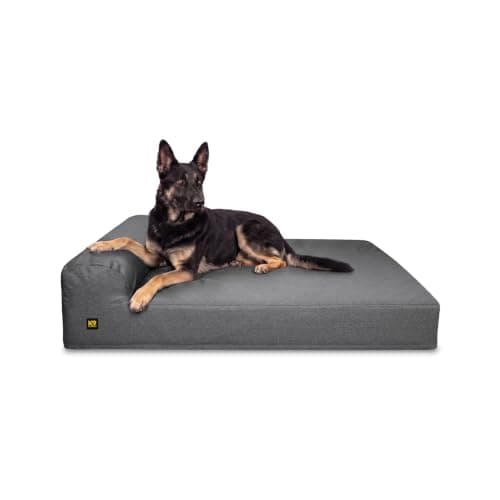 | K9 Ballistics Tough Ripstop Giant 7-Inch Orthopedic Bed (XL)Depth and a tough cover in one bed - with one warranty carve-out to read first | 72/100 | $300.00 · Amazon |
| 2 | 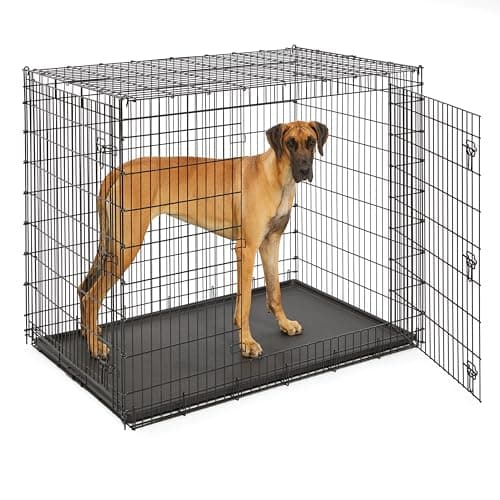 | MidWest Homes for Pets Solutions 54-Inch Double Door CrateA genuine giant-breed footprint - the only 54 in from a maker that stands behind it | 54/100 | $226.99 · Amazon |
| 3 | 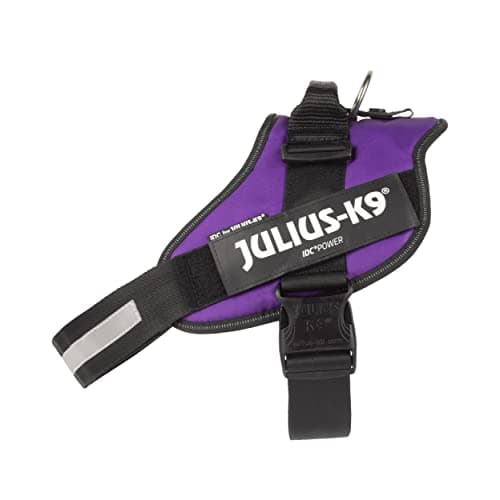 | Julius-K9 IDC Powerharness (Size 2XL/3)The dog nothing else fits - the only mainstream chart that runs past 46 in | 58/100 | $64.99 · Amazon |
| 4 | 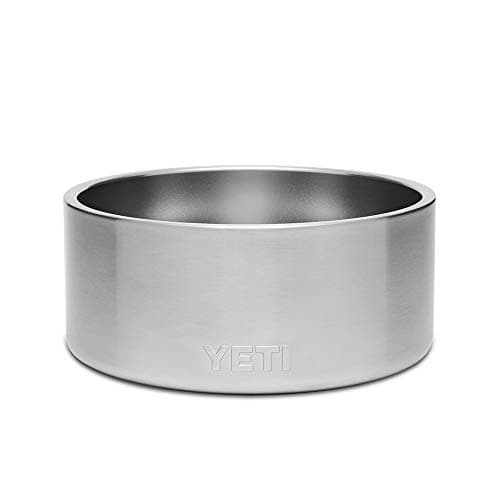 | YETI Boomer 8 Dog BowlA bowl that will outlive the dog, at a price that reflects it | 87/100 | $60.00 · Amazon |
Tap any row to jump to the full review. Prices are pulled live from Amazon as of October 20, 2026; where we have no verified live price we show none rather than a stale number. #ad — how our links work.
The picks, ranked
1. K9 Ballistics Tough Ripstop Giant 7-Inch Orthopedic Bed (XL)
Durability score 72/100Best for: Depth and a tough cover in one bed - with one warranty carve-out to read first
The overlap bed - real orthopedic depth under a tough cover - as long as you buy it knowing that if the dog wins, you get a cover and not a bed.
- Foam
- 7 in orthopedic mattress - the depth a heavy dog needs to avoid bottoming out
- Foam density
- Not published
- Cover
- Tough Ripstop, removable and washable
- Chew warranty
- 120 days, COVER ONLY - K9 Ballistics names the Tough Ripstop Giant 7 in variants in its cover-only list
- Flatten warranty
- 10-year: a mattress that flattens more than 2 in is replaced once, free
Pros
- 7 in of solid orthopedic foam is the depth that actually stops a heavy dog reaching the floor through the bed
- The 10-year won't-flatten warranty is aimed squarely at the failure mode that kills big-dog beds - compression rather than teeth
- A chew-resistant cover over an orthopedic mattress is a combination no cot can give you
- Removable, washable cover
Cons
- This is the carve-out that catches people: on the Tough Ripstop line the 120-day chew warranty replaces the COVER ONLY, and the Giant 7 in is explicitly on that list
- Ripstop is a lighter construction than the Armored line's 1200D ballistic - it is chew-resistant, not chew-proof
- No published foam density, so 'orthopedic' stays an unverifiable word here as everywhere else
- Expensive for a bed whose chew cover stops at the zipper
How we assessed it: on published materials, hardware specs and construction — not long-term chew-tested. We say so because it is true, and because a claim we cannot back is worth nothing to you.
#ad Price as of October 20, 2026; Amazon prices change often, so check before you buy. How our links work.
2. MidWest Homes for Pets Solutions 54-Inch Double Door Crate
Durability score 54/100Best for: A genuine giant-breed footprint - the only 54 in from a maker that stands behind it
The only crate on this page that actually fits a giant breed, bought with clear eyes: a very large wire box with unusually good corners, not an escape-proof or chew-proof one.
- Dimensions
- 54 x 37 x 45 in (retail listings; MidWest's own product page publishes no figures in text)
- Sold for
- 'Giant Breed Dogs, 100+ lbs'
- Construction
- Drop-pin corner construction with a reinforced L-bar, which MidWest says 'prevents side panels from bowing inward'
- Latches
- Three slide-bolt latches per door
- Wire gauge
- Not published - MidWest will not give a gauge for this crate either
- Warranty
- One year, manufacturing defects only. MidWest: 'The warranty does not cover damage by the dog.'
- Car safety
- None. CPS: wire crates 'will not provide significant protection in the case of an accident'
Pros
- At 54 in it is the only crate here a Great Dane, a mastiff or a Saint Bernard can lie fully stretched out in
- Drop-pin corners and the L-bar address the specific way a big dog beats a wire crate - the side panel bowing at the middle, rather than anything actually breaking
- Three latches per door instead of the single slide bolt most wire crates ship with
- It costs about a quarter of what the aluminum crates here do, which for most households is the difference between owning a correctly sized crate and not owning one
Cons
- Slide bolts are still slide bolts. Three is better than one, but it is the bottom rung of the latch ladder on our escape-proof crate page
- No wire gauge published, so 'heavy duty' is a claim here rather than a specification
- The warranty excludes the dog in a single sentence, on a crate sold specifically for the largest and strongest dogs there are
- It is a wire crate. It is not chew-proof, and it must never be used as a car restraint
- Assembled it is enormous. At 54 x 37 x 45 in it takes more floor than most sofas and there is no folding it out of the way
How we assessed it: on published materials, hardware specs and construction — not long-term chew-tested. We say so because it is true, and because a claim we cannot back is worth nothing to you.
#ad Price as of October 20, 2026; Amazon prices change often, so check before you buy. How our links work.
3. Julius-K9 IDC Powerharness (Size 2XL/3)
Durability score 58/100Best for: The dog nothing else fits - the only mainstream chart that runs past 46 in
The answer when the dog is genuinely too big for everything else, and it is last here for one reason: nothing about its strength is published, and it all hangs on one buckle.
- This size
- Size 3 (2XL) - 82-115 cm / 32.5-46.5 in chest, listed for 40-70 kg (88-154 lb)
- Next size up
- Size 4 - 96-138 cm / 38-54.5 in, listed for 70-90 kg (154-198 lb)
- Closure
- A single click-lock chest buckle - Julius-K9's 'one-click fit'
- Handle
- Lockable top handle - Julius-K9 offers it to cut the risk of the handle catching when the dog is off the leash
- Saddle
- Julius-K9 says the chest-strap design gives 'excellent force distribution' - a description, not a measurement
- Materials
- Not published
- Load rating
- Not published
Pros
- Size 3 reaches 46.5 in and size 4 reaches 54.5 in - nothing else in this roundup goes past 44
- One buckle and it is on, which stops being a convenience and starts being a safety point when the dog is 140 lb and impatient
- The broad saddle spreads lead pressure across the sternum and back rather than concentrating it on two thin straps
- The handle locks down, which Julius-K9 offers specifically to reduce the risk of it catching on something when the dog is off the leash
Cons
- The single chest buckle is the entire closure. It is one point of failure by design, and on a giant dog that is the point of failure that matters
- Julius-K9 publishes no fabric, no hardware spec and no load rating anywhere we can find - on a harness explicitly sold for large working dogs
- 'Excellent force distribution' is the strongest strength claim Julius-K9 makes anywhere, and it is a phrase rather than a figure
- No warranty terms are stated on the US site
- The sizes overlap heavily (3 starts at 32.5 in, 4 starts at 38 in), so measuring is not optional - buying by the size letter will get it wrong
How we assessed it: on published materials, hardware specs and construction — not long-term chew-tested. We say so because it is true, and because a claim we cannot back is worth nothing to you.
#ad Price as of October 20, 2026; Amazon prices change often, so check before you buy. How our links work.
4. YETI Boomer 8 Dog Bowl
Durability score 87/100Best for: A bowl that will outlive the dog, at a price that reflects it
Objectively over-specified for a dog bowl, and the only one here whose steel alloy is actually stated. If you buy one bowl for the dog's life, this is defensible.
- Material
- 18/8 stainless steel, per YETI
- Capacity
- 8 cups
- Base
- Non-slip ring
- Care
- Dishwasher safe
- Wall construction
- Double-wall on YETI's insulated line; check the specific model
Pros
- 18/8 stainless is a named alloy specification rather than 'stainless steel', which is the level of disclosure we keep asking for and rarely get
- Non-slip ring is molded into the base rather than glued on, so it does not peel off in the dishwasher
- Genuinely a buy-it-for-life object — there is no wear mechanism on a stainless bowl short of the dog eating it
Cons
- Four to five times the price of an equivalent-capacity stainless bowl
- Heavy, which is a virtue at home and a liability in a pack
- You are paying a brand premium on a product where the material is the whole story
How we assessed it: on published materials, hardware specs and construction — not long-term chew-tested. We say so because it is true, and because a claim we cannot back is worth nothing to you.
#ad Price as of October 20, 2026; Amazon prices change often, so check before you buy. How our links work.
The part that catches everyone: the dog is not finished
A Great Dane reaches most of its height before it reaches anything like its adult frame, and it goes on filling out well past eighteen months. Practically, that means two of the four purchases on this page are sized for the dog you will have rather than the dog in front of you — the crate and the bed — and two are not, because a harness that is loose now is a harness the dog can reverse out of now. Buy the crate and the bed at adult size and use a divider in the crate meanwhile; buy the harness to fit today and expect to buy a second one. Julius-K9’s overlapping size run is, for once, useful here: a dog that lands in the top of size 3 today will land inside size 4 later.
The other thing that changes with age is the floor. A giant breed with early hip or elbow changes will stop using a bed it has to lower itself onto badly, and will stop using a car it has to jump into. That is a ramp question rather than a bed question, and it is on what size dog ramp do I need.
The bottom line
Four objects: 7 in of foam, 54 in of wire, the one harness chart that reaches past 46.5 in, and a heavy stainless bowl on the floor. Between them they cover sleeping, containing, walking and feeding a 110 to 175 lb dog using the only published figures that exist at that weight. What they do not do — and what no combination of purchases can do today — is get this dog certified-safe in a car. If you take one thing from this page, make it that one, and make the second one the bowl: of all the gear decisions in front of a Dane owner, the elevated feeder is the one where the market and the published evidence disagree, and the evidence is the half that was peer-reviewed.
Frequently asked questions
What size crate does a Great Dane need?
Larger than the standard range goes. Crates are commonly sold at 36, 42 and 48 in, and a 48 in crate suits a 90 to 110 lb dog. For an adult Great Dane the only size that works is 54 in, and in this registry exactly one product is made at it: the MidWest Solutions 54-inch double door, at 54 x 37 x 45 in, which MidWest sells for "Giant Breed Dogs, 100+ lbs". Buy it understanding what it is - a very large wire crate with unusually good corners. MidWest states that its one-year warranty does not cover damage by the dog, three slide bolts are still slide bolts, and the Center for Pet Safety's crate study says wire crates will not provide significant protection in a crash.
Should a Great Dane eat from a raised bowl?
There is a published finding that points the other way, and giant breeds are the population it was found in. Glickman et al. (2000), in JAVMA, examined non-dietary risk factors for gastric dilatation-volvulus in large and giant breed dogs and found a raised food bowl associated with increased GDV risk, estimating that a meaningful share of cases in those breeds were attributable to it. It is an observational study, so it shows association rather than causation, and later work has been mixed. We report it rather than advise on it: bloat is rapidly fatal and the decision belongs with your vet. There are genuine medical reasons to elevate - megaesophagus, severe cervical or forelimb arthritis, post-operative recovery - and those are a veterinary call, not a shopping one.
How thick should a Great Dane's bed be?
Thick enough that the dog's hip and shoulder do not reach the floor through it, which in practice means about 7 in of foam at this weight. Thickness matters more than footprint because the failure mode for a giant-breed bed is compression rather than tearing - a 150 lb dog flattens a 4 in mattress into a mat. It is also the only support figure you can check, because not one maker in the category publishes a foam density, so "orthopedic" stays an unverifiable word. The one published warranty that engages with the real failure is K9 Ballistics' 10-year cover on a mattress that flattens more than 2 in.
What harness fits a Great Dane?
Measure the chest first, because this is the size where most charts simply end. Ruffwear's girth sizing stops at 42 in, Non-stop at 42.5 in, and the 2 Hounds Freedom at 44 in in its 1 in XXL. The only mainstream chart that goes further is Julius-K9's IDC Powerharness: size 3 is published at 32.5-46.5 in of chest and size 4 at 38-54.5 in. We pick it on availability rather than merit and say so - Julius-K9 publishes no fabric, no hardware spec and no load rating, and the whole closure is one click-lock buckle. Note the sizes overlap heavily, so buying by the size letter will get it wrong.
Is there a crash-tested car harness for a Great Dane?
No. Certification has a ceiling and this breed is above it: across the Center for Pet Safety's certified products, the best-certified harness is rated to 110 lb and the largest certified crate is rated to 110 lb. A Great Dane commonly starts at 110 lb and goes to 175. That means no certified restraint of any kind - harness, crate or carrier - exists for the breed, and any product marketed as crash-tested at this weight is relying on the manufacturer's own testing rather than third-party certification. The best available arrangement is a crate in a cargo area, strapped down properly, bought as an engineering compromise rather than a certified solution.
Do Great Danes need an orthopedic bed or a chew-proof one?
Pick the failure mode you actually have, because today you cannot buy both well at this size. An orthopedic bed with real depth answers compression and joints, and the K9 Ballistics Tough Ripstop Giant pairs 7 in of foam with a 10-year flatten warranty - but on that line the 120-day chew warranty replaces the cover only, and K9 Ballistics names the Giant 7 in variants on that cover-only list. A chew-focused answer means a hard elevated cot instead, trading foam for a frame and a chew warranty. If the dog destroys bedding, buy for teeth; if it sleeps hard and is heavy or ageing, buy for depth.
How much does gear for a Great Dane cost compared to a large dog?
Expect to pay more in every category and to have far less choice, which is the real cost. The giant sizes sit at the top of each maker's range, and in two of the four categories here there is effectively a single product rather than a field - one 54 in crate, one harness chart that reaches past 46.5 in. We do not publish live prices in prose because they move; each product card on this page carries the current Amazon price when it is available and a "check price" link when it is not. What is worth budgeting for separately is a second harness, because a harness bought to fit a two-year-old Dane will not be the harness it finishes in.
Sources
Every spec on this page traces to one of these. Where a manufacturer does not publish a figure, we say “not published” rather than estimating it.
- K9 Ballistics — warranty terms: the 120-day chew warranty, the Armored vs Tough Ripstop cover-only split, and the separate 10-year won't-flatten cover
- MidWest Homes for Pets — Solutions heavy duty double door crate: the drop-pin corner construction and the reinforced L-bar that MidWest says prevents the side panels bowing inward
- MidWest Homes for Pets — FAQ: one-year warranty, manufacturing defects only, and the sentence "The warranty does not cover damage by the dog."
- Julius-K9 — IDC Powerharness size chart: size 3 (2XL) at 82-115 cm / 32.5-46.5 in chest for 40-70 kg, and size 4 at 96-138 cm / 38-54.5 in for 70-90 kg
- Glickman et al. (2000) — "Non-dietary risk factors for gastric dilatation-volvulus in large and giant breed dogs", JAVMA 217(10):1492-9: the study that found raised feeders associated with INCREASED risk
- Center for Pet Safety — certified products list: the published weight ceilings on every certified harness, crate and carrier
- Center for Pet Safety — 2015 Crate Study: wire crates "will not provide significant protection in the case of an accident"
- YETI — Boomer dog bowl: the 18/8 stainless specification, the 8-cup capacity and the molded non-slip ring
Related
 The Best Dog Crates for Large Dogs
 The Best 'Indestructible' Dog Beds for Large Dogs
 Should You Use a Raised Dog Bowl?
 What Size Crate Does My Dog Need?
 The Best Dog Harnesses for Large Dogs
 The Best Dog Harnesses for Medium Dogs
 Is There a Crash-Tested Dog Harness for Large Dogs?
- How we test — the durability rubric in full