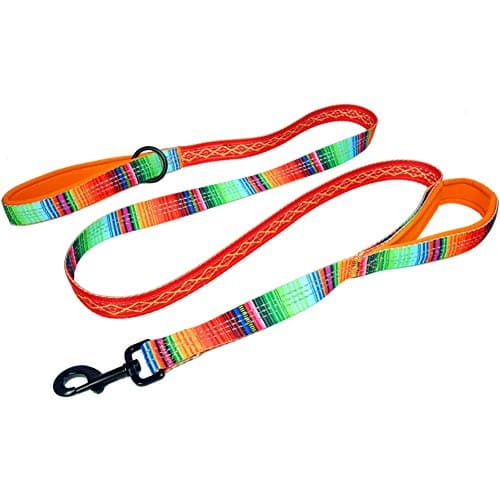
Dog Leash Clips, Explained
Webbing almost never fails. The clip does. Here is what each type is, how it fails, and the published numbers the hardware industry gives you that the pet industry will not.
Start with the finding that shaped this page. Go into a hardware catalog and look up a bolt snap — the same spring-gate snap that ships on the end of a dog leash — and you get a published working load. Ace Hardware lists a 3/8 in. nickel-plated zinc bolt snap at 50 lb, a 1/2 in. one at 90 lb, and a stainless double-ended snap at 260 lb. Plain numbers, on the shelf, for a couple of dollars.
Now go and read the product page for almost any dog leash. The webbing gets a paragraph. The clip gets an adjective.
That asymmetry is the whole subject of this page, because the clip is the part that actually fails.
The four clips you will actually encounter
Bolt snap (spring snap)
A barrel with a sliding bolt held shut by a spring; you pull the bolt back with a thumb stud to open it. It is the default on cheap and mid-range leashes because it is cheap to make and easy to operate one-handed.
How it fails: the bolt is the weak axis. Load applied across the gate rather than along the spine of the clip pushes directly against the spring. A dog that lunges sideways loads it in exactly that direction. The second failure mode is more mundane: the thumb stud catches on a coat, a pocket or your own hand and the gate opens without anything breaking at all.
Trigger snap (scissor snap)
A hinged lever that swings inward. Mechanically it does the same job as a bolt snap, but the lever is held by a stronger spring geometry and is much harder to open by accident, because the lever has to be squeezed rather than nudged.
How it fails: the hinge pin, and the same across-the-gate loading. Better than a bolt snap for security, no better in raw strength unless the maker has actually specified better metal — which, again, is nearly never published.
Frog clip / French clip
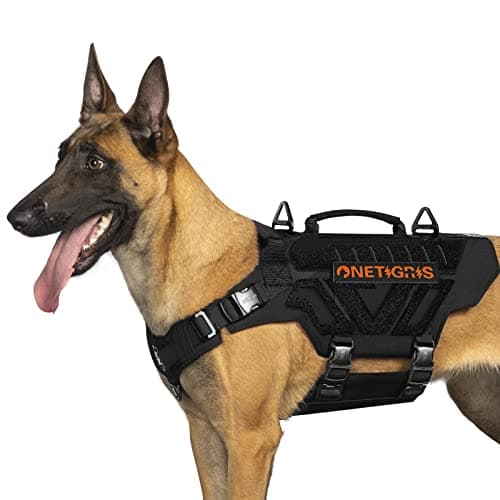
The tactical-looking one: a scissor-style clip with a much larger gate opening, so you can clip it onto a harness ring or a fence rail without threading. Popular on working and tactical gear because it is fast in gloves.
How it fails: the wide gate is the point and the problem. More opening means more leverage on the gate, and frog clips are the clip most often reported opening against a harness ring under a sideways load. They are excellent for speed; they are not the clip we would choose for a dog that lunges.
Locking carabiner
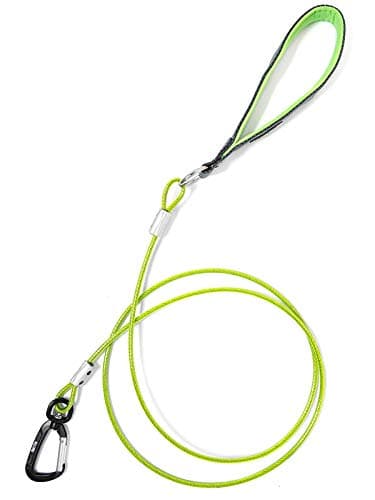
A climbing-derived clip with a screw or auto-locking sleeve over the gate. Heavier and slower than everything above, and the only one of the four routinely sold with a manufacturer’s strength figure attached.
How it fails: honestly, at loads no dog produces — provided it is locked. Unlocked, a carabiner is just a large snap with a wide gate. Mighty Paw’s cable leash is the clearest example of what a published number looks like in this category: its carabiner is rated to hold over 850 lb of pull force, which is one of the very few hardware ratings anyone in the industry states out loud.
The strap is five times stronger than the thing holding it shut
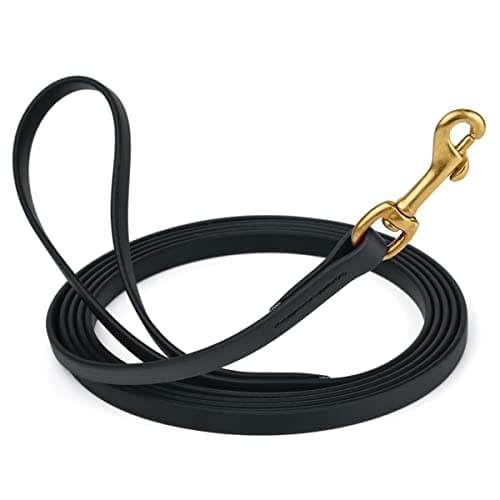
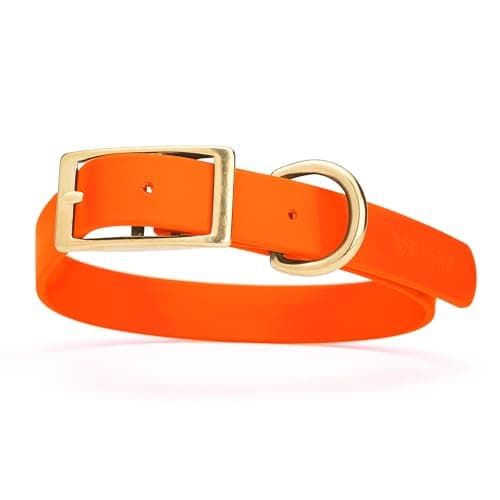
BioThane publishes both halves of the equation for its standard 1 in strap, and the two numbers together are the most useful thing in this whole category. The strap has a 1,000 lb break strength. The buckle rated for it has a 200 lb pull strength.
So a leash advertising “3,800 lb test webbing” while saying nothing about its clip is advertising the part that was never going to break. The chain is only as strong as the hardware, and the hardware is routinely the one component nobody will quantify.
Which clip for which dog
A dog under about 40 lb that does not lunge: any of them. A bolt snap is genuinely fine, and it is the lightest option, which matters on a small dog’s collar.
A large dog that lunges or reacts: trigger snap at minimum, locking carabiner if you will tolerate the weight. This is the case where the sideways-load failure is not theoretical, and it is worth the fifty grams.
Working, tactical or gloved use: frog clip for speed, with the caveat above. Many working handlers run a frog clip on the handler end and something more secure at the dog end, which is a sensible split.
Water, mud and salt: the metal matters more than the mechanism. Stainless or solid brass; plated zinc will corrode at the spring first and then fail without warning. This is a large part of why we like biothane long lines — the failure the material solves is the same failure that kills the hardware. Full picture in our biothane leash roundup.
Swivels, and the one that seizes
Most leash clips include a swivel eye so the leash does not wind up as the dog circles. It is a real feature and a real failure point: the swivel is a rotating joint exposed to grit, and on plated hardware it is the first thing to seize.
A seized swivel is not itself dangerous — it just means the leash twists. But it is a reliable early indicator that the plating has gone and that the spring inside the clip is next. If your leash clip no longer spins freely, look hard at the gate before you trust it on a big dog.
A thirty-second inspection worth doing
- Work the gate ten times. It should snap shut positively every time. A lazy return means a tired spring.
- Try to open it by pressing the gate inward with a thumb, without touching the release. If it moves at all, it is done.
- Look into the gap where the gate meets the body. A visible gap when it is closed means the gate is bent, which happens after any hard sideways load.
- Check the swivel spins. See above.
That is the whole inspection, it costs half a minute, and it is the highest-value maintenance you can do on any walking gear you own. The clip is the part that fails, and it is also the part that tells you it is about to.
Frequently asked questions
What is the strongest type of dog leash clip?
A locking carabiner, by a wide margin — and it is the only one of the four common clip types routinely sold with a published strength figure. Mighty Paw's cable leash carabiner is rated to hold over 850 lb of pull force. The caveat is that this only holds while the locking sleeve is actually done up; an unlocked carabiner is just a large snap with a wide gate.
What is the difference between a bolt snap and a trigger snap?
A bolt snap opens by sliding a spring-loaded bolt back with a thumb stud. A trigger snap opens by squeezing a hinged lever. They do the same job, but the trigger snap is markedly harder to open by accident, because a lever must be squeezed rather than nudged — and accidental opening, not breakage, is the most common way a leash clip actually lets a dog go.
How much weight can a dog leash clip hold?
Almost no dog-gear brand publishes a figure. The hardware industry does, for the same class of part: Ace Hardware's catalog lists a 3/8 in. zinc bolt snap at a 50 lb working load, a 1/2 in. one at 90 lb, and a stainless double-ended bolt snap at 260 lb. Read those as an order of magnitude rather than as your leash's rating — but note that a large dog hitting the end of a leash can exceed the low end of that range easily.
Are frog clips safe for large dogs?
They are fast and glove-friendly, which is why working handlers like them, but the large gate that makes them convenient also gives a sideways load more leverage on the gate. For a dog that lunges, a trigger snap or a locking carabiner is the more conservative choice. A common working compromise is a frog clip at the handler end and a more secure clip at the dog end.
Why does my leash clip stop swiveling?
Grit and corrosion in the swivel joint. It is harmless in itself — the leash just twists — but on plated hardware it is a reliable sign that the plating has failed, and the spring inside the gate is the next thing to go. Treat a seized swivel as a prompt to inspect the gate rather than as a cosmetic annoyance.
Sources
Every spec on this page traces to one of these. Where a manufacturer does not publish a figure, we say “not published” rather than estimating it.
- Baron 3/8 in. nickel-plated zinc bolt snap — published 50 lb working load (Ace Hardware catalog)
- Campbell 1/2 in. nickel-plated zinc bolt snap — published 90 lb working load (Ace Hardware catalog)
- National Hardware 3-15/16 in. stainless steel double-ended bolt snap — published 260 lb working load (Ace Hardware catalog)
- Mighty Paw — chew-proof cable leash (2.34 mm braided steel; carabiner rated 850+ lb)
- BioThane — Beta 520 PET material spec (1,000 lb strap break strength; 200 lb buckle pull strength)
- OneTigris — X-Armor Tactical Harness (1000D nylon; published buckle and D-ring load ratings)