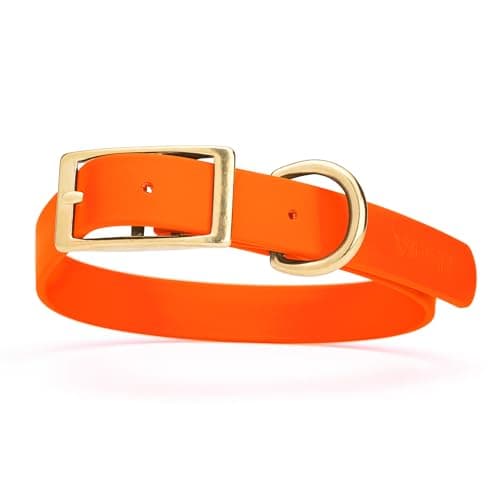
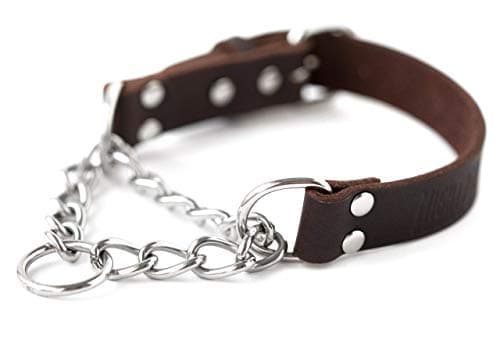
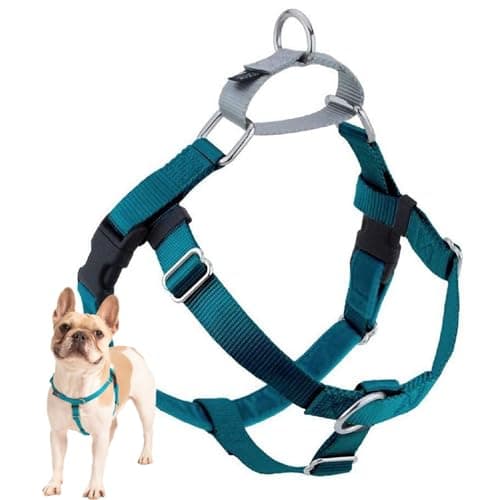
Are Wide Dog Collars Better?
Width genuinely reduces the pressure a lead puts on a neck. It is not a strength specification, and for three of the problems people buy it to solve it is the wrong tool.
The verdict
Yes, for one specific reason: a wider collar spreads the same pulling force over more surface area, so the pressure on any one part of the neck is lower. That is physics rather than marketing, and it is why a strong dog on a flat collar is better served by a 2 in strap than a 3/4 in one. But width is nota strength specification — almost nobody in this category publishes a break strength at any width — and it does not fix the three problems people most often buy it for. If the dog pulls, the answer is a harness. If the dog backs out of its collar, the answer is a limited-slip design such as the Ruffwear Chain Reaction, not a wider flat collar. And if the dog has a long coat, a wide flat collar will mat it; the rolled collar exists precisely to avoid that, and rolled means narrow by design.
What width actually does
Pressure is force divided by area. Double the width of the strap carrying a lead’s load and you roughly halve the pressure at the contact surface for the same pull. Nothing about that is controversial, and it is the reason wide collars are traditional on dogs built with narrow heads and powerful necks: the collar has to be wide enough to stay put without being tightened to the point of digging in.
The corollary matters just as much. Width improves comfort under load. It does not improve the strength of the webbing, the buckle, the D-ring or the stitching — and those are the four things that actually break. A 2 in collar with a stamped zinc D-ring is weaker where it counts than a 1 in collar with a welded stainless one.
What the makers publish, which is almost nothing
We went looking for width specifications across the collars in our registry, and the result is the familiar one in this category:
| Collar | Published width | Published load rating |
|---|---|---|
| OneTigris Tactical Collar (Large) | 2 in, in the listing title | Not published |
| Auburn Leathercrafters Rolled Collar | 1/2 to 1-1/4 in, across a 10-34 in size range | Not published |
| Soft Touch padded leather (Medium) | 1 in wide x 20 in long, for a 14.5-17.5 in neck | Not published |
| Ruffwear Chain Reaction | Not published | Not published |
Read that table twice. The 2 in width on the OneTigris collar is the only dimension OneTigris publishes for it— no denier, no load rating, from the same brand that publishes 485 lb buckle ratings on its X-Armor harness. Width is the spec the category is willing to state because it is the spec that photographs well. The numbers that would let you compare two collars on strength are not published by anybody, at any width, which is exactly why our durable collar roundup ranks on hardware and material evidence rather than on dimensions.
The three problems width does not solve
Pulling
A wide collar makes pulling more comfortable for the dog, which is not the same as making it safer or making it stop. The load is still on the neck. If the dog pulls hard enough that collar width is on your mind, the equipment change that matters is a harness — see the no-pull harnesses for the front-clip options, and our honest answer on whether a harness actually helps, which is more qualified than most pages will tell you. The comparison most people want next is a no-pull harness against a regular one.
A dog that backs out of its collar
This is the single most common reason people search for a wider collar, and width is not the mechanism that fixes it. A dog escapes a flat collar by reversing and letting the collar slide over the back of its skull; a wider flat strap does that just as readily if it is loose enough to be comfortable. The design that addresses it is limited-slip — a martingale, which tightens by a controlled amount when the dog pulls back and then releases. The Ruffwear Chain Reactionis our pick for that job: a metal chain control loop and an aluminium V-ring rather than a fabric loop. It carries the standard caveat and we will repeat it rather than bury it — a martingale must never be left on an unsupervised dog, because the loop is a snag hazard. If it is the right category for you, the martingale roundup goes through the whole field, and the escape-proof harnesses are the alternative when the dog is a committed escaper.
A long or double coat
A wide flat collar sitting on a long coat mats it, and no amount of padding prevents that. The traditional answer is a rolled collar: round in cross-section, narrow by design, and specified by Auburn Leathercrafters from 1/2 to 1-1/4 in. It is the one case where the narrower collar is unambiguously the better product, and it is why our leather collar roundup treats rolled construction as a feature rather than a style.
When wide genuinely is the right answer
- A strong dog that is going to be led from the collar at all. More area under the same load is simply better, and a 2 in strap on a broad-necked dog is not excessive. Our heavy-duty collar cut for broad-necked dogs works through this at the size where it matters.
- When you want a handle on the collar itself. A control handle needs something to be stitched to. The OneTigris tactical collar is the reason this page has a 2 in pick: the handle gives immediate close control without reaching for the leash, which is a real-world advantage at a kerb or a trailhead. Its own trade-off is bulk, and some dogs will not tolerate it. If the handle is the feature you want, the tactical collars are the full field and what a tactical collar actually is is the explainer.
- Carrying a nameplate. A riveted plate needs strap width to sit on, which is why plate collars are rarely narrow. See the nameplate collars.
What to look for instead of width
- What the D-ring is made of and how it is formed. Welded beats split; stainless beats plated zinc. This is the part that decides whether the collar holds.
- The buckle. A metal buckle-and-tongue closure has no plastic to crack in cold. A quick-release can be opened fast, which is a safety feature in some situations and a failure mode in others.
- Material, and whether the grade is stated.With leather, grade decides everything and almost nobody publishes it — our collar materials guide is the long version, and leather against nylon is the short one.
- Edge finishing. Beveled, polished edges on leather and bound edges on webbing are what stop a wide collar sawing at a coat.
- Fit, measured. Two fingers under the strap, measured at the base of the neck where the collar sits. A correctly fitted 1 in collar beats a loose 2 in one at everything.
Quick picks
The short answer, ranked and scored against our published durability rubric. Where a manufacturer does not publish a spec, we say so rather than estimating it.
| # | Photo | Product | Durability | Price |
|---|---|---|---|---|
| 1 | 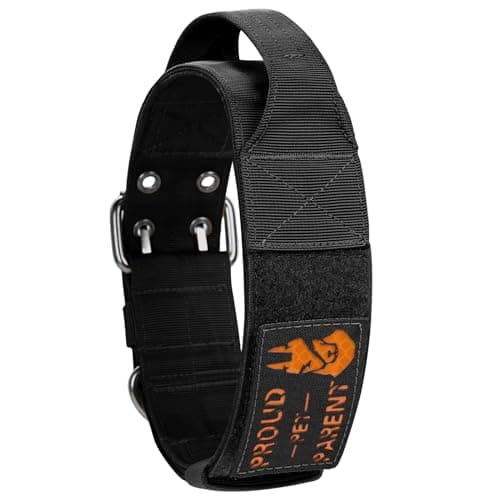 | OneTigris Tactical Dog CollarA control handle on the collar itself | 64/100 | $18.99 · Amazon |
| 2 | 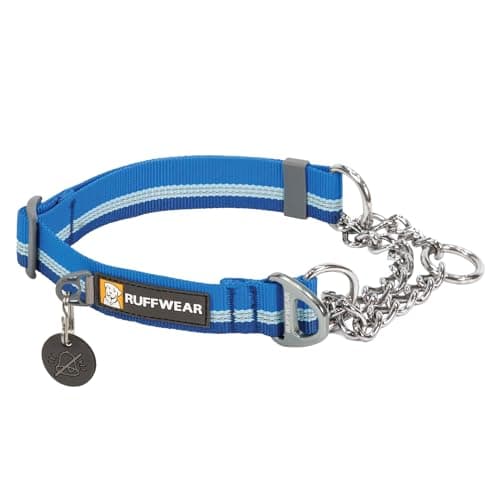 | Ruffwear Chain Reaction CollarA dog that backs out of a flat collar | 70/100 | $29.99 · Amazon |
| 3 | 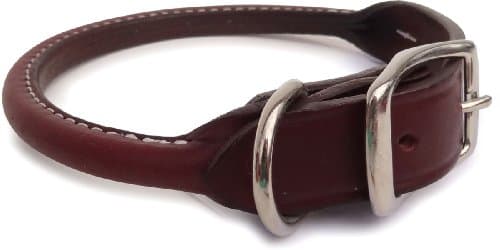 | Auburn Leathercrafters Rolled Leather CollarThe buy-it-for-life leather collar | 78/100 | $67.00 · Amazon |
Tap any row to jump to the full review. Prices are pulled live from Amazon as of October 18, 2026; where we have no verified live price we show none rather than a stale number. #ad — how our links work.
The picks, ranked
1. OneTigris Tactical Dog Collar
Durability score 64/100Best for: A control handle on the collar itself
A genuinely useful control handle; just note the published-spec discipline OneTigris shows elsewhere does not extend to this one.
- Design
- Padded collar with an integrated control handle (Amazon listing)
- Width
- 2 in, stated in the listing title — the only dimension OneTigris publishes for it
- Denier
- Not published for this model
- Load rating
- Not published for this model
Pros
- The handle gives you immediate close control without reaching for the leash
- Heavier webbing than a typical flat collar
Cons
- OneTigris publishes load ratings on its X-Armor harness but not on this collar
- The handle adds bulk that some dogs will not tolerate
How we assessed it: on published materials, hardware specs and construction — not long-term chew-tested. We say so because it is true, and because a claim we cannot back is worth nothing to you.
#ad Price as of October 18, 2026; Amazon prices change often, so check before you buy. How our links work.
2. Ruffwear Chain Reaction Collar
Durability score 70/100Best for: A dog that backs out of a flat collar
The right answer for a dog that slips its collar, with the standard martingale caveat: not for unsupervised wear.
- Design
- Martingale-style limited-slip with a chain control loop (Amazon listing)
- Hardware
- Metal chain loop, aluminum V-ring
- Load rating
- Not published
Pros
- The limited-slip loop tightens just enough to stop a dog reversing out of it
- Metal control loop instead of a fabric one
Cons
- A martingale must never be left on an unsupervised dog — the loop is a snag hazard
- No published load rating
How we assessed it: on published materials, hardware specs and construction — not long-term chew-tested. We say so because it is true, and because a claim we cannot back is worth nothing to you.
#ad Price as of October 18, 2026; Amazon prices change often, so check before you buy. How our links work.
3. Auburn Leathercrafters Rolled Leather Collar
Durability score 78/100Best for: The buy-it-for-life leather collar
The one collar here that names its leather grade, and that alone puts it ahead of every unlabeled 'genuine leather' collar on the market.
- Leather
- Full-grain bridle leather
- Hardware
- Bright nickel-plated buckle and dee ring; smooth capped rivets
- Construction
- Beveled and hand-polished edges; extended D-end pattern on large sizes
- Sizes
- 10–34 in; widths 1/2 to 1-1/4 in
- Made in
- Central New York State, USA
Pros
- Full-grain bridle leather — the top of the grade hierarchy, and Auburn names it, which almost no collar seller does
- Rolled construction resists matting the coat on long-haired dogs
- Capped rivets and beveled edges are real construction detail, not marketing
Cons
- Nickel-plated hardware, not solid stainless — plating wears through eventually
- No published break strength
- Sold in single-collar quantities at a real premium over mass-market nylon
How we assessed it: on published materials, hardware specs and construction — not long-term chew-tested. We say so because it is true, and because a claim we cannot back is worth nothing to you.
#ad Price as of October 18, 2026; Amazon prices change often, so check before you buy. How our links work.
The bottom line
Wider is better at one job — spreading load — and that job matters on a strong dog. Treat it as a comfort-under-load feature, not as a strength claim, because at every width in this category the strength numbers are unpublished. Then spend your attention on the parts that do fail: the ring, the buckle, the stitching and the fit. If your real problem is pulling, buy a harness. If it is escaping, buy a limited-slip collar and never leave it on unsupervised. If it is a long coat, buy a rolled collar and go narrower, not wider.
Frequently asked questions
Are wide dog collars better for the dog?
For comfort under load, yes. Pressure is force divided by area, so a wider strap spreads the same pulling force over more of the neck and the pressure at any one point is lower. That is the real and only reliable advantage. Width does not make the webbing, the buckle, the D-ring or the stitching stronger, and those are what break. It also does not stop a dog pulling, does not stop a dog backing out of its collar, and on a long-coated dog a wide flat collar mats the coat.
How wide should a dog collar be?
Match it to the dog's build and to the job, then check the fit rather than the number. Across the collars we have assessed, published widths run from 1/2 in (the narrow end of Auburn Leathercrafters' rolled collar range) through 1 in (Soft Touch's padded leather in Medium, for a 14.5-17.5 in neck) to 2 in (the OneTigris tactical collar in Large). A broad-necked strong dog that will be led from the collar is well served at the wide end. A long-coated dog is better on a narrow rolled collar. A correctly fitted narrow collar - two fingers under the strap at the base of the neck - outperforms a loose wide one at everything.
Will a wider collar stop my dog slipping out of it?
No, and this is the most common mistaken purchase in the category. A dog escapes a flat collar by reversing and sliding it over the back of the skull, and a wide flat strap does that just as easily if it is loose enough to be comfortable. The mechanism that addresses it is limited slip: a martingale tightens by a controlled amount when the dog pulls back and then releases. Our pick is the Ruffwear Chain Reaction, which uses a metal chain control loop and an aluminium V-ring rather than a fabric loop. One hard caveat: a martingale must never be left on an unsupervised dog, because the loop is a snag hazard.
Is a wide collar better than a harness for a dog that pulls?
No. A wide collar makes pulling more comfortable for the dog without changing where the load sits, which is still the neck. If collar width is on your mind because of pulling, the equipment change that matters is a harness that moves the load onto the chest and shoulders. Worth reading the honest version first: harnesses help with the mechanics and the comfort, and they are not a training method.
Do wide collars damage a dog's coat?
A wide flat collar on a long or double coat will mat it where it sits, and padding does not prevent it. The traditional fix is a rolled collar - round in cross-section rather than flat, so there is far less surface rubbing in one place. Auburn Leathercrafters specifies its rolled collar from 1/2 to 1-1/4 in across a 10-34 in size range, with beveled and hand-polished edges, and rolled construction is the reason to buy it rather than a style choice.
Does collar width tell you anything about strength?
Almost nothing, because nobody publishes the figures that would let you compare. Of the collars we have assessed, not one publishes a load rating at any width - including the 2 in OneTigris, whose stated 2 in width is the only dimension the brand publishes for that collar at all, from a company that does publish 485 lb buckle ratings on its X-Armor harness. Judge strength on what you can see: a welded stainless D-ring over a split or plated one, a metal buckle over plastic, and stitching that anchors the ring to load-bearing material rather than to a fabric panel.
Sources
Every spec on this page traces to one of these. Where a manufacturer does not publish a figure, we say “not published” rather than estimating it.
- OneTigris — X-Armor harness: the per-size load ratings quoted here (485 lb buckles, 440 lb front D-ring, 400 lb top D-ring at L and XL) and the 1000D nylon shell
- Auburn Leathercrafters — rolled collar: full-grain bridle leather, the 1/2 to 1-1/4 in width range, the 10-34 in size range, capped rivets and beveled edges
- Mendota Pet — maker page for the British-style check cord and the leather collar line (solid-braid polypropylene; made in the USA)