The Best Dog Gear for Labradors
A Labrador is a 55 to 80 lb dog that spends its life in water, mud and whatever it found by the lake. That single fact decides the material of almost everything you buy for it - and it rules out the material most people search for first.
The verdict
Buy the Viper BioThane collar rather than the leather one you came here looking for. Coated webbing does not absorb lake water, mud or smell, it wipes clean, and BioThane publishes a 1,000 lbbreak strength for the standard 1 in strap — with the honest caveat that the same material spec puts buckle pull strength at 200 lb, so the hardware is the real limit. For the car, the Sleepypod Clickit Sport: it is one of only three harnesses that have ever passed independent crash certification, and this is the rare breed whose weight sits insidethe certified band rather than past it — the Center for Pet Safety publishes the medium at 45–90 lb. For water, the Ruffwear Float Coat, on an 800D ballistic polyestershell and named EVA/PE foam panels — bought for duration, cold and boats, not because a retriever cannot swim. For heat, the Swamp Cooler, the only cooling vest whose maker publishes all three fabric layers, with the physics stated plainly: evaporative cooling loses most of its effect in humidity. And if you want leather anyway, the Mendota hunt collaris the honest version — a US-made collar from a gundog maker — bought knowing that the one spec that decides a leather collar’s life, the grade, is not published by Mendota or by anyone else.
One fact decides most of this
There is a version of this page that lists the ten things a Labrador owner should buy. It would be useless, because the interesting decisions for this breed are not which category but which material, and they all turn on the same thing: a retriever is a dog bred to go into water and bring something back, and it will do that on a walk round a municipal pond in February given the slightest encouragement.
Wet changes four things about gear, and all four are specification questions rather than taste:
- Absorbent materials stop being neutral and start being consumables. Leather, nylon webbing and padded fabric all take up water. Nylon dries; leather dries badly and repeatedly, which is what actually kills a leather collar; padding holds water against skin.
- Plated hardware corrodes and stainless does not. On a dog that swims, the buckle and the ring are the parts that fail, and plated zinc is the cheap default across the category.
- Smell becomes a specification. This is not cosmetic. An owner who cannot stand the collar takes it off the dog, and a collar in a drawer is not carrying an ID tag.
- Weight matters more wet than dry. A soaked harness or vest on a dog working in cover is carrying water weight all day.
So the ranking criterion for this breed is simple and it is unusual: we rank on what the maker publishes about the material’s behavior when soaked, and on whether the hardware is named. Everything below follows from that.
The collar: the most-searched answer is the wrong material
The single largest Labrador gear query we can measure is for a leathercollar. We understand the appeal completely — a leather collar on a working retriever is the right-looking object, and this site is not squeamish about paying for a traditional material that lasts. But on this dog it is the wrong call for a reason you can check.
The specification that determines how long a leather collar lasts is the grade and tannage of the leather, and essentially nobody in the dog market publishes it. Mendota does not state a grade on the listing. Neither do most of its competitors. That leaves you buying the one property that decides the outcome on faith — and then subjecting it to the single worst duty cycle for leather there is, which is repeated soaking and drying. We go through what is and is not published across the whole leather field on the leather collars roundup, and the head-to-head against coated webbing is on BioThane against leather.
Coated webbing answers all four of the wet problems at once. The Viper BioThane collar is a polyester core with a TPU or PVC coating: it does not absorb water, it does not hold smell, it washes with soap and water and disinfects with a 10% bleach solution, and it stays flexible in cold. BioThane publishes 1,000 lb break strength for Beta 520 PET in the standard 1 in profile.
Two honest limits, and we will not bury either. BioThane states plainly that the tensile strength lives in the polyester core— the coating adds nothing structural. And the same material spec puts buckle pull strength at 200 lb, a fifth of the strap figure, which means the buckle is the failure point and Viper does not publish a figure for theirs. For a 70 lb dog that is ample headroom. We mention it because the 1,000 lb number gets quoted at people as though it described the collar, and it describes the strap.
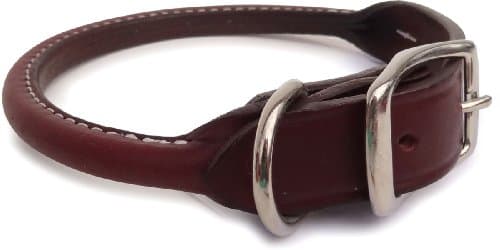
If you want leather regardless — and for a dog that mostly walks on a lead and swims occasionally, that is a perfectly defensible choice — buy it from a company whose business is field gear. The Mendota hunt collar is made in the USA, uses a traditional buckle-and-tongue closure with no plastic to crack in the cold, and has the hardware proportions of a working product rather than a fashion one. Keep a second collar so the leather one can dry properly between swims, and accept that the grade, the hardware material and the warranty terms are all unpublished.
The car: the one place this breed’s weight is a lucky number
We write a lot on this site about how crash certification runs out before big dogs do. A Labrador is the pleasant exception, and it is worth stating precisely because it so rarely works out this well.
The entire list of harnesses that have ever passed independent Center for Pet Safety crash certification has three products on it. The Sleepypod Clickit Sportis one of them — a 5-star result under protocol CPS-001-014.01 — and CPS publishes explicit per-size weight ratings for it rather than one blanket claim: the small is rated to 25 lb, the medium 45–90 lb, the large 75–90 lb and the XL to 90 lb. An adult Labrador at 55 to 80 lb lands in the middle of a certified size rather than past the top of the chart.
Compare that with the page we published alongside this one for the other end of the scale: for a Great Dane there is no certified restraint of any kind at any weight, because certification stops at 110 lb. The Labrador owner has something most large-breed owners do not, which is an actual certified option. Use it.
Three caveats before you buy, all of them real:
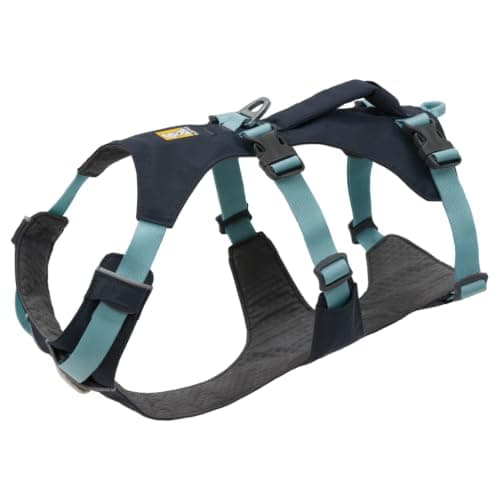
- Fit is part of the certification. A badly fitted certified harness is not a certified harness. It takes genuine care and the three-point design means the vehicle seat belt passes through the harness rather than clipping to a ring.
- The naming is confusing and you should check it.CPS certified the “Clickit Sport”; Amazon currently lists the “Clickit Sport Plus.” If certification is the reason you are buying, read the CPS listing before you order.
- The ceiling is 90 lb. A heavy or overweight Lab can clear it, and the answer there is the Clickit Range, which CPS certifies to 110 lb.
What the certified field actually looks like, and what the testing involves, is on the crash-tested harnesses roundup and CPS crash testing explained. If you would rather crate the dog than harness it, the trade is set out on dog car harness against crate. And do not substitute the walking harness: it is a different product with a different job, for reasons we go through on car harness against walking harness.
The life jacket: not because the dog cannot swim
A retriever does not need a buoyancy aid to swim and nobody should sell you one on that basis. What a jacket actually buys you is four specific things, and three of them are about duration rather than ability: a dog that is tired, a dog in cold water, a dog in current or chop, and a dog that might go in off a boat when nobody is watching. Add a fifth if the dog is older or has any joint issue, which by eight or nine is most of them.
The Ruffwear Float Coat is the pick on published specification rather than on feel. Its shell is 800D ballistic polyester with DWR and PU coating — the heaviest shell fabric of any product in this hub by a distance, which matters on a dog getting in and out over rock and gunwales. It names its foam: layered EVA and PEin placed panels, where competitors write “flotation foam.” Its buckles are named ITW Nexus Airloc and its neck closure is telescoping and permanently attached rather than threaded, so it cannot be rethreaded wrong.
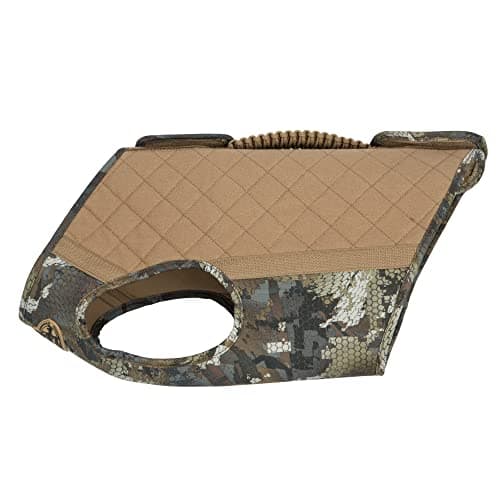
The honest gap is significant and we rank it anyway: Ruffwear publishes no buoyancy figure— not in pounds, not in newtons, not in anything. Nor is there a strength rating for the lifting handle, on a jacket whose handle exists specifically to lift a wet dog out of water. That is the state of the whole category, not a Ruffwear failing, and it is the central complaint of the life jackets roundup. If you are weighing a full jacket against a lighter flotation aid, life jacket against flotation vest is the comparison; and if the dog is working water rather than swimming for fun, a neoprene vest is a different product solving a cold problem, ranked on the hunting dog vests.
Heat: the problem a water dog has on land
The cooling-vest query for this breed is real and the answer needs a caveat attached, so here is both. The Ruffwear Swamp Cooleris the cooling vest we would buy, and the reason is disclosure: it is the only one whose maker publishes the entire layer stack — a polyester air mesh outer, a polyester felt reservoir that holds the water, and a dry-weave polyester mesh lining. Hardware is named (ITW Nexus Waveloc buckles, a YKK Vislon zipper) and the shell carries a published UPF 50+ rating, so a light-colored vest is reflecting solar load as well as evaporating water.
The caveat is physics rather than a defect, and no packaging anywhere states it: an evaporative vest loses most of its effect in high humidity. Evaporation is the mechanism, and when the air is already near saturation there is nowhere for the water to go. In a dry heat it works; in a humid August afternoon it is close to decorative, and a soaked vest on a dog in humidity can be worse than nothing. Ruffwear publishes no figure at all for how much it cools a dog, which is the honest state of the category.
We argue the whole question — including when the right answer is shade, water and a different time of day rather than a purchase — on are dog cooling vests worth it, and the ranked field is on the cooling vests roundup. Carry the water, too: the packable bowls are on the collapsible bowls and bottles.
What we are deliberately not picking here
Three more things get searched for this breed and each belongs on a page that already answers it properly rather than in a paragraph here.
- The pulling harness. A young Lab pulls, and the honest position is that a front attachment changes the mechanics of pulling without training the dog out of it. The field is ranked on the no-pull harness roundup, the evidence question is on do harnesses help with pulling, and because an adult Lab sits in the middle of the size range, the sizing argument that applies to it is on harnesses for medium dogs.
- The raised bowl. There is a published finding here and it points away from elevation for large deep-chested dogs, which is this breed. We set the study out, including what it does and does not establish, on should you use a raised dog bowl. Bloat is a veterinary conversation, not a bowl review.
- Indestructible toys. A retriever is a carrier rather than a dedicated destroyer, but a bored Lab will take a plush toy apart in an afternoon. The toys with actual guarantees behind them are on the indestructible toys roundup.
What to look for, in order
- Pick the material for wet first. Coated webbing or stainless over leather and plated zinc, for anything the dog wears daily.
- Buy the certified car restraint while you can. This is the size band where one exists; check the per-size rating and the exact model name.
- Buy the life jacket for duration, cold and boats, not for swimming ability — and expect no buoyancy figure from anyone.
- Treat the cooling vest as a dry-heat tool. In humidity, change the plan rather than the kit.
- Require named hardware.On a dog that swims, “metal buckle” is not a specification and plated zinc is the default.
- Own two collars. One wet, one drying. This is the cheapest useful thing on the page.
Quick picks
The short answer, ranked and scored against our published durability rubric. Where a manufacturer does not publish a spec, we say so rather than estimating it.
| # | Photo | Product | Durability | Price |
|---|---|---|---|---|
| 1 | 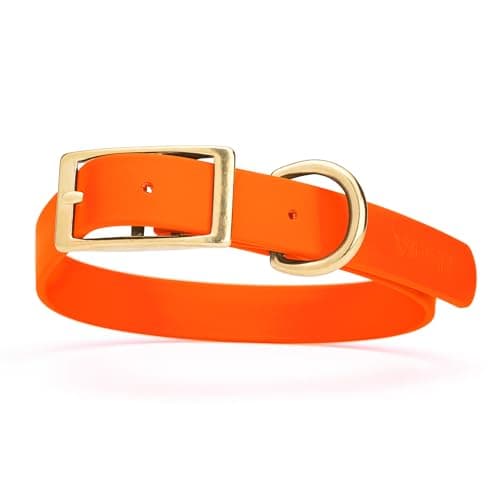 | Viper BioThane Waterproof CollarA dog that swims, rolls, and stinks up a nylon collar | 72/100 | $24.99 · Amazon |
| 2 | 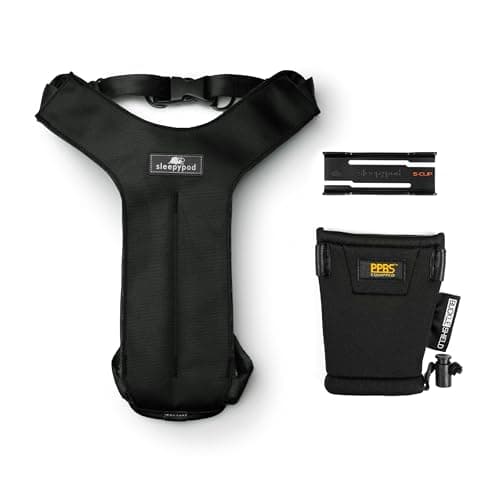 | Sleepypod Clickit Sport PlusThe best-certified car harness you can actually buy on Amazon | 87/100 | $109.24 · Amazon |
| 3 | 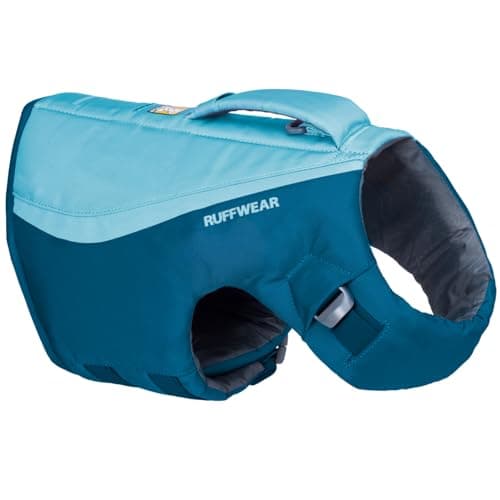 | Ruffwear Float CoatThe best-specified life jacket — 800D shell and layered EVA/PE foam | 85/100 | $99.99 · Amazon |
| 4 | 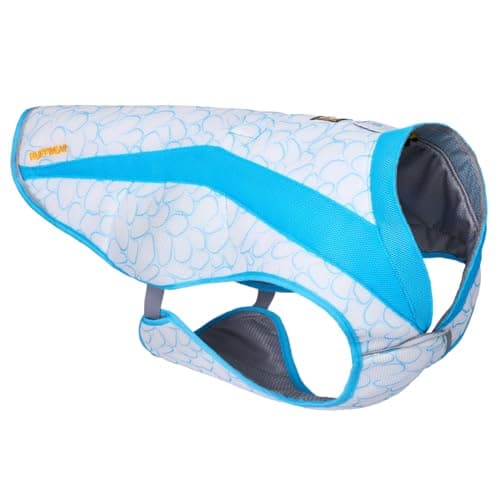 | Ruffwear Swamp Cooler VestThe only cooling vest here that publishes its whole layer stack | 79/100 | $74.99 · Amazon |
| 5 | 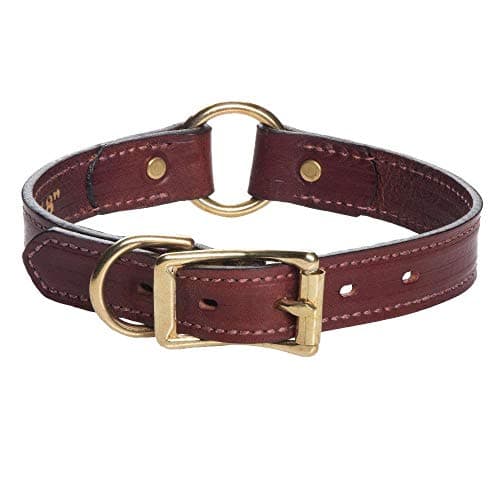 | Mendota Pet Leather Dog CollarA working leather collar from a field-gear maker | 67/100 | $44.49 · Amazon |
Tap any row to jump to the full review. Prices are pulled live from Amazon as of October 20, 2026; where we have no verified live price we show none rather than a stale number. #ad — how our links work.
The picks, ranked
1. Viper BioThane Waterproof Collar
Durability score 72/100Best for: A dog that swims, rolls, and stinks up a nylon collar
The right collar for a dog that lives in water and filth — just understand that the 1,000 lb number belongs to the strap, not to the buckle holding it shut.
- Material
- Coated webbing: polyester core with a TPU or PVC coating
- Core break strength
- BioThane Beta 520 PET, 1 in standard: 1,000 lb (material maker's published figure)
- Buckle pull strength
- 200 lb on the same material spec — the hardware, not the strap, is the limit
- Cleaning
- Soap and water; disinfects with 10% bleach solution
Pros
- Genuinely waterproof and, per BioThane's own FAQ, stinkproof — the reason working and hunting owners buy it
- The polyester core carries a published 1,000 lb break strength in the standard 1 in profile
- Wipes clean; no absorbed mud, lake water or dead-thing smell
- Stays flexible in cold weather
Cons
- The coating adds no strength at all — BioThane says plainly that the tensile strength comes from the polyester webbing inside
- The material spec puts buckle pull strength at 200 lb, five times lower than the webbing. The buckle is the failure point, and Viper does not publish theirs
- Stiffer than nylon and it can feel slick
How we assessed it: on published materials, hardware specs and construction — not long-term chew-tested. We say so because it is true, and because a claim we cannot back is worth nothing to you.
#ad Price as of October 20, 2026; Amazon prices change often, so check before you buy. How our links work.
2. Sleepypod Clickit Sport Plus
Durability score 87/100Best for: The best-certified car harness you can actually buy on Amazon
The car harness to buy for a dog under 90 lb: it is one of a mere three that have ever passed independent crash certification.
- CPS certification
- Clickit Sport: 5-star, protocol CPS-001-014.01 (tested July 2014)
- Per-size ratings
- S rated to 25 lb · M rated 45–90 lb · L rated 75–90 lb · XL rated to 90 lb
- Ceiling
- 90 lb. For a heavier dog, CPS certifies the Clickit Range at 110 lb
- Design
- Three-point restraint; the vehicle seat belt passes through the harness
Pros
- Sleepypod is one of only three brands with ANY CPS-certified harness — the entire certified list is three products
- CPS publishes explicit per-size weight ratings for it rather than one blanket claim
- The three-point design keeps the dog on the seat rather than tethering it by the neck
Cons
- Rated to 90 lb — a bigger dog needs the Clickit Range instead
- Expensive, and it takes real care to fit correctly. A badly fitted certified harness is not a certified harness
- CPS certified the 'Clickit Sport'; Amazon currently lists the 'Clickit Sport Plus'. Check the CPS listing before you buy if certification is the reason you are buying
How we assessed it: on published materials, hardware specs and construction — not long-term chew-tested. We say so because it is true, and because a claim we cannot back is worth nothing to you.
#ad Price as of October 20, 2026; Amazon prices change often, so check before you buy. How our links work.
3. Ruffwear Float Coat
Durability score 85/100Best for: The best-specified life jacket — 800D shell and layered EVA/PE foam
The most thoroughly specified life jacket you can buy, and it still will not tell you how much flotation you are getting.
- Shell
- 800D ballistic polyester with DWR and PU coating
- Flotation
- Layered EVA and PE foams, in strategically placed panels
- Buckles
- ITW Nexus Airloc side-release
- Neck closure
- Telescoping, permanently attached
- Handle
- Low-profile lifting handle; no strength rating published
- Sizes
- XXS–XL, 13–42 in girth
- Buoyancy figure
- Not published
Pros
- 800D ballistic polyester is the heaviest shell fabric of any product in this hub, by a distance
- Publishes the foam types by name — layered EVA and PE — where competitors say 'flotation foam'
- Named ITW Nexus Airloc buckles and a telescoping neck closure that is permanently attached rather than threaded
- Foam panels placed to support a natural swimming position rather than simply floating the dog
Cons
- Ruffwear publishes no buoyancy figure — not in pounds, newtons or anything else
- No strength rating for the lifting handle, on a jacket whose handle exists to lift a wet dog out of water
- The most expensive jacket in this roundup
- Chewing is excluded from Ruffwear's warranty
How we assessed it: on published materials, hardware specs and construction — not long-term chew-tested. We say so because it is true, and because a claim we cannot back is worth nothing to you.
#ad Price as of October 20, 2026; Amazon prices change often, so check before you buy. How our links work.
4. Ruffwear Swamp Cooler Vest
Durability score 79/100Best for: The only cooling vest here that publishes its whole layer stack
The best-documented cooling vest on the market — three named layers, named hardware and a published UPF figure — and still no manufacturer anywhere will tell you how many degrees it removes.
- Outer layer
- Polyester air mesh (bluesign approved)
- Middle layer
- Polyester felt — the water reservoir
- Lining
- Dry-weave polyester mesh (bluesign approved)
- Buckles
- ITW Nexus Waveloc side-release
- Zipper
- YKK Vislon
- Sun protection
- UPF 50+
- Sizes
- XXS–XL, 13–42 in girth
- Cooling performance figure
- Not published
Pros
- Publishes all three fabric layers by name — outer air mesh, polyester felt reservoir, dry-weave lining — which no other vest here does
- Named hardware: ITW Nexus Waveloc buckles and a YKK Vislon zipper, not unspecified plastic
- Light-colored shell with a published UPF 50+ rating, so it is reflecting solar load as well as evaporating
- Highest coverage in Ruffwear's cooling range, and the six-size run goes from 13 in to 42 in girth
Cons
- Ruffwear publishes no weight for it, and no figure at all for how much it actually cools a dog
- Like every evaporative vest, it loses most of its effect in high humidity — that is physics, not a defect, but nobody says it on the packaging
- Needs re-soaking whenever it dries out, with no signal that it has
- The most expensive vest in this roundup by a clear margin
How we assessed it: on published materials, hardware specs and construction — not long-term chew-tested. We say so because it is true, and because a claim we cannot back is worth nothing to you.
#ad Price as of October 20, 2026; Amazon prices change often, so check before you buy. How our links work.
5. Mendota Pet Leather Dog Collar
Durability score 67/100Best for: A working leather collar from a field-gear maker
A proper working collar from a proper working brand — and the grade of leather, which decides everything, is the thing nobody will state.
- Material
- Leather; grade not published on the listing
- Origin
- Made in the USA per Mendota
- Hardware
- Buckle and D-ring; material not published
- Warranty
- Not published in detail
Pros
- From a maker whose business is field and gundog gear rather than fashion, which shows in the hardware proportions
- Made in the USA, which Mendota states plainly
- Traditional buckle-and-tongue closure — no plastic to crack in cold
Cons
- The listing does not state the leather grade, which is the single specification that determines how long a leather collar lasts
- Hardware material not published
- No published warranty terms
How we assessed it: on published materials, hardware specs and construction — not long-term chew-tested. We say so because it is true, and because a claim we cannot back is worth nothing to you.
#ad Price as of October 20, 2026; Amazon prices change often, so check before you buy. How our links work.
The part that actually fails: the hardware
Across every category on this page, on a dog that swims, the component that gives out first is not the fabric. It is the buckle, the ring and the stitching around them. That is why we keep returning to whether a maker will nameits hardware: ITW Nexus Airloc and Waveloc buckles on the Ruffwear products, YKK on the zipper, stainless rather than plated zinc on the better collars and harnesses. A named component is one you can look up and hold the brand to. “Metal buckle” is a sentence in a listing.
Salt water accelerates all of it. If you swim the dog in the sea, rinse the hardware in fresh water afterwards — the same thing you would do to a fishing reel, for the same reason. And read the warranties knowing what they all exclude: Ruffwear covers defects in materials and craftsmanship, states no duration, and excludes chewing, normal wear and alterations. Corrosion from use is wear. Nobody covers it.
The bottom line
For a Labrador, buy the material that does not care about water: a BioThane collar with stainless-grade hardware for every day, a certified Clickit Sport for the car while your dog’s weight still sits inside a published rating, an 800D Float Coat for long or cold water, and a Swamp Cooler for dry heat with the humidity caveat understood. Buy the Mendota leather if you want leather, with a second collar so it can dry, and knowing the grade is unpublished. That is four purchases and one indulgence, and between them they cover the parts of this breed’s life that actually destroy gear. If your dog hunts or works water seriously rather than swimming recreationally, the next page to read is the hunting dog vests, where cold water rather than buoyancy is the problem being solved.
Frequently asked questions
What is the best collar for a Labrador?
A coated-webbing collar rather than the leather one most people search for. The Viper BioThane collar is a polyester core under a TPU or PVC coating: it does not absorb lake water, mud or smell, it washes with soap and water and disinfects with a 10% bleach solution, and it stays flexible in the cold. BioThane publishes a 1,000 lb break strength for Beta 520 PET in the standard 1 in profile. Two honest caveats: BioThane says the strength lives in the polyester core and the coating adds nothing structural, and the same material spec puts buckle pull strength at 200 lb - so the hardware is the real limit, and Viper does not publish a figure for theirs.
Is a leather collar a bad idea for a Labrador?
It is the wrong default for a dog that swims, for a reason you can check rather than a matter of taste. The specification that decides how long a leather collar lasts is the grade and tannage of the leather, and essentially nobody in the dog market publishes it - Mendota does not state a grade on the listing and neither do most competitors. So you are buying the deciding property on faith, then putting it through repeated soaking and drying, which is the worst duty cycle leather has. If you want leather anyway, buy it from a field-gear maker, keep a second collar so it can dry properly between swims, and accept that the grade, the hardware material and the warranty terms are unpublished.
What car harness is crash tested for a Labrador?
The Sleepypod Clickit Sport, and this breed is unusually well served. Only three harnesses have ever passed independent Center for Pet Safety crash certification, and the Clickit Sport is one of them with a 5-star result under protocol CPS-001-014.01. CPS publishes per-size weight ratings rather than one blanket claim: the small is rated to 25 lb, the medium 45-90 lb, the large 75-90 lb and the XL to 90 lb, so an adult Lab at 55-80 lb sits inside a certified size instead of past the top of the chart. Check two things before ordering - that the fit is correct, because a badly fitted certified harness is not a certified harness, and the exact model name, since CPS certified the Clickit Sport while Amazon currently lists the Clickit Sport Plus.
Does a Labrador need a life jacket?
Not to swim, and nobody should sell you one on that basis. A jacket buys four specific things, three of which are about duration rather than ability: a tired dog, cold water, current or chop, and a dog that might go in off a boat unobserved. Add a fifth for an older dog or one with any joint issue. The Ruffwear Float Coat is the best-specified option - an 800D ballistic polyester shell, named layered EVA and PE foam panels, ITW Nexus Airloc buckles and a permanently attached telescoping neck closure. The real gap, and it is category-wide, is that Ruffwear publishes no buoyancy figure at all and no strength rating for the lifting handle.
Do cooling vests work on Labradors?
In dry heat, yes; in humidity, barely - and that is physics rather than a product defect. An evaporative vest works by evaporating water, so when the air is already near saturation there is nowhere for the water to go, and a soaked vest on a dog in high humidity can be worse than nothing. The Ruffwear Swamp Cooler is the one we would buy because it is the only vest whose maker publishes the whole layer stack - polyester air mesh outer, polyester felt reservoir, dry-weave lining - with named hardware and a published UPF 50+ rating, so it reflects solar load as well as evaporating. No maker in the category publishes any figure for how much a vest actually cools a dog.
Should a Labrador eat from a raised bowl?
There is a published finding that points the other way for large deep-chested dogs, which is this breed, and it belongs in a conversation with your vet rather than in a purchase. We set the study out in full - what it establishes, what it does not, and the genuine medical cases where elevation is still right - on our raised dog bowl page. The short version is that the elevated-feeder category markets a health benefit it has never demonstrated, against published work pointing the other way, and bloat is rapidly fatal.
What size gear does a Labrador take?
An adult Labrador is usually 55 to 80 lb with a chest girth in the high twenties to mid thirties of inches, which puts it comfortably inside almost every published size run rather than at either edge - unlike a small dog fighting a 13 in minimum or a giant breed past a 42 in ceiling. Measure the chest girth behind the front legs and read the chart on the exact listing. The practical consequence is that sizing rules nothing out for this breed, so the decision falls entirely to the spec sheet, which is the same argument we make for the middle of the size range generally.
What fails first on gear for a dog that swims?
The hardware, not the fabric. Across collars, harnesses and vests, the components that give out on a swimming dog are the buckle, the ring and the stitching around them - and plated zinc is the cheap default across the category while stainless is not. That is why we keep insisting a maker name its hardware: ITW Nexus Airloc and Waveloc buckles, YKK zippers, stainless rather than plated. Salt water accelerates all of it, so rinse the hardware in fresh water after a sea swim, the same way you would a fishing reel. And note that no warranty here helps: corrosion from use is wear, and wear is excluded everywhere.
Sources
Every spec on this page traces to one of these. Where a manufacturer does not publish a figure, we say “not published” rather than estimating it.
- BioThane — Beta 520 PET material data: the 1,000 lb break strength for standard 1 in webbing, the 200 lb buckle pull strength, and the statement that tensile strength comes from the polyester core rather than the coating
- Center for Pet Safety — Sleepypod Clickit Sport certification: 5-star result under protocol CPS-001-014.01, and the published per-size weight ratings including M at 45-90 lb
- Center for Pet Safety — certified products list: the three certified harnesses and their published weight ceilings
- Ruffwear — Float Coat product page: the 800D ballistic polyester shell, the layered EVA and PE foam panels, ITW Nexus Airloc buckles, the telescoping neck closure and the 13-42 in girth run
- Ruffwear — Swamp Cooler product page: the three named layers (polyester air mesh outer, polyester felt reservoir, dry-weave lining), ITW Nexus Waveloc buckles, YKK Vislon zipper and the UPF 50+ rating
- Mendota Pet — maker site for the leather hunt collar, including the made-in-the-USA claim
- Ruffwear — warranty terms: defects in materials and craftsmanship; chewing, normal wear and alterations excluded