The Best Dog Harnesses for Small Dogs
The hard part is not strength — a 12 lb dog is not out-pulling anything. It is that a small dog's proportions punish a design drawn for a Labrador, and most of this category is a scaled-down Labrador harness.
Buy the Ruffwear Front Range. It is the best-documented harness in this size band — a 300D recycled polyester ripstop shell, named ITW Nexus Airloc buckles, an anodized 6061-T6 aluminum V-ring — and Ruffwear publishes girth-based sizing from 13 in, which is a genuinely small dog.
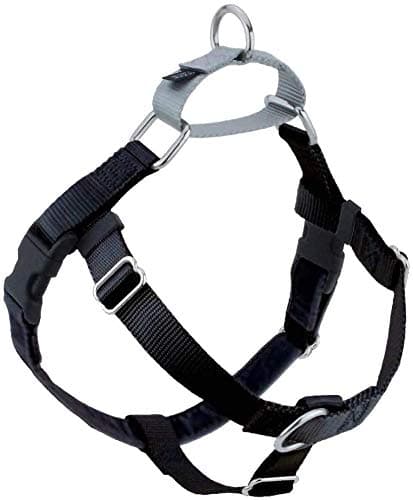
Buy the 2 Hounds Design Freedom if your dog backs out of things. It starts at a 5/8 in XS sized 14–20 in, uses stainless hardware, and 2 Hounds publishes a 3,800 lb test strength for its webbing — the only published webbing figure anywhere in this roundup.
A small dog is not a small version of a big dog
The engineering problem changes below about 25 lb, and it changes in ways strength has nothing to do with:
- The neck-to-head ratio inverts. Plenty of small breeds have a head no wider than the neck, and some — sighthounds and many terriers — have a head that is narrower. A harness that a Labrador cannot possibly reverse out of is trivially escapable on a whippet.
- There is nowhere to put the straps. The distance between the point of shoulder and the last rib on a 12 lb dog is a few inches. Every strap is close to a joint or a rub point, which is why adjustment points matter more here than on any other size of dog.
- Hardware weight is now a real fraction of the load. A steel buckle set sized for a 70 lb dog is a meaningful percentage of a 10 lb dog’s body weight. On small dogs, over-built is a design failure, not a virtue.
- Coats are thinner. Fine-coated and short-coated small breeds have very little between webbing and skin, so edge finishing and padding do more work than fabric weight does.
The tracheal argument, handled honestly
The standard reason given for putting a small dog in a harness is tracheal collapse — a real and well-documented condition in small breeds, particularly toy breeds. It is the usual advice, and we are not going to tell you to ignore your vet.
We will tell you the literature is less settled than the internet is. Ridgway’s 2026 review in Frontiers in Veterinary Science examined the claimed physical risks of dog-worn equipment and reported that claims of collar-related injury to the thyroid, trachea, jugular veins or carotid arteries from routine leash pulling are “not supported in the literature” — while separately reporting that every harness type studied altered gait and restricted thoracic excursion.
The practical position that survives both findings: if your dog has a diagnosed airway condition, follow your vet. If it does not, choose on control and fit rather than on a mechanism neither side has established. And in either case, do not leave any harness on all day.
Escape is the actual failure mode
Ask small-dog owners what has gone wrong with a harness and you will hear one story overwhelmingly: the dog backed out of it. Usually at the worst possible moment — a vet parking lot, a firework, a stranger’s dog.
Three things reduce it, in order of how much they help:
- A third strap or a tightening loop. A martingale-style loop across the back (which is what the Freedom uses) or a third girth strap behind the ribs closes the gap a reversing dog needs.
- Adjustment points. Two-point harnesses fit a size band. Five or six points fit your dog, and a harness that actually fits is much harder to reverse out of.
- Checking it every time. Webbing creeps through adjusters. A harness set correctly in March is loose by June.
Our full treatment of the escape problem, including the harness shapes that solve it, is in the best escape-proof harnesses.
One group of small dogs is a different problem entirely, because girth and body length belong to two different size brackets: the best dog harnesses for dachshunds ranks on adjustment points rather than on girth alone.
Quick picks
The short answer, ranked and scored against our published durability rubric. Where a manufacturer does not publish a spec, we say so rather than estimating it.
| # | Photo | Product | Durability | Price |
|---|---|---|---|---|
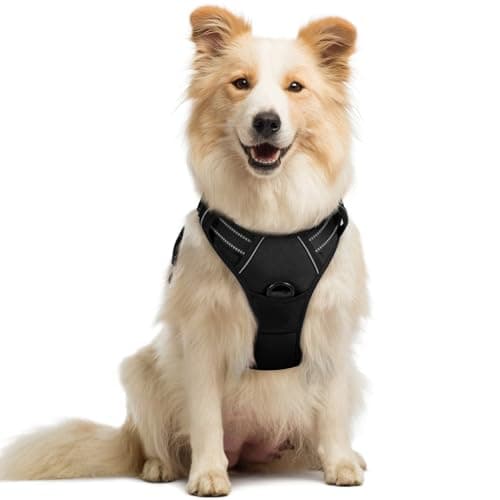
| 1 | 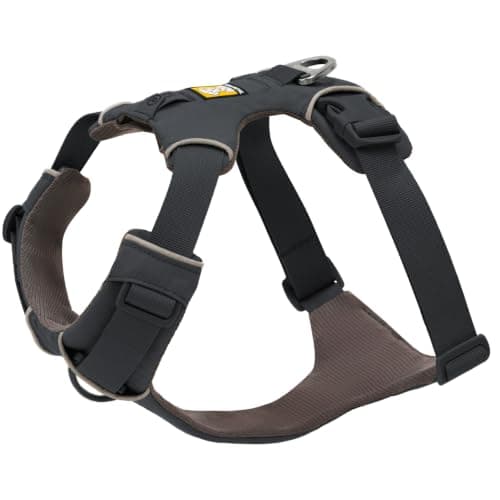 | Ruffwear Front Range HarnessThe everyday harness for a dog that does not pull hard | 77/100 | $59.99 · Amazon |
| 2 | 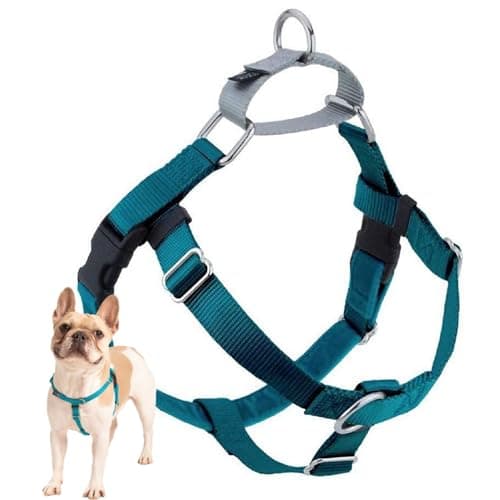 | 2 Hounds Design Freedom No-Pull HarnessA hard puller, if you buy the chew coverage with it | 82/100 | $34.98 · Amazon |
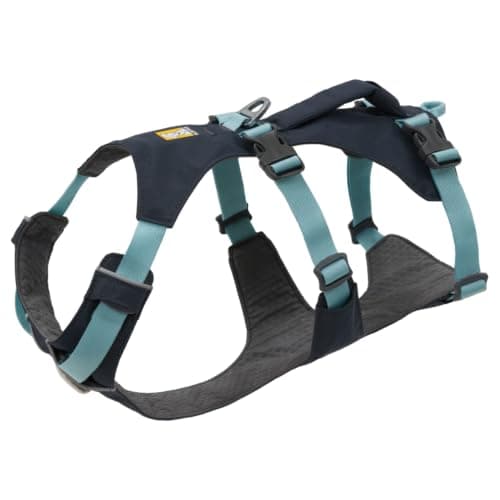
| 3 | 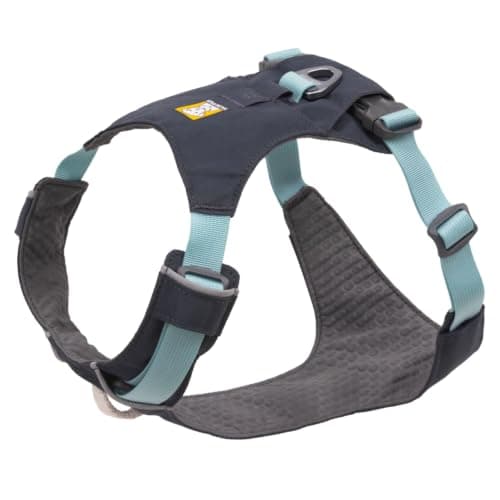 | Ruffwear Hi & Light HarnessA minimal harness for a small dog that objects to bulk | 62/100 | $49.99 · Amazon |
| 4 | 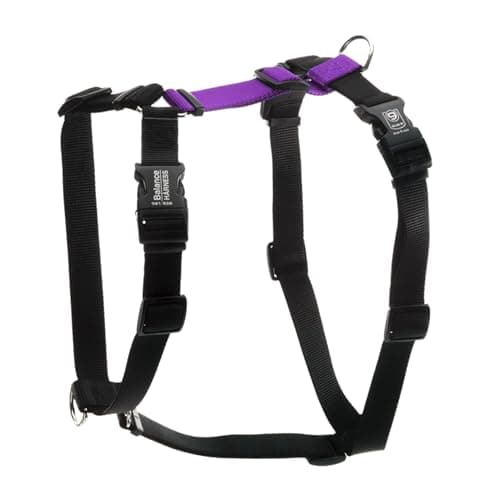 | Blue-9 Balance HarnessFit — if you can live with a brand that publishes almost nothing | 60/100 | $45.95 · Amazon |
| 5 | 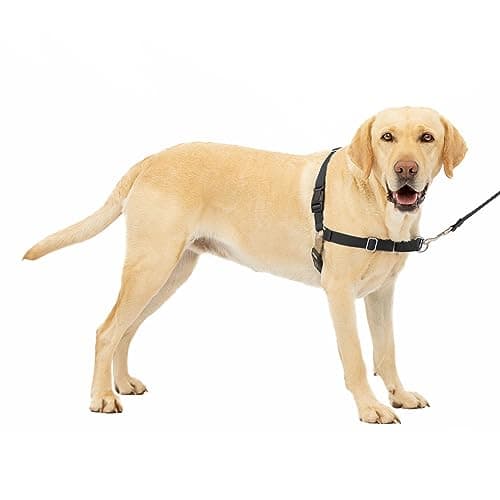 | PetSafe Easy Walk HarnessThe cheapest way to stop a dog pulling on a walk | 42/100 | $22.99 · Amazon |
Tap any row to jump to the full review. Prices are pulled live from Amazon as of October 18, 2026; where we have no verified live price we show none rather than a stale number. #ad — how our links work.
The picks, ranked
1. Ruffwear Front Range Harness
Durability score 77/100Best for: The everyday harness for a dog that does not pull hard
The best-specified everyday harness here, and the rare case where the cheaper Ruffwear has the heavier fabric.
- Shell
- 300D polyester ripstop (100% recycled), PU coating + non-fluorinated DWR
- Padding
- PE foam
- Webbing
- Polyester (30% recycled)
- Buckles
- ITW Nexus Airloc side-release
- Rear attachment
- Anodized 6061-T6 aluminum V-ring
- Front attachment
- Nylon webbing in a TPU tube
- Sizes
- XXS–L/XL, 13–42 in girth
- Load rating
- Not published
Pros
- 300D recycled ripstop is a genuinely heavier shell than the Web Master's 150D, for less money
- Named, specified hardware — ITW Nexus Airloc buckles, anodized aluminum V-ring
- Two leash points, four points of adjustment
- Polyester webbing resists abrasion better than polypropylene
Cons
- No published load rating — a real gap for a premium brand
- Ruffwear's warranty states no duration at all and explicitly excludes chewing damage
- Hand wash, mild detergent, air dry
How we assessed it: on published materials, hardware specs and construction — not long-term chew-tested. We say so because it is true, and because a claim we cannot back is worth nothing to you.
#ad Price as of October 18, 2026; Amazon prices change often, so check before you buy. How our links work.
2. 2 Hounds Design Freedom No-Pull Harness
Durability score 82/100Best for: A hard puller, if you buy the chew coverage with it
The strongest published webbing in the category paired with stainless hardware — but budget for the paid chewing warranty if your dog is a chewer.
- Webbing
- 3,800 lb test strength (manufacturer's own claim)
- Lining
- Swiss velvet
- Hardware
- Stainless steel
- Control
- Martingale tightening loop on the back
- Sizes
- 5/8 in XS (14–20 in) to 1 in XXL (36–44 in)
- Made in
- North Carolina, globally sourced materials
Pros
- The 3,800 lb webbing figure is the highest published rating we found on any harness in this category
- Stainless steel hardware — rust-resistant and washable, unlike plated zinc
- The martingale loop tightens the chest strap rather than choking the neck
- Made in the USA, which is rare at this price
Cons
- The 3,800 lb figure is 2 Hounds' own claim, not third-party verified — treat it as a manufacturer's number
- Base warranty explicitly excludes chewed webbing and buckles; chew coverage is a separate paid add-on
- Velvet lining is comfortable but holds dirt and dries slowly
How we assessed it: on published materials, hardware specs and construction — not long-term chew-tested. We say so because it is true, and because a claim we cannot back is worth nothing to you.
#ad Price as of October 18, 2026; Amazon prices change often, so check before you buy. How our links work.
3. Ruffwear Hi & Light Harness
Durability score 62/100Best for: A minimal harness for a small dog that objects to bulk
The lightweight option, and honest about being one. Do not ask it to do the Flagline's job.
- Construction
- Minimalist webbing-led build
- Reflectivity
- Reflective trim
- Weight
- Lightest harness in Ruffwear's line
- Adjustment
- Published by Ruffwear per size
- Load rating
- Not published
Pros
- Genuinely minimal — the right answer for a small dog where a structured harness is more garment than the dog needs
- Reflective trim as standard
- Packs down to nothing, which makes it a good travel spare
Cons
- Minimal construction means less escape resistance than a three-strap design — this is not the harness for a determined reverser
- No load rating published
- Little padding, so it is not the harness for a dog that pulls hard
How we assessed it: on published materials, hardware specs and construction — not long-term chew-tested. We say so because it is true, and because a claim we cannot back is worth nothing to you.
#ad Price as of October 18, 2026; Amazon prices change often, so check before you buy. How our links work.
4. Blue-9 Balance Harness
Durability score 60/100Best for: Fit — if you can live with a brand that publishes almost nothing
The best-fitting harness here and the worst-documented — a real problem when durability is the thing you are buying.
- Material
- Washable soft-touch nylon
- Adjustment
- Six points
- Attachment
- Front and back rings
- Buckle material
- Not published
- Ring type (welded or split)
- Not published
- Load rating
- Not published
Pros
- Six points of adjustment — the most in this roundup, and the reason trainers reach for it
- Front and back attachment on every size
- Genuinely washable
Cons
- Blue-9 is the thinnest-specified brand we looked at: no buckle material, no ring type, no load rating anywhere on its product page
- Chewing is not covered by default — Blue-9 sells a $4 one-year chew warranty as an add-on
- You cannot substantiate a single durability claim about this harness from the manufacturer's own site
How we assessed it: on published materials, hardware specs and construction — not long-term chew-tested. We say so because it is true, and because a claim we cannot back is worth nothing to you.
#ad Price as of October 18, 2026; Amazon prices change often, so check before you buy. How our links work.
5. PetSafe Easy Walk Harness
Durability score 42/100Best for: The cheapest way to stop a dog pulling on a walk
It solves pulling cheaply, and that is all it does — do not mistake it for durable gear.
- Design
- Front-clip, martingale chest strap (Amazon listing)
- Materials
- Not published
- Hardware
- Not published
- Load rating
- Not published
Pros
- The front-clip design genuinely redirects a pulling dog, and it is the cheapest way to get that
- Very widely available
Cons
- PetSafe publishes no materials, hardware or load specification we could verify
- Plastic buckles throughout — this is not a harness built to survive a determined chewer
- The chest strap can rub in the armpit on a dog that pulls constantly
How we assessed it: on published materials, hardware specs and construction — not long-term chew-tested. We say so because it is true, and because a claim we cannot back is worth nothing to you.
#ad Price as of October 18, 2026; Amazon prices change often, so check before you buy. How our links work.
Small dogs pull too, and the physics is the same
A 15 lb dog will not dislocate your shoulder, but the mechanics of where you attach the leash do not care about the dog’s weight. Shih et al. (2021) measured leash tension across equipment in 52 dogs and found the highest maximum tension on a back-connection harness — 16.87 N against 6.97 N on a collar — because a strap across the shoulders gives a dog something to lean into.
So if your small dog pulls, a back-clip harness will not fix it and may make it worse. Use the front ring. Both the Front Range and the Freedom have one; the Easy Walk is front-only, which is the entire reason it exists.
What a small-dog harness should weigh
This is the spec nobody lists and it matters more than fabric denier at this size. A harness that is 8% of a dog’s body weight is a load; the same harness on a 70 lb dog is nothing.
If your dog objects to being harnessed — freezes, flattens, tries to back out during fitting — bulk is the usual culprit rather than the concept. The Hi & Light exists for exactly that dog: it is the lightest harness in Ruffwear’s line and honest about what it gives up to be that. It is not doing the Front Range’s job and Ruffwear does not claim it is.
Never lift a small dog by the harness
Small dogs get picked up, and a top handle looks like an invitation. It is not one. Lifting a dog by a harness handle concentrates its whole weight on the girth strap and the chest, and no harness on this page publishes a rating for its handle — Ruffwear publishes no load rating anywhere in its line.
Lift a small dog with a hand under the chest and a hand under the hindquarters. If you routinely need to lift and support a dog, that is a different product entirely; see lifting and support harnesses.
Two small-dog maintenance notes
- Wash it more often than you think. A small dog’s harness sits inches from the ground and collects everything. Grit inside webbing is an abrasive.
- Watch the armpits weekly. There is very little tissue between strap and skin at this size, and a rub goes from bald to raw quickly. The general replacement and inspection routine is in when to replace a harness.
If you also own a dog at the other end of the scale
The problem inverts rather than disappearing. At the small end the constraint is proportion — a design drawn for a Labrador does not sit right on a 12 lb dog. At the large end the constraint is that the chart simply stops: Ruffwear’s largest size in any line is 42 in girth, which is short of a broad giant breed. The best harnesses for large dogs works through where each maker’s sizing actually ends and what is left above it.
At the small end, the budget option is a more defensible buy than it is anywhere else, because the loads are lower and a growing or awkwardly shaped dog needs adjustment points more than it needs a documented spec sheet. Where that reasoning holds and where it stops is in our Rabbitgoo no-pull harness review.
Frequently asked questions
What is the best harness for a small dog?
The Ruffwear Front Range is the best-documented option in the size band — a 300D recycled polyester ripstop shell, named ITW Nexus Airloc buckles, an anodized 6061-T6 aluminum V-ring, and published girth-based sizing from 13 in. If your dog backs out of harnesses, the 2 Hounds Design Freedom is the better answer: a 5/8 in XS fitting 14–20 in, stainless hardware, a martingale tightening loop, and a published 3,800 lb webbing test figure that nothing else here matches.
Why does my small dog keep escaping from its harness?
Because on many small breeds the head is no wider than the neck — and on sighthounds and some terriers it is narrower — so a harness that a Labrador could never reverse out of is trivially escapable. Three fixes in order of effect: a third girth strap or a martingale tightening loop that closes the gap a reversing dog needs; more adjustment points, since five or six points fit your dog rather than a size band; and re-checking the fit every time, because webbing creeps through adjusters over weeks.
Is a harness safer than a collar for a small dog?
The usual reason given is tracheal collapse, which is a real and well-documented condition in toy breeds — if your dog has a diagnosed airway condition, follow your vet. The literature is less settled than the internet suggests: Ridgway's 2026 review reports that claims of collar injury to the thyroid, trachea or major vessels from routine leash pulling are not supported in the literature, while also reporting that all harness types studied alter gait and restrict thoracic excursion. Choose on fit and control, and take the harness off indoors either way.
Should a small dog's harness clip at the front or the back?
Front, if the dog pulls. The physics does not scale with weight: Shih et al. (2021) measured the highest maximum leash tension of anything tested on a back-connection harness, 16.87 N against 6.97 N on a collar, because a strap across the shoulders gives a dog something to lean into. A back clip is fine for a small dog that walks on a loose leash and wrong for one that does not.
Can I lift my small dog by its harness handle?
No. Lifting concentrates the dog's whole weight on the girth strap and chest, and no harness in this roundup publishes a rating for its handle — Ruffwear publishes no load rating anywhere in its line. Lift with a hand under the chest and a hand under the hindquarters instead. If you regularly need to lift and support a dog, that is a purpose-built lifting harness, which is a different product.
How heavy should a harness be for a small dog?
As light as it can be while still fitting properly — this is the spec nobody lists and it matters more than fabric weight at this size, because hardware sized for a 70 lb dog is a real fraction of a 10 lb dog's body weight. If your dog freezes, flattens or backs away during fitting, bulk is usually the reason rather than the harness concept. Ruffwear's Hi & Light exists for that dog and is honest that it gives up structure to be light.
Sources
Every spec on this page traces to one of these. Where a manufacturer does not publish a figure, we say “not published” rather than estimating it.
- Ruffwear — Front Range Harness specs and girth-based sizing (300D recycled polyester ripstop, ITW Nexus Airloc buckles)
- 2 Hounds Design — Freedom No-Pull Harness specs (3,800 lb test webbing, stainless hardware, made in North Carolina)
- Ruffwear — warranty terms (chewing excluded; no duration stated)
- Shih et al. (2021) — “Comparison of Leash Tension When Walking Dogs Using Different Collars and Harnesses”, Frontiers in Veterinary Science 8:735680
- Ridgway (2026) — “Health implications of dog-worn equipment: a review of known and alleged physical risks”, Frontiers in Veterinary Science 13:1711781
- Denier explained — ASTM D1907 skein method (grams per 9,000 meters)