The Best Slow Feeder Dog Bowls
The slow-down figures in this category are all manufacturer numbers. What is verifiable is the mechanism — and one design is genuinely harder to defeat than the rest.
Buy the Company of Animals Green Slow Feeder. Its upright plastic “grass blades” are the one mechanism in this category that a dog cannot simply bulldoze, because there is no continuous channel for a tongue to sweep along. It is also, by a distance, the easiest to clean.
Buy the Outward Hound Fun Feeder if you want the widest range of maze patterns and difficulty levels — which matters more than it sounds, because a dog that has solved one pattern eats fast again.
Nobody verifies the headline claim
Every product in this category carries some version of “slows eating by up to 10 times.” We went looking for the test behind any of those figures — a protocol, a sample, a control — and found none. They are manufacturer numbers with no stated method.
We are not saying slow feeders do not work; the mechanism is obvious and observable in your own kitchen in one meal. We are saying that the multiplier is not a specification, that it will vary enormously by dog, kibble size and pattern, and that ranking these products by whose marketing claims the biggest number would be meaningless.
So we ranked them on the mechanism and on how easily a dog defeats it.
Two mechanisms, and one is better
The maze
A molded bowl with raised ridges forming channels. Kibble falls between the ridges and the dog has to work along the channels rather than taking mouthfuls.
It works, and it has a defeat: a dog that learns to push its tongue along a channel gets a continuous run of kibble. Deep mazes resist that better than shallow ones, and rotating between two different patterns is a genuinely effective countermeasure — the dog has to re-learn each time.
The upright blades
The Green Slow Feeder uses vertical plastic blades standing off a flat base. There is no channel at all, so there is nothing for a tongue to sweep along — the dog has to pick kibble from between blades one area at a time.
It is harder to defeat, it works with wet food where most mazes do not, and its open, flat structure is dramatically easier to clean than a deep molded maze. The trade-offs are a larger floor footprint and blades that can be snapped off individually by a chewer.
Why slow the eating at all
Two reasons, and it is worth being clear about which applies.
Bloat risk. Rapid eating is among the risk factors associated with gastric dilatation-volvulus in deep-chested dogs — Glickman and colleagues examined non-dietary risk factors for GDV in large and giant breeds in JAVMA in 2000, and speed of eating features in that literature. This is a veterinary matter and we are reporting rather than advising: if your dog is a deep-chested large breed, the conversation belongs with your vet.
Enrichment. A meal that takes fifteen minutes rather than ninety seconds is fifteen minutes of the dog doing something. For a bored dog — and boredom is the driver behind a lot of the destruction we cover in this hub — that is a real, free improvement to the day.
One group of dogs cannot use the deeper mazes at all. The best dog bowls for flat-faced breeds explains why depth, not pattern complexity, is the specification that decides it for a French bulldog, a pug or a Boston terrier.
Quick picks
The short answer, ranked and scored against our published durability rubric. Where a manufacturer does not publish a spec, we say so rather than estimating it.
| # | Photo | Product | Durability | Price |
|---|---|---|---|---|
| 1 | 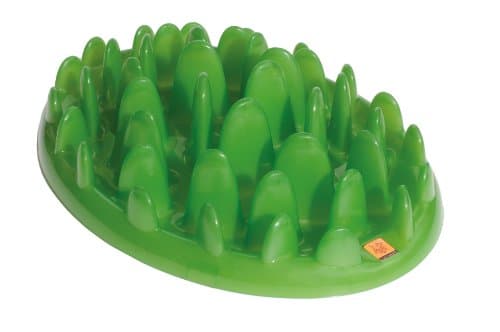 | Company of Animals Green Slow FeederThe grass-blade design that a bulldozer cannot simply push through | 55/100 | $32.50 · Amazon |
| 2 | 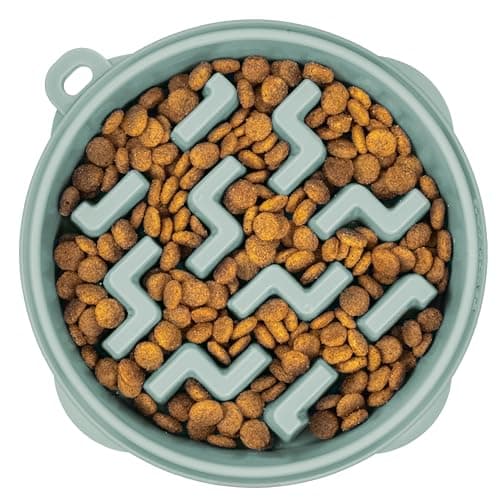 | Outward Hound Fun Feeder Slo BowlThe default slow feeder, in the widest range of maze patterns | 51/100 | $8.51 · Amazon |
| 3 | 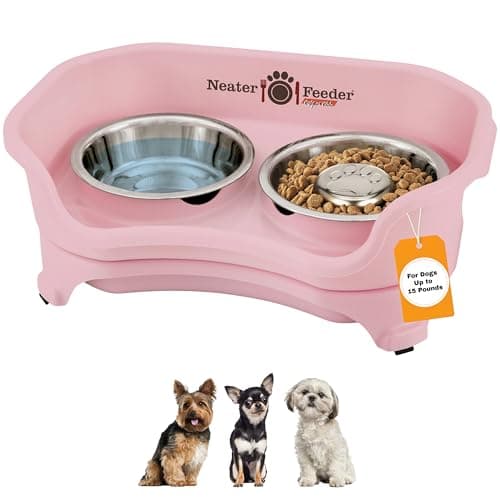 | Neater Pet Brands Neater Slow FeederA slow feeder that also contains the spill | 51/100 | $34.99 · Amazon |
| 4 | 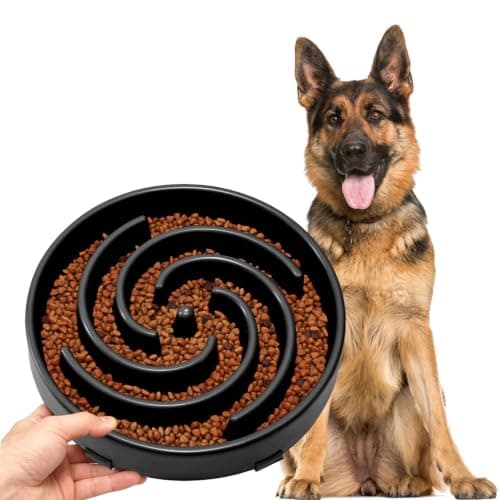 | JASGOOD Slow Feeder BowlThe cheapest way to find out whether a slow feeder helps your dog | 41/100 | $16.99 · Amazon |
Tap any row to jump to the full review. Prices are pulled live from Amazon as of October 18, 2026; where we have no verified live price we show none rather than a stale number. #ad — how our links work.
The picks, ranked
1. Company of Animals Green Slow Feeder
Durability score 55/100Best for: The grass-blade design that a bulldozer cannot simply push through
The better mechanism, and the easier one to clean. Buy this one if your dog has already learned to defeat a maze bowl.
- Design
- Upright plastic 'grass blades' rather than a molded maze
- Material
- Food-safe plastic
- Care
- Dishwasher safe
- Published slow-down figure
- Not published as an independently verified figure
Pros
- The vertical-blade design is genuinely harder to defeat than a maze — a dog cannot get its tongue under the whole meal at once
- Flat, open structure is far easier to clean than a deep maze
- Works with wet food as well as kibble, which most mazes do not
Cons
- Larger footprint on the floor than a bowl-shaped feeder
- Blades are individually snappable by a chewer
- Higher price than the maze bowls
How we assessed it: on published materials, hardware specs and construction — not long-term chew-tested. We say so because it is true, and because a claim we cannot back is worth nothing to you.
#ad Price as of October 18, 2026; Amazon prices change often, so check before you buy. How our links work.
2. Outward Hound Fun Feeder Slo Bowl
Durability score 51/100Best for: The default slow feeder, in the widest range of maze patterns
The category default for good reason. Rotate the pattern before your dog learns to bulldoze it.
- Material
- Food-safe plastic
- Patterns
- Several maze designs at different difficulty levels
- Base
- Non-slip ring
- Care
- Top-rack dishwasher safe
- Published slow-down figure
- Not published as an independently verified figure
Pros
- The widest range of maze patterns and difficulty levels, which matters because a dog that has solved one pattern eats fast again
- Non-slip base — essential, because a determined eater will otherwise push the bowl into a corner and tip it
- Cheap enough to own two patterns and rotate them
Cons
- Plastic ridges are a chewing target for a frustrated dog, and swallowed plastic is a worse problem than fast eating
- The slow-down claims across this whole category are manufacturer figures, not independently verified ones
- Deep mazes are genuinely hard to clean by hand
How we assessed it: on published materials, hardware specs and construction — not long-term chew-tested. We say so because it is true, and because a claim we cannot back is worth nothing to you.
#ad Price as of October 18, 2026; Amazon prices change often, so check before you buy. How our links work.
3. Neater Pet Brands Neater Slow Feeder
Durability score 51/100Best for: A slow feeder that also contains the spill
The right choice if your dog is both a gulper and a scatterer. Otherwise the extra parts are extra washing up.
- Design
- Maze insert with a spill-containing outer
- Material
- Food-safe plastic
- Care
- Dishwasher safe
- Published slow-down figure
- Not published as an independently verified figure
Pros
- Combines the maze with Neater's spill-containment approach, so scattered kibble stays on the tray
- Dishwasher safe
Cons
- More parts than a single molded bowl, and more parts is more cleaning
- No independently verified slow-down figure, like everything in this category
- Plastic throughout
How we assessed it: on published materials, hardware specs and construction — not long-term chew-tested. We say so because it is true, and because a claim we cannot back is worth nothing to you.
#ad Price as of October 18, 2026; Amazon prices change often, so check before you buy. How our links work.
4. JASGOOD Slow Feeder Bowl
Durability score 41/100Best for: The cheapest way to find out whether a slow feeder helps your dog
A low-risk experiment. If it works, buy a better one; if it does not, you have lost very little.
- Design
- Maze insert, some configurations with a stainless outer bowl
- Material
- Plastic insert; stainless outer on some configurations
- Care
- Dishwasher safe
- Published slow-down figure
- Not published
Pros
- A removable insert means the outer bowl can be used normally, which is genuinely useful if the slow feeder does not suit the dog
- Cheapest option here by a wide margin
Cons
- No published material or performance detail
- Removable inserts are one more thing for a bored dog to remove and chew
- Build quality is visibly below the branded options
How we assessed it: on published materials, hardware specs and construction — not long-term chew-tested. We say so because it is true, and because a claim we cannot back is worth nothing to you.
#ad Price as of October 18, 2026; Amazon prices change often, so check before you buy. How our links work.
Cleaning: the reason people stop using them
A slow feeder has far more surface area than a bowl, and wet food dries into a maze like grout. The pattern most owners follow is: buy it, use it, find it a nuisance to wash, go back to the bowl.
- Dishwasher, top rack. Every product here is dishwasher safe; hand-washing a deep maze is the thing that kills the habit.
- Rinse immediately after wet food. Thirty seconds under a tap beats ten minutes with a brush the next morning.
- Flat designs win here. The Green Slow Feeder’s open blade structure has nowhere for food to hide. This is a bigger practical advantage than it appears on a spec sheet.
Cheaper things that work as well
We would rather tell you this than sell you a bowl you do not need.
- Scatter feeding. Throw the kibble across a lawn or a snuffle mat. It is free, it is slower than any bowl, and it adds genuine scent work.
- A large ball in a normal bowl. A tennis ball or a stainless ball in the bowl forces the dog to eat around it. Effectively a free maze — just make sure it is too large to swallow.
- Feed from a food toy. A KONG or similar takes far longer than any slow feeder and does more for enrichment. We cover the tough ones in indestructible dog toys.
- More, smaller meals. Free, and it addresses the same problem from the other end.
Two cautions
Do not use one with a resource guarder without advice. A slow feeder makes a meal take longer and makes it harder to get at, and for a dog that guards food that is a longer window of tension rather than an improvement.
Watch a chewer. Every product here is plastic, and the ridges and blades are exactly the shape a frustrated dog bites. Swallowed plastic is a worse problem than fast eating. If your dog chews the feeder rather than eating from it, take it away and use scatter feeding instead.
Worth asking before you buy any of them whether you need one at all. A slow feeder changes how a meal is eaten, not what or how much, and there are four situations where it is actively the wrong tool — most importantly a dog that chews plastic, where a swallowed piece of bowl is a worse problem than fast eating. The decision, and the four cases where a slow feeder genuinely earns its place, are on when to use a slow feeder dog bowl.
Frequently asked questions
Do slow feeder dog bowls actually work?
The mechanism works and you can observe it in one meal — but the headline figures do not mean anything. Every product in the category claims to slow eating by some multiple, and we could find no test protocol, sample or control behind any of those numbers. They are manufacturer claims with no stated method, and the real effect varies enormously by dog, kibble size and pattern.
What is the best slow feeder bowl?
The Company of Animals Green Slow Feeder, because its upright blade design is the one mechanism here a dog cannot simply bulldoze — there is no continuous channel for a tongue to sweep along, so the dog has to pick kibble from between blades. It also works with wet food, which most mazes do not, and its open flat structure is far easier to clean than a deep molded maze.
Why does my dog still eat fast from a slow feeder?
Most likely it has learned to run its tongue along one of the maze channels, which turns the maze back into a bowl. Deep mazes resist this better than shallow ones, and rotating between two different patterns is genuinely effective because the dog has to re-learn each time. An upright-blade feeder has no channels at all, which is why it is harder to defeat.
Do slow feeders prevent bloat?
Rapid eating appears among the risk factors discussed in the veterinary literature on gastric dilatation-volvulus in deep-chested dogs — Glickman et al. (2000) examined non-dietary risk factors for GDV in large and giant breeds in JAVMA. We are reporting that rather than advising on it: bloat is a veterinary matter, it is rapidly fatal, and if your dog is a large deep-chested breed the conversation belongs with your vet rather than with a bowl review.
Is there a free alternative to a slow feeder?
Several, and some are better. Scatter feeding across a lawn or a snuffle mat is slower than any bowl and adds scent work. A large ball in a normal bowl — too big to swallow — forces the dog to eat around it and is effectively a free maze. Feeding from a food toy takes longer than any slow feeder and does more for enrichment. And simply feeding more, smaller meals addresses the same problem from the other end.
Are slow feeders safe for dogs that chew?
Watch them closely. Every product in this category is plastic, and the ridges and blades are exactly the shape a frustrated dog bites — swallowed plastic is a considerably worse problem than fast eating. If your dog chews the feeder rather than eating from it, take it away and use scatter feeding instead. We would also avoid slow feeders with a resource guarder without behavioral advice, since they extend the window of tension around a meal.
Sources
Every spec on this page traces to one of these. Where a manufacturer does not publish a figure, we say “not published” rather than estimating it.