The Best Dog Harnesses for Dachshunds
Every harness in this category is sized by chest girth. On a long-backed, deep-chested, short-legged dog, girth alone is the wrong number to buy on.
The verdict
Buy the Ruffwear Flagline. It is the right harness for this breed for two published reasons and one practical one. Published: it has six independent points of adjustment, more than anything else we have scored, which is the only way to fit a body whose girth and length belong to two different size brackets; and it carries a load-dispersing chest and belly panel under the handle rather than a handle sewn to a strap. Practical: it starts at XXS, 13–17 in girth, which is where a standard dachshund actually sits. If the dog pulls hard, the 2 Hounds Freedom is the better buy — its 5/8 in XS covers 14–20 in and it moves the correction to the chest strap rather than the neck. The Front Range is the everyday option with the heavier 300D shell. One hard caveat that applies to all of them: no maker publishes a lift rating for a handle, Ruffwear included, so a handle is for steadying a dog on a slope — not for hoisting a long-backed dog off the ground by the middle of its spine.
Quick picks
The short answer, ranked and scored against our published durability rubric. Where a manufacturer does not publish a spec, we say so rather than estimating it.
| # | Photo | Product | The two numbers that matter | Durability | Price |
|---|---|---|---|---|---|
| 1 | 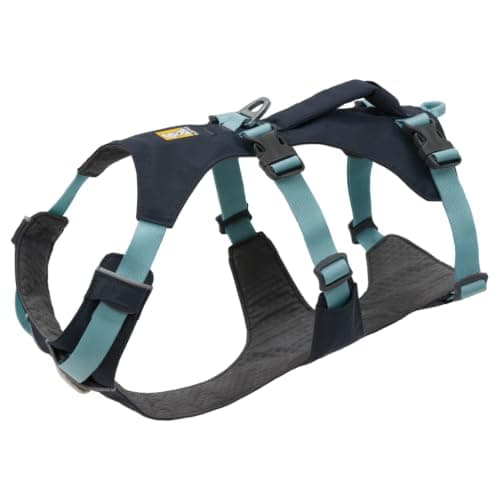 | Ruffwear Flagline HarnessSix adjustment points and a lift panel — the best-fitting escape-resistant harness |
| 81/100 | $69.99 · Amazon |
| 2 | 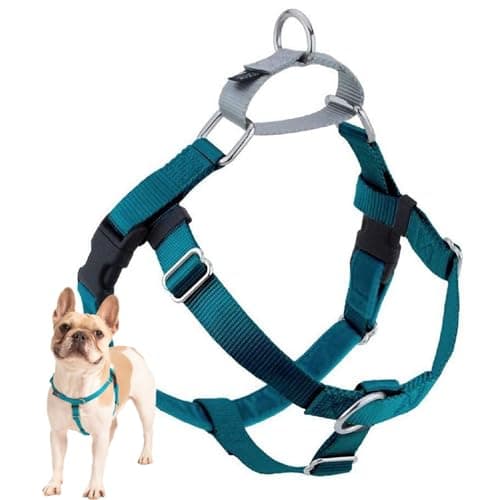 | 2 Hounds Design Freedom No-Pull HarnessA hard puller, if you buy the chew coverage with it |
| 82/100 | $34.98 · Amazon |
| 3 | 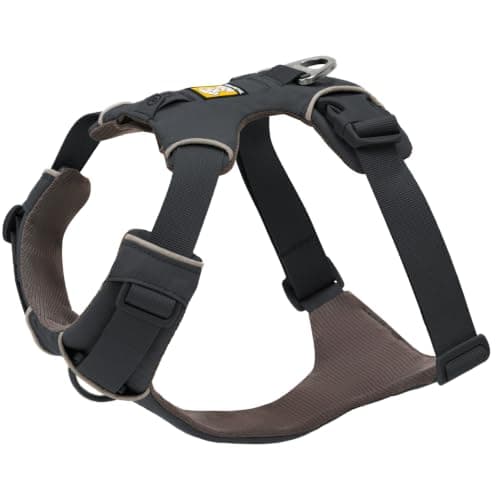 | Ruffwear Front Range HarnessThe everyday harness for a dog that does not pull hard |
| 77/100 | $59.99 · Amazon |
| 4 | 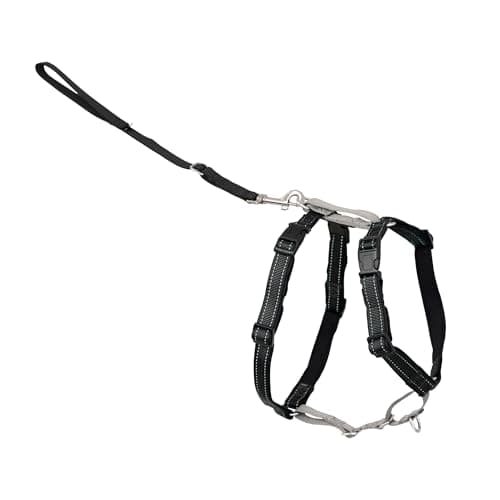 | PetSafe 3 in 1 HarnessA budget harness that also does duty as a car restraint tether point |
| 42/100 | $29.99 · Amazon |
Tap any row to jump to the full review. Specs are the manufacturer's own published figures; where a maker does not publish one we say "not published" rather than estimating it. Prices are pulled live from Amazon as of October 18, 2026; where we have no verified live price we show none rather than a stale number. #ad — how our links work.
A dachshund is two sizes at once
Every harness in this category is sold on one measurement: chest girth, taken a couple of inches behind the front legs. For most breeds that single number is a reasonable proxy for the whole dog, because girth and body length scale together.
A dachshund breaks the proxy. The chest is deep and barrel-shaped, so the girth figure comes out at the size of a much larger dog; the legs are short and the back is long, so the harness’s physical footprint has to sit on a torso that is a completely different shape from the one the pattern was drawn for. Buy on girth alone and you get a harness that fastens correctly and then either rides up into the armpits, or extends so far back that the belly strap lands in the wrong place, or both.
Which is why the specification that decides this category for this breed is adjustment points. Not denier, not webbing strength, not buckle material — the number of independent places you can change the geometry after you have bought on girth. The Flagline publishes six. The Front Range publishes four. The PetSafe 3 in 1 publishes nothing at all about its hardware and is a two-strap design, which is the least adjustable shape in the category.
The published size runs, in one place
These are the makers’ own figures, not ours:
| Harness | Smallest published size | Sized by |
|---|---|---|
| Ruffwear Flagline | XXS, 13–17 in girth | Girth |
| 2 Hounds Freedom | 5/8 in XS, 14–20 in | Girth, plus a webbing width per size |
| Ruffwear Front Range | XXS (range runs 13–42 in) | Girth |
| PetSafe 3 in 1 | Not published as a girth range | S/M/L labels |
Note what is absent from every row: a back length. The only product category on this site where a maker publishes one is carrier backpacks — Ruffwear states a maximum back length alongside girth on the Hitch Hiker, and K9 Sport Sack sizes its carriers by back length outright. No walking-harness maker does it. For a long-bodied dog that is the gap, and the only way to close it is to measure your dog’s back from the base of the neck to the base of the tail and then look hard at the product photos for where the belly strap falls on a dog of normal proportions.
The handle question, which matters more on this breed than any other
A dachshund is the breed people most want a handle for — lifting into a car, up a step, off a sofa. It is also the breed where the handle is most likely to be used wrongly.
Two facts, both verifiable. First: no maker publishes a lift rating. Not Ruffwear, and Ruffwear sells a harness specifically marketed for lifting. We flagged that on our lifting-harness roundup and it is still true. Second: there is a real structural difference between a handle stitched to a strap and a handle sitting on a panel designed to spread load. Ruffwear publishes the latter for the Flagline — a load-dispersing chest and belly panel — which is the reason it ranks first here rather than the Front Range.
The practical rule for a long-backed dog: a handle is for steadying and guiding— keeping a dog upright on a slippery floor, controlling a descent down steps, stopping a jump before it starts. Lifting the whole dog by a single point over the middle of a long spine is the one thing the handle is worst at. When you do need to lift, support the chest and the hindquarters, which is what a dedicated sling-type harness is built for.
The gear that matters more than the harness
Honest advice on this breed has to include the part that does not involve a harness at all. The repeated loading a short-legged, long-backed dog takes is from jumping down — off furniture, out of a car — and the single most useful piece of equipment for that is not a harness, it is a ramp that removes the jump. Our ramp sizing guide covers the one number that decides whether a ramp is usable: the incline angle you get from its length against your actual loading height. A harness controls a dog. A ramp removes the event.
We are deliberately not quoting prevalence statistics or veterinary thresholds here. The anatomy is not controversial, and the gear conclusion does not need a number we would have to invent to support it.
The picks, ranked
1. Ruffwear Flagline Harness
Durability score 81/100Best for: Six adjustment points and a lift panel — the best-fitting escape-resistant harness
The best-fitting harness Ruffwear makes and the one we would put on an escape artist — six adjusters and a named high-strength front connection, on a deliberately light shell.
- Shell
- 150D polyester ripstop with DWR and PU coating
- Adjustment
- Six points
- Handle
- Padded, for balanced lifting
- Lift panel
- Load-dispersing chest/belly panel
- Buckles
- ITW Nexus Mach 1 side-release
- Rear leash ring
- Anodized 6061-T6 aluminum V-ring
- Front leash connection
- 87.5% UHMWPE / 12.5% nylon
- Sizes
- XXS (13–17 in) to L/XL (32–42 in) girth
- Lift load rating
- Not published
Pros
- Six independent adjustment points — the most of any harness we have scored, and adjustment is what actually stops a dog reversing out
- The front leash connection is specified to the composition: 87.5% UHMWPE, 12.5% nylon. UHMWPE is genuinely high-strength fiber and almost nobody names it
- Named ITW Nexus Mach 1 buckles and an anodized 6061-T6 aluminum V-ring
- Load-dispersing chest and belly panel means the lift handle is not just sewn to a strap
Cons
- 150D shell — half the denier of the cheaper Front Range's 300D, so this is the lighter fabric despite being the more capable harness
- No published load rating for the handle or the lift panel, on a harness sold for lifting
- Expensive
- Chewing excluded from the warranty, like everything else in Ruffwear's line
How we assessed it: on published materials, hardware specs and construction — not long-term chew-tested. We say so because it is true, and because a claim we cannot back is worth nothing to you.
#ad Price as of October 18, 2026; Amazon prices change often, so check before you buy. How our links work.
2. 2 Hounds Design Freedom No-Pull Harness
Durability score 82/100Best for: A hard puller, if you buy the chew coverage with it
The strongest published webbing in the category paired with stainless hardware — but budget for the paid chewing warranty if your dog is a chewer.
- Webbing
- 3,800 lb test strength (manufacturer's own claim)
- Lining
- Swiss velvet
- Hardware
- Stainless steel
- Control
- Martingale tightening loop on the back
- Sizes
- 5/8 in XS (14–20 in) to 1 in XXL (36–44 in)
- Made in
- North Carolina, globally sourced materials
Pros
- The 3,800 lb webbing figure is the highest published rating we found on any harness in this category
- Stainless steel hardware — rust-resistant and washable, unlike plated zinc
- The martingale loop tightens the chest strap rather than choking the neck
- Made in the USA, which is rare at this price
Cons
- The 3,800 lb figure is 2 Hounds' own claim, not third-party verified — treat it as a manufacturer's number
- Base warranty explicitly excludes chewed webbing and buckles; chew coverage is a separate paid add-on
- Velvet lining is comfortable but holds dirt and dries slowly
How we assessed it: on published materials, hardware specs and construction — not long-term chew-tested. We say so because it is true, and because a claim we cannot back is worth nothing to you.
#ad Price as of October 18, 2026; Amazon prices change often, so check before you buy. How our links work.
3. Ruffwear Front Range Harness
Durability score 77/100Best for: The everyday harness for a dog that does not pull hard
The best-specified everyday harness here, and the rare case where the cheaper Ruffwear has the heavier fabric.
- Shell
- 300D polyester ripstop (100% recycled), PU coating + non-fluorinated DWR
- Padding
- PE foam
- Webbing
- Polyester (30% recycled)
- Buckles
- ITW Nexus Airloc side-release
- Rear attachment
- Anodized 6061-T6 aluminum V-ring
- Front attachment
- Nylon webbing in a TPU tube
- Sizes
- XXS–L/XL, 13–42 in girth
- Load rating
- Not published
Pros
- 300D recycled ripstop is a genuinely heavier shell than the Web Master's 150D, for less money
- Named, specified hardware — ITW Nexus Airloc buckles, anodized aluminum V-ring
- Two leash points, four points of adjustment
- Polyester webbing resists abrasion better than polypropylene
Cons
- No published load rating — a real gap for a premium brand
- Ruffwear's warranty states no duration at all and explicitly excludes chewing damage
- Hand wash, mild detergent, air dry
How we assessed it: on published materials, hardware specs and construction — not long-term chew-tested. We say so because it is true, and because a claim we cannot back is worth nothing to you.
#ad Price as of October 18, 2026; Amazon prices change often, so check before you buy. How our links work.
4. PetSafe 3 in 1 Harness
Durability score 42/100Best for: A budget harness that also does duty as a car restraint tether point
Reasonable value as a walking harness. Do not read the car-restraint function as a safety claim — it is not certified and we would not use it as one.
- Functions
- Walking harness, no-pull front clip, and car restraint attachment
- Webbing
- Nylon; denier not published
- Crash certification
- None — not CPS certified
- Hardware
- Not published
Pros
- Three functions in one at a low price, including a front clip for pulling
- Widely available in a full size run
Cons
- The car-restraint function is NOT crash certified — the Center for Pet Safety has not certified this harness, and a tether point is not a restraint
- No published webbing or hardware specification
- Two-strap construction offers less escape resistance than a three-strap design
How we assessed it: on published materials, hardware specs and construction — not long-term chew-tested. We say so because it is true, and because a claim we cannot back is worth nothing to you.
#ad Price as of October 18, 2026; Amazon prices change often, so check before you buy. How our links work.
Fitting one, in order
- Measure girth at the widest part of the ribcage, two inches behind the front legs, and buy the size that puts that figure mid-range rather than at the top.
- Measure the back, base of neck to base of tail, and write it down. No walking harness publishes a maximum, so this number is for your own judgment about where the belly strap will land.
- Set the chest first, the belly second, the neck last. On a six-point harness the order matters: fix the part that bears load, then close the geometry around it.
- Check the armpits after a walk, not before. Rubbing on a deep-chested dog shows up at the point where the front strap crosses, and it shows up after movement.
Two adjacent questions
People shopping for this breed arrive with two other searches attached. One is whether a no-pull harness is a different product from a regular one, which it is — no-pull vs regular harness sets out the mechanism rather than the marketing, and the mechanism is the same on a short dog as on a tall one. The other is service work: a dachshund is a plausible service or emotional-support dog and our service-harness roundup covers the one thing that category gets wrong, which is treating a vest as a credential.
A note on front clips
Three of the four here have a front leash point. On a short dog a front clip hangs closer to the ground, which means the leash is more likely to end up under a front leg. It is still the right mechanism for a puller — we have explained why on do harnesses help with pulling — but expect to manage leash routing more actively than you would on a tall dog.
Frequently asked questions
What size harness does a dachshund need?
Measure chest girth at the widest point of the ribcage, about two inches behind the front legs. A standard dachshund commonly lands in the 13-20 in band, which is covered by the Ruffwear Flagline's XXS (13-17 in) and the 2 Hounds Freedom's 5/8 in XS (14-20 in). Buy the size that puts your measurement in the middle of the published range rather than at the top of it, and measure the dog's back length as well — no walking-harness maker publishes a maximum back length, so that number is for your own judgment about where the belly strap will sit.
Can you lift a dachshund by its harness handle?
Not as a routine way of moving the dog. No manufacturer publishes a lift rating for a harness handle — including Ruffwear, which sells a harness specifically for lifting. A handle is well suited to steadying a dog, guiding it down steps and preventing a jump; it is least suited to taking the dog's whole weight through a single point above the middle of a long spine. When you need to lift, support the chest and the hindquarters.
Is a harness or a collar better for a dachshund?
A harness, for walking. The reasoning is the same as for any dog that pulls — the load moves off the neck and onto the chest — and it applies with more force to a long-backed breed, where you also want to avoid the dog bracing against a collar. Use a collar for identification. We cover the general case on dog harness vs collar.
Which harness has the most adjustment points?
The Ruffwear Flagline, with six independent points — the most of any harness we have scored. That matters more for this breed than for almost any other, because a dachshund's girth and body length belong to different size brackets, so the fit has to be corrected after you buy on girth.
Sources
Every spec on this page traces to one of these. Where a manufacturer does not publish a figure, we say “not published” rather than estimating it.
- Ruffwear — Flagline product page: six points of adjustment, load-dispersing lift panel, 150D polyester ripstop shell, and the 87.5% UHMWPE / 12.5% nylon front leash connection
- Ruffwear — Front Range product page: 300D recycled polyester ripstop shell, ITW Nexus Airloc buckles, 13-42 in girth size run
- 2 Hounds Design — Freedom No-Pull product page: the 3,800 lb webbing test figure, stainless hardware, and the 5/8 in XS through 1 in XXL size run
- Ruffwear — warranty terms: defects in materials and craftsmanship; chewing, normal wear and alterations excluded