The Best Dog Crates for Medium Dogs
A medium dog is the one size the whole crate market is built for - which makes this the only size band where buying the wrong type of crate is entirely the buyer's choice rather than the market's fault.
The verdict
Most people with a 40–70 lb dog should buy the MidWest 36-inch double door iCrate for about sixty dollars, put a chew-resistant pad in it, and spend the saved money on something else. It ranks last here on the rubric and it is still the right purchase for a dog that is not trying to get out. The ProSelect Empire tops the page because it is the only crate in the entire category that publishes a steel gauge— 20-gauge with 1/2 in reinforcing tubes — and the listing Amazon carries is literally the Medium. The Diggs Evolv Intermediate is the best-designed home crate for this size, with a dual latch Diggs says cannot be worked from inside and the most complete size chart in the business. The Petmate Sky Kennelis here for one job only, flying, and it is not crash protection. And the thing that makes this size band different from every other: if the crate has to ride in a car, a 30–70 lb dog is inside the weights that CPS has actually certified, which is not true of a 110 lb dog.
Quick picks
The short answer, ranked and scored against our published durability rubric. Where a manufacturer does not publish a spec, we say so rather than estimating it.
| # | Photo | Product | What is published | Durability | Price |
|---|---|---|---|---|---|
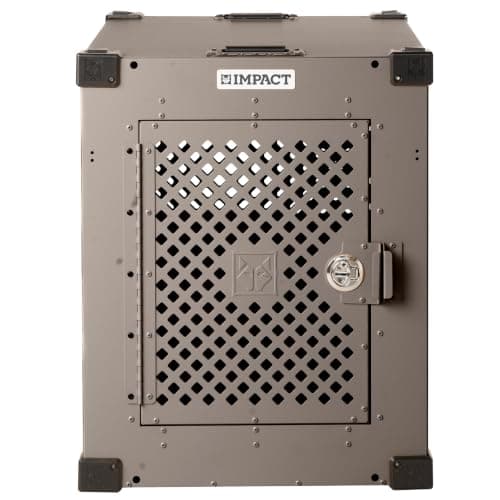
| 1 | 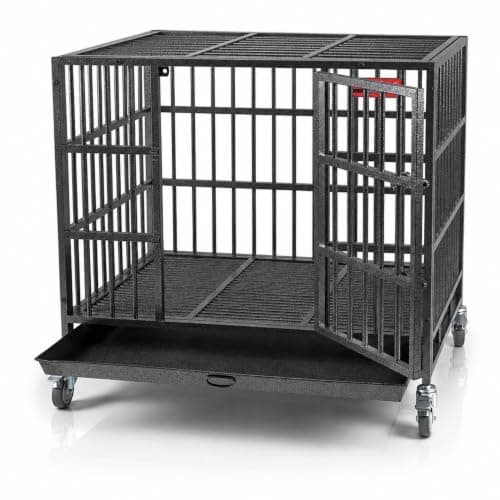 | ProSelect Empire Dog CageRaw steel strength per dollar |
| 73/100 | $389.75 · Amazon |
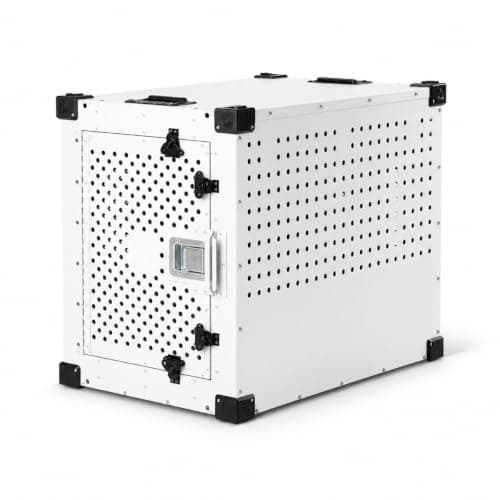
| 2 | 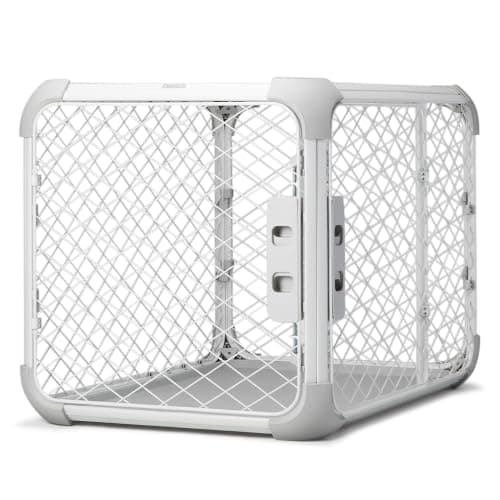 | Diggs Evolv Modular CrateA crate you can live with in a living room |
| 70/100 | $359.20 · Amazon |
| 3 | 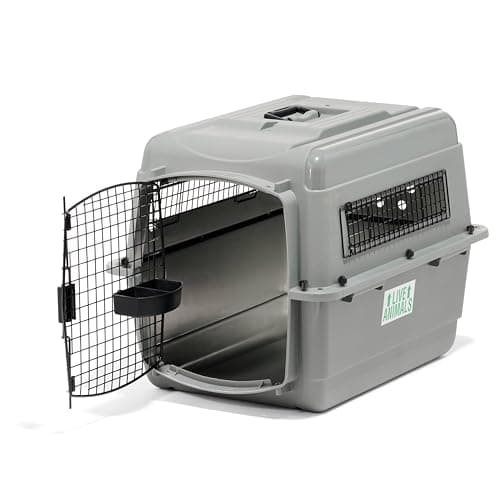 | Petmate Sky KennelAirline travel — and nothing else |
| 51/100 | $107.95 · Amazon |
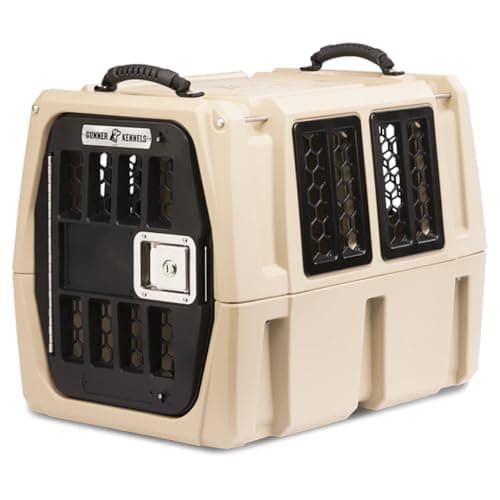
| 4 | 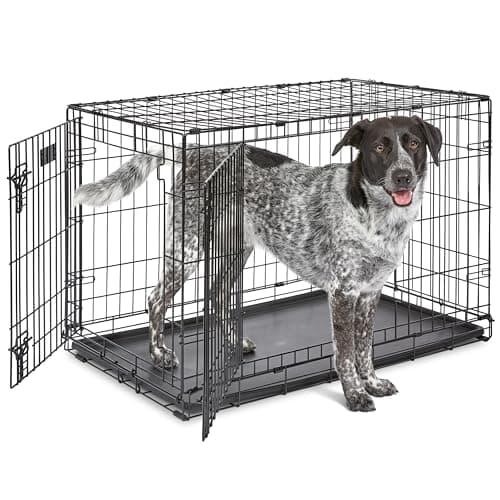 | MidWest Homes for Pets 36-Inch Double Door iCrateThe default crate for a 40-70 lb dog that is not trying to escape |
| 41/100 | $61.93 · Amazon |
Tap any row to jump to the full review. Specs are the manufacturer's own published figures; where a maker does not publish one we say "not published" rather than estimating it. Prices are pulled live from Amazon as of November 3, 2026; where we have no verified live price we show none rather than a stale number. #ad — how our links work.
The medium band is the inverse of the big-dog problem
We wrote a page about gear for Great Danes whose single finding was: the published specification stops before the dog does. Bed weight tiers end at 120 lb. Crate size charts end at 54 in. Harness charts end around 46 in. Crash certification ends at 110 lb. For a 150 lb dog, most of the market is extrapolation.
A 30–70 lb dog is the exact opposite, and it is worth saying plainly because it changes what a buying decision in this band is for. Nothing is constrained. Every crate type — folding wire, welded steel, modular panel, molded plastic, aluminum travel, furniture — is made in a size that fits your dog, usually in two or three sizes that fit. The size charts have your dog in the middle rather than at the end. And the crash certifications that exist were issued at weights that cover you: the certified crate list is short, but the test weights on it cluster exactly where a medium dog lives.
That means the question “which is the strongest crate for a medium dog?” is almost always the wrong question. The right one is which of four jobs the crate is doing, because each job has a different answer and three of the four answers are cheap.
What decides a crate for a medium dog, in order
- The job. Home containment for a settled dog, containment for a dog that escapes, travel in a car, or a flight. These are four products, not four grades of one product, and the most expensive mistake in this category is buying up a grade instead of across a type.
- The latch, not the panels. Dogs leave crates through the door. That is the finding behind the whole escape-proof crate roundup and it holds at every size: a slide bolt is the easiest thing in the assembly for a determined dog to work, and a dual latch is the single biggest upgrade available.
- Whether any strength figure is published at all.Gauge, tube diameter, weld type. One maker in the category publishes a gauge. Everyone else sells an adjective — “heavy duty”, “professional-gauge”, “ultra strong” — and then declines to put a number behind it.
- Whether the size chart gives you two numbers. Height and weight, not one or the other. A 55 lb dog can stand 19 in or 25 in at the shoulder depending on breed, and a chart that only gives pounds is guessing for you.
- What the warranty excludes. In this category, read it as entertainment and then plan around it. Every warranty here excludes damage caused by the dog, including on crates explicitly marketed for dogs that destroy crates.
- Whether the crate is a car restraint. It almost certainly is not. A wire crate is distraction prevention; an airline-compliant plastic kennel is compliant with an airline rule, which is not a crash standard. Only the CPS certified list answers this.
The one genuinely medium-specific decision: the divider
Here is the thing this band gets to do that no other size does. A 36 in wire crate with a divider panel covers a 15 lb puppy and the 60 lb adult it becomes, which means one crate for the dog’s life rather than two. That is the real argument for buying at 36 in rather than at 30 in, and it is why the cheapest product on this page is the one most people should actually buy.
It only works if the divider is used. A puppy in a crate sized for its adult self has room to use one end as a toilet and the other as a bed, which undoes the only training mechanism a crate offers. The measuring method and the one-inch rules are on what size crate does my dog need, and the divider is the reason that page says to buy for the adult dog and shrink the box rather than buying twice.
One sizing caution, because the band is wide. MidWest states 41–70 lb for the 36 in crate, and Diggs gives 30–50 lb for its Medium and 50–70 lb for the Intermediate. A 45 lb dog is therefore within three different makers’ bands at two different nominal sizes, which is not a contradiction — it is proof that the pound figure alone is not a specification. Measure the dog standing, nose to tail base and floor to the top of the head, and buy on the height number.
The number almost nobody will print
Across the entire crate market, one product in our registry publishes a steel gauge: the ProSelect Empire, at 20-gauge steel reinforced with 1/2 in diameter tubes on a 3/4 in tube frame. That is why it tops this page despite costing six times what the MidWest costs, and it is a slightly uncomfortable position to be in — we are rewarding a maker for publishing a figure rather than for having the best figure, because there is nothing to compare it to.
The contrast is instructive. MidWest sells the Ultima Pro as “professional-gauge” and will not say what gauge that is; we have asked that question on the heavy-duty crate roundup and the answer has not changed. Diggs builds a visibly better crate than either and publishes no gauge. Impact builds in aluminum and publishes no gauge.
So the honest reading for a medium-dog buyer: if the dog is not working on the crate, the gauge does not matter and you should not pay for it. If the dog isworking on the crate, the Empire is the only product where you can see what you are buying — and then its warranty excludes exactly that use, which brings us to the part of this category that never stops being absurd.
Every crate warranty excludes your dog
Collected in one place, because at this size the warranties are indistinguishable from each other and from nothing:
- ProSelect Empire:one year, excluding “breakage or damage caused by user or dog” — on a cage sold for dogs that claw or chew their way out of other cages.
- Diggs Evolv: one year, with terms that exclude damage caused by dogs who are not crate-trained or who chew the product. A crate is, for many buyers, the device used to crate-train the dog.
- Gunner G1:lifetime against defects, and it “does not extend to cover destruction done to the product by the pet”. Gunner also sells a separate steel chew kit, which is a tacit admission.
The practical consequence is that no crate warranty in this category is insurance against the thing you are worried about. Buy the latch and the steel, not the paperwork. If the dog is genuinely destroying crates, the fix is behavioral and mechanical rather than contractual, and the two pages worth reading first are how to make a dog crate escape proof and crates and separation anxiety, because a dog dismantling a door out of distress is not solved by heavier wire.
The picks, ranked
1. ProSelect Empire Dog Cage
Durability score 73/100Best for: Raw steel strength per dollar
The most steel for the money and the most honest spec sheet in the category — sold with a warranty that excludes the exact thing you are buying it for.
- Steel
- 20-gauge steel reinforced by 1/2 in diameter steel tubes
- Frame
- 3/4 in tube frame
- Latches
- Dual door latches
- Warranty
- 1 year — explicitly excludes 'breakage or damage caused by user or dog'
Pros
- It publishes an actual steel gauge — 20-gauge, with 1/2 in reinforcing tubes — which MidWest will not do
- Genuinely heavy, welded steel construction at a mid-range price
- Dual latches on the door
Cons
- The warranty is the category's central absurdity: this crate is sold 'for powerful dogs that are able to claw or chew their way out of other cages', and the warranty then excludes damage caused by the dog
- One year only
- Extremely heavy; the casters are doing real work
How we assessed it: on published materials, hardware specs and construction — not long-term chew-tested. We say so because it is true, and because a claim we cannot back is worth nothing to you.
#ad Price as of November 3, 2026; Amazon prices change often, so check before you buy. How our links work.
2. Diggs Evolv Modular Crate
Durability score 70/100Best for: A crate you can live with in a living room
The best-designed crate here and a genuinely clever latch — but it is not crash-certified, and its warranty walks away from chewers.
- Materials
- High-strength steel wire on a reinforced frame; nylon-coated steel, diamond mesh, rounded pet-safe edges (Diggs)
- Latch
- Dual latching system — Diggs states the two locks cannot be opened from inside the crate
- Capacity
- S up to 16 in / 30 lb; M 16–18 in / 30–50 lb; Intermediate 18–22 in / 50–70 lb; L 22–28 in / 70–90 lb; XL up to 29 in / 90–110 lb
- Size on this listing
- Intermediate — dogs 18–22 in tall (50–70 lb), Ash
- Warranty
- 1 year — and Diggs' warranty terms exclude 'damage caused by dogs who are not crate-trained or who chew on the product'
- Steel gauge
- Not published
- Crash certification
- None. Diggs holds no CPS certification at all today - its Passenger Carrier was certified at 18 lb in October 2021 and has since been delisted
Pros
- The dual latch genuinely defeats the paw-and-nose crate escapes that beat a single slide bolt — Diggs states it cannot be worked from inside
- Five sizes with published height AND weight bands, which is more than almost any crate maker publishes
- Modular panel construction, so it comes apart for storage without tools
- The only crate here that does not look like a piece of kennel equipment
Cons
- Diggs is sometimes remembered as a certified brand; its only CPS certificate was on the Passenger Carrier and it has been delisted. Nothing Diggs sells is crash-certified
- The warranty excludes chewers outright, which is a strange exclusion on a crate this expensive
- Diggs will not publish the steel gauge
- It breaks down into panels rather than folding flat — easier to store than a rigid crate, not as quick as a true collapsible
How we assessed it: on published materials, hardware specs and construction — not long-term chew-tested. We say so because it is true, and because a claim we cannot back is worth nothing to you.
#ad Price as of November 3, 2026; Amazon prices change often, so check before you buy. How our links work.
3. Petmate Sky Kennel
Durability score 51/100Best for: Airline travel — and nothing else
Buy it to fly. Do not buy it believing airline approval means it will protect your dog in a car crash — it does not.
- Design
- Molded plastic, airline compliant (Amazon listing)
- Crash certification
- None — it is not on the CPS certified list
- Made in
- USA (Amazon listing)
Pros
- Meets airline requirements, which is a real and specific job
- Inexpensive
Cons
- Airline compliance is NOT crash protection. They are unrelated standards and the Sky Kennel carries no crash certification
- Plastic shell with wing-nut fasteners — a determined chewer defeats it
How we assessed it: on published materials, hardware specs and construction — not long-term chew-tested. We say so because it is true, and because a claim we cannot back is worth nothing to you.
#ad Price as of November 3, 2026; Amazon prices change often, so check before you buy. How our links work.
4. MidWest Homes for Pets 36-Inch Double Door iCrate
Durability score 41/100Best for: The default crate for a 40-70 lb dog that is not trying to escape
The right default for a medium dog at home, and the crate most medium-dog owners should buy. It is not escape-proof and it is not a car crate.
- Size band
- 36 in, stated for 'Medium-Large Breeds, 41-70 lbs' (MidWest listing, model 1536DDU)
- Exterior
- Retailer listings disagree: 35.6 x 21.9 x 24.5 in and 36 x 23 x 25 in for the same model number
- Wire gauge
- Not published. No listing or MidWest page we could find states a gauge for the iCrate line
- Doors
- Two, so the crate can open to a wall or into a room
- Latches
- Slide-bolt — described on the listing as 'secure latches', with no further specification
- Pan
- Leak-proof plastic pan; divider panel included
- Crate weight
- 22 lb (retailer listing)
- Crash certification
- None. CPS's position on wire crates is that they will not provide significant protection in a crash
Pros
- Two doors at this price is genuinely useful: a 36 in crate rarely fits a room in only one orientation
- The divider panel means one crate covers a puppy and the adult dog it becomes, which is the whole argument for buying at 36 in
- Folds flat, weighs 22 lb, and costs less than a tenth of the premium crates on this page
- Leak-proof pan rather than a tray that seeps, which is the component most often cheapened at this price
Cons
- No wire gauge published anywhere, so 'durable' is the only strength claim on offer — the same refusal MidWest makes on the 'professional-gauge' Ultima Pro
- Two retailers publish exterior dimensions for this exact model number that differ by more than an inch in two axes; measure your space against the larger figure
- Slide-bolt latches are the easiest latch for a determined dog to work, and this is not an escape-proof crate
- Never a car crate: wire crates are distraction prevention, not crash protection
How we assessed it: on published materials, hardware specs and construction — not long-term chew-tested. We say so because it is true, and because a claim we cannot back is worth nothing to you.
#ad Price as of November 3, 2026; Amazon prices change often, so check before you buy. How our links work.
If the crate has to ride in a car, your dog is in luck
This is the finding that justifies a medium-dog crate page rather than a note on the large-dog one. Crash certification is issued per product and per test-dog weight, and the certified list is public and short. Read it with a 110 lb dog in mind and it is mostly bad news — the point we make at length on the large-dog crash-harness page. Read it with a 45 lb dog in mind and the picture changes completely: the Gunner G1 carries 5-star certifications at 30 lb (Small), 45 lb (Medium) and 75 lb (Intermediate), so a medium dog can be in a crate that was tested at approximately its own weight.
Nothing on this page is that crate, deliberately — the certified field is ranked on the crash-tested crate roundup, and we are not going to re-rank it here to pad a list. What belongs here is the decision rule: if the crate’s job includes the car, buy from the certified list at the size that was tested, and treat everything else on this page as a house crate. A wire crate in a vehicle is distraction prevention, and the Center for Pet Safety’s own position is that wire crates will not provide significant protection in a crash.
For most households the cheaper and better answer is a certified harness rather than a certified crate, which is the argument of are crash-tested dog crates worth it, and the straight comparison is on harness against crate.
Flying is a different rule book
The Petmate Sky Kennel is on this page because the 100–400 size range is the band most medium dogs fly in, and because the confusion it causes is worth heading off: an airline-compliant kennel is compliant with an airline’s container requirements, which govern ventilation, door type, fasteners and labeling. Those requirements say nothing about crash performance, and the Sky Kennel carries no crash certification of any kind.
If a flight is actually in the plan, the requirements that get enforced at the counter — and the hardware details that get crates refused — are set out on airline dog crate requirements. Buy the kennel for the flight and a different crate for the house, because a molded plastic kennel with wing-nut fasteners is one of the easier things on this page for a bored dog to take apart.
What goes in it
A bare pan is a cold, hard floor, and the pad is where most of the crate’s comfort actually comes from. Two things to know at this size. First, a bed sized for the room is almost never the right thing in a crate — the bolsters eat the usable floor and the dog ends up lying on the edge, which is the whole subject of will a dog bed fit in a crate. Second, a crate pad is the single most frequently destroyed object in this category, and the only ones worth buying at a size a medium dog can reach are ranked on the crate pad roundup.
If the crate will hold water — a long day, a hot room, travel — the bowl becomes a mounting problem rather than a bowl problem, because a tipped bowl in a crate ruins the pad and then the floor. The four mounts that exist, and the two that resist an upward push, are on the crate-mounted bowl roundup.
Which one for your dog
- A settled 40–70 lb dog, crate at home, normal use. The MidWest 36-inch double door. Two doors, a divider, a leak-proof pan, 22 lb, about sixty dollars. Spend the difference on the pad.
- A dog that opens or works at doors. The Diggs Evolv Intermediate first, for the dual latch, and the ProSelect Empire if the dog is attacking the structure rather than the latch.
- A dog that has already destroyed a wire crate. The Empire, with your eyes open about the warranty, and read the separation anxiety page before you buy heavier steel, because the escape and the distress are usually the same event.
- The crate rides in the car. None of these. Buy from the certified list at the tested size, or restrain the dog with a certified harness instead.
- The dog is flying. The Sky Kennel, for that and nothing else.
- You want it to look like furniture. A different category with a different failure mode, ranked on the crate furniture roundup.
The bottom line
A medium dog is the easiest dog in the world to buy a crate for, and the market’s response to that is to sell you a grade rather than a type. The sixty-dollar wire crate is the correct answer for most 30–70 lb dogs at home; the dual-latch Diggs is the correct answer if the dog works at doors; the 20-gauge Empire is the correct answer if the dog has already won a round; and if the crate is going in a car, none of them is the answer and your dog’s weight is the one piece of good news in the crash-certification picture.
Whatever you buy, assume the warranty will not cover the dog. Every warranty in this category says so in writing, including on the crates sold specifically for dogs that destroy crates.
Frequently asked questions
What size crate does a medium dog need?
For most 40-70 lb dogs, a 36 in crate - MidWest states 41-70 lb for its 36 in iCrate - and for a 30-50 lb dog the next size down is usually right. But the pound figure alone is not a specification: a 55 lb dog can stand 19 in or 25 in at the shoulder depending on breed, which is why Diggs publishes both a height band and a weight band for each size (Medium 16-18 in / 30-50 lb, Intermediate 18-22 in / 50-70 lb). Measure the dog standing - nose to the base of the tail, and floor to the top of the head - and buy on the height.
What is the best crate for a medium dog?
For most people the MidWest 36-inch double door iCrate at around sixty dollars, with a chew-resistant pad in it. It ranks last of the four here on our rubric and it is still the right purchase for a dog that is not trying to get out: two doors, a divider panel that covers a puppy through to a 70 lb adult, a leak-proof pan, and it folds flat. If your dog works at the door, move up to the Diggs Evolv Intermediate for its dual latch; if it has already destroyed a crate, the ProSelect Empire is the only product in the category that publishes a steel gauge.
Is a 36 inch crate too big for a medium dog?
Not if you use the divider. The whole argument for buying at 36 in is that one crate covers the puppy and the adult dog it becomes, which is a genuinely medium-size advantage - but a puppy left in an adult-sized crate has room to use one end as a toilet and the other as a bed, which defeats the only training mechanism a crate offers. Fit the divider so the dog can stand, turn and lie down flat with little more to spare, and move it out as the dog grows.
Can I use a medium dog crate in the car?
Only if it is on the Center for Pet Safety's certified list at the size that was tested, and none of the four crates here is. This is the one place where having a medium dog is a real advantage: certification is issued per product and per test-dog weight, and the Gunner G1 carries 5-star certifications at 30 lb, 45 lb and 75 lb, so a medium dog can sit inside a weight that was actually tested - which is not true of a 110 lb dog. A folding wire crate is distraction prevention, not crash protection; CPS's own position is that wire crates will not provide significant protection in a crash. For most households a certified harness is the cheaper and better answer.
What wire gauge is a dog crate?
Almost nobody publishes it. Across the whole category we have found exactly one product that states a steel gauge: the ProSelect Empire, at 20-gauge steel reinforced with 1/2 in diameter tubes on a 3/4 in tube frame. MidWest markets the Ultima Pro as 'professional-gauge' and declines to say what that means, and no iCrate listing or MidWest page we could find states a gauge for the standard folding crates. Diggs and Impact both build visibly better crates than a budget wire box and publish no gauge either. If the dog is not working on the crate, the gauge does not matter; if it is, the Empire is the only one where you can see what you are buying.
Do crate warranties cover a dog chewing the crate?
No - and this is consistent enough across the category to treat as a rule. The ProSelect Empire's one-year warranty excludes 'breakage or damage caused by user or dog', on a cage sold for dogs that claw or chew out of other cages. Diggs' warranty excludes damage caused by dogs who are not crate-trained or who chew the product, on a crate many people buy in order to crate-train a dog. Gunner's lifetime warranty 'does not extend to cover destruction done to the product by the pet', and Gunner sells a separate steel chew kit. Buy the latch and the steel, not the paperwork.
Is an airline-approved crate also crash tested?
No, and they are unrelated standards. Airline compliance governs ventilation, door construction, fasteners, and labeling - the things an airline will check at the counter. Crash performance is tested separately and independently, and the Petmate Sky Kennel carries no crash certification at all. Buy an airline kennel to fly; do not buy one believing it protects a dog in a car.
Wire crate or plastic crate for a medium dog?
For home use, wire: better airflow, better visibility, it folds flat, it takes a divider, and it costs a third as much. Plastic earns its place for two specific jobs - flying, where the container rules require a solid-sided kennel, and dogs that settle better in an enclosed den. The thing plastic does not earn is a strength argument: a molded shell with wing-nut fasteners is one of the easier crates for a bored dog to take apart, which is the opposite of how it is usually sold.
Sources
Every spec on this page traces to one of these. Where a manufacturer does not publish a figure, we say “not published” rather than estimating it.
- Boss Pet Edge — ProSelect Empire Cages specification: 20-gauge steel reinforced by 1/2 in diameter steel tubes on a 3/4 in tube frame, with dual door latches. The only published steel gauge anywhere in the crate category
- Diggs — Evolv crate product page: the dual latching system Diggs states cannot be opened from inside the crate, the five size bands published with both a height and a weight range (M 16-18 in / 30-50 lb; Intermediate 18-22 in / 50-70 lb), and the 1-year warranty whose terms exclude damage caused by dogs that are not crate-trained or that chew the product
- Chewy — retailer listing for the MidWest iCrate Fold & Carry Double Door 36 in (model 1536DDU): the 41-70 lb size band, the divider panel, the leak-proof pan and the 22 lb crate weight. No wire gauge appears on this or any other iCrate listing or MidWest page we could find
- Center for Pet Safety — the CPS Certified list. The only place a crash-certification claim can be checked, and the source for the fact that certification is issued per product AND per test-dog weight