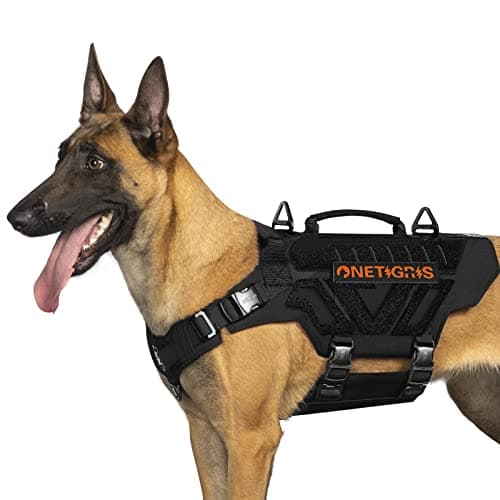
Heavy-Duty Dog Collars for Rottweilers
Two things separate a Rottweiler collar from a big-dog collar: the neck is thicker than the sizing charts expect, and the collar spends its life wet from the inside.
Buy the Viper biothane collar. It is the only material on this page with a published strength figure behind it — BioThane states 1,000 lb break strength for the standard 1 in Beta 520 profile — and it is the only one you can wash with soap and water or disinfect with a 10% bleach solution, which on a Rottweiler is not a footnote.
Buy the OneTigris handle collar if you want a physical handhold on a 120 lb dog, and the Auburn rolled leather if you want the collar to outlive the dog and the dog stays dry.
The drool problem, which is a materials problem
Rottweilers have loose flews and they drool. Ask any owner. That means the collar is not occasionally wet after a swim — it is routinely damp from the inside, every day, in the same band of material, for years.
Rank the materials on that one fact and the order changes:
- Coated webbing (biothane). A polyester core sealed inside a TPU or PVC skin. There is nothing exposed to absorb anything. BioThane’s own FAQ makes the point plainly — the material does not take up water and does not hold odor. Wipe it, or bleach it.
- Nylon. Absorbs, holds, and grows a smell. Washable, but it comes back.
- Leather. The worst of the three for this specific dog. Leather dries out, stiffens and cracks under a repeat wet-dry cycle, and conditioning it back is a chore you will stop doing by month four.
That is the whole reason a leather collar we rate very highly in general — our leather collar roundup leads with it — sits third here rather than first. Same collar, different dog.
22 to 28 inches, and why that breaks sizing charts
Adult Rottweilers commonly measure 22–28 in at the neck, and large males can exceed that. A great many collars stop at 24 in or at “XL” without saying what XL means in inches. Read the chart in inches before you buy; if a seller will not publish one, that is your answer about how much else they have thought about.
Measure high on the neck, behind the ears, not at the base where a Rottweiler is at its widest and the collar will never sit. Two fingers of clearance. Full method in how to measure a dog for a harness and collar.
Width does more than strength does
The instinct with a heavy dog is to buy the strongest possible collar. The more useful instinct is to buy a wider one.
Force through a collar is spread across its contact area. A 1 in collar concentrates everything a 120 lb dog does into a 1 in band; a 1-1/2 in or 2 in collar spreads the same force over half again or twice the area. Nothing about that makes the collar stronger — the webbing was never the failure point — but it changes what the dog feels and it reduces the chance of a pressure line under the coat.
There is a limit. Very wide collars restrict head movement and can be genuinely uncomfortable on a dog with a short, thick neck. 1-1/2 in is the width that suits most adult Rottweilers; 2 in belongs on the very largest dogs and on collars designed with a tapered profile.
The buckle is the whole collar
This is our standing position across the site and it is at its most literal here. On a 1,000 lb-rated biothane strap, BioThane rates the matching buckle at 200 lb. The strap is five times stronger than the thing holding it shut. Every collar in this category has the same architecture and most of them do not publish either number.
What to look for, given that:
- Metal tongue-and-hole over side-release. A side-release buckle has two plastic or metal legs under a spring load and it can be popped by a lateral hit. A tongue through a punched hole cannot.
- Welded ring, not split. A split ring is a bent strip. Load it sideways hard enough and it opens.
- Solid stock over plating. Nickel over zinc is the category default. It wears through, and once the plating is gone the zinc underneath goes quickly.
Quick picks
The short answer, ranked and scored against our published durability rubric. Where a manufacturer does not publish a spec, we say so rather than estimating it.
| # | Photo | Product | Durability | Price |
|---|---|---|---|---|
| 1 | 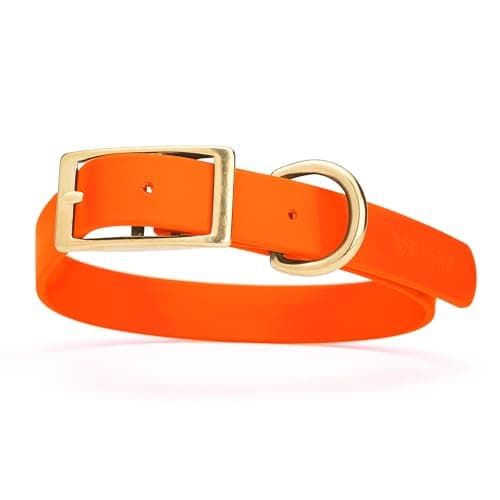 | Viper BioThane Waterproof CollarA dog that swims, rolls, and stinks up a nylon collar | 72/100 | $24.99 · Amazon |
| 2 | 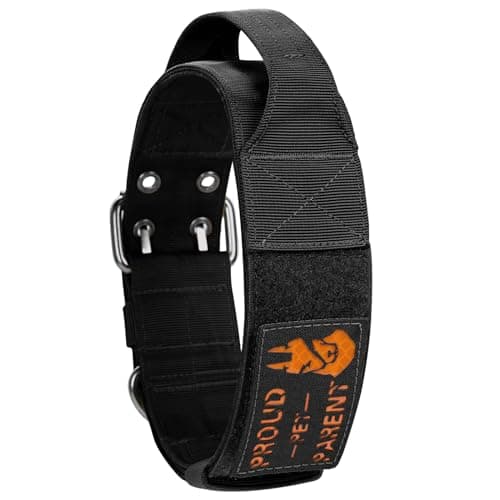 | OneTigris Tactical Dog CollarA control handle on the collar itself | 64/100 | $18.99 · Amazon |
| 3 | 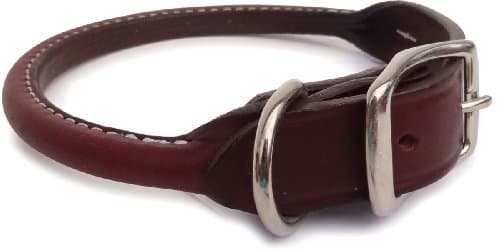 | Auburn Leathercrafters Rolled Leather CollarThe buy-it-for-life leather collar | 78/100 | $67.00 · Amazon |
| 4 | 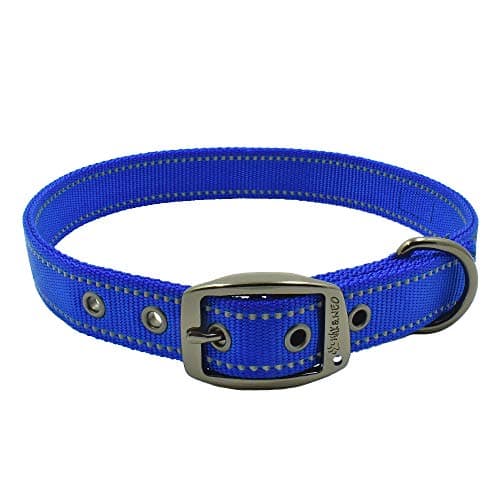 | Max and Neo MAX Reflective Metal Buckle CollarA metal-buckle nylon collar that funds a rescue | 61/100 | $15.99 · Amazon |
| 5 | 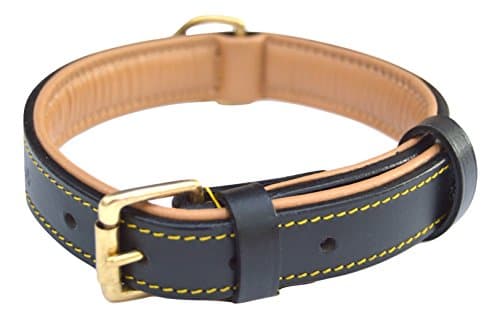 | Soft Touch Collars Padded Leather CollarA leather collar that will outlive the dog | 66/100 | Check price |
Tap any row to jump to the full review. Prices are pulled live from Amazon as of October 18, 2026; where we have no verified live price we show none rather than a stale number. #ad — how our links work.
The picks, ranked
1. Viper BioThane Waterproof Collar
Durability score 72/100Best for: A dog that swims, rolls, and stinks up a nylon collar
The right collar for a dog that lives in water and filth — just understand that the 1,000 lb number belongs to the strap, not to the buckle holding it shut.
- Material
- Coated webbing: polyester core with a TPU or PVC coating
- Core break strength
- BioThane Beta 520 PET, 1 in standard: 1,000 lb (material maker's published figure)
- Buckle pull strength
- 200 lb on the same material spec — the hardware, not the strap, is the limit
- Cleaning
- Soap and water; disinfects with 10% bleach solution
Pros
- Genuinely waterproof and, per BioThane's own FAQ, stinkproof — the reason working and hunting owners buy it
- The polyester core carries a published 1,000 lb break strength in the standard 1 in profile
- Wipes clean; no absorbed mud, lake water or dead-thing smell
- Stays flexible in cold weather
Cons
- The coating adds no strength at all — BioThane says plainly that the tensile strength comes from the polyester webbing inside
- The material spec puts buckle pull strength at 200 lb, five times lower than the webbing. The buckle is the failure point, and Viper does not publish theirs
- Stiffer than nylon and it can feel slick
How we assessed it: on published materials, hardware specs and construction — not long-term chew-tested. We say so because it is true, and because a claim we cannot back is worth nothing to you.
#ad Price as of October 18, 2026; Amazon prices change often, so check before you buy. How our links work.
2. OneTigris Tactical Dog Collar
Durability score 64/100Best for: A control handle on the collar itself
A genuinely useful control handle; just note the published-spec discipline OneTigris shows elsewhere does not extend to this one.
- Design
- Padded collar with an integrated control handle (Amazon listing)
- Width
- 2 in, stated in the listing title — the only dimension OneTigris publishes for it
- Denier
- Not published for this model
- Load rating
- Not published for this model
Pros
- The handle gives you immediate close control without reaching for the leash
- Heavier webbing than a typical flat collar
Cons
- OneTigris publishes load ratings on its X-Armor harness but not on this collar
- The handle adds bulk that some dogs will not tolerate
How we assessed it: on published materials, hardware specs and construction — not long-term chew-tested. We say so because it is true, and because a claim we cannot back is worth nothing to you.
#ad Price as of October 18, 2026; Amazon prices change often, so check before you buy. How our links work.
3. Auburn Leathercrafters Rolled Leather Collar
Durability score 78/100Best for: The buy-it-for-life leather collar
The one collar here that names its leather grade, and that alone puts it ahead of every unlabeled 'genuine leather' collar on the market.
- Leather
- Full-grain bridle leather
- Hardware
- Bright nickel-plated buckle and dee ring; smooth capped rivets
- Construction
- Beveled and hand-polished edges; extended D-end pattern on large sizes
- Sizes
- 10–34 in; widths 1/2 to 1-1/4 in
- Made in
- Central New York State, USA
Pros
- Full-grain bridle leather — the top of the grade hierarchy, and Auburn names it, which almost no collar seller does
- Rolled construction resists matting the coat on long-haired dogs
- Capped rivets and beveled edges are real construction detail, not marketing
Cons
- Nickel-plated hardware, not solid stainless — plating wears through eventually
- No published break strength
- Sold in single-collar quantities at a real premium over mass-market nylon
How we assessed it: on published materials, hardware specs and construction — not long-term chew-tested. We say so because it is true, and because a claim we cannot back is worth nothing to you.
#ad Price as of October 18, 2026; Amazon prices change often, so check before you buy. How our links work.
4. Max and Neo MAX Reflective Metal Buckle Collar
Durability score 61/100Best for: A metal-buckle nylon collar that funds a rescue
The cheapest honest way to get off plastic buckles.
- Buckle
- Metal (Amazon listing)
- Webbing
- Nylon, reflective stitching (Amazon listing)
- Load rating
- Not published
Pros
- A metal buckle at a price where almost everything is plastic
- Max and Neo donates a collar to a rescue for each one sold
Cons
- No published load rating or webbing spec
- Reflective stitching, not reflective webbing
How we assessed it: on published materials, hardware specs and construction — not long-term chew-tested. We say so because it is true, and because a claim we cannot back is worth nothing to you.
#ad Price as of October 18, 2026; Amazon prices change often, so check before you buy. How our links work.
5. Soft Touch Collars Padded Leather Collar
Durability score 66/100Best for: A leather collar that will outlive the dog
Leather is the buy-it-for-life material, but without a published grade you are trusting the seller — read our materials guide before you spend.
- Material
- Leather, padded (Amazon listing)
- Size on this listing
- Medium — 20 in long x 1 in wide, for a 14.5-17.5 in neck (Amazon listing)
- Leather grade
- Not published — see our collar materials guide on why that matters
- Hardware
- Not published
Pros
- Real leather softens and conforms to the dog rather than degrading
- Padding keeps the edge off the neck
Cons
- The listing does not state the leather grade, and grade is the whole story with leather
- Leather needs conditioning and hates repeated soakings — the wrong choice for a swimmer
How we assessed it: on published materials, hardware specs and construction — not long-term chew-tested. We say so because it is true, and because a claim we cannot back is worth nothing to you.
#ad We only show a price when we have a live one from Amazon. We don’t have one for this product right now, so we’re not going to guess. How our links work.
Search Amazon for the Soft Touch Collars Padded Leather Collar
The case for a handle collar on this breed
A Rottweiler is heavy enough that at some point you will need to physically hold the dog and the leash will be in the wrong place — a vet’s waiting room, a tailgate, a loose dog coming down the sidewalk. A handle collar gives you that without a fistful of nylon.
Two honest caveats. First, a handle adds bulk on a neck that is already short and thick, and some dogs will not tolerate it. Second, OneTigris publishes real load ratings on its X-Armor harness — 485 lb buckles, 440 lb front D-ring — and publishes nothing at all for this collar. We rate it for what the handle does, not for documentation it does not have.
If the collar is doing the pulling, buy a harness
A Rottweiler can generate more force than any collar decision will manage. If yours pulls hard, the fix is a front-connection harness, not a heavier collar — and the evidence is clearer than the internet consensus suggests. Shih et al. (2021) measured maximum leash tension of 16.87 N on a back-connection harness against 6.97 N on a collar: a yoke across the shoulders helps a dog pull. Johnson & Wynne (2024) found a front-connection harness statistically indistinguishable from a metal prong collar on pull force.
The full argument is in harness vs collar, and the gear is ranked in the most durable dog harnesses.
Living with it
- Check the fit monthly, not annually. A young Rottweiler’s neck grows in a way that will outrun a collar you bought three months ago.
- Look at the hole you use. On a buckle collar, the punched hole under load elongates before anything else fails. If the hole has gone oval, the collar is telling you something.
- Do not leave a collar on a crated dog. This is not breed-specific advice, but it matters more with a dog strong enough to bend a crate bar. Take it off.
When to replace, and the signs to look for, are covered in when to replace a harness, leash or collar.
Frequently asked questions
What size collar does a Rottweiler need?
Most adult Rottweilers take a 22–28 in collar, and large males can go past that. Many collars stop at 24 in or hide their top size behind an unexplained 'XL', so read the chart in inches before buying. Measure high on the neck just behind the ears — not down at the base, where a Rottweiler is widest and the collar will never sit — and allow two fingers of clearance.
How wide should a Rottweiler's collar be?
1-1/2 in suits most adult Rottweilers. Width spreads force across a larger contact area, which is a comfort and pressure-distribution gain rather than a strength gain — the webbing was never the failure point. 2 in belongs on the very largest dogs and works best in a tapered profile, because a very wide collar restricts head movement on a short, thick neck.
What is the best collar material for a dog that drools a lot?
Coated webbing — biothane. Rottweilers have loose flews and the collar is routinely damp from the inside, every day, in the same band of material. Biothane is a polyester core sealed inside TPU or PVC, so nothing is exposed to absorb anything; BioThane's own FAQ states the material neither takes up water nor holds odor, and it cleans with soap and water or a 10% bleach solution. Leather is the worst choice for this dog: repeated wet-dry cycling stiffens and cracks it.
Is a leather collar good for a Rottweiler?
Only if the dog stays dry. Full-grain leather is the buy-it-for-life material and we rank it first in our general leather collar roundup — but a Rottweiler that drools heavily, swims or works wet ground puts leather through a wet-dry cycle it does not survive well, and the conditioning routine that would fix that is one most owners abandon. Same collar, different dog.
How strong is a heavy-duty dog collar, really?
The strap is rarely the limit; the buckle is. BioThane publishes 1,000 lb break strength for its standard 1 in Beta 520 webbing and 200 lb pull strength for the matching buckle — the strap is five times stronger than the thing holding it shut. Almost no collar brand publishes either figure for its finished product, so judge the architecture instead: a metal tongue-and-hole buckle over a side-release, a welded ring over a split one, and solid stock over nickel plating that will eventually wear through.
Should I use a collar or a harness to stop a Rottweiler pulling?
A front-connection harness. A heavier collar does not change the mechanics of pulling. Shih et al. (2021) measured maximum leash tension of 16.87 N on a back-connection harness against 6.97 N on a collar, because a yoke across the shoulders helps a dog pull; Johnson & Wynne (2024) found a front-connection harness statistically indistinguishable from a metal prong collar on pull force. Keep the collar for ID and a handhold.
Sources
Every spec on this page traces to one of these. Where a manufacturer does not publish a figure, we say “not published” rather than estimating it.
- BioThane — Beta 520 PET material spec (1,000 lb strap break strength; 200 lb buckle pull strength)
- BioThane — what the material actually is (polyester core, TPU/PVC coating), and why it does not hold odor
- Auburn Leathercrafters — rolled collar specs (full-grain bridle leather; 10–34 in sizes; made in Central New York)
- Leather grades — full grain, top grain, corrected grain and splits, explained
- Shih et al. (2021) — “Comparison of Leash Tension When Walking Dogs Using Different Collars and Harnesses”, Frontiers in Veterinary Science 8:735680
- Ridgway (2026) — “Health implications of dog-worn equipment: a review of known and alleged physical risks”, Frontiers in Veterinary Science 13:1711781