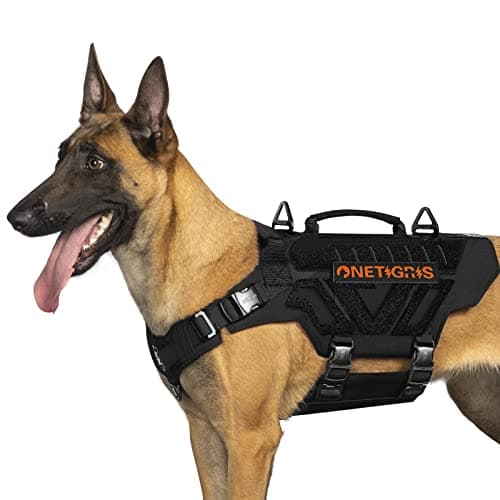
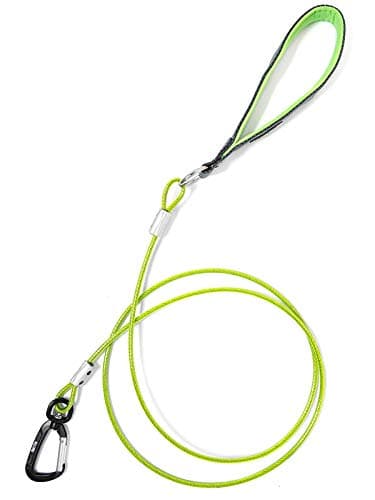
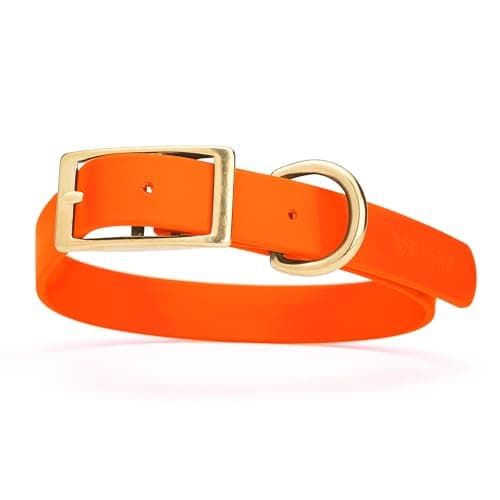
When to Replace a Dog Harness
No manufacturer in this category publishes a service life. So the useful question is not how old the harness is — it is what the webbing, the adjusters and the hardware are telling you.
We went looking for a published replacement interval for a dog harness and did not find one. Not from Ruffwear, not from Kurgo, not from any of the tactical brands. Climbing harnesses have retirement schedules; lifting slings have inspection regimes; dog gear has neither.
We could invent a number — “replace every two years” would read well and get quoted — but it would be fabricated, and a two-year-old harness on a gentle old spaniel is in a completely different state from a six-month-old one on a dog that swims daily in salt water. So this page does it the honest way: condition-based, not calendar-based, with the specific things to look at.
Three findings that mean stop using it today
These are not “monitor it” findings. These are done.
- Any cut, nick or melt across the load-bearing webbing. Webbing carries load across its full width. A cut halfway across has removed far more than half the strength, because the load concentrates at the remaining edge. This is the one thing the climbing world is unanimous about and it transfers directly.
- A gate that can be pushed open, or a buckle that releases under a pull. A closure that opens under load is not degraded, it is failed. See our guide to leash clips for the thirty-second gate check.
- Webbing that slips through its adjuster under hand pressure. If you can make the strap move by pulling on it, so can a 70 lb dog — and it will, progressively, on every walk, until the harness is loose enough to come off.
Four things that mean it is on the way out
1. Fuzzing and nap on the webbing
Surface fuzz is normal and is not, by itself, a problem — it is the outer fibers abrading, which is what they are there for. What matters is where. Fuzz spread evenly along a strap is wear. Fuzz concentrated in one two-inch band is a strap being sawn by a buckle edge or a ring, and that band is where it will part.
2. Color loss on one face only
UV degrades nylon and polyester, and a strap that has faded markedly on the side that faces the sun has lost tensile strength you cannot see. A harness that has lived on a hook by a south-facing window for four summers is older than a harness that has lived in a boot room for eight.
3. Stiffness in a strap that used to be supple
Usually salt, sometimes dried mud driven into the weave. Both act as an abrasive inside the fiber bundle, so a stiff strap is grinding itself down every time it flexes. Rinse gear that has been in salt water, in fresh water, before it dries. This is the single cheapest life-extension available and almost nobody does it.
4. Hardware that no longer looks like metal
Plated zinc goes first: the plating breaks, then the zinc corrodes, and it does it from the inside of the spring where you cannot see it. White powdery deposits around a D-ring or a snap are the visible end of a process that started a while ago. Stainless and solid brass do not do this, which is most of why we score them higher.
And the special case: a dog that has chewed it
A chewed strap is a cut strap. It does not matter that it looks superficial — teeth crush and sever individual fibers over an area, and the surviving fibers are already work-hardened. Retire it.
Assume, too, that you are not covered. We have read the standard warranty terms across this category and chewing is excluded almost everywhere: Ruffwear, Kurgo, Mighty Paw and 2 Hounds Design all exclude chew damage from their standard terms, and Mighty Paw’s exclusion for “excessive chewing or cutting” sits on a leash sold specifically to chewers. Blue-9 sells chew cover as a four-dollar add-on, which is honest pricing for what the risk actually is.
A realistic inspection cadence
Since the calendar cannot tell you when to replace, put the calendar to work on the inspection instead:
- Every walk, without thinking about it: does the clip close positively when you attach it? That is already 80% of the inspection and it costs nothing.
- Monthly: run each strap through your fingers end to end, feeling for a stiff or thinned band. Work the gate. Check the adjusters hold.
- After anything unusual: a swim in salt, a hard fall, a fence snag, or any event where the dog hit the end of the leash hard enough that you felt it in your shoulder. Inspect immediately, at the clip first.
- On a growing dog, monthly regardless: not for wear, for fit. Re-run the two-finger check from our measuring guide.
What actually lasts, and what does not
On the evidence we have gathered across this hub, the ranking is fairly consistent and it has almost nothing to do with price.
Longest-lived: biothane, because there is nothing in it to rot, absorb or stiffen — a polyester core in a sealed TPU or PVC coating. Then stainless and solid brass hardware. Then vegetable-tanned full-grain leather that is actually maintained.
Shortest-lived: plated zinc hardware in wet conditions, polypropylene webbing under abrasion, and any bonded or “genuine leather” that is really shredded fiber in a binder. We go through that distinction properly in leather versus nylon.
And one honest caveat about all of the above: none of it is a published service life, because none exists. It is what the materials evidence supports, and we would rather give you that with the uncertainty attached than a confident number nobody can stand behind.
Frequently asked questions
How often should you replace a dog harness?
There is no published service life for dog harnesses — we checked the major brands and none of them state one, unlike climbing harnesses or lifting slings. Replacement should be condition-based: retire it immediately for any cut in the load-bearing webbing, a closure that can be pushed open, or webbing that slips through its adjuster under hand pressure. Otherwise inspect monthly and after any hard event.
Is a frayed dog harness still safe?
It depends where the fraying is. Even surface fuzz along a whole strap is normal abrasion of the outer fibers. Fraying concentrated in one narrow band is a strap being sawn by a buckle edge or ring, and that band is where it will part — retire it. Any actual cut, nick or melted spot across the webbing means retire it today, because a cut halfway across removes far more than half the strength.
Do dog harness warranties cover chewing?
Very rarely. Ruffwear, Kurgo, Mighty Paw and 2 Hounds Design all exclude chewing damage from their standard warranty terms. Blue-9 sells a chew warranty as a paid add-on for about four dollars. Assume you are not covered unless you specifically paid to be — and retire any chewed strap regardless, because teeth sever fibers across an area even when the damage looks superficial.
Does sunlight damage a dog harness?
Yes. UV degrades both nylon and polyester, and the loss of tensile strength is not visible. A useful proxy is uneven fading: a strap noticeably paler on the face that has been towards a window or the sun has aged more than its calendar age suggests. Store gear out of direct light and it will outlast an identical harness that hangs in a sunny porch.
Should I rinse a dog harness after swimming in the sea?
Yes, in fresh water, before it dries. Dried salt crystals act as an abrasive inside the fiber bundle, so a stiff, salt-loaded strap grinds itself down every time it flexes — and salt attacks plated hardware from inside the spring where you cannot inspect it. It is the cheapest life-extension available for walking gear and almost nobody bothers.
Sources
Every spec on this page traces to one of these. Where a manufacturer does not publish a figure, we say “not published” rather than estimating it.
- Ruffwear — warranty terms (chewing excluded; no duration stated)
- Kurgo — lifetime warranty terms
- Mighty Paw — warranty policy (excessive chewing and cutting excluded)
- 2 Hounds Design — warranty (chewed webbing and buckles excluded)
- Blue-9 — refund policy and the $4 chew warranty add-on
- BioThane — Beta 520 PET material spec (1,000 lb strap break strength; 200 lb buckle pull strength)
- Ridgway (2026) — “Health implications of dog-worn equipment: a review of known and alleged physical risks”, Frontiers in Veterinary Science 13:1711781