The Worst Dog Collars
We are not going to name five brands and call them the worst, because we have not tested a field of bad collars and pretending otherwise is the exact thing this site exists to avoid. What we can do is name the five failure patterns - and every one of them is visible in the listing before you buy.
The verdict
The worst dog collar is not a brand, it is a pattern, and the same five patterns account for nearly every collar failure we have documented across this site. In order: (1) a strong strap on weak hardware — BioThane publishes 1,000 lb of break strength for its 1 in webbing and 200 lbof buckle pull strength on the same spec sheet, so a “1,000 lb collar” is a claim about the part that was never going to break; (2) plated zinc hardware sold as metal, which corrodes from the inside of the plating out; (3)“genuine leather”, which is not a grade and tells you nothing; (4) a collar bought at the top of its size range, in a category where not one maker publishes a maximum neck circumference; and (5) a flat collar used as the leash attachment on a dog that pulls hard, which is a load path through the trachea rather than a durability problem at all. Every one of those is checkable from the listing, and four of the five are visible in the photographs.
Why this page names patterns and not brands
“Worst dog collars” is a real thing people search, and most of the pages written for it are dishonest in a specific way: they list five cheap collars the writer has never handled, assert that they broke, and link to an expensive one. We score gear from published specifications and say so — the method is on how we test— and we have not assembled a field of bad collars and destroyed them. So we cannot tell you which five collars are worst, and anyone who tells you they can, from a desk, is making it up.
What we can do is more useful anyway. Across nine collar pages on this site the same handful of failures keep surfacing, and they are all structural rather than brand-specific. A $12 collar and a $70 collar can share the same fault. Below are the five, ordered by how often they actually catch people out, with the published figures that prove each one and the page where we worked it through in full.
1. A strong strap on weak hardware
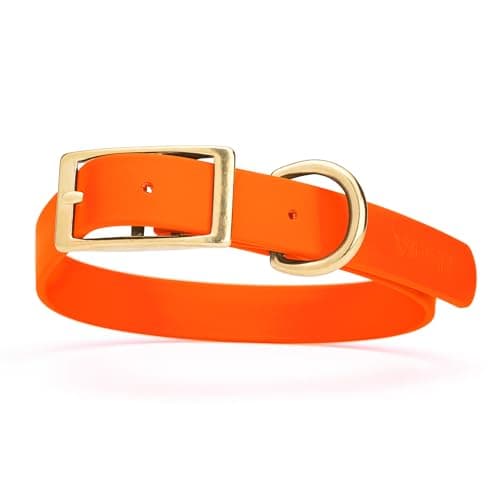
This is the biggest one by a distance, and the numbers to prove it are published by the material maker rather than by any collar brand. BioThane’s Beta 520 PET — the coated webbing almost every “biothane” collar on the market is cut from — has a published break strength of 1,000 lb in the standard 1 in profile. On the same spec sheet, the buckle pull strength is 200 lb.
The strap is five times stronger than the buckle. So when a listing advertises a “1,000 lb collar”, it is quoting the strength of the component that was never going to fail and saying nothing at all about the component that will. This is not a BioThane problem — BioThane is the one party in the chain publishing honest numbers. It is a marketing problem, and it is why hardware carries the same 25% weight as materials in our scoring.
How to see it before you buy: look for a published figure for the buckle or the ring, not the webbing. Almost nobody provides one, and the few who do are worth paying attention to for that reason alone. The full argument, with the nine collars we scored on it, is on the most durable dog collars roundup.
2. Plated zinc sold as “metal hardware”
“Metal” is not a specification. The buckles and rings in this category are broadly stainless steel, solid brass, aluminum alloy, or zinc alloy with a plated finish — and the last of those is the cheapest to make and the hardest to identify from a photograph, because a fresh plating looks exactly like the real thing.
The failure mode matters more than the material snobbery. A plated zinc buckle does not gradually weaken the way a leather strap does; it holds its shape while the plating breaks down at a scratch, and then it fails at an unremarkable load with no warning. That is a bad failure mode, which is why our rubric scores failure mode separately from materials — the question is not only how strong a part is, but whether it tells you before it goes.
How to see it before you buy: look for the word stainless, brassor a named alloy. If the listing says only “metal buckle”, “heavy duty hardware” or “alloy”, treat the hardware as unspecified. A collar that will not name its buckle metal is also, almost always, a collar that publishes no load figure for it — the two silences travel together. The equivalent problem on the other end of the leash is set out on dog leash clips, explained, where the hardware industry publishes working loads from 50 to 260 lb for the same snap designs the pet industry sells unrated.
3. “Genuine leather” and other words that mean nothing
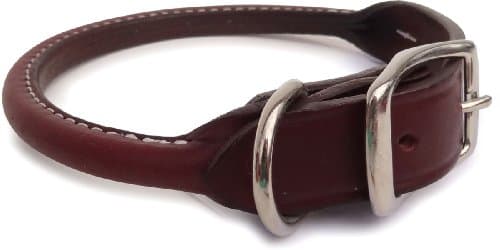
Leather is graded by which layer of the hide it comes from, and the terminology is routinely mangled in listings — sometimes carelessly, sometimes not. “Genuine leather” is not a grade. It means the material is really leather and nothing else: not which layer, not whether the surface has been corrected, not whether it is a split with a sprayed finish. Full grain is a subset of top grainrather than its rival — top grain means the upper layer of the hide, full grain means that layer with its surface left uncorrected.
The practical consequence is that the single most expensive-sounding word in a leather collar listing is the one that guarantees the least. And there is a second silence behind it: not one leather collar we have assessed publishes its tannage— vegetable-tanned and chrome-tanned leather behave completely differently when they get wet, which for a dog collar is not an academic distinction.
How to see it before you buy:require the grade in writing, and treat “genuine”, “real” and “premium” as absent information rather than as claims. The full terminology is on the dog collar materials guide, the water question is on are leather dog collars safe, and the three collars that do name a grade are on the leather collar roundup.
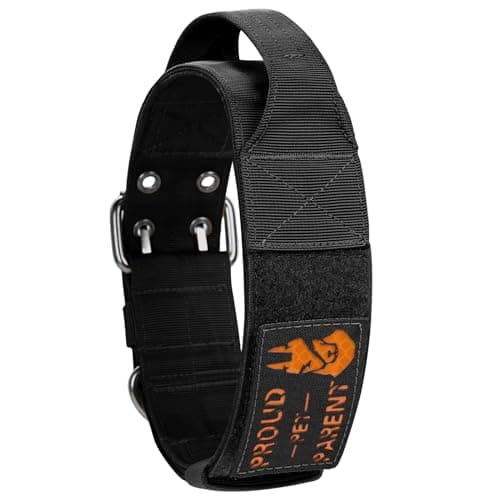
The same pattern runs through the synthetic side of the shelf under a different word. Denieris a measure of yarn mass — grams per 9,000 meters, per ASTM D1907 — not a measure of strength. A 1000D collar is made of heavier yarn than a 500D one, which usually correlates with abrasion resistance and says nothing directly about what the strap will hold. Treat a denier figure as a description of the cloth, not a rating.
4. The collar bought at the top of its size range
Here is a finding that surprised us when we first went looking for it, and that we have now confirmed across every breed-cut collar page on this site: not one collar in this category publishes a maximum neck circumference as a structural limit.Size charts exist, but they describe fit — which neck the strap will go around — and the largest size is simply the longest strap, not a rated configuration.
That matters because strap width and hardware size are frequently coupled to the size letter. Buy the largest size in a line and you may be getting the same buckle that was specified for a 25 lb dog, on a longer strap, around a 110 lb one. Nothing in the listing tells you, because there is no figure to compare against. We worked this through in detail for the breed where it bites hardest, on heavy-duty dog collars for a Cane Corso.
How to see it before you buy: check whether the strap widthchanges with the size. If a line runs 5/8 in at the small end and 1 in at the large end, the maker is telling you that the sizes are different products, and any published strength figure belongs to one specific configuration. Where a maker publishes nothing at all, do not buy the top size for a heavy dog — buy a line whose largest size is in the middle of its range.
The related trap is width itself, which is sold as a strength upgrade and is not one. A wider strap spreads a lead’s load over more neck, which is real and worth having on a strong dog. It is not a strength specification, and for pulling, for a dog that slips its collar and for a long coat it is the wrong fix — the three cases are on are wide dog collars better.
5. A flat collar doing a harness’s job
The last pattern is the one that is not a durability problem at all, and it is the one we would most like people to take away. A flat collar is an excellent place to hang identification. On a dog that pulls hard it is a poor place to attach a leash, because the entire load runs through the front of the neck — and a collar that is strong enough not to break is precisely the collar that transmits all of that force.
In other words, the strongest possible flat collar does not solve this; it is the mechanism. The fix is to move the load off the neck, which is what a harness does, and the full argument — including the cases where a collar genuinely is the right leash attachment — is on dog harness against collar. If you want the control of a collar without the slip, a properly fitted martingale is the middle path, with one hard rule attached: never on an unsupervised or crated dog. That rule, and why a growing neck changes which design to buy, is on is a martingale collar safe for a puppy.
What this page does not cover
Anyone searching for the worst dog collars may be expecting prong, choke or electronic collars to appear here, so it is worth saying plainly why they do not. This site assesses gear against a durability rubric — materials, hardware, construction, failure mode, warranty — and that rubric has nothing useful to say about equipment whose entire purpose is to apply aversive pressure. We do not rank them, we do not recommend them, and we are not going to pretend that a scoring system built for buckles and webbing settles a welfare question. That is a conversation for a trainer or a veterinary behaviorist, not a gear review.
One narrow, gear-shaped observation does apply and is worth having: the failure patterns above are mechanical, and they apply to any collar of any type. A plated buckle on a training collar corrodes exactly as it does on a flat one.
The five-line check before you buy
Everything above collapses into five questions you can answer from a product listing in about a minute. If a collar fails more than one of them, it is not that it will certainly break — it is that nothing published about it would let you argue otherwise.
- Is there a published figure for the buckle or the ring? Not for the webbing. If the only number is a strap strength, the collar is unrated where it counts.
- Is the hardware metal named?“Stainless”, “brass” or an alloy number, not “metal” or “heavy duty”.
- Is the material graded?A leather grade, or a coated-webbing material name. “Genuine leather” and a bare denier figure are not grades.
- Does the strap width change across the size run? If it does, every published number belongs to one size and you need to know which.
- Is the collar being asked to do a harness’s job? If your dog pulls hard, the answer to a collar problem is usually not a better collar.
So what should you buy instead?
Three starting points, depending on the dog rather than on the budget. For a dog that swims, rolls in things and ruins nylon, buy coated webbing — it does not absorb water, mud or odor, and the material maker publishes real figures, which almost nobody else in this category does. For a collar meant to outlive the dog, buy leather from a maker that will name the grade. For everyday use with hardware you can actually identify, buy from the narrow set of brands that name their buckles. All three cases, with the nine collars we scored, are on the most durable dog collars roundup, and the material decision itself — the one that comes before any brand — is settled on BioThane against leather.
One closing note on price, because it is the thing people most want a rule for and we do not have one. Across the collars we have scored, price correlates with documentation far more reliably than with strength: the expensive collars are mostly the ones willing to tell you what they are made of. That is worth paying for, and it is not the same thing as being stronger.
Frequently asked questions
What is the worst type of dog collar?
The worst collar is a pattern rather than a type, and the most common one is a strong strap on unrated hardware. BioThane publishes a 1,000 lb break strength for its standard 1 in webbing and a 200 lb buckle pull strength on the same spec sheet, so the strap is five times stronger than the buckle - which means a '1,000 lb collar' is a claim about the part that was never going to break. Look for a published figure for the buckle or the ring instead. Almost no brand provides one, and the few that do are worth attention for that reason alone.
Why is 'genuine leather' a warning sign on a dog collar?
Because it is not a grade. Leather is graded by which layer of the hide it comes from, and 'genuine leather' means only that the material really is leather - not which layer, not whether the surface has been corrected, not whether it is a split with a sprayed finish. Full grain is a subset of top grain, not its rival: top grain is the upper layer of the hide and full grain is that layer with its surface left uncorrected. Require the grade in writing, and treat 'genuine', 'real' and 'premium' as missing information rather than as claims. No leather collar we have assessed publishes its tannage either, which is the spec that decides how it behaves when wet.
How can I tell if a dog collar's hardware is cheap?
Read what the listing calls it. The hardware in this category is broadly stainless steel, solid brass, aluminum alloy, or zinc alloy with a plated finish, and a fresh plating looks identical to the real thing in a photograph. If the listing says only 'metal buckle', 'heavy duty hardware' or 'alloy', the hardware is unspecified. The reason it matters is the failure mode rather than the raw strength: plated zinc holds its shape while the plating breaks down at a scratch, then fails at an unremarkable load with no warning, which is exactly the kind of failure that gives you no chance to retire the collar first.
Is a wider dog collar stronger?
No. Width spreads a lead's load over more of the neck, which is real and genuinely worth having on a strong dog, but it is not a strength specification - the buckle and the ring still decide what the collar holds. Width is also the wrong fix for three problems people commonly buy it for: pulling, a dog that slips its collar, and a long coat. A denier figure is a similar trap on the synthetic side: denier is a measure of yarn mass under ASTM D1907, not a rating.
Is it bad to buy the largest size in a collar range?
It can be, and nothing in the listing will tell you. Not one collar in this category publishes a maximum neck circumference as a structural limit - the size charts describe fit, so the largest size is the longest strap rather than a rated configuration. Strap width and hardware size are often coupled to the size letter, so the top size in a line can pair a longer strap with the buckle that was specified for a much smaller dog. Check whether the strap width changes across the size run: if it does, every published figure belongs to one specific size, and for a heavy dog you want a line whose largest size sits in the middle of its range.
Should I walk my dog on a collar or a harness?
A collar for identification, and for a dog that pulls hard, a harness for the leash. A flat collar puts the whole load through the front of the neck, and a collar strong enough not to break is precisely the one that transmits all of that force - so the strongest possible flat collar does not solve this problem, it is the mechanism of it. If you want a collar's control without the slip, a correctly fitted martingale is the middle path, with one hard rule: never on an unsupervised or crated dog.
Are prong, choke and shock collars the worst dog collars?
That is a welfare question rather than a gear question, and this site does not rank them. We score equipment on materials, hardware, construction, failure mode and warranty, and that rubric has nothing useful to say about equipment whose purpose is to apply aversive pressure - so we do not recommend them, do not rank them, and will not pretend a scoring system built for buckles settles the argument. Ask a trainer or a veterinary behaviorist. The one gear-shaped point that does carry across: the mechanical failure patterns on this page apply to any collar of any type.
Does a more expensive dog collar last longer?
Not reliably, and the correlation that does exist is a different one. Across the collars we have scored, price tracks documentation far better than it tracks strength: expensive collars are mostly the ones willing to publish what they are made of - a leather grade, a named buckle metal, a material spec sheet. That is worth paying for, because it is what lets you check a claim rather than trust it. It is not the same thing as the collar being stronger, and a stainless buckle on a cheap strap will outlast a plated-zinc buckle on an expensive one.
Sources
Every spec on this page traces to one of these. Where a manufacturer does not publish a figure, we say “not published” rather than estimating it.
- BioThane — Beta 520 PET material spec: the 1,000 lb break strength for the standard 1 in profile and the 200 lb buckle pull strength on the same sheet
- BioThane — what the material actually is: polyester webbing with a TPU or PVC coating, with the tensile strength coming from the webbing inside
- Leather grades — full grain, top grain, corrected grain and splits, and why 'genuine leather' is not a grade
- Denier explained — ASTM D1907 skein method (grams per 9,000 meters), i.e. a measure of yarn mass and not of strength