AirTag vs a GPS Dog Collar
The cheap option is not a worse tracker. It is a different kind of device entirely, and it fails in exactly the place a dog is most likely to be lost.
The verdict
If your dog gets out in a town or a suburb and there are people around, an AirTag on the collar is a cheap and genuinely useful thing to have — with the understanding that it contains no GPS at all. It is a Bluetooth beacon; its position comes from passing Apple devices reporting the beacon, so it works where there are iPhones and stops working where there are not. If your dog gets out into open country, buy a real tracker. Within cell coverage, the Tractive GPS DOG 6 is the sensible buy: unlimited range inside coverage, IP68, a published battery claim of up to two weeks, and it clips to a collar up to 1.1 in wide. Understand that the subscription is not optional— stop paying and the hardware is inert. Beyond cell coverage, only the Garmin Alpha 300i works at all: it links by radio directly to the dog’s device, up to 9 miles, with no subscription for the tracking itself. For a hunting or field dog that is not a preference, it is the only architecture that functions.
Three architectures, three different failures
Everything sold as a pet tracker is one of three things, and the differences are not about features. They are about what has to exist in the world for the device to report a position at all.
| Bluetooth crowd-find | Cellular + GPS | Direct radio | |
|---|---|---|---|
| Example | Apple AirTag in a collar holder | Tractive GPS DOG 6 | Garmin Alpha 300i + dog device |
| Contains GPS? | No | Yes | Yes, on the dog device |
| Needs what nearby | Other people’s Apple devices | A cell signal | Nothing — the handheld talks to the collar |
| Range | As far as the crowd extends | Unlimited within coverage | Up to 9 miles to the dog device |
| Subscription | None | Required— hardware does not function without it | None for tracking; inReach messaging is separate |
| Battery | Coin cell, roughly a year | Up to 2 weeks published; XL variants claim up to 6 | Up to 55 hours on the handheld |
| Fails where | Anywhere without people | Anywhere without cell coverage | Beyond radio line of sight |
We cover the second and third columns in depth on are GPS dog collars worth it and rank the field on best GPS dog trackers. This page exists because the first column is a different animal and it is the one people are actually searching for.
What an AirTag actually does
An AirTag is a Bluetooth Low Energy beacon with a coin cell in it. It does not know where it is. It broadcasts an identifier, and any passing Apple device that hears the broadcast reports the encounter — so the position you see is where somebody else’s phone was when it heard your tag, not where your tag says it is.
That architecture has real virtues. There is no subscription, the battery lasts about a year rather than days, it is cheap enough to lose, and in a dense area the crowd is large enough that updates come frequently. For a dog that slips a gate in a residential street, it will very often work.
It also has one disqualifying property for the case that matters most. A dog that genuinely goes missing — bolts at a gunshot, chases deer off a trail, disappears from a campsite — goes away from people. That is the definition of the problem. And it is exactly the condition under which a crowd-sourced beacon has no crowd and reports nothing at all. The device is not broken; it is being asked to work in the one environment it cannot.
Mounting one on a collar, and what to look for
If you have decided an AirTag is right for your situation, the practical question is how it attaches, and this is where the gear judgment comes in.
- Keep it on the top of the neck, not under the throat. A holder that rotates under the jaw gets chewed, scraped on the ground and soaked in the water bowl.
- Prefer a holder that threads onto the webbing over one that dangles from a D-ring. Anything hanging is something a second dog can grab, and dangling hardware is the most common thing to go missing.
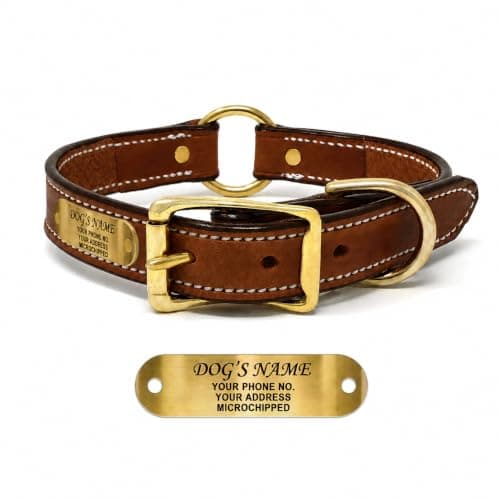
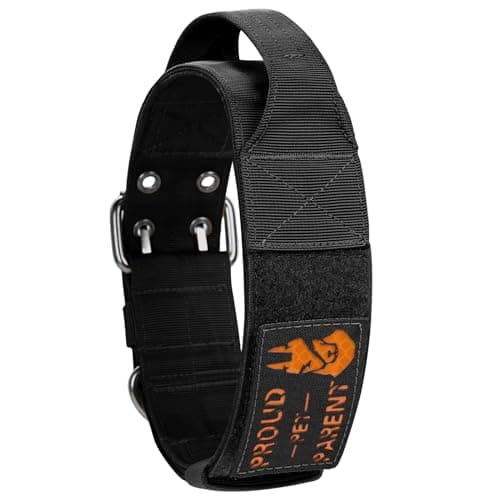
- Use a wide collar.A 1.5–2 in webbing collar gives a holder a stable platform; a thin round collar lets it flop. The tactical collar category is where the wide webbing and ID panels live.
- Do not rely on it for water.An AirTag is water resistant, not a dive device, and nothing about a third-party holder is rated. For a dog that swims, the IP68 figure on the Tractive is a published spec and the holder’s is not.
Note the thing we are not going to do: name a specific AirTag holder as a pick. We do not assess any in this registry, and we are not going to invent a recommendation to fill the slot. The two products below are the ones we have actually assessed, and they are the answer to the case where the beacon is not.
Matching the device to where your dog gets lost
The whole decision reduces to one question, and it is not about your dog — it is about your geography.
- Suburban or urban, dog escapes the yard: a beacon is adequate and cheap. Cellular is better and costs a subscription forever.
- Mixed — walks in parks, drives to trailheads: cellular. The Tractive clips onto the collar you already own, which is the right way to do this.
- Hunting, field trials, backcountry, ranch: direct radio, and nothing else. A cellular tracker in a coverage hole is an inert plastic box, and a beacon is worse.
One more honest point about all three. None of them is a substitute for a fence, a recall or a leash, and none of them prevents anything — they tell you where the dog went after it went. The thing that keeps a dog findable without any electronics is a legible ID: a nameplate riveted to the collar does not run out of battery, does not need coverage and does not need an app. We rank those on collars with nameplates, and it is the cheapest piece of insurance on this entire site.
Quick picks
The short answer, ranked and scored against our published durability rubric. Where a manufacturer does not publish a spec, we say so rather than estimating it.
| # | Photo | Product | Durability | Price |
|---|---|---|---|---|
| 1 | 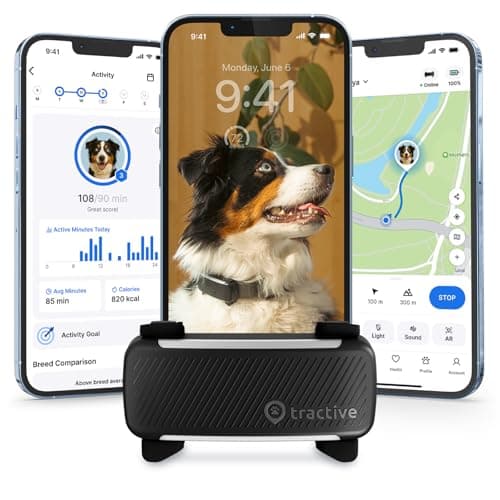 | Tractive GPS DOG 6Unlimited-range tracking anywhere there is cell coverage | 61/100 | $47.40 · Amazon |
| 2 | 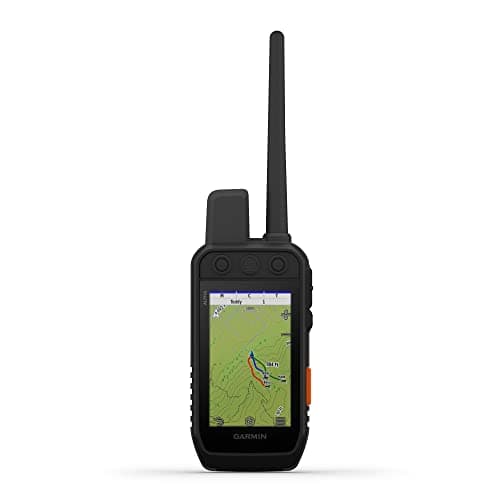 | Garmin Alpha 300i HandheldTracking with no cell coverage at all — the only true off-grid system here | 87/100 | $849.99 · Amazon |
Tap any row to jump to the full review. Prices are pulled live from Amazon as of October 18, 2026; where we have no verified live price we show none rather than a stale number. #ad — how our links work.
The picks, ranked
1. Tractive GPS DOG 6
Durability score 61/100Best for: Unlimited-range tracking anywhere there is cell coverage
The right tracker for a pet that might get out of the yard. The wrong tracker for a dog that ranges beyond cell coverage.
- Link type
- Cellular (LTE) plus GPS — requires network coverage
- Subscription
- Required; the hardware does not function without an active plan
- Range
- Unlimited within cell coverage
- Battery
- Published by Tractive as up to 2 weeks; the XL variants claim up to 6
- Attachment
- Clips to an existing collar up to 1.1 in wide
- Water resistance
- Published by Tractive as IP68
- Health monitoring
- Heart rate, respiratory rate, sleep, bark and scratch monitoring
Pros
- Unlimited range wherever there is a cell signal, which is the case that covers most escaped pet dogs
- Clips to the collar you already own rather than replacing it
- Now carries the health and behavior monitoring that used to be the reason to buy a Whistle instead — heart rate, respiratory rate, sleep, barking and scratching
- Far cheaper up front than the Garmin
Cons
- The subscription is not optional — stop paying and you own an inert plastic box, which is the single biggest thing to understand before buying
- No cell coverage means no tracking, which is exactly the terrain a hunting or field dog gets lost in
- Battery life is measured in weeks at best and days in heavy use, and a flat tracker is no tracker
How we assessed it: on published materials, hardware specs and construction — not long-term chew-tested. We say so because it is true, and because a claim we cannot back is worth nothing to you.
#ad Price as of October 18, 2026; Amazon prices change often, so check before you buy. How our links work.
2. Garmin Alpha 300i Handheld
Durability score 87/100Best for: Tracking with no cell coverage at all — the only true off-grid system here
The serious tool. If your dog ranges where there is no cell signal, nothing on the consumer market is a substitute for it.
- Link type
- Direct radio between handheld and dog device — no cellular network required
- Range to dog device
- Up to 9 miles to a compatible Alpha collar
- Display
- 3.5 in sunlight-readable touchscreen
- Battery
- Up to 55 hours; about 50 with satellite features active. USB-C charging
- Satellite messaging
- inReach two-way messaging and SOS (subscription required)
- Subscription for tracking
- None — the dog-tracking link itself is not a subscription service
- Dogs tracked
- Up to 20 with additional dog devices
- Dog device
- Sold separately for this handheld
Pros
- The only system here that works with no cell coverage whatsoever, because the handheld talks to the collar directly over radio rather than through a network
- No subscription is required for the dog tracking itself — a genuine cost difference over the cellular trackers, which are subscription-dependent forever
- Tracks up to 20 dogs at up to 9 miles, which is why this is the system houndsmen and field trainers actually use
- Up to 55 hours on a charge, and the battery is replaceable rather than sealed in — a real advantage on a multi-day hunt
- inReach satellite SOS covers the handler as well as the dog
Cons
- By far the most expensive option here, and the dog collar device is a separate purchase on top
- Bulky handheld — this is field equipment, not a pet gadget
- inReach messaging and SOS do require their own subscription, even though tracking does not
How we assessed it: on published materials, hardware specs and construction — not long-term chew-tested. We say so because it is true, and because a claim we cannot back is worth nothing to you.
#ad Price as of October 18, 2026; Amazon prices change often, so check before you buy. How our links work.
The short version
- An AirTag has no GPS. It borrows position from nearby Apple devices. No people, no position.
- A cellular tracker needs a signal and a subscription. Both, forever. Within coverage it is the best value answer.
- Direct radio is the only off-grid option. It costs the most and needs a separate dog device.
- Put a nameplate on the collar regardless. It is the only part of this that never fails.
Frequently asked questions
Can you use an Apple AirTag to track a dog?
You can use one to find a dog, within limits, but it is not a tracker in the way a GPS collar is. An AirTag contains no GPS. It is a Bluetooth beacon, and its position comes from passing Apple devices reporting that they heard it — so it works where there are iPhones and reports nothing where there are not. For a dog that slips a gate in a residential street it will often work. For a dog that bolts into open country it will not, because the definition of that problem is that the dog has gone away from people.
Is an AirTag or a GPS collar better for a dog?
It depends entirely on where your dog would get lost, not on which device is better. In a town, an AirTag is cheap, needs no subscription and has a battery measured in months rather than days. Outside cell and crowd coverage, only a direct-radio system like the Garmin Alpha works at all — a cellular tracker in a coverage hole is an inert box and a Bluetooth beacon with no crowd reports nothing.
What collar works with an AirTag holder?
A wide flat webbing collar, 1.5 to 2 inches, which gives the holder a stable platform rather than letting it flop. Mount it on the top of the neck rather than under the throat, and prefer a holder that threads onto the webbing over one that dangles from a D-ring — anything hanging is something to catch or chew off. We do not assess any specific AirTag holder, so we are not going to name one as a pick.
Do GPS dog trackers need a subscription?
Cellular ones do, and it is not optional — the Tractive hardware does not function without an active plan, so stopping payment leaves you with an inert device. Direct-radio systems are different: the Garmin Alpha's dog-tracking link needs no subscription at all, because the handheld talks to the collar directly rather than through a network. Garmin's inReach satellite messaging and SOS do carry their own subscription, separately from tracking.
Sources
Every spec on this page traces to one of these. Where a manufacturer does not publish a figure, we say “not published” rather than estimating it.