When to Use a Slow Feeder Dog Bowl
Every slow feeder on the market is sold on a slow-down claim, and not one of those claims is independently verified. What the design does reliably is change how a meal is eaten - which is useful in some situations and counterproductive in others.
The verdict
Use a slow feeder when the problem is howyour dog eats — a gulper that empties a bowl in seconds, a dog that needs its meal to last, or a bored dog whose food can do some of the enrichment work. Skip it when the problem is what or how much your dog eats, when the dog chews plastic, or when a meal is already a source of stress. The bowl we would buy first is the Company of Animals Green Slow Feeder: its upright blade design is genuinely harder to defeat than a moulded maze because the dog cannot get its tongue under the whole meal at once, it is far easier to clean than a deep maze, and it works with wet food. The Outward Hound Fun Feeder is the cheaper default and the one to buy in two patterns, because a dog that has solved one maze eats fast again. One honest caveat that applies to the entire category: every slow-down figure you will read is a manufacturer claim, not an independently verified one.
What a slow feeder actually does
The mechanism is simple and it is not in dispute: the bowl puts obstacles between the dog and the food, so the dog has to work around ridges or blades instead of taking mouthfuls from an open dish. The meal takes longer and it takes more effort.
What ismissing is measurement. Across the slow feeders we have assessed, the published slow-down figures are manufacturer claims and we have found no independently verified figure for any of them. That does not mean the bowls do not work — the mechanism is obvious enough that you can watch it working — but it does mean you should treat “slows eating by X times” as advertising, and judge the bowl on its design, its cleanability and whether your dog can defeat it.
The four situations where a slow feeder is the right tool
- A gulper. A dog that empties a bowl in under a minute, then stands over it. This is the core case and the design addresses it directly.
- A dog whose meal needs to last. Dogs on a measured ration can find a small meal demoralisingly brief. The same quantity in a slow feeder takes meaningfully longer to eat, which is a welfare win at no nutritional cost.
- A bored dog, as part of enrichment.Food is the cheapest enrichment there is. If a maze bowl buys ten minutes of problem-solving twice a day, that is ten minutes a chew toy does not have to cover — though for most destructive dogs the toy still earns its place; see the indestructible toys.
- A multi-dog household where one dog finishes first and then patrols. Slowing the fast eater down evens the field. It is a management tool rather than a behavioral fix, and it should sit alongside feeding dogs in separate spaces rather than instead of it.
The four situations where it is the wrong tool
- Your dog chews plastic.This is the serious one. Moulded ridges and upright blades are both chewing targets for a frustrated dog, blades are individually snappable, and swallowed plastic is a far worse problem than fast eating. If your dog attacks the bowl rather than the food, stop using it and feed from stainless — the stainless steel bowls is the roundup, and stainless against ceramic is the material comparison.
- The problem is portion size, not speed. A slow feeder changes the pace of a meal, not its calories. Weighing food is the tool for that and no bowl substitutes for it.
- Mealtimes are already stressful. Adding difficulty to a meal a dog is anxious about can make the anxiety worse rather than better. Start with the simpler interventions.
- You want to settle the raised-bowl question.Bowl height and bowl difficulty are separate decisions and they get conflated constantly. The height question has an evidence base and real stakes, and we handle it properly — with its citations — on should you use a raised dog bowl. Read that before buying anything elevated; do not take an answer to it from this page.
One further note on health: anything to do with eating speed, gastric conditions or a dog that gulps and then retches is a veterinary conversation, not a shopping one. We cite the evidence we have on the raised-bowl page and we do not make clinical recommendations in our own voice anywhere on this site.
Maze, blades, or tray: how the three designs differ
| Design | Hard to defeat? | Cleaning | Wet food |
|---|---|---|---|
| Moulded maze (Outward Hound) | Until the dog learns the pattern | Deep mazes are genuinely hard by hand | Poorly |
| Upright blades (Green) | Yes - no way to get the tongue under the whole meal | Flat and open; easiest here | Yes |
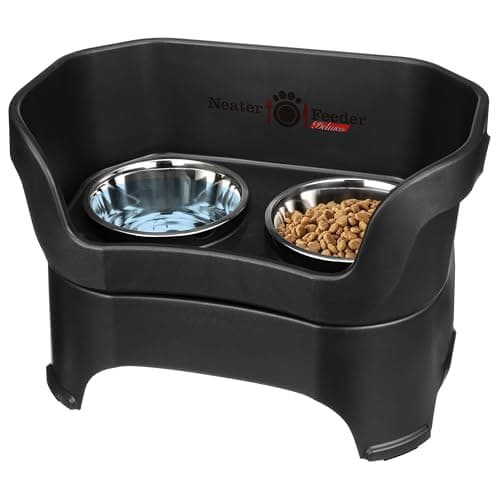
| Maze plus spill tray (Neater) | As a maze, plus it contains the scatter | More parts, more washing | Poorly |
Two practical details that decide more than the pattern does. The first is a non-slip base: without one, a determined eater pushes the bowl into a corner and tips it, which defeats the entire purpose — the Outward Hound’s non-slip ring is the reason it remains the category default. The second is rotation: a dog that has solved one maze eats fast again, so two cheap patterns alternated beat one expensive bowl. If the dog has already learned to bulldoze a maze, move to the blade design rather than to a harder maze.
What to look for, in order
- A non-slip base. Non-negotiable. Everything else is optional.
- Cleanability you will actually sustain. A deep maze that is hard to hand wash gets washed less, and a food bowl that gets washed less is the wrong purchase at any price.
- A mechanism your dog cannot learn around. Blades beat mazes on this, and rotating two patterns beats both.
- Honest material expectations. Everything in this category is food-safe plastic. If your dog chews plastic, this is not your category.
- Ignore the slow-down multiplier. No figure in this category is independently verified. Judge the design.
Quick picks
The short answer, ranked and scored against our published durability rubric. Where a manufacturer does not publish a spec, we say so rather than estimating it.
| # | Photo | Product | Durability | Price |
|---|---|---|---|---|
| 1 | 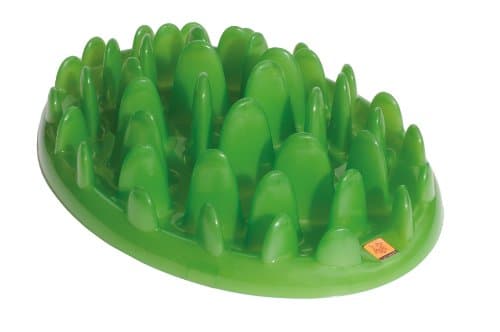 | Company of Animals Green Slow FeederThe grass-blade design that a bulldozer cannot simply push through | 55/100 | $32.50 · Amazon |
| 2 | 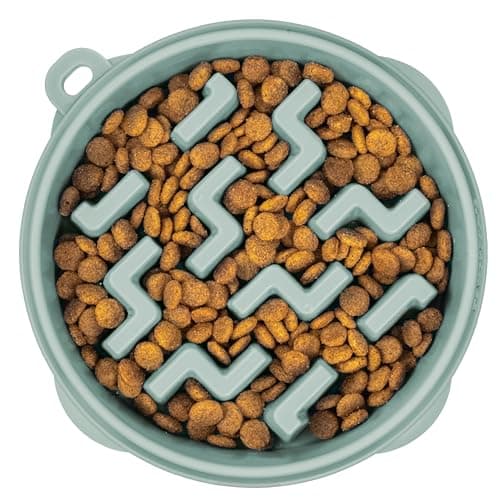 | Outward Hound Fun Feeder Slo BowlThe default slow feeder, in the widest range of maze patterns | 51/100 | $8.51 · Amazon |
| 3 | 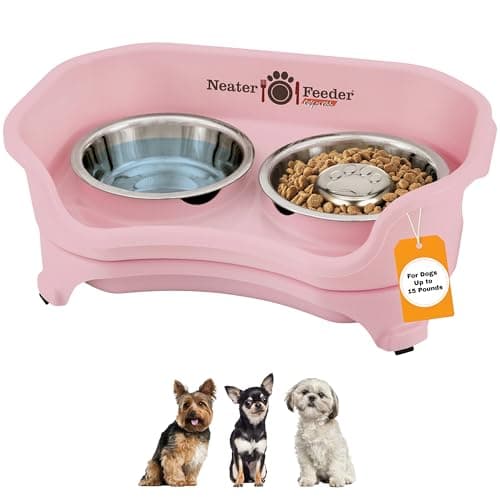 | Neater Pet Brands Neater Slow FeederA slow feeder that also contains the spill | 51/100 | $34.99 · Amazon |
Tap any row to jump to the full review. Prices are pulled live from Amazon as of October 18, 2026; where we have no verified live price we show none rather than a stale number. #ad — how our links work.
The picks, ranked
1. Company of Animals Green Slow Feeder
Durability score 55/100Best for: The grass-blade design that a bulldozer cannot simply push through
The better mechanism, and the easier one to clean. Buy this one if your dog has already learned to defeat a maze bowl.
- Design
- Upright plastic 'grass blades' rather than a molded maze
- Material
- Food-safe plastic
- Care
- Dishwasher safe
- Published slow-down figure
- Not published as an independently verified figure
Pros
- The vertical-blade design is genuinely harder to defeat than a maze — a dog cannot get its tongue under the whole meal at once
- Flat, open structure is far easier to clean than a deep maze
- Works with wet food as well as kibble, which most mazes do not
Cons
- Larger footprint on the floor than a bowl-shaped feeder
- Blades are individually snappable by a chewer
- Higher price than the maze bowls
How we assessed it: on published materials, hardware specs and construction — not long-term chew-tested. We say so because it is true, and because a claim we cannot back is worth nothing to you.
#ad Price as of October 18, 2026; Amazon prices change often, so check before you buy. How our links work.
2. Outward Hound Fun Feeder Slo Bowl
Durability score 51/100Best for: The default slow feeder, in the widest range of maze patterns
The category default for good reason. Rotate the pattern before your dog learns to bulldoze it.
- Material
- Food-safe plastic
- Patterns
- Several maze designs at different difficulty levels
- Base
- Non-slip ring
- Care
- Top-rack dishwasher safe
- Published slow-down figure
- Not published as an independently verified figure
Pros
- The widest range of maze patterns and difficulty levels, which matters because a dog that has solved one pattern eats fast again
- Non-slip base — essential, because a determined eater will otherwise push the bowl into a corner and tip it
- Cheap enough to own two patterns and rotate them
Cons
- Plastic ridges are a chewing target for a frustrated dog, and swallowed plastic is a worse problem than fast eating
- The slow-down claims across this whole category are manufacturer figures, not independently verified ones
- Deep mazes are genuinely hard to clean by hand
How we assessed it: on published materials, hardware specs and construction — not long-term chew-tested. We say so because it is true, and because a claim we cannot back is worth nothing to you.
#ad Price as of October 18, 2026; Amazon prices change often, so check before you buy. How our links work.
3. Neater Pet Brands Neater Slow Feeder
Durability score 51/100Best for: A slow feeder that also contains the spill
The right choice if your dog is both a gulper and a scatterer. Otherwise the extra parts are extra washing up.
- Design
- Maze insert with a spill-containing outer
- Material
- Food-safe plastic
- Care
- Dishwasher safe
- Published slow-down figure
- Not published as an independently verified figure
Pros
- Combines the maze with Neater's spill-containment approach, so scattered kibble stays on the tray
- Dishwasher safe
Cons
- More parts than a single molded bowl, and more parts is more cleaning
- No independently verified slow-down figure, like everything in this category
- Plastic throughout
How we assessed it: on published materials, hardware specs and construction — not long-term chew-tested. We say so because it is true, and because a claim we cannot back is worth nothing to you.
#ad Price as of October 18, 2026; Amazon prices change often, so check before you buy. How our links work.
The bottom line
A slow feeder is a cheap, genuinely useful tool for one specific problem: a dog that eats too fast, or a meal that finishes too quickly. Buy for the mechanism rather than the claim, insist on a non-slip base, choose the design your dog cannot learn around, and own two patterns if the dog is clever. Stop using one the moment the dog starts eating the bowl instead of the food. And keep it separate from the two questions it gets muddled with: portion control, which is a scale, and bowl height, which has its own evidence and its own page. If what you actually want is a feeding station rather than a bowl, the elevated feeders and the feeders with food storage are the right roundups.
Frequently asked questions
When should you use a slow feeder dog bowl?
Four cases. A gulper that empties a bowl in seconds. A dog on a measured ration whose meal otherwise finishes demoralisingly fast. A bored dog, where the meal can do some enrichment work. And a multi-dog house where the fast eater finishes and then patrols - though that is management, and it belongs alongside feeding dogs in separate spaces rather than instead of it. The common thread is that a slow feeder changes how a meal is eaten. It does not change what or how much.
Are slow feeder bowls good or bad for dogs?
Good for the specific job of slowing a fast eater, with two real cautions. The first is plastic: every slow feeder we have assessed is food-safe plastic, moulded ridges and upright blades are both chewing targets for a frustrated dog, blades snap individually, and swallowed plastic is a worse problem than fast eating. If your dog attacks the bowl rather than the food, stop and feed from stainless. The second is evidence: the slow-down figures across this category are manufacturer claims and we have found no independently verified figure for any of them, so judge the design rather than the multiplier.
Which slow feeder design is hardest for a dog to defeat?
The upright-blade design, as used by the Company of Animals Green Slow Feeder. A moulded maze works until the dog learns the pattern and then it bulldozes it; vertical blades mean the dog cannot get its tongue under the whole meal at once, which is a structural rather than a puzzle-based obstacle. The blade design also cleans far more easily than a deep maze - a flat, open structure rather than channels - and it is the only one of the three that works properly with wet food. Its trade-offs are a larger floor footprint, a higher price, and blades that a chewer can snap one at a time.
Do slow feeders prevent bloat?
That is a clinical question and we do not answer it in our own voice. The evidence we have gathered on bowl design and gastric risk - including the research on raised food bowls - is set out with its citations on our page about whether you should use a raised dog bowl, and anything involving a dog that gulps and then retches belongs with your veterinarian rather than with a product page. What we can tell you about slow feeders specifically is that no slow-down claim in the category is independently verified.
Why does my dog still eat fast from a slow feeder?
Almost always one of two reasons. The dog has learned the pattern - a maze is a puzzle and puzzles get solved, which is why two cheap patterns rotated beat one expensive bowl - or the bowl is moving. A determined eater without a non-slip base simply pushes the bowl into a corner and tips it, and then there is no maze at all. Check the base first, then change the mechanism rather than the difficulty: move from a moulded maze to an upright-blade design instead of buying a harder maze.
Can you use a slow feeder with wet food?
With the blade design, yes - the Green Slow Feeder works with wet food as well as kibble, which most moulded mazes do not. Deep maze channels hold wet food in places a dog cannot reach and you cannot easily clean, which is both wasteful and a hygiene problem. If you feed wet, the blade design or a plain bowl are the sensible options, and the plain-bowl route points at stainless rather than plastic.
Sources
Every spec on this page traces to one of these. Where a manufacturer does not publish a figure, we say “not published” rather than estimating it.
- Company of Animals — maker page for the Green Slow Feeder (upright blade design, dishwasher safe)
- Outward Hound — maker page for the Fun Feeder Slo Bowl range (maze patterns, non-slip ring, top-rack dishwasher safe)
- Neater Pet Brands — maker page for the Neater Slow Feeder (maze insert with spill-containing outer)